Graphic Designing
Why a Unique Logo Design Can Make or Break Your Brand in 2025–26
Why a Unique Logo Design Can Make or Break Your Brand in 2025–26: In today’s hyper-digital world, where first impressions are everything and brand identity...

Need help? Call us:
+92 320 1516 585
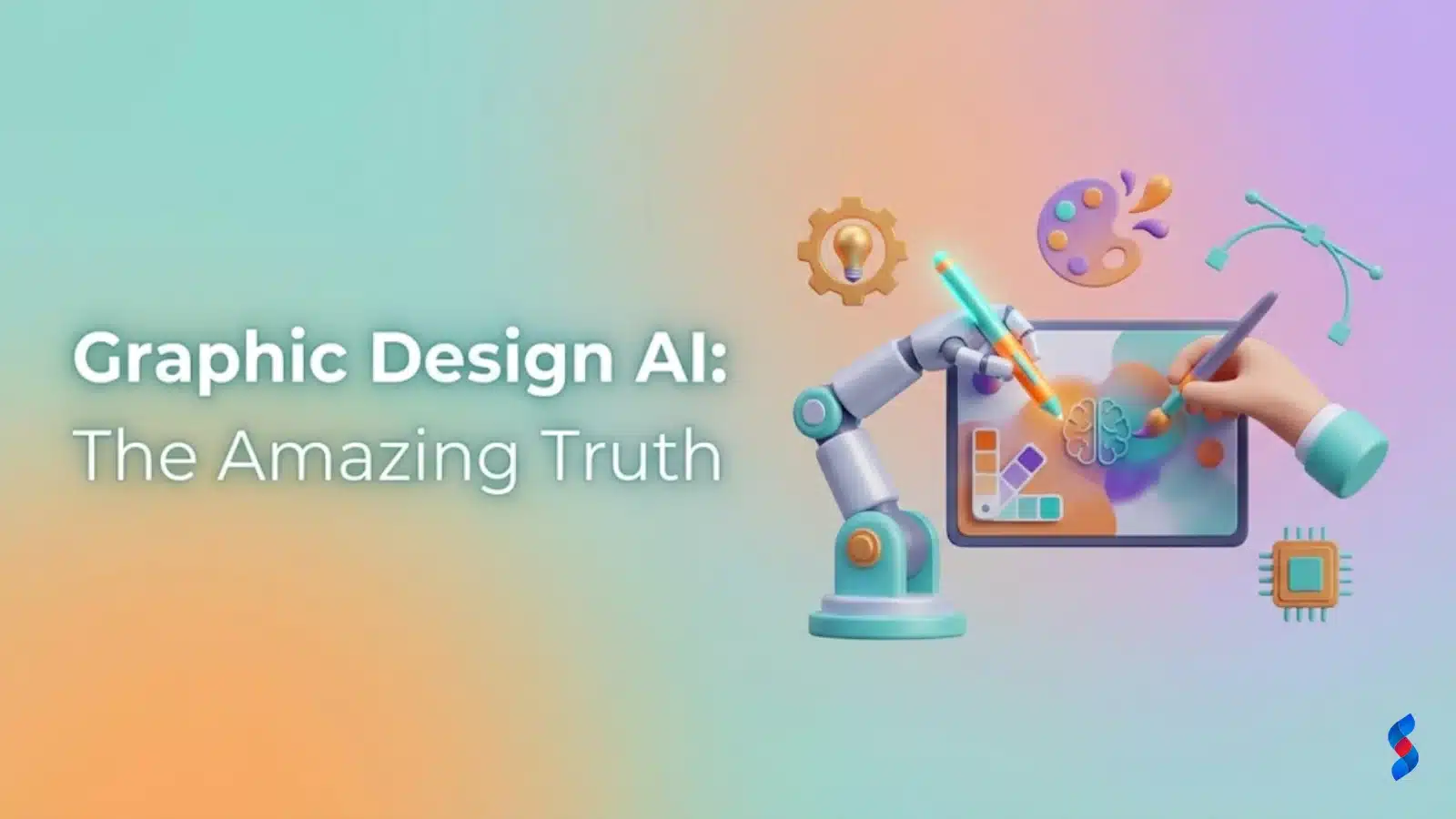
The field of graphic design is undergoing a monumental shift, driven by the rapid advancements in artificial intelligence. Graphic design AI is no longer a futuristic fantasy; it’s a present-day reality that’s reshaping how designers work, create, and innovate. This article delves into the amazing truth about graphic design AI in 2025, exploring its capabilities, limitations, and the transformative impact it’s having on the industry.
Graphic design AI refers to the use of artificial intelligence technologies to automate, augment, and enhance the graphic design process. This includes a wide range of applications, from generating design concepts and layouts to automating repetitive tasks and providing intelligent design suggestions. In essence, it involves leveraging AI algorithms and machine learning models to assist designers in creating visually appealing and effective communication materials.
AI systems can now analyze design trends, understand user preferences, and generate creative assets based on specific parameters. They can also assist with tasks like image editing, typography selection, and color palette creation. As AI design software continues to evolve, its integration into the graphic design workflow is becoming increasingly seamless and intuitive.
The growing popularity of graphic design AI stems from several key factors. Firstly, AI can significantly improve efficiency by automating time-consuming tasks, allowing designers to focus on more strategic and creative aspects of their work. Secondly, AI design tools can help designers explore new ideas and push creative boundaries by generating unexpected design variations and offering data-driven insights.
Moreover, graphic design automation can reduce costs and accelerate project timelines, making it an attractive option for businesses of all sizes. AI also enables personalized design experiences by tailoring content to individual user preferences. Finally, the increasing availability and affordability of AI design software are making it accessible to a wider range of designers and organizations. As AI continues to advance, we anticipate even more benefits and applications emerging within the graphic design sphere.
The question of whether graphic design AI will replace human designers is a subject of much debate. While AI can automate many tasks and generate impressive designs, it currently lacks the critical thinking, emotional intelligence, and strategic problem-solving abilities that are essential for truly effective design. In our experience at SkySol Media, AI serves best as a powerful tool that augments human creativity rather than replacing it.
The future of graphic design likely lies in a collaborative approach, where designers leverage AI to enhance their skills and capabilities while retaining their unique human perspective. The concern of job displacement is valid, but rather than fearing it, designers should adapt by learning to effectively wield AI graphic design tools and focus on developing skills that AI cannot replicate. This hybrid approach will allow designers to remain relevant and valuable in the evolving landscape.
A variety of AI graphic design tools are already available, catering to different needs and skill levels. These tools can be broadly categorized as follows:
These tools are constantly evolving, with new features and capabilities being added regularly. The key is for designers to experiment with different options to discover which ones best suit their workflow and design needs.
The applications of AI in design industry are vast and varied, spanning across different design disciplines. Here are some specific examples:
[IMAGE: A collage showcasing examples of AI-generated designs for different applications, such as logos, websites, and marketing materials]
These examples demonstrate the potential of generative AI for design to streamline workflows, enhance creativity, and improve design outcomes.
Despite its advancements, current artificial intelligence design technology still has limitations.
It is important for designers to be aware of these limitations and to use AI tools responsibly and ethically.
One of the most significant ways AI is transforming the graphic design workflow is through the automation of repetitive tasks. This frees up designers’ time to focus on more strategic and creative aspects of their work. Examples of tasks that can be automated with AI include:
By automating these tasks, AI can significantly improve the efficiency of the design process and reduce the risk of human error. Our clients in Dubai have seen considerable time savings from these automations.
Beyond automation, AI can also enhance creativity by providing designers with new ideas, perspectives, and design variations. AI design software can analyze design trends, identify patterns, and generate novel design concepts that designers may not have considered otherwise.
[IMAGE: A visual representation of a designer using AI tools to brainstorm and generate multiple design concepts for a project]
These AI-assisted design capabilities can help designers break free from creative ruts, explore new possibilities, and develop truly innovative designs.
AI can also accelerate the prototyping and iteration process by enabling designers to quickly create and test different design variations. Generative AI for design can automatically generate prototypes based on specific requirements, allowing designers to quickly visualize and evaluate different design options.
This faster prototyping and iteration process allows designers to refine their designs more quickly and efficiently, resulting in better user experiences and more effective communication materials.
Despite the advancements in AI graphic design tools, human creativity and originality remain essential skills that AI cannot fully replicate. AI can generate designs based on existing patterns and data, but it lacks the ability to think outside the box, challenge assumptions, and create truly novel and innovative designs.
Human designers bring a unique perspective and intuition to the design process, allowing them to create designs that are not only visually appealing but also emotionally resonant and meaningful. They can understand the nuances of human behavior, cultural context, and aesthetic preferences, allowing them to create designs that connect with audiences on a deeper level. A client once asked us if AI could replace the “spark” of a human designer. We showed them examples of AI-generated content lacking that emotional depth, solidifying the importance of human input.
Effective graphic design requires strategic thinking and problem-solving skills, which are areas where human designers excel. Designers must be able to understand the client’s needs, identify the target audience, define the project goals, and develop a design strategy that effectively communicates the desired message.
This involves analyzing complex information, making informed decisions, and adapting to changing circumstances. AI can assist with data analysis and provide insights, but it cannot replace the human designer’s ability to think critically, solve problems creatively, and develop a comprehensive design strategy.
Graphic design is not just about aesthetics; it’s also about understanding human emotions and creating designs that resonate with the target audience. Human designers possess emotional intelligence, which allows them to empathize with users, understand their needs, and create designs that evoke the desired emotions.
This involves understanding user behavior, conducting user research, and analyzing feedback to ensure that the design effectively meets the needs of the target audience. AI can assist with data collection and analysis, but it cannot replace the human designer’s ability to connect with users on an emotional level and create designs that are truly user-centered.
Graphic design AI is impacting logo design and branding by providing designers with new tools and techniques to generate logo concepts, explore different design styles, and create visually appealing brand identities. AI can analyze brand values, target audience, and industry trends to generate logo designs that are aligned with the brand’s identity and resonate with its target market.
However, human designers remain essential for refining these AI-generated concepts, ensuring that the logo is unique, memorable, and effectively communicates the brand’s message. They also play a crucial role in developing the overall brand identity, including the brand’s voice, personality, and visual style.
In web design and UI/UX, AI in design industry is being used to automate tasks such as layout generation, image optimization, and user testing. AI can analyze website content, user behavior, and design trends to generate visually appealing and user-friendly website layouts. It can also optimize images for different devices and screen sizes, ensuring that the website loads quickly and looks great on all platforms.
Furthermore, AI can simulate user interactions with the website and provide feedback on usability, accessibility, and user experience. However, human designers are still needed to ensure that the website is functional, intuitive, and meets the needs of the target audience. They also play a critical role in developing the website’s information architecture, navigation, and overall user experience.
AI graphic design tools are also transforming the creation of marketing and advertising materials. AI can be used to generate ad copy, design visuals, and personalize content based on user data. It can also automate the process of A/B testing different ad variations to determine which performs best.
However, human marketers and designers are still needed to develop the overall marketing strategy, ensure that the messaging is aligned with the brand’s values, and create compelling visuals that capture the attention of the target audience. They also play a critical role in analyzing campaign data and making adjustments to optimize performance.
In illustration and visual content creation, AI design software is being used to generate images from text prompts, enhance existing images, and create new visual styles. AI image generators can create stunning visuals based on user input, allowing designers to quickly generate illustrations for websites, social media, and other design projects.
AI-powered photo editors can enhance existing images, remove imperfections, and perform complex editing tasks with ease. However, human illustrators and designers are still needed to create original artwork, develop unique visual styles, and ensure that the visual content is aligned with the brand’s message and aesthetic.
One of the most common misconceptions about graphic design AI is that it will completely replace human designers. While AI can automate many tasks and generate impressive designs, it lacks the creativity, emotional intelligence, and strategic thinking skills that are essential for truly effective design.
AI is best viewed as a tool that augments human creativity rather than replacing it. Designers who learn to effectively leverage AI tools will be more productive, efficient, and creative than ever before. The future of graphic design lies in collaboration between humans and AI, where each complements the strengths of the other.
Another common misconception is that AI-generated designs are always better than designs created by humans. While AI can generate designs that are visually appealing and technically sound, they often lack the emotional depth, originality, and strategic thinking that are hallmarks of great design.
AI-generated designs can be a great starting point, but they typically require refinement and customization by human designers to ensure that they meet the specific needs of the project and resonate with the target audience. A purely AI-generated design may lack the crucial human touch that makes a design truly impactful.
A third misconception is that learning AI tools is difficult for designers. While some AI tools can be complex and require technical expertise, many are designed to be user-friendly and intuitive. Designers with basic computer skills can quickly learn to use AI tools to enhance their workflow and improve their design outcomes.
There are also numerous online courses, tutorials, and resources available to help designers learn AI tools and techniques. The key is to embrace a growth mindset and be willing to experiment with new technologies.
The future of graphic design lies in a hybrid approach, where humans and AI collaborate to create better designs than either could achieve alone. Designers will leverage AI to automate repetitive tasks, generate design concepts, and explore new possibilities, while retaining their unique human skills, such as creativity, emotional intelligence, and strategic thinking.
This collaborative approach will allow designers to focus on the most important aspects of the design process, such as understanding the client’s needs, developing a design strategy, and creating designs that resonate with the target audience. AI will serve as a powerful tool that empowers designers to be more productive, efficient, and creative.
As AI in design industry becomes more prevalent, the role of the designer will evolve. Designers will need to develop new skills and competencies to effectively leverage AI tools and techniques. They will also need to focus on developing their unique human skills, such as creativity, emotional intelligence, and strategic thinking, which AI cannot replicate.
The designer of the future will be a hybrid of artist, strategist, and technologist, capable of seamlessly integrating AI into their workflow and creating designs that are both visually appealing and strategically effective. This evolution requires a proactive approach to learning and adapting to the changing landscape of the design industry.
Design education will need to adapt to the changing landscape of the design industry by incorporating AI tools and techniques into the curriculum. Design students will need to learn how to use AI to automate tasks, generate design concepts, and explore new possibilities.
They will also need to develop their unique human skills, such as creativity, emotional intelligence, and strategic thinking, which AI cannot replicate. Design schools should also emphasize ethical considerations of ethical AI design, ensuring that students understand the potential biases and limitations of AI and use it responsibly. The goal is to prepare the next generation of designers to thrive in a world where AI is an integral part of the design process.
To thrive in the evolving design landscape, it’s crucial to actively learn AI design tools and techniques. There’s a wealth of resources available, from online courses and tutorials to workshops and conferences. Start by exploring popular AI design software like Adobe Sensei, Canva AI, or even specialized tools for logo creation or image enhancement.
Experiment with different platforms and features to discover what resonates with your workflow and design style. Don’t be afraid to embrace new technologies and push your creative boundaries. Consider taking online courses focused on graphic design automation to understand how to integrate AI effectively into your processes.
While AI can automate many tasks, certain skills remain uniquely human. Focus on honing your creativity, critical thinking, and emotional intelligence. Develop your ability to understand user needs, empathize with audiences, and create designs that resonate on a personal level.
Cultivate your strategic thinking skills to effectively solve problems, develop comprehensive design strategies, and communicate your ideas persuasively. Remember, AI is a tool, but your unique human perspective is what sets you apart.
The field of AI in design industry is constantly evolving, so it’s essential to embrace a growth mindset and commit to continuous learning. Stay up-to-date on the latest AI design trends, experiment with new tools and techniques, and seek out opportunities to expand your knowledge and skills.
Be open to feedback and willing to adapt your approach as needed. The designers who thrive in the future will be those who embrace change, are eager to learn, and are committed to continuous improvement.
One of the most pressing ethical AI design considerations is the potential for bias in AI algorithms and design outputs. AI algorithms are trained on data, and if that data reflects existing biases, the AI will likely perpetuate those biases in its designs. This can lead to designs that are unfair, discriminatory, or exclusionary.
For example, an AI trained on a dataset that predominantly features images of white people may struggle to generate accurate or representative designs for people of color. It is essential to be aware of these biases and to take steps to mitigate them, such as diversifying the training data and using AI tools that are designed to be fair and inclusive.
Another important ethical consideration is the issue of copyright and ownership of AI-generated designs. Who owns the copyright to a design created by AI? Is it the designer who used the AI tool, the developer of the AI tool, or the AI itself?
The legal landscape surrounding AI-generated content is still evolving, but it is generally accepted that the copyright belongs to the person who provided the creative input and direction for the AI. However, it is important to carefully review the terms of service of any AI tool before using it to create designs, as some tools may claim ownership of the generated content.
It is crucial to ensure that AI design workflow promotes accessibility and inclusivity. This means creating designs that are usable by people of all abilities and that are representative of diverse populations. AI can be used to improve accessibility by automatically generating alternative text for images, creating captions for videos, and ensuring that designs are compatible with assistive technologies.
However, it is important to be mindful of the potential for AI to perpetuate existing inequalities. For example, an AI that is trained on a dataset that does not include images of people with disabilities may generate designs that are not accessible to them. It is essential to prioritize accessibility and inclusivity in all aspects of the AI design process.
One of our clients, a large e-commerce company, struggled with the time-consuming process of creating marketing materials for their various product lines. By implementing graphic design automation using AI-powered tools, they were able to automate the creation of banner ads, social media posts, and email marketing templates.
This resulted in a significant reduction in production time, allowing their marketing team to focus on more strategic initiatives. The AI tools also provided data-driven insights that helped them to optimize their campaigns for better performance.
Another client, a healthcare provider, wanted to improve the user experience of their website. By using AI-powered design tools, they were able to analyze user behavior, identify areas for improvement, and generate design variations that were tailored to the needs of their target audience.
This resulted in a significant increase in user engagement, improved conversion rates, and higher customer satisfaction scores. The AI tools also helped them to ensure that their website was accessible to people of all abilities.
A startup company approached us looking to develop a unique and memorable brand identity. By leveraging generative AI for design, we were able to generate a wide range of logo concepts, color palettes, and visual styles that were aligned with the company’s values and target market.
The AI tools helped us to explore new design possibilities and push the boundaries of creativity. The resulting brand identity was visually stunning, strategically effective, and perfectly captured the essence of the startup’s brand.
[IMAGE: A before-and-after comparison showcasing the impact of AI on a design project, highlighting improvements in efficiency, user experience, or visual appeal]
At SkySol Media, we’re at the forefront of the AI design revolution, actively integrating AI graphic design tools into our design process. We leverage AI for tasks such as image enhancement, layout optimization, and personalized content generation. Our designers use these tools to streamline their workflows, explore new creative avenues, and deliver exceptional results for our clients. We believe that AI is a powerful tool that enhances human creativity, and we’re committed to using it responsibly and ethically.
We understand the ethical considerations surrounding ethical AI design, and we’re committed to implementing AI in a responsible and ethical manner. We carefully select AI tools that are designed to be fair, inclusive, and unbiased. We also take steps to mitigate potential biases in our data and algorithms. Our approach is rooted in transparency and accountability. We strive to use AI in a way that benefits our clients, our community, and the design industry as a whole.
SkySol Media is committed to helping our clients leverage AI to achieve their design goals. We offer a range of services, including AI design consulting, AI tool implementation, and AI design training. We work closely with our clients to understand their specific needs and challenges, and we develop customized solutions that help them to maximize the benefits of AI. Our goal is to empower our clients to thrive in the evolving design landscape.
Graphic design AI offers numerous benefits, including increased efficiency, enhanced creativity, faster prototyping, and improved user experiences. By automating repetitive tasks, AI frees up designers’ time to focus on more strategic and creative aspects of their work. AI also provides designers with new tools and techniques to explore new design possibilities and create visually stunning and strategically effective designs. Understanding these benefits is crucial for any designer or business looking to stay competitive.
While AI is transforming the graphic design industry, the role of human designers remains essential. Designers who embrace AI, develop their unique human skills, and commit to continuous learning will be well-positioned to thrive in the future of graphic design. The key is to view AI as a powerful tool that augments human creativity rather than replacing it.
At SkySol Media, we’re excited about the possibilities of graphic design AI, and we’re committed to helping our clients leverage AI to achieve their design goals. We believe that the future of design is bright, and we’re confident that human designers will continue to play a vital role in shaping that future.
Q: Will AI completely replace graphic designers?
A: No, AI will not completely replace graphic designers. AI is a tool that enhances human creativity, not replaces it. Designers who learn to leverage AI effectively will be more valuable than ever.
Q: What are the biggest challenges of using AI in graphic design?
A: The biggest challenges include dealing with bias in AI algorithms, ensuring ethical use of AI, and maintaining a human touch in AI-generated designs.
Q: How can I get started with AI in graphic design?
A: Start by exploring AI design tools like Adobe Sensei or Canva AI. Take online courses, experiment with different features, and embrace a growth mindset.
Q: Is AI-generated content copyrighted?
A: The legal landscape is still evolving, but generally, the copyright belongs to the person who provided the creative input and direction for the AI. Always review the terms of service of the AI tool you’re using.
Q: What are some examples of AI design trends in 2025?
A: Expect to see more personalized design recommendations, automated A/B testing, and AI-powered image enhancement becoming mainstream. Also, watch for the rise of AI-driven style exploration and real-time design feedback.
Q: What’s the most important skill for a graphic designer in the age of AI?
A: Emotional intelligence. While AI can generate visuals, understanding user emotions and creating designs that resonate with people remains a uniquely human skill.
Don’t forget to share it

We’ll Design & Develop a Professional Website Tailored to Your Brand
Enjoy this post? Join our newsletter
Newsletter
Related Articles
Why a Unique Logo Design Can Make or Break Your Brand in 2025–26
How Professional Graphic Design Boosts Your Brand Identity in 2025–26
Top 10 Reasons to Outsource Your Graphic Design Needs Today
Graphic Design SEO: 7 Amazing Ways to Boost Your Website in 2025
Graphic Design Skills: The Amazing 2025 Boost for WordPress Traffic
Ultimate Guide to Boosting WordPress Website Success with Graphic Design Experience in 2025