Graphic Designing
Why a Unique Logo Design Can Make or Break Your Brand in 2025–26
Why a Unique Logo Design Can Make or Break Your Brand in 2025–26: In today’s hyper-digital world, where first impressions are everything and brand identity...

Graphic design branding is more than just a pretty logo; it’s the visual cornerstone of your brand’s identity, shaping how your audience perceives and interacts with you. In 2026, a cohesive and compelling graphic design strategy is crucial for standing out in a saturated market. This comprehensive guide from SkySol Media will walk you through the key elements, latest trends, and essential strategies for effective graphic design branding.
The world of graphic design is in constant motion, influenced by technological advancements, shifting cultural values, and evolving consumer expectations. What worked yesterday might not resonate today, making continuous adaptation key to brand success. Understanding the landscape is essential.
To stay ahead in 2026, brands must embrace adaptability. The most successful brand identity design reflects a deep understanding of current trends and anticipates future shifts. This means paying attention to emerging technologies like AI and augmented reality, as well as being sensitive to social and cultural movements. Being flexible and responsive to change is not just an advantage, it’s a necessity for maintaining relevance. Our team in Dubai has seen how even established brands can benefit from refreshing their visual branding to resonate with a younger demographic.
For example, consider how the rise of mobile-first experiences has influenced web design. Brands must ensure their visual elements are optimized for smaller screens and touch interfaces, adapting their logo and marketing materials accordingly. Moreover, with increased awareness of social issues, brands need to demonstrate authenticity and inclusivity in their visual communication.
While a logo is undoubtedly a crucial component of graphic design branding, it represents only a small fraction of the overall picture. Visual branding encompasses every visual element associated with your brand, from your color palette and typography to the imagery you use in your marketing materials. These elements work together to create a cohesive and recognizable brand identity.
A strong brand identity design includes:
Think of your brand as a person. Your logo is like their face, but your color palette is their wardrobe, your typography is their voice, and your imagery is their personality. All these elements must work together to create a consistent and memorable impression. Ignoring any of these aspects can lead to a disjointed and ineffective brand identity.
In today’s hyper-competitive market, graphic design branding is no longer a luxury; it’s a fundamental requirement for survival. A strong visual identity differentiates you from the competition, attracts customers, and fosters brand loyalty. Without a cohesive and compelling visual strategy, your brand risks being overlooked and forgotten.
In the digital age, visuals reign supreme. Consumers are bombarded with information daily, making it crucial for brands to capture attention quickly and effectively. Compelling graphic design can cut through the noise and communicate your brand’s message in a memorable way. A strong brand identity design is essential.
Here’s a quick trend analysis:
> “Visuals are the language of the digital age. Brands that master this language will thrive, while those that don’t will struggle to connect with their audience.” – Anna Miller, Design Strategist
We’ve observed firsthand that brands with strong visual branding consistently outperform those with weak or inconsistent designs. Effective visual communication is not just about aesthetics; it’s about strategically conveying your brand’s message and values.
Consistency is the cornerstone of effective graphic design branding. When your visual elements are consistent across all platforms and touchpoints, it reinforces your brand identity and builds trust with your audience. A consistent visual language helps customers recognize your brand instantly, creating a sense of familiarity and reliability.
Imagine encountering a brand with a different logo, color palette, and typography on every platform. It would likely create confusion and erode trust. In contrast, a brand with a consistent visual identity projects professionalism and competence.
Here’s why consistency matters:
When our team in London works on visual branding projects, we prioritize creating a comprehensive style guide to ensure consistency across all marketing materials. This guide serves as a visual bible, dictating how the brand should be represented in every context.
The world of graphic design is constantly evolving, with new trends emerging every year. Staying up-to-date with these trends is crucial for keeping your brand identity fresh and relevant. However, it’s important to note that not every trend is right for every brand. The key is to identify trends that align with your brand values and target audience.
Minimalism continues to be a dominant trend in graphic design branding. In a world saturated with information, simplicity cuts through the noise and allows your message to shine. Minimalist designs are clean, uncluttered, and easy to understand. This trend emphasizes functionality and clarity, focusing on essential elements and eliminating unnecessary distractions. A minimalist logo design can be remarkably effective.
Key elements of minimalist design:
Minimalism is particularly effective for brands that want to project a sense of sophistication, elegance, and trustworthiness. However, it’s important to ensure that your minimalist design still reflects your brand’s personality and values. We once advised a client who was hesitant to embrace minimalism, fearing it would make their brand seem bland. By carefully selecting the right colors and typography, we were able to create a minimalist design that was both elegant and engaging.
While minimalism focuses on simplicity, another prominent trend is the use of bold colors and gradients. This trend is all about making a statement and capturing attention. Bold colors can evoke strong emotions and create a sense of excitement and energy. Gradients add depth and dimension to designs, creating a visually appealing and modern look.
Tips for using bold colors and gradients:
Brands that want to project a sense of creativity, innovation, and confidence often embrace bold colors and gradients. However, it’s important to use these elements strategically and avoid creating designs that are overwhelming or visually jarring.
In 2026, authenticity is more important than ever. Consumers are increasingly skeptical of traditional marketing tactics and are drawn to brands that feel genuine and relatable. Using authentic imagery and storytelling can help you connect with your audience on a deeper level and build trust.
Authentic imagery includes:
Storytelling is another powerful tool for connecting with your audience. By sharing your brand’s story, you can create an emotional connection and build a sense of loyalty. Your story should be authentic, engaging, and relevant to your target audience.
One of our clients, a small coffee shop, used authentic imagery and storytelling to build a strong local following. They regularly posted photos of their baristas, customers, and the coffee-making process on social media. They also shared stories about the farmers who grew their coffee beans. This authentic approach helped them create a sense of community and build trust with their customers.
Creating a unique brand identity through graphic design requires a deep understanding of your brand’s values, personality, and target audience. It’s not just about creating a visually appealing logo; it’s about crafting a visual language that resonates with your customers and sets you apart from the competition.
Before you start designing any visual elements, it’s crucial to define your brand values and personality. What does your brand stand for? What are your core beliefs? What kind of personality do you want to project? Answering these questions will help you create a visual identity that is authentic and meaningful.
To define your brand values and personality:
1. Identify Your Mission: What is your brand’s purpose?
2. Define Your Values: What principles guide your brand’s actions?
3. Determine Your Personality: What human traits best describe your brand?
4. Know Your Audience: Who are you trying to reach? What are their needs and desires?
Once you have a clear understanding of your brand values and personality, you can start translating them into visual elements. For example, if your brand values are innovation and creativity, you might choose a bold color palette and unconventional typography. If your brand personality is sophisticated and elegant, you might opt for a minimalist design with a limited color palette.
Developing a visual language that resonates involves creating a cohesive set of visual elements that work together to communicate your brand’s message. This includes your logo, color palette, typography, imagery, and overall design style. Each element should be carefully chosen to reflect your brand values and personality.
Here are the key steps in developing a visual language:
1. Logo Design: Create a logo that is memorable, versatile, and reflects your brand’s essence.
2. Color Palette Selection: Choose a color palette that evokes the desired emotions and aligns with your brand personality.
3. Typography Selection: Select fonts that are readable, visually appealing, and consistent with your brand’s tone.
4. Imagery Style: Define the style of photography, illustrations, and icons that will be used in your visual communication.
5. Design Style: Establish the overall design style, including layout, spacing, and visual hierarchy.
It’s crucial to maintain consistency across all visual elements to create a unified and recognizable brand identity. This consistency helps customers recognize your brand instantly and reinforces your brand’s message.
Brand guidelines are a set of rules and recommendations that dictate how your brand should be represented visually. They ensure consistency across all platforms and marketing materials, helping to maintain a unified and recognizable brand identity. Without brand guidelines, your visual identity can become fragmented and inconsistent, diluting your brand’s message and eroding trust with your audience.
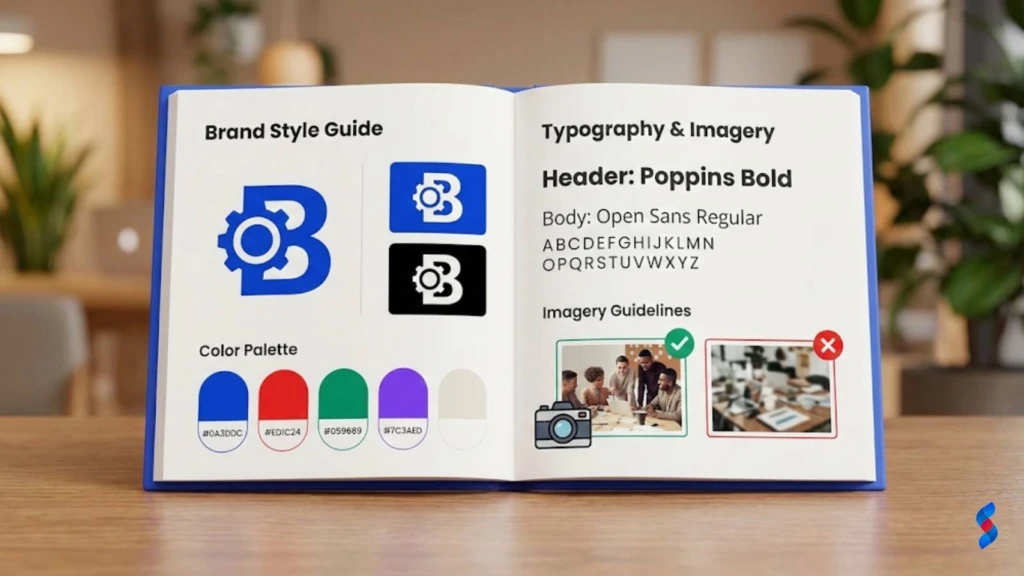
A style guide serves as your brand’s visual bible, providing detailed instructions on how to use your logo, color palette, typography, imagery, and other visual elements. It should be comprehensive and easy to understand, ensuring that everyone who represents your brand knows how to maintain consistency.
A comprehensive style guide should include:
We recommend creating a digital style guide that can be easily accessed and updated as needed. This ensures that everyone has access to the latest guidelines and can maintain consistency in their work.
Ensuring consistency across all platforms is crucial for maintaining a strong and recognizable brand identity. This means applying your brand guidelines to all your marketing materials, including your website, social media profiles, print collateral, and advertising campaigns.
Here are some tips for ensuring consistency:
Our team has helped countless brands establish robust brand guidelines and implement processes to ensure consistency across all platforms. This investment pays off in the long run by strengthening brand recognition, building trust, and driving customer loyalty.
The graphic design industry is constantly evolving, driven by new tools and technologies that streamline the design process, enhance creativity, and improve collaboration. Staying up-to-date with these advancements is crucial for staying competitive and delivering high-quality design work.
Artificial intelligence (AI) is rapidly transforming the graphic design landscape, offering new possibilities for automation, personalization, and creative exploration. AI-powered design tools can assist with tasks such as image generation, layout design, and color palette selection, freeing up designers to focus on more strategic and creative aspects of their work.
Examples of AI-powered design tools:
While AI can be a valuable tool for designers, it’s important to remember that it’s not a replacement for human creativity and expertise. AI can assist with repetitive tasks and provide inspiration, but ultimately, it’s up to the designer to bring their vision to life and create designs that resonate with the target audience. The impact on brand messaging will continue to be seen.
Collaborative design platforms are revolutionizing the way designers work, enabling seamless collaboration with clients, stakeholders, and other designers. These platforms provide a centralized hub for sharing files, providing feedback, and managing design projects, streamlining the design process and improving communication.
Popular collaborative design platforms:
Collaborative design platforms offer several benefits, including:
By leveraging these tools and technologies, designers can work more efficiently, collaborate more effectively, and deliver higher-quality design work.
Measuring the impact of graphic design branding is crucial for understanding its effectiveness and making data-driven decisions. By tracking key metrics, conducting A/B testing, and analyzing customer feedback, you can gain valuable insights into how your visual identity is performing and identify areas for improvement.
Tracking key metrics is essential for understanding how your graphic design branding is impacting your business goals. These metrics provide valuable insights into how your visual identity is resonating with your audience and driving results.
Key metrics to track:
By tracking these metrics over time, you can identify trends, measure the impact of design changes, and make data-driven decisions to optimize your visual branding strategy.
Here’s an example of how to present the metrics in an HTML table:
| Metric | Description | How to Track |
|---|---|---|
| Website Traffic | Number of visitors to your website | Google Analytics |
| Engagement | How users interact with your visual content | Google Analytics, Social Media Analytics |
| Conversions | Percentage of visitors who complete a desired action | Google Analytics, CRM |
A/B testing is a powerful technique for refining your visual strategy and optimizing its effectiveness. It involves creating two or more versions of a design element (e.g., a logo, a website banner, or a social media ad) and testing them against each other to see which performs better.
Here’s how to conduct A/B testing:
1. Identify a Design Element to Test: Choose a specific design element that you want to optimize.
2. Create Two or More Variations: Create two or more versions of the design element with different visual characteristics.
3. Split Your Audience: Divide your audience into two or more groups and show each group a different version of the design element.
4. Track Key Metrics: Monitor key metrics such as click-through rates, conversion rates, and engagement to see which version performs better.
5. Implement the Winning Version: Implement the winning version of the design element across your marketing materials.
A/B testing can help you identify which visual elements are most effective at attracting attention, driving engagement, and converting customers. By continuously testing and optimizing your visual branding, you can ensure that it’s performing at its best.
Effective graphic design branding requires more than just aesthetic appeal; it requires a strategic approach that aligns with your brand values, target audience, and business goals. Here are some expert tips to help you create a visual identity that resonates with your customers and drives results.
Collaboration is key to successful graphic design branding. Working closely with designers ensures that your vision is understood and translated into a visual identity that accurately reflects your brand. Clear communication, mutual respect, and a willingness to compromise are essential for a productive and successful collaboration.
Tips for working with designers:
Remember, graphic design is a collaborative process. By working closely with your designer, you can create a visual identity that is both beautiful and effective.
Budgeting for graphic design is an investment in your brand’s future. While it may be tempting to cut corners and opt for cheaper design solutions, investing in professional graphic design can pay off in the long run by strengthening your brand, attracting customers, and driving revenue.
Factors to consider when budgeting for graphic design:
When budgeting for graphic design, it’s important to prioritize quality over cost. A well-designed visual identity can last for years and generate significant returns, while a poorly designed identity can damage your brand and deter customers.
Even with the best planning and execution, graphic design branding can present challenges. Understanding these common pitfalls and how to avoid them is crucial for ensuring the success of your visual identity.
One of the biggest challenges in graphic design branding is avoiding clichés and generic visuals. In a world saturated with visual content, it’s essential to create a visual identity that is unique, memorable, and authentic. Using generic stock photos, overused design elements, and predictable color palettes can make your brand appear bland and uninspired.
Tips for avoiding design clichés:
Remember, your visual identity should be a reflection of your brand’s unique character. Don’t be afraid to break the mold and create something truly original.
Ensuring accessibility and inclusivity in your designs is not only ethical but also good for business. Accessible designs are usable by people with disabilities, while inclusive designs are representative of diverse audiences. By creating designs that are accessible and inclusive, you can reach a wider audience and create a more welcoming and equitable brand experience.
Tips for ensuring accessibility:
Tips for ensuring inclusivity:
By prioritizing accessibility and inclusivity, you can create a visual identity that is welcoming and equitable for everyone.
Studying real-world examples of successful graphic design branding can provide valuable insights and inspiration for your own visual identity. By analyzing the strategies and tactics used by leading brands, you can gain a better understanding of what works and what doesn’t.
Here are a few case studies of brands that have successfully created a strong and recognizable visual identity:
These case studies demonstrate the importance of consistency, originality, and strategic thinking in graphic design branding. By studying these examples, you can gain valuable insights into how to create a visual identity that resonates with your audience and drives results.
From these case studies, we can glean several key takeaways for your brand:
By applying these lessons to your own graphic design branding efforts, you can create a visual identity that is both effective and memorable.
The field of graphic design branding is constantly evolving, driven by emerging technologies, shifting consumer expectations, and changing cultural values. Staying ahead of the curve is crucial for ensuring that your visual identity remains relevant and effective in the years to come.
Several emerging technologies and design trends are poised to shape the future of graphic design branding.
To prepare your brand for the next visual revolution, it’s essential to:
By embracing these strategies, you can ensure that your brand is well-positioned to thrive in the ever-changing world of graphic design branding.
In this comprehensive guide, we’ve explored the key elements, latest trends, and essential strategies for effective graphic design branding in 2026. You’ve learned how to define your brand values, develop a visual language that resonates, create brand guidelines, measure the impact of your visual branding, and troubleshoot common challenges. By implementing these strategies, you can create a visual identity that strengthens your brand, attracts customers, and drives business results.
We at SkySol Media are here to assist you in navigating the complexities of graphic design branding and creating a visual identity that sets you apart. With our expertise and guidance, you can confidently elevate your brand and achieve your business goals.
Q: What is graphic design branding?
A: Graphic design branding is the process of creating a visual identity for a brand, encompassing elements such as logo, color palette, typography, and imagery, to communicate the brand’s values and personality.
Q: Why is graphic design branding important?
A: It’s important because it differentiates a brand from competitors, builds trust with customers, and fosters brand loyalty by creating a consistent and recognizable visual presence.
Q: How do I define my brand values and personality?
A: Start by identifying your mission, defining your core values, determining your brand personality, and understanding your target audience’s needs and desires.
Q: What are brand guidelines?
A: Brand guidelines are a set of rules that dictate how your brand should be represented visually, ensuring consistency across all platforms and marketing materials.
Q: How can I measure the impact of my graphic design branding?
A: Track key metrics like website traffic, engagement, and conversions, and use A/B testing to optimize your visual strategy.
Q: What are some common graphic design branding challenges?
A: Common challenges include avoiding design clichés, ensuring accessibility and inclusivity, and maintaining consistency across all platforms.
Q: How can AI help with graphic design branding?
A: AI-powered tools can assist with tasks like image generation, layout design, and color palette selection, freeing up designers to focus on creative and strategic aspects.
Q: What role does color play in graphic design branding?
A: Color evokes emotions, communicates brand personality, and makes designs memorable. Your color palette must be chosen carefully.
Q: Is it necessary to update my graphic design branding periodically?
A: Yes, periodic updates are often necessary to stay relevant, adapt to changing trends, and ensure your visual identity continues to resonate with your target audience.
Q: How does typography contribute to visual branding?
A: Typography establishes the mood of your brand and ensures clarity in all communications. It is key in brand messaging.

Why a Unique Logo Design Can Make or Break Your Brand in 2025–26
How Professional Graphic Design Boosts Your Brand Identity in 2025–26
Top 10 Reasons to Outsource Your Graphic Design Needs Today