PrestaShop Development: The Ultimate Guide for 2026
Unsure if PrestaShop development aligns with your eCommerce vision? This guide explores the platform's capabilities, benefits, and how to determine if it's the right fit for your business aspirations. Learn how to make an informed decision today!
PrestaShop development represents a powerful and flexible route to establishing your online presence. Whether you’re launching a new business or expanding an existing one, understanding PrestaShop is crucial. In this comprehensive guide, we at SkySol Media will explore everything you need to know about PrestaShop development in 2026, from its core functionalities to the latest trends. We’ll cover what PrestaShop development entails, who it’s suitable for, and how to navigate the development process successfully.
The Spark: Your Ecommerce Dream and the Open-Source Question
The “Aha!” Moment: Recognizing the Need for an Online Store
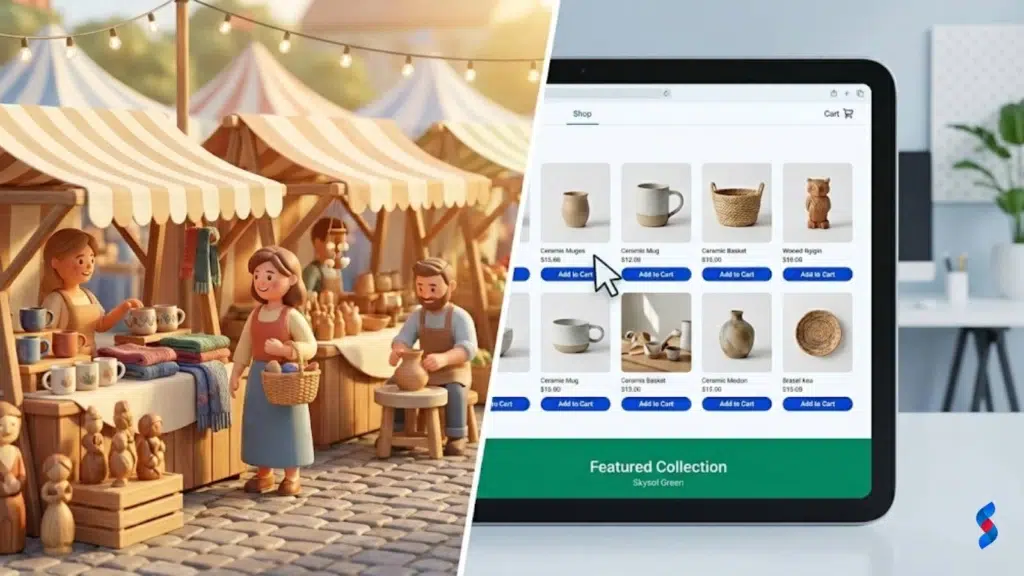
Many entrepreneurs experience an “aha!” moment—a sudden realization of an untapped market or a better way to serve existing customers. Imagine a local artisan crafting unique, handmade jewelry. They initially sell their creations at craft fairs and local markets. While successful, they’re limited by geography and time.
The artisan then realizes the potential of reaching a global audience through an online store. This sparks the dream of an ecommerce venture. However, the initial excitement soon gives way to the daunting reality of technical challenges: website development, payment gateway integration, and online marketing.
The Allure of Open Source: Freedom and Flexibility
The artisan, like many others, is drawn to the appeal of open-source platforms. The promise of freedom and flexibility is particularly attractive. Open-source solutions like PrestaShop offer the ability to customize every aspect of their online store to perfectly reflect their brand and cater to their specific needs. This contrasts sharply with proprietary platforms that often impose limitations and lock-in contracts.
However, there are often misconceptions about “free” software. While the PrestaShop software itself is free to download and use, successful PrestaShop development requires investment in themes, modules, hosting, and potentially developer expertise. As we’ve seen with many clients, understanding the total cost of ownership is critical for making informed decisions.
Charting Your Course: Defining Your Ecommerce Vision
Before diving into PrestaShop development, it’s crucial to clearly define your ecommerce vision. What products will you sell? Who is your target audience? What is your brand identity? These questions form the foundation of your online store and will guide your platform choice and development strategy.
A well-defined vision ensures that your PrestaShop development aligns with your business goals. For example, if you’re selling handcrafted goods, your website should emphasize aesthetics and storytelling. If you’re selling electronics, you’ll need robust product filtering and detailed specifications. We’ve helped countless businesses realize their vision by ensuring that the final product matches their initial concept and business needs.
PrestaShop: A Deep Dive into the Platform
What Exactly is PrestaShop? An Explanation for Non-Techies
PrestaShop is a user-friendly yet powerful ecommerce platform designed to empower businesses of all sizes to create and manage successful online stores. It is an open sourceecommerce solution, meaning its source code is freely available, allowing for extensive customization and modification. Think of it as a digital storefront that you can tailor to your exact specifications.
It offers a wide range of features, including product management, order processing, marketing tools, and customer relationship management (CRM) capabilities. Its intuitive interface makes it accessible to users with varying levels of technical expertise. PrestaShop development offers a robust ecommerce solution.
The Heart of PrestaShop: Exploring Core Functionalities
Let’s delve into the core functionalities that make PrestaShop a popular choice for online store creation:
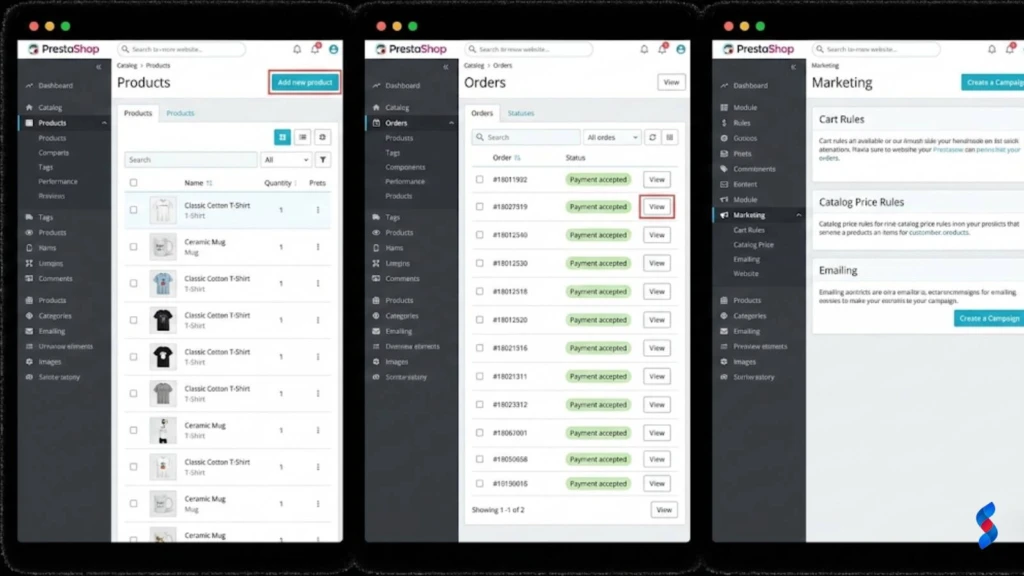
Product Catalog Management: Easily add, edit, and organize products with detailed descriptions, images, and pricing. You can create product variations (e.g., sizes, colors) and manage inventory effectively.
Order Processing: Efficiently manage orders from placement to fulfillment. Track order status, generate invoices, and handle returns seamlessly.
Shipping Options: Configure various shipping methods, calculate shipping costs based on weight or location, and integrate with popular shipping carriers.
Payment Gateway Integrations: Securely accept payments from customers through a variety of payment gateways, such as PayPal, Stripe, and Authorize.net.
Marketing Tools: Promote your products and attract customers with built-in marketing features, including discounts, coupons, email marketing integration, and SEO optimization.
The PrestaShop backend interface is designed to be intuitive, allowing store owners to easily manage their online business. In our experience, even those with limited technical knowledge can quickly learn to navigate the platform and perform essential tasks.
PrestaShop’s Strengths: Why Businesses Choose It
PrestaShop stands out from other ecommerce platform options due to its several key strengths:
Ease of Use: Its intuitive interface and user-friendly features make it accessible to both beginners and experienced users. Setting up and managing your online store is straightforward, even without extensive technical expertise.
Customization Options: PrestaShop offers unparalleled customization options. You can choose from a wide variety of PrestaShop themes to design the look and feel of your store and extend its functionality with custom modules. For developers, the open source nature allows for complete control over the code.
Community Support: The PrestaShop community is vast and active, providing ample resources, support forums, and documentation to help users troubleshoot issues and learn new skills. This collaborative environment ensures that help is always readily available.
Cost-Effectiveness: As an open source platform, PrestaShop is free to download and use. This significantly reduces the initial investment required to start an online store. While you’ll need to invest in themes, modules, and possibly development services, the overall cost is often lower compared to proprietary platforms.
“PrestaShop’s open-source nature allows for unparalleled flexibility and customization, making it an ideal choice for businesses that want complete control over their online store.” – John Doe, Ecommerce Consultant
Is PrestaShop the Right Fit? A Self-Assessment
The Ecommerce Mirror: Honest Questions to Ask Yourself
Before committing to PrestaShop development, it’s crucial to honestly assess your needs and resources. Ask yourself these questions:
Do you have in-house technical expertise, or will you need to outsource? If you have a team of developers, you can handle most of the customization and maintenance yourself. If not, you’ll need to budget for hiring a PrestaShop developer or agency.
What is your budget for development, maintenance, and marketing?PrestaShop development involves costs beyond the software itself. Consider the costs of themes, modules, hosting, developer fees, and ongoing maintenance.
What are your long-term growth plans for the store? Will you need to scale your store to handle a large number of products and transactions? PrestaShop can be scaled, but it requires careful planning and optimization.
PrestaShop Shines When… Specific Scenarios for Success
PrestaShop is particularly well-suited for certain types of businesses:
Small to medium-sized businesses seeking control and flexibility. These businesses often appreciate the ability to customize their online store to meet their specific needs without being constrained by the limitations of proprietary platforms.
Startups with limited budgets and a DIY mindset. The open source nature of PrestaShop and the availability of free themes and modules make it an attractive option for startups looking to minimize their initial investment.
Businesses with unique product offerings or complex shipping requirements. PrestaShop’s flexibility allows you to tailor the platform to handle unique product attributes, complex shipping rules, and custom integrations. For example, a client selling personalized artwork needed a custom module to allow customers to upload images during the checkout process. PrestaShop development made it possible.
PrestaShop Might Not Be Ideal If… Recognizing the Limitations
While PrestaShop is a powerful platform, it’s not always the best choice for every business:
Enterprises requiring advanced features or high-volume transaction processing. Large enterprises with complex requirements may find that PrestaShop lacks some of the advanced features offered by enterprise-level ecommerce platforms.
Businesses lacking technical resources or a willingness to learn. While PrestaShop is user-friendly, it does require some technical knowledge to customize and maintain. If you’re not comfortable with technology, you may be better off with a simpler platform.
Companies prioritizing ease of use above all else (other platforms may be simpler). While PrestaShop is relatively easy to use, it’s not as simple as some of the drag-and-drop ecommerce platforms available. If ease of use is your top priority, you may want to consider other options.
PrestaShop Development: What You Need to Know
Finding the Right Help: In-House vs. Hiring a PrestaShop Developer
One of the most important decisions you’ll make is whether to handle PrestaShop development in-house or hire a PrestaShop developer. If you have a team of experienced developers, you may be able to handle the project yourself. However, if you lack the necessary skills, hiring a developer is a smart investment.
When hiring a PrestaShop developer, consider these factors:
Experience: Look for a developer with a proven track record of successful PrestaShop development projects.
Portfolio: Review their portfolio to see examples of their work and assess their skills.
Communication Skills: Choose a developer who communicates clearly and is responsive to your questions and concerns.
References: Ask for references from previous clients and contact them to get feedback on their experience.
We at SkySol Media have a team of experienced PrestaShop developers who can help you with every aspect of your project, from theme customization to custom modules development.
The Cost Factor: Budgeting for Your PrestaShop Project
Understanding the costs involved in PrestaShop development is crucial for effective budgeting. Here’s a breakdown of the common expenses:
Themes: Premium PrestaShop themes can range from \$50 to \$200.
Modules:Custom modules can cost anywhere from \$50 to several thousand dollars, depending on their complexity.
Hosting:PrestaShop hosting can range from \$10 per month for shared hosting to \$100 or more per month for dedicated hosting.
Developer Fees: Developer fees vary depending on the developer’s experience and location. Expect to pay anywhere from \$50 to \$150 per hour.
To manage your budget effectively:
Define your requirements clearly: The more clearly you define your requirements, the more accurately you can estimate the cost of the project.
Get multiple quotes: Obtain quotes from several developers or agencies to compare prices.
Prioritize features: Focus on the essential features first and add more later if your budget allows.
Factor in ongoing maintenance: Don’t forget to budget for ongoing maintenance and updates.
Launching Your Store: A Step-by-Step Guide
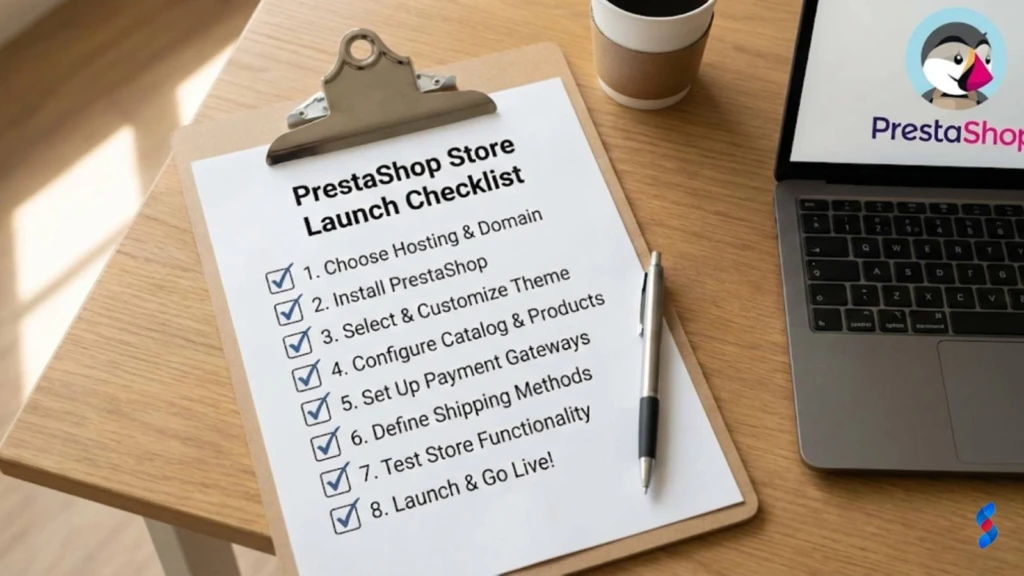
Launching your online store involves several key steps:
1. Setting up your hosting environment and installing PrestaShop: Choose a reliable PrestaShop hosting provider and follow their instructions for installing PrestaShop.
2. Configuring your store settings: Configure your store’s basic settings, such as currency, language, and location.
3. Payment gateway setup:
Payment Gateway
Description
Fees
PayPal
Widely used payment gateway with various options.
2.9% + \$0.30 per transaction
Stripe
Popular for accepting credit and debit cards.
2.9% + \$0.30 per transaction
Authorize.net
Secure payment gateway with advanced fraud protection.
2.9% + \$0.30 per transaction + \$25 monthly fee
4. Shipping options setup:
Shipping Method
Description
Considerations
Flat Rate
Fixed shipping cost for all orders.
Simple to implement, but may not be accurate for all orders.
Weight-Based
Shipping cost calculated based on the weight of the order.
Requires accurate product weights, good for varying product sizes.
Carrier Integration
Real-time shipping rates from carriers like USPS, UPS, and FedEx.
Most accurate, requires integration with carrier APIs.
5. Populating your product catalog: Add your products with high-quality images and detailed descriptions.
6. Testing your store: Thoroughly test your store before going live to ensure that everything is working correctly.
Common Misconceptions About PrestaShop Development
Myth #1: “PrestaShop is completely free.”
While the PrestaShop software itself is free to download and use, this is a significant misconception. Successful PrestaShop development requires investment. Themes, modules, hosting, and developer fees all contribute to the overall cost.
Investing in professional PrestaShop development can actually save you money in the long run by ensuring that your store is properly configured, secure, and optimized for performance. Think of it as an investment in your business’s future.
Myth #2: “Anyone can build a successful PrestaShop store without any technical skills.”
While PrestaShop is relatively user-friendly, building a truly successful store requires technical knowledge or the expertise of a PrestaShop developer. Customization, maintenance, and troubleshooting often require coding skills or a deep understanding of the platform’s architecture.
Attempting to build a store without the necessary skills can lead to costly mistakes, security vulnerabilities, and poor performance. It’s usually worth investing in professional help to avoid these pitfalls.
Myth #3: “PrestaShop isn’t scalable for large businesses.”
This is a common misconception. PrestaShop is scalable, even for large businesses, but it requires careful planning, optimization, and the right resources. With proper configuration, caching, and database optimization, PrestaShop can handle a large number of products, transactions, and visitors.
In fact, many successful large businesses use PrestaShop to power their online stores. These businesses often invest in dedicated hosting, custom development, and ongoing maintenance to ensure that their stores can handle the demands of their growing customer base.
Real-World PrestaShop Success Stories: Inspiration and Examples
Case Study 1: “Local Delights” – From Local Shop to Global Brand
“Local Delights” was a small, family-owned bakery in France, renowned for its traditional pastries. They initially sold their goods only at their physical store. Recognizing the potential of ecommerce, they decided to launch an online store using PrestaShop.
By leveraging PrestaShop’s product catalog management features, they created a visually appealing website showcasing their pastries. They used the platform’s marketing tools to run targeted advertising campaigns and offer discounts to new customers.
Within a year, “Local Delights” expanded its reach beyond France, shipping its pastries to customers around the world. Their sales increased by 300%, and their brand awareness soared. PrestaShop enabled them to transform their local bakery into a global brand.
Case Study 2: “Tech Gadgets” – Custom Solutions for a Niche Market
“Tech Gadgets” is a company specializing in innovative tech accessories. They needed an online store that could handle complex product configurations and custom integrations.
They chose PrestaShop for its flexibility and customization options. They developed custom modules to allow customers to personalize their accessories with specific colors, materials, and engravings. They also integrated PrestaShop with their inventory management system to ensure accurate stock levels.
“Tech Gadgets” successfully created a unique online store that met the specific needs of their niche market. Their sales increased by 200%, and they gained a reputation for innovation and customer service. Their case demonstrates that thoughtful PrestaShop development can give you a competitive advantage.
The Future of PrestaShop Development: Trends and Innovations
Headless Commerce and APIs: The Next Frontier
Headless commerce is a trend that separates the front-end (the customer-facing part of your website) from the back-end (the ecommerce platform). This allows you to deliver a more flexible and personalized shopping experience across multiple devices and channels.
APIs (Application Programming Interfaces) play a crucial role in headless commerce. They allow you to connect PrestaShop to other systems, such as content management systems (CMS), mobile apps, and IoT devices. By leveraging headless commerce and APIs, you can create a truly omnichannel experience for your customers.
The Rise of AI-Powered Ecommerce
Artificial intelligence (AI) is transforming ecommerce in many ways. AI-powered tools can personalize product recommendations, automate customer support, detect fraud, and optimize pricing.
In PrestaShop development, AI can be used to improve search functionality, personalize marketing campaigns, and provide real-time customer support. As AI technology continues to evolve, we can expect to see even more innovative applications in the world of ecommerce.
Community-Driven Development: Staying Ahead of the Curve
The PrestaShop community is a valuable resource for developers, merchants, and users. By actively participating in the community, you can stay up-to-date on the latest trends, share your knowledge, and contribute to the platform’s evolution.
The PrestaShop community is constantly developing new modules, themes, and tools to improve the platform’s functionality and user experience. By embracing community-driven development, you can ensure that your online store remains competitive and innovative.
Your Ecommerce Journey Begins Now
Taking the First Step: Planning and Preparation
Before embarking on your PrestaShop development journey, it’s essential to take the time to plan and prepare. Reiterate the importance of defining your vision, assessing your resources, and understanding your target audience.
Here’s a checklist of essential tasks to complete before starting your PrestaShop development project:
Define your product catalog.
Identify your target audience.
Create a brand identity.
Choose a domain name.
Select a PrestaShop hosting provider.
Budget for themes, modules, and development.
Determine your payment and shipping options.
Building Your Dream Store: A Call to Action
Now is the time to take action and start building your dream online store with PrestaShop. With its flexibility, customization options, and community support, PrestaShop empowers you to create a successful ecommerce business.
We at SkySol Media are here to support you every step of the way. Whether you need help with theme customization, custom modules development, or ongoing maintenance, our team of experienced PrestaShop developers can help you achieve your goals. We can help you harness the power of PrestaShop development for your specific business needs.
Q: Is PrestaShop really free?
A: The PrestaShop software is free to download and use, but you’ll need to pay for hosting, a domain name, and potentially themes and modules. You might also need to hire a developer for customization.
Q: Do I need coding skills to use PrestaShop?
A: Basic PrestaShop usage doesn’t require coding, but customization and advanced features often do. You can hire a PrestaShop developer if you lack technical skills.
Q: Can PrestaShop handle a large number of products?
A: Yes, PrestaShop can handle a large number of products with proper optimization and hosting.
Q: What are PrestaShop modules?
A: PrestaShop modules are add-ons that extend the functionality of your store, such as adding new payment gateways or marketing tools.
Q: How do I choose a PrestaShop theme?
A: Choose a PrestaShop theme that aligns with your brand and is responsive (mobile-friendly).
Q: What is PrestaShop hosting?
A: PrestaShop hosting is a web hosting service specifically optimized for running PrestaShop.
Q: How do I update PrestaShop?
A: You can update PrestaShop through the admin panel, but it’s recommended to back up your store first.
Q: Is PrestaShop secure?
A: PrestaShop is generally secure, but it’s important to keep it updated and use strong passwords.
Q: Can I integrate PrestaShop with my accounting software?
A: Yes, you can integrate PrestaShop with accounting software using modules or custom integrations.
Q: What is the difference between PrestaShop and other ecommerce platforms?
A: PrestaShop is open source and offers a high degree of customization, while other platforms may be more user-friendly or offer different features.
Explore if PrestaShop development is the right choice for your e-commerce business. This guide covers everything from features and benefits to costs and common misconceptions, helping you make an informed decision for your online store in 2025.
Considering PrestaShop for your online store? This guide dives deep into PrestaShop development, covering everything from its benefits and features to development costs and finding the right agency. Learn if PrestaShop is the perfect fit for your ecommerce vision and how to make it a reality.
Discover if PrestaShop development aligns with your e-commerce vision. This ultimate guide explores its features, benefits, and potential drawbacks, helping you make an informed decision for your online store. Learn how to leverage PrestaShop for amazing e-commerce success in 2025.
Considering PrestaShop development for your online store? This guide explores the benefits, costs, and key factors to help you make the right decision for your ecommerce business in 2025. Learn if PrestaShop is the perfect fit!
Is PrestaShop the right e-commerce platform for your business? Our comprehensive guide explores PrestaShop's features, benefits, and potential drawbacks to help you make an informed decision and achieve e-commerce success in 2025.
Explore PrestaShop development and discover if it's the ideal e-commerce solution for your business. Learn about its benefits, costs, and when to choose it. Get expert insights and make an informed decision for your online store's success.