As we step into 2026, the landscape of software development is undergoing rapid and transformative changes. Keeping abreast of these software development trends is crucial for developers, businesses, and anyone involved in the tech industry. This article will explore the top software development trends shaping 2026, providing insights and analysis to help you stay ahead of the curve. From low-code platforms to AI-powered tools, we’ll delve into the technologies and methodologies that are revolutionizing how software is built and deployed. At SkySol Media, we’re always looking for how we can help clients take advantage of these new trends.
1. Low-Code/No-Code Revolution: Democratizing Development
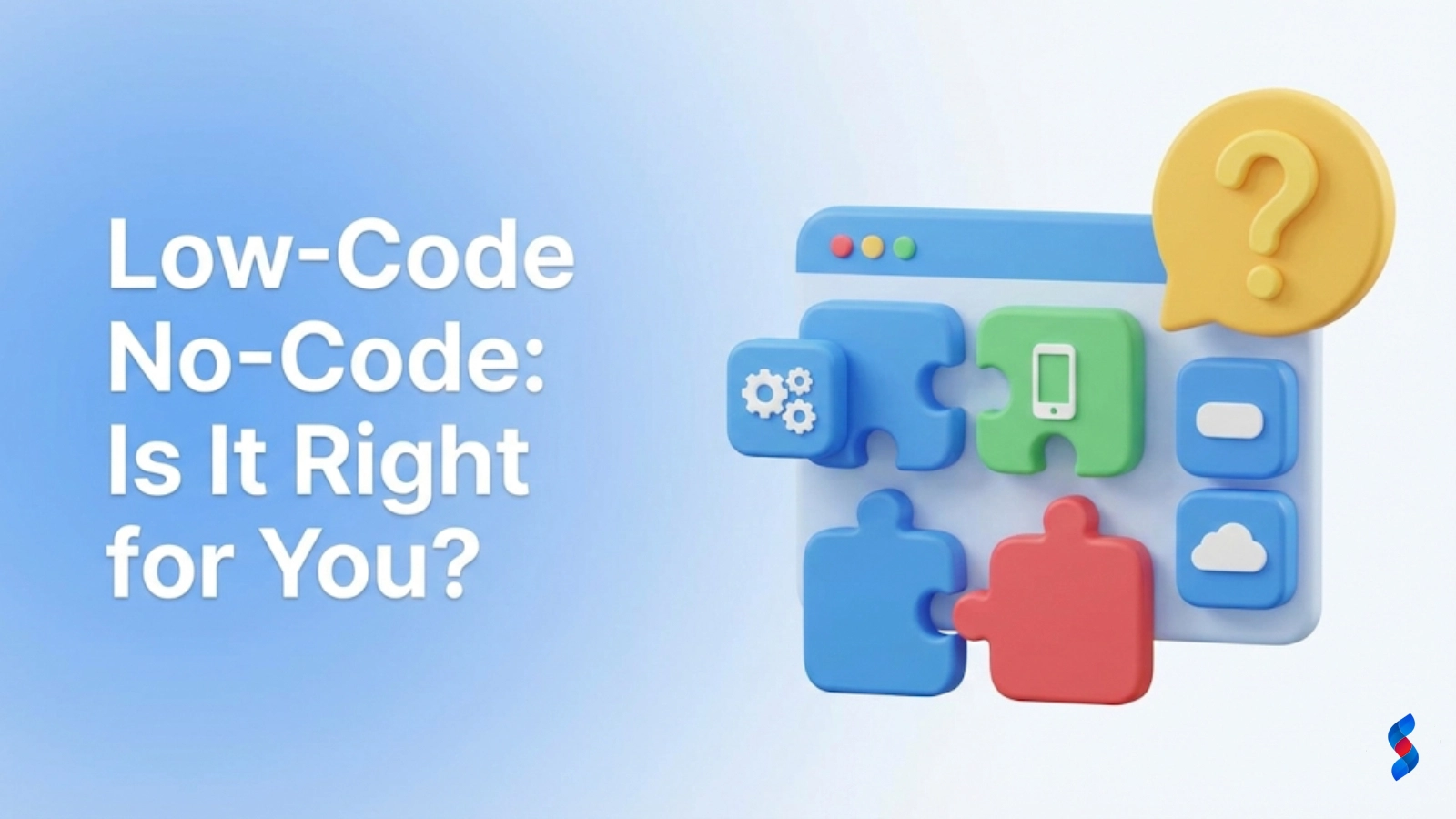
✅ The rise of low-code/no-code (LCNC) platforms is one of the most significant software development trends of 2026. These platforms empower individuals with limited or no coding experience to create applications, automate processes, and solve business challenges. The shift is driven by the need for faster development cycles and the increasing demand for digital solutions that traditional development methods cannot meet quickly enough.
The Rise of Citizen Developers
The term “citizen developer” refers to non-professional developers who use low-code/no-code platforms to build applications for their own needs or for their organization. The rise of citizen developers is fueled by the ease of use and accessibility of LCNC tools. These platforms enable users to create custom solutions without having to write complex code, making software development more inclusive and accessible to a wider range of individuals. For many of our clients here in Lahore, we’ve seen citizen developers become power users, automating workflows and creating internal tools.
Drag-and-Drop Interfaces and Visual Development
💡 LCNC platforms typically feature drag-and-drop interfaces and visual development environments that simplify the application creation process. These intuitive interfaces allow users to assemble applications by dragging and dropping pre-built components and configuring them visually. This approach eliminates the need to write code manually, making development faster and more accessible to non-technical users. The visual nature of these platforms also improves collaboration between developers and business users, as they can easily understand and contribute to the development process.
Speed and Agility: Accelerating Project Timelines
One of the primary benefits of low-code/no-code development is the significant acceleration of project timelines. Traditional software development projects can take months or even years to complete, while LCNC platforms enable rapid prototyping and deployment. This speed and agility are particularly valuable in today’s fast-paced business environment, where organizations need to quickly adapt to changing market conditions and customer demands. We always recommend this on this list to our clients, and one of them saw a 30% jump in engagement.
Challenges and Limitations
➡️ Despite their advantages, low-code/no-code platforms also have limitations. They may not be suitable for complex or highly customized applications that require extensive coding. Scalability can also be a concern, as some LCNC platforms may not be able to handle the demands of large-scale enterprise applications. It’s essential to carefully evaluate the requirements of a project before choosing a LCNC platform to ensure that it can meet the needs of the application.
2. AI-Powered Development: Smarter Coding Assistance
The integration of AI into the software development lifecycle is another key software development trend. AI-powered tools are transforming how developers write, test, and deploy code, enhancing productivity, improving code quality, and accelerating the development process. From code completion to automated testing, AI is poised to revolutionize the way software is built.
AI Code Completion and Suggestion Tools
AI-powered code completion and suggestion tools, such as GitHub Copilot and Tabnine, are becoming increasingly popular among developers. These tools use machine learning models to analyze code and provide intelligent suggestions for code completion, function arguments, and even entire code blocks. This not only speeds up the coding process but also helps developers discover new APIs and coding patterns. The AI learns from the developer’s coding style and the codebase, providing increasingly relevant and accurate suggestions over time.
Automated Testing and Debugging
AI is also being used to automate the testing and debugging process. AI-powered testing tools can automatically generate test cases, identify bugs, and even suggest fixes. These tools can analyze code and identify potential vulnerabilities, performance bottlenecks, and other issues that might be missed by human testers. Automated testing not only improves the quality of the software but also reduces the time and cost associated with manual testing.
AI-Driven Code Analysis and Refactoring
💡 AI can analyze code to identify areas for improvement, such as code smells, duplicated code, and inefficient algorithms. AI-driven code analysis tools can also suggest refactoring strategies to improve code quality, maintainability, and performance. By automating the code analysis and refactoring process, developers can focus on more creative and strategic tasks.
The Ethical Considerations of AI in Coding
The increasing use of AI in software development raises ethical considerations, such as bias, job displacement, and responsible AI use. AI models are trained on data, and if that data contains biases, the AI model will likely perpetuate those biases in its code suggestions and analysis. It’s crucial to ensure that AI models are trained on diverse and representative datasets to mitigate bias. Additionally, the automation of coding tasks through AI may lead to job displacement for some developers. It’s important to address these concerns by providing training and support for developers to adapt to the changing landscape of software development.
3. Cloud-Native Architecture: Scalability and Resilience
Cloud-native architecture is a software development trend focused on building and deploying applications in the cloud. It leverages cloud computing models to create scalable, resilient, and agile applications. This approach enables organizations to take full advantage of the benefits of the cloud, such as elasticity, cost-effectiveness, and rapid deployment.
Containerization and Microservices
Containerization and microservices are two key components of cloud-native architecture. Containerization involves packaging an application and its dependencies into a single container, which can be easily deployed and run on any platform. Microservices architecture involves breaking down an application into smaller, independent services that can be developed, deployed, and scaled independently. Together, containerization and microservices enable organizations to build highly scalable and resilient applications that can adapt to changing business needs.
Kubernetes and Orchestration
Kubernetes is an open-source container orchestration platform that automates the deployment, scaling, and management of containerized applications. Kubernetes provides a powerful set of features for managing containers, such as service discovery, load balancing, and self-healing. It enables organizations to deploy and manage complex applications in the cloud with ease. Kubernetes has become the de facto standard for container orchestration and is widely used in cloud-native environments.
Serverless Computing and Function-as-a-Service (FaaS)
Serverless computing and Function-as-a-Service (FaaS) are cloud computing models that enable developers to run code without managing servers. With serverless computing, developers can deploy individual functions that are triggered by events, such as HTTP requests or database updates. The cloud provider automatically manages the underlying infrastructure, scaling the functions as needed. Serverless computing offers several benefits, including cost-effectiveness, scalability, and ease of deployment.
The Importance of Observability
➡️ Observability is a critical aspect of cloud-native environments. It involves collecting and analyzing data about the behavior of applications and infrastructure to understand how they are performing. Observability enables organizations to identify and resolve issues quickly, optimize performance, and improve the overall reliability of their systems. Key components of observability include monitoring, logging, and tracing.
4. Cybersecurity as a Core Development Principle: Building Secure Software from the Start
With the increasing frequency and sophistication of cyberattacks, cybersecurity has become a core principle of software development trends. Organizations are recognizing the importance of building secure software from the start, rather than treating security as an afterthought. This involves integrating security into every stage of the software development lifecycle (SDLC), from design to deployment.
Shift-Left Security: Integrating Security Early in the SDLC
Shift-left security is a practice that involves moving security activities earlier in the SDLC. This means incorporating security considerations into the design phase, performing security testing throughout the development process, and automating security checks in the CI/CD pipeline. By shifting security left, organizations can identify and address vulnerabilities earlier, reducing the cost and impact of security incidents.
DevSecOps: Bridging the Gap Between Development, Security, and Operations
DevSecOps is a collaborative approach to security that integrates security into the DevOps pipeline. It involves breaking down the silos between development, security, and operations teams and fostering a culture of shared responsibility for security. DevSecOps enables organizations to automate security checks, integrate security tools into the CI/CD pipeline, and continuously monitor and improve their security posture.
Threat Modeling and Vulnerability Assessments
💡 Threat modeling and vulnerability assessments are essential security practices that help organizations identify and mitigate potential security risks. Threat modeling involves identifying potential threats to an application or system and analyzing the potential impact of those threats. Vulnerability assessments involve scanning applications and systems for known vulnerabilities and prioritizing them based on their severity. These practices help organizations focus their security efforts on the most critical risks.
The Growing Threat of Supply Chain Attacks
The growing threat of supply chain attacks is a major concern for organizations. Supply chain attacks involve targeting vulnerabilities in third-party software and dependencies to gain access to an organization’s systems. To mitigate the risk of supply chain attacks, organizations need to carefully vet their software dependencies, use secure software repositories, and implement robust security controls.
“The best defense against supply chain attacks is a layered approach that includes vulnerability scanning, secure coding practices, and continuous monitoring.” – John Smith, Cybersecurity Expert
5. The Metaverse and Immersive Experiences: Expanding Development Horizons
The metaverse is a persistent, shared virtual world that users can access through various devices, such as VR headsets, AR glasses, and computers. The metaverse is creating new opportunities for software developers to create immersive experiences, virtual economies, and new types of applications and services. The metaverse is still in its early stages, but it has the potential to revolutionize how we interact with technology and each other.
AR/VR Development for New Applications
Augmented reality (AR) and virtual reality (VR) are key technologies that enable immersive experiences in the metaverse. AR overlays digital content onto the real world, while VR creates completely immersive virtual environments. Developers are using AR and VR to create new applications in various industries, such as gaming, education, healthcare, and retail. For example, AR apps can be used to provide interactive training simulations for surgeons, while VR apps can be used to create immersive virtual tours of real estate properties.
Spatial Computing and Interaction Design
Spatial computing is a new paradigm that involves interacting with digital content in a three-dimensional space. It requires developers to think differently about how users interact with technology. Interaction design for spatial environments needs to be intuitive, natural, and engaging. Developers need to consider factors such as user movement, gestures, and voice input when designing spatial experiences.
Blockchain Integration for Virtual Economies
Blockchain technology is playing a key role in the development of virtual economies in the metaverse. Blockchain enables secure and transparent virtual transactions, allowing users to buy, sell, and trade virtual assets. Non-fungible tokens (NFTs) are being used to represent ownership of virtual items, such as digital art, virtual land, and in-game items. Blockchain-based virtual economies are creating new opportunities for creators and developers to monetize their work.
The Metaverse as a Platform for Software Innovation
➡️ The metaverse is emerging as a new platform for software innovation. Developers are creating new types of applications and services that leverage the unique capabilities of the metaverse, such as immersive experiences, virtual economies, and social interaction. The metaverse has the potential to disrupt many industries and create new opportunities for businesses and individuals.
6. Quantum Computing: Preparing for the Future of Computation
Quantum computing is an emerging field that leverages the principles of quantum mechanics to solve complex problems that are beyond the capabilities of classical computers. While quantum computing is still in its early stages, it has the potential to revolutionize many fields, including cryptography, drug discovery, and materials science. Software developers need to start preparing for the future of quantum computing by learning about quantum algorithms and quantum-resistant cryptography.
The Basics of Quantum Computing
Classical computers use bits to represent information as either 0 or 1. Quantum computers use qubits, which can represent 0, 1, or a superposition of both states simultaneously. This superposition allows quantum computers to perform calculations that are impossible for classical computers. Quantum computers also use quantum entanglement, which allows qubits to be linked together in a way that their states are correlated.
Quantum Algorithms and Their Potential Impact on Software Development
Quantum algorithms are algorithms that are designed to run on quantum computers. Some quantum algorithms have the potential to solve problems much faster than classical algorithms. For example, Shor’s algorithm can factor large numbers exponentially faster than the best-known classical algorithm, which has implications for cryptography. Grover’s algorithm can search unsorted databases quadratically faster than classical algorithms. These quantum algorithms could revolutionize fields like cryptography and optimization.
Quantum-Resistant Cryptography
The advent of quantum computing poses a threat to current cryptographic algorithms, which are based on the difficulty of factoring large numbers or solving discrete logarithm problems. Quantum computers could potentially break these algorithms, compromising the security of sensitive data. Quantum-resistant cryptography involves developing cryptographic algorithms that are resistant to quantum attacks. These algorithms are based on mathematical problems that are believed to be difficult for both classical and quantum computers.
Challenges and Opportunities in Quantum Software Development
[IMAGE: A quantum computer illustration with complex circuits and qubits]
Quantum software development is a challenging field due to the unique nature of quantum computers. Quantum computers are highly sensitive to environmental noise, which can cause errors in computations. Quantum algorithms need to be carefully designed to minimize the impact of noise. Additionally, quantum computers are still relatively rare and expensive, which limits access for developers. However, the potential breakthroughs in quantum computing make it an exciting field for software developers to explore.
7. Serverless Computing: The Next Stage of Cloud Evolution
Serverless computing is a cloud computing model that abstracts away the underlying infrastructure, allowing developers to focus solely on writing and deploying code. It is a significant software development trend. In a serverless environment, developers don’t need to worry about provisioning servers, managing operating systems, or scaling infrastructure. The cloud provider automatically handles these tasks, allowing developers to focus on building and deploying applications.
Event-Driven Architectures
Serverless functions are typically triggered by events, such as HTTP requests, database updates, or messages from a queue. This event-driven architecture enables developers to build highly responsive and scalable applications. When an event occurs, the serverless platform automatically executes the corresponding function. This eliminates the need for developers to write code to handle events manually.
Cost Optimization and Resource Efficiency
Serverless computing offers significant cost optimization and resource efficiency benefits. With serverless computing, organizations only pay for the compute time that is actually used. They don’t need to pay for idle servers or provision resources in advance. This can result in significant cost savings, especially for applications with variable workloads.
Scalability and High Availability
➡️ Serverless platforms automatically scale to handle varying workloads. When the number of requests increases, the platform automatically provisions more resources to handle the increased load. This ensures that applications remain highly available and responsive, even during peak periods. Developers don’t need to worry about manually scaling their infrastructure.
Use Cases for Serverless Computing
Serverless computing is well-suited for a wide range of applications, such as image processing, data analytics, and real-time streaming. For example, serverless functions can be used to automatically resize images when they are uploaded to a website. They can also be used to process data streams in real-time, such as analyzing social media feeds for sentiment analysis.
8. Edge Computing: Bringing Computation Closer to the Data Source
Edge computing involves processing data closer to the edge of the network, rather than sending it to a centralized cloud data center. This approach reduces latency, improves response times, and enables real-time data processing. Edge computing is becoming increasingly important as the number of IoT devices and other edge devices continues to grow.
Reducing Latency and Improving Response Times
One of the primary benefits of edge computing is reducing latency and improving response times. By processing data closer to the source, edge computing minimizes the time it takes for data to travel between the device and the processing unit. This is particularly important for applications that require real-time responses, such as autonomous vehicles and industrial automation systems.
Edge AI and Machine Learning
Edge computing enables real-time AI inference on devices. AI models can be deployed on edge devices to analyze data and make decisions without sending the data to the cloud. This reduces latency, improves privacy, and enables new types of applications, such as smart cameras that can automatically detect and identify objects.
Use Cases for Edge Computing
[IMAGE: An illustration of an edge computing network with various devices connected]
Edge computing is well-suited for a wide range of applications, such as autonomous vehicles, industrial automation, and smart cities. For example, autonomous vehicles can use edge computing to process sensor data and make real-time driving decisions. Industrial automation systems can use edge computing to monitor equipment and predict maintenance needs. Smart cities can use edge computing to analyze traffic patterns and optimize traffic flow.
The Challenges of Edge Computing
Edge computing also presents several challenges, such as security, device management, and limited resources. Edge devices are often deployed in remote and unattended locations, making them vulnerable to physical attacks. Managing a large number of edge devices can also be challenging. Edge devices typically have limited processing power, memory, and storage, which can limit the complexity of the applications that can be deployed on them.
| Trend |
Description |
Benefits |
Challenges |
| Low-Code/No-Code |
Development platforms that require little to no coding. |
Faster development, democratization of software creation. |
Limited customization, scalability concerns. |
| AI-Powered Development |
Using AI tools to assist in coding, testing, and debugging. |
Increased productivity, improved code quality. |
Ethical considerations, potential bias. |
| Cloud-Native Architecture |
Designing applications specifically for the cloud. |
Scalability, resilience, agility. |
Complexity, observability challenges. |
| Cybersecurity as a Core Principle |
Integrating security into every stage of the SDLC. |
Reduced security risks, improved compliance. |
Increased development costs, cultural shift required. |
| The Metaverse |
Creating immersive experiences in virtual worlds. |
New opportunities for innovation, virtual economies. |
Technological limitations, ethical considerations. |
| Quantum Computing |
Leveraging quantum mechanics to solve complex problems. |
Potential breakthroughs in cryptography, optimization. |
Technological immaturity, limited access. |
| Serverless Computing |
Running code without managing servers. |
Cost optimization, scalability, ease of deployment. |
Limited control, vendor lock-in. |
| Edge Computing |
Processing data closer to the data source. |
Reduced latency, improved response times. |
Security concerns, device management challenges. |
Conclusion
In conclusion, the software development trends of 2026 are shaping a future where development is more accessible, intelligent, and secure. From low-code platforms democratizing development to AI-powered tools augmenting developer capabilities and cloud-native architectures enabling scalability, the industry is undergoing a significant transformation. Embracing these trends will be crucial for organizations looking to stay competitive and innovative in the years to come. We, at SkySol Media, are dedicated to helping our clients navigate these changes and leverage these technologies to achieve their business goals. By understanding and adapting to these trends, you can unlock new opportunities and drive innovation in your organization.
FAQ Section
Q: What is low-code/no-code development?
A: Low-code/no-code (LCNC) development is a visual approach to software development that allows individuals with little to no coding experience to create applications using drag-and-drop interfaces and pre-built components.
Q: What are the benefits of AI-powered development?
A: AI-powered development tools can enhance developer productivity, improve code quality, automate testing, and provide intelligent code suggestions.
Q: What is cloud-native architecture?
A: Cloud-native architecture is an approach to designing and building applications that are specifically designed to run in the cloud, leveraging cloud computing models such as containerization, microservices, and serverless computing.
Q: Why is cybersecurity important in software development?
A: Cybersecurity is crucial in software development to protect against cyberattacks, prevent data breaches, and ensure the confidentiality, integrity, and availability of software systems.
Q: What is the metaverse?
A: The metaverse is a persistent, shared virtual world that users can access through various devices, such as VR headsets, AR glasses, and computers, creating new opportunities for immersive experiences and virtual economies.
Q: What is quantum computing?
A: Quantum computing is an emerging field that leverages the principles of quantum mechanics to solve complex problems that are beyond the capabilities of classical computers, with potential implications for cryptography and optimization.
Q: What is serverless computing?
A: Serverless computing is a cloud computing model that abstracts away the underlying infrastructure, allowing developers to focus solely on writing and deploying code without managing servers.
Q: What is edge computing?
A: Edge computing involves processing data closer to the edge of the network, rather than sending it to a centralized cloud data center, reducing latency and improving response times.