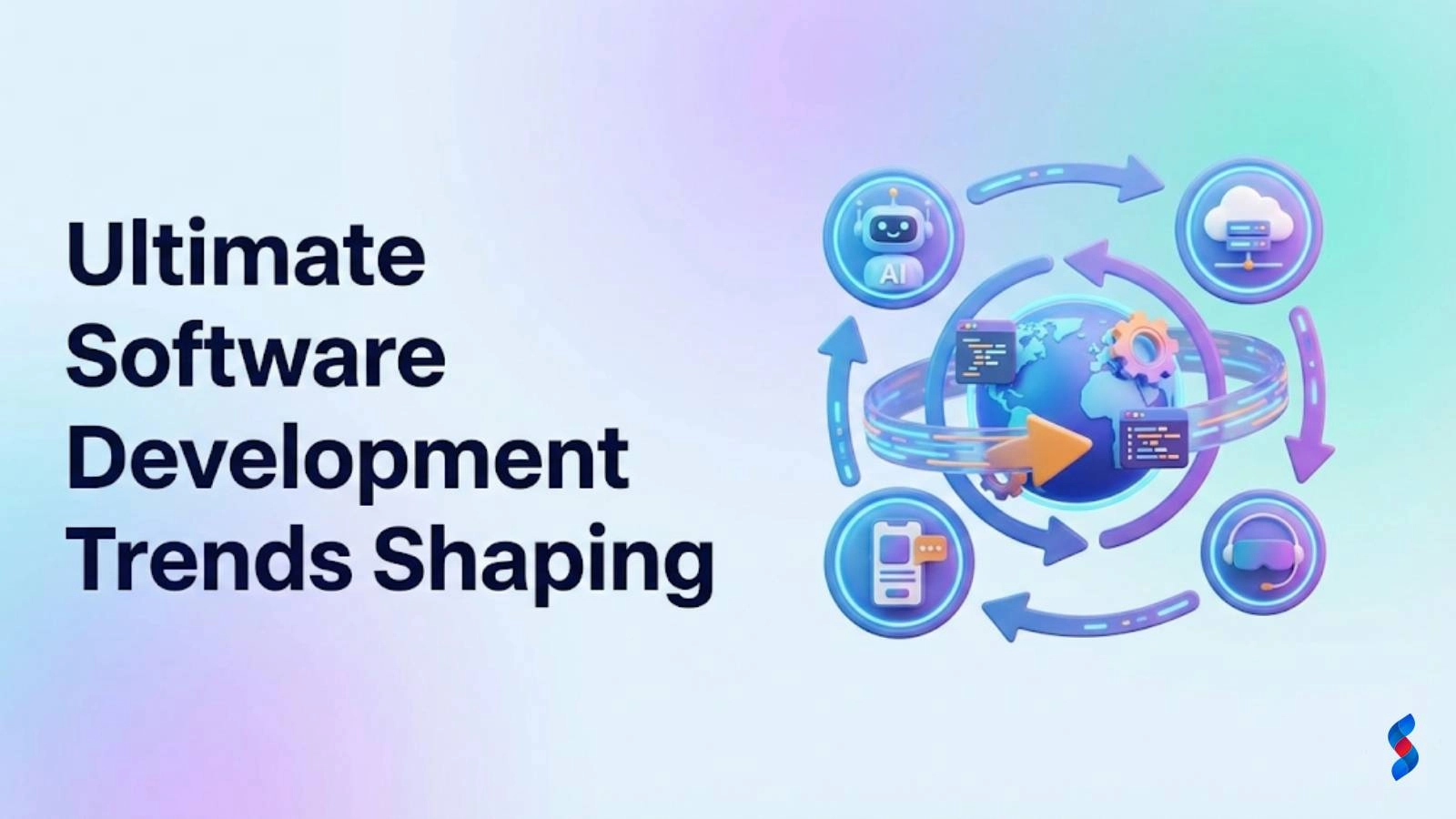
Stay ahead of the curve! Discover the top software development trends revolutionizing the industry. Learn how to leverage these innovations to build better software and drive business growth. Don't get left behind – explore the future of software today!
Software development is an ever-changing field, with the digital landscape continuously evolving. Staying ahead of the curve is essential, and in 2026, several key software development trends are poised to reshape how we build and deploy applications. This article will explore these transformative trends, providing insights into their challenges and offering practical solutions for developers and businesses looking to innovate. The key is to understand these trends and how they can benefit your business.
The Constant State of Change
Software development is never static, with new technologies and methodologies emerging constantly. We’ve seen how quickly things can change, especially with the advent of new languages, frameworks, and architectural patterns. This constant evolution demands continuous learning and adaptation from developers and organizations alike.
Why Staying Updated Matters
Staying current with software development trends is crucial for remaining competitive and building cutting-edge applications. Ignoring these trends can lead to technical debt, missed opportunities, and ultimately, a loss of market share. Embracing these advancements allows us to create more efficient, scalable, and user-friendly software solutions.
The Problem-Solution Approach
This article will explore top trends, highlighting their challenges and providing solutions. Our goal is to provide a clear understanding of each trend, its potential benefits, and the practical steps needed for successful implementation. We aim to equip you with the knowledge and strategies to navigate the evolving landscape of software development effectively.
1. Low-Code/No-Code Development: Bridging the Skills Gap
💡 Low-code development and no-code platforms are revolutionizing the way applications are built, empowering citizen developers and accelerating development cycles. These platforms provide visual interfaces and pre-built components, allowing users with limited or no coding experience to create functional applications. This approach can significantly reduce the time and resources required for software development, making it an attractive option for businesses of all sizes.
The Problem: Scarcity of Skilled Developers
Finding and retaining skilled developers is increasingly difficult and costly. The demand for developers far outstrips the supply, leading to fierce competition for talent and rising salaries. This shortage can significantly delay projects and increase development costs, making it challenging for businesses to innovate and grow.
The Solution: Empowering Citizen Developers
Low-code/no-code platforms enable non-technical users to create applications, alleviating the burden on developers. By empowering citizen developers, businesses can tap into a wider pool of talent and democratize the development process. This approach allows developers to focus on more complex and specialized tasks, while non-technical users can build simpler applications and workflows.
Benefits of Low-Code/No-Code
Increased speed, reduced costs, and improved agility are key benefits of low-code development. Applications can be built and deployed much faster than with traditional coding methods, leading to quicker time-to-market. The reduced need for skilled developers translates into lower development costs, and the agility of these platforms allows for rapid iteration and adaptation to changing business needs.
Potential Drawbacks and Mitigation
Discuss limitations in complexity and scalability, suggesting when to use traditional development methods. While low-code/no-code platforms offer numerous advantages, they may not be suitable for all types of applications. Complex and highly customized applications may still require traditional coding methods. It’s essential to assess the specific requirements of each project and choose the most appropriate development approach. For our clients here in Islamabad, we’ve seen the hybrid approach of low-code for front-end and standard for back-end be successful.
2. The Rise of AI-Powered Development Tools: Automating the Tedious
✅ AI in software development is transforming the way developers work, automating repetitive tasks and improving code quality. AI-powered tools can assist with code generation, testing, debugging, and even project management. By automating these tasks, developers can focus on more creative and strategic aspects of software development, leading to increased productivity and innovation.
The Problem: Repetitive and Time-Consuming Tasks
Many software development tasks are repetitive and consume valuable time. These tasks, such as writing boilerplate code, performing unit tests, and debugging common errors, can be tedious and demotivating for developers. Automating these tasks frees up developers to focus on more challenging and rewarding work.
The Solution: AI-Driven Automation
AI-powered tools can automate tasks such as code generation, testing, and debugging. These tools use machine learning algorithms to analyze code, identify patterns, and generate code snippets automatically. They can also perform automated testing, identify bugs, and suggest fixes, significantly reducing the time and effort required for these tasks.
Examples of AI in Development
GitHub Copilot, deep learning for automated testing. GitHub Copilot, for example, uses AI to suggest code completions and entire code blocks based on the context of the code being written. Deep learning models can be trained to perform automated testing, identifying bugs and vulnerabilities with high accuracy.
Challenges and Ethical Considerations
Address bias in AI models and the need for human oversight. AI models can be biased if they are trained on biased data, leading to unfair or discriminatory outcomes. It’s essential to ensure that AI models are trained on diverse and representative datasets and that human oversight is maintained to prevent unintended consequences.
> “AI is not going to replace developers, but developers who use AI will replace those who don’t.” – Andrej Karpathy, former Director of AI at Tesla
3. Cloud-Native Architecture: Scalability and Resilience
➡️ Cloud-native architecture is a modern approach to building and deploying applications that leverages the scalability and resilience of cloud computing. By embracing cloud-native principles, organizations can develop applications that are more agile, scalable, and resilient, enabling them to respond quickly to changing business needs. This approach involves using containers, microservices, and DevOps practices to create applications that are optimized for the cloud.
The Problem: Traditional Infrastructure Limitations
On-premise infrastructure can be inflexible and difficult to scale. Traditional infrastructure often requires significant upfront investment and ongoing maintenance. Scaling resources up or down can be a complex and time-consuming process, limiting the agility of businesses.
The Solution: Embracing Cloud-Native Principles
Cloud-native architectures leverage containers, microservices, and DevOps practices for greater scalability and resilience. By using containers, applications can be packaged and deployed consistently across different environments. Microservices allow applications to be broken down into smaller, independent components that can be developed and deployed independently. DevOps practices promote collaboration and automation throughout the development lifecycle.
Key Components of Cloud-Native
Containers (Docker), orchestration (Kubernetes), microservices. Docker provides a standard format for packaging applications and their dependencies. Kubernetes is a container orchestration platform that automates the deployment, scaling, and management of containerized applications. Microservices are small, independent services that communicate with each other over a network.
Benefits of Cloud-Native
Improved scalability, faster deployment, and increased resilience. Cloud-native applications can be scaled up or down quickly and easily to meet changing demand. Faster deployment cycles allow businesses to respond quickly to new opportunities and market changes. The distributed nature of cloud-native architectures makes them more resilient to failures.
✨ Cybersecurity Mesh Architecture (CSMA) is an emerging security approach that focuses on providing a distributed and modular security framework. Unlike traditional perimeter-based security models, CSMA establishes a security perimeter around each individual asset, regardless of its location. This approach is particularly relevant in today’s increasingly distributed and complex IT environments, where traditional security measures are often insufficient.
The Problem: Traditional Perimeter Security is Insufficient
Traditional security models are vulnerable to modern threats. Perimeter-based security models assume that all threats originate from outside the network. However, modern threats often bypass the perimeter, either through insider threats or by exploiting vulnerabilities in internal systems.
The Solution: Cybersecurity Mesh Architecture
CSMA provides a distributed architectural approach to scalable, flexible, and reliable cybersecurity control. By establishing a security perimeter around each individual asset, CSMA reduces the attack surface and limits the impact of successful attacks. This approach also allows for more granular security policies and controls.
How CSMA Works
Defines security perimeters around the identity of a person or thing. CSMA uses identity-based security to verify the identity of users and devices before granting access to resources. This approach ensures that only authorized users and devices can access sensitive data and systems.
Benefits of CSMA
Improved security posture, better compliance, and reduced risk. CSMA enhances an organization’s security posture by reducing the attack surface and limiting the impact of successful attacks. It also helps organizations comply with regulatory requirements and reduce the risk of data breaches.
Implementation Challenges
Complexity of integration and the need for skilled security professionals. Implementing CSMA can be complex and require significant expertise in cybersecurity. Organizations may need to invest in new technologies and training to implement CSMA effectively. We recommend a phased approach to implementation, starting with the most critical assets and systems.
5. The Growing Importance of DevOps and DevSecOps: Streamlining the Development Lifecycle
✅ The growing importance of DevOps and DevSecOps reflects a shift towards greater collaboration, automation, and security integration in software development. DevOps promotes collaboration between development and operations teams, while DevSecOps integrates security into every stage of the development lifecycle. These practices enable faster releases, improved quality, and enhanced security, helping organizations stay competitive in today’s fast-paced environment.
The Problem: Siloed Development and Operations Teams
Traditional development cycles are often slow and inefficient due to silos between teams. Development and operations teams often work in isolation, leading to communication breakdowns, delays, and inefficiencies. This siloed approach can hinder innovation and slow down the time-to-market for new products and features.
The Solution: Embracing DevOps and DevSecOps
DevOps promotes collaboration and automation throughout the development lifecycle. DevSecOps integrates security into every stage. By breaking down silos and promoting collaboration, DevOps and DevSecOps enable faster releases, improved quality, and enhanced security. These practices also foster a culture of continuous improvement and learning.
Benefits of DevOps and DevSecOps
Faster releases, improved quality, and enhanced security. DevOps and DevSecOps enable organizations to release software updates more frequently and with greater confidence. The integration of security into every stage of the development lifecycle helps to identify and mitigate vulnerabilities early on, reducing the risk of security breaches.
Tools and Practices
Continuous integration/continuous deployment (CI/CD), infrastructure as code (IaC), security automation. CI/CD automates the process of building, testing, and deploying software updates. IaC allows infrastructure to be defined and managed as code, enabling greater automation and consistency. Security automation tools can automate security testing, vulnerability scanning, and incident response.
Here’s a table summarizing the benefits of DevOps and DevSecOps:
Benefit
Description
Faster Releases
More frequent software updates and faster time-to-market.
Improved Quality
Reduced bugs and improved software stability.
Enhanced Security
Proactive identification and mitigation of security vulnerabilities.
Increased Efficiency
Automation of repetitive tasks and streamlined workflows.
Better Collaboration
Improved communication and collaboration between development and operations teams.
6. Serverless Computing: Focus on Code, Not Infrastructure
💡 Serverless computing is a cloud computing model that allows developers to focus on writing code without managing servers. In a serverless architecture, the cloud provider automatically manages the underlying infrastructure, including servers, operating systems, and networking. This model enables developers to deploy and scale applications quickly and efficiently, reducing operational overhead and costs.
The Problem: Managing Servers and Infrastructure
Traditional infrastructure management is complex and time-consuming. Managing servers and infrastructure requires significant expertise and effort. Tasks such as provisioning servers, configuring networks, and managing security can be time-consuming and distract developers from writing code.
The Solution: Serverless Architectures
Serverless computing allows developers to focus on writing code without managing servers. By offloading infrastructure management to the cloud provider, developers can focus on building and deploying applications quickly and efficiently. This model also enables automatic scaling, ensuring that applications can handle increased traffic without manual intervention.
Advantages of Serverless
Reduced operational overhead, automatic scaling, and cost efficiency. Serverless computing reduces operational overhead by eliminating the need to manage servers and infrastructure. Automatic scaling ensures that applications can handle increased traffic without manual intervention. Cost efficiency is achieved by only paying for the resources consumed by the application.
Use Cases for Serverless
Event-driven applications, APIs, and background tasks. Serverless computing is well-suited for event-driven applications, such as webhooks and message queues. It is also ideal for building APIs and background tasks that require scalability and reliability. For example, many of our clients in Karachi use serverless for media transcoding operations due to the quick spin-up time.
7. Edge Computing: Bringing Computation Closer to the Data Source
➡️ Edge computing is a distributed computing paradigm that brings computation and data storage closer to the source of data. By processing data at the edge of the network, edge computing reduces latency, improves performance, and enhances security. This approach is particularly relevant for applications that require real-time processing, such as IoT devices, autonomous vehicles, and augmented reality.
The Problem: Latency and Bandwidth Limitations
Cloud computing can be limited by latency and bandwidth constraints, especially for real-time applications. Sending data to the cloud for processing can introduce latency, which can be unacceptable for applications that require real-time responses. Bandwidth constraints can also limit the amount of data that can be transmitted to the cloud.
The Solution: Edge Computing
Edge computing processes data closer to the source, reducing latency and improving performance. By processing data at the edge of the network, edge computing reduces the distance that data needs to travel, minimizing latency and improving performance. This approach also reduces the amount of data that needs to be transmitted to the cloud, alleviating bandwidth constraints.
Applications of Edge Computing
IoT devices, autonomous vehicles, and augmented reality. IoT devices generate vast amounts of data that can be processed at the edge to provide real-time insights. Autonomous vehicles rely on edge computing to process sensor data and make real-time decisions. Augmented reality applications use edge computing to render 3D graphics and provide interactive experiences.
Benefits of Edge Computing
Reduced latency, improved security, and enhanced reliability. Edge computing reduces latency by processing data closer to the source. It improves security by keeping sensitive data on-premise and reducing the risk of data breaches. It also enhances reliability by allowing applications to continue operating even when the network connection to the cloud is lost.
8. Blockchain Technology: Beyond Cryptocurrency
✅ Blockchain technology is a distributed ledger technology that provides a secure, transparent, and immutable record of transactions. While blockchain is often associated with cryptocurrency, it has numerous other applications, including supply chain management, identity verification, and voting systems. Blockchain can enhance trust, transparency, and security in various industries.
The Problem: Lack of Trust and Transparency
Traditional systems often lack transparency and are vulnerable to fraud. Traditional systems often rely on centralized authorities to manage data and transactions. This can create a lack of trust and transparency, making it difficult to verify the accuracy and integrity of data.
The Solution: Blockchain for Secure and Transparent Transactions
Blockchain provides a secure, transparent, and immutable ledger for recording transactions. By distributing the ledger across multiple nodes, blockchain eliminates the need for a centralized authority. Transactions are verified by multiple nodes, ensuring the accuracy and integrity of the data.
Use Cases Beyond Cryptocurrency
Supply chain management, identity verification, and voting systems. Blockchain can be used to track products through the supply chain, ensuring their authenticity and provenance. It can also be used to verify identities and prevent fraud. Blockchain can also be used to create secure and transparent voting systems.
Challenges of Blockchain Adoption
Scalability, regulatory uncertainty, and energy consumption. Blockchain technology can be limited by scalability constraints, making it difficult to handle large volumes of transactions. Regulatory uncertainty also poses a challenge to blockchain adoption. Some blockchain networks consume significant amounts of energy, raising environmental concerns.
9. Quantum Computing: A Glimpse into the Future
💡 Quantum computing is a revolutionary computing paradigm that leverages the principles of quantum mechanics to solve complex problems that are intractable for classical computers. Quantum computers use qubits, which can represent multiple states simultaneously, allowing them to perform calculations much faster than classical computers. While quantum computing is still in its early stages, it has the potential to transform various industries, including drug discovery, materials science, and financial modeling.
The Problem: Limitations of Classical Computing
Classical computers struggle with complex problems that require vast computational power. Classical computers use bits to represent data, which can be either 0 or 1. This limits their ability to solve complex problems that require exploring a vast number of possibilities simultaneously.
The Solution: Quantum Computing
Quantum computers leverage quantum mechanics to solve problems that are intractable for classical computers. Quantum computers use qubits, which can represent multiple states simultaneously. This allows them to explore a vast number of possibilities simultaneously, making them much faster than classical computers for certain types of problems.
Potential Applications of Quantum Computing
Drug discovery, materials science, and financial modeling. Quantum computing can be used to simulate the behavior of molecules and materials, accelerating the discovery of new drugs and materials. It can also be used to optimize financial models and improve risk management.
Current State and Future Prospects
Quantum computing is still in its early stages, but it has the potential to revolutionize many industries. While quantum computers are not yet ready for widespread use, they are rapidly evolving, and their potential impact on various industries is significant.
10. Augmented Reality (AR) and Virtual Reality (VR): Immersive Experiences
➡️ Augmented reality (AR) and virtual reality (VR) are immersive technologies that enhance the way we interact with the digital world. AR overlays digital information onto the real world, while VR creates a completely immersive digital environment. These technologies have numerous applications in various industries, including training simulations, product demonstrations, and remote collaboration.
The Problem: Lack of Engagement and Interactivity
Traditional applications can be passive and lack engagement. Traditional applications often present information in a static and non-interactive way, which can lead to a lack of engagement and reduced learning outcomes.
The Solution: AR and VR for Immersive Experiences
AR and VR provide immersive and interactive experiences that can enhance learning, entertainment, and productivity. AR overlays digital information onto the real world, making it possible to interact with digital content in a more natural and intuitive way. VR creates a completely immersive digital environment, allowing users to experience virtual worlds and interact with virtual objects.
Use Cases for AR and VR
Training simulations, product demonstrations, and remote collaboration. AR and VR can be used to create realistic training simulations that allow users to practice skills in a safe and controlled environment. They can also be used to create interactive product demonstrations that allow customers to experience products in a more engaging way. AR and VR can also be used to facilitate remote collaboration, allowing teams to work together in a virtual environment.
Benefits of AR and VR
Increased engagement, improved learning, and enhanced productivity. AR and VR can increase engagement by providing immersive and interactive experiences. They can improve learning by allowing users to practice skills in a safe and controlled environment. They can also enhance productivity by facilitating remote collaboration and providing access to information in a more intuitive way.
Conclusion: Embracing the Future of Software Development
In conclusion, the software development trends outlined in this article represent a significant shift in how applications are built, deployed, and secured. From low-code development empowering citizen developers to AI in software development automating tedious tasks, these trends are driving innovation and efficiency across the industry. Embracing cloud-native architectures, cybersecurity mesh architecture, and DevOps practices is essential for building scalable, resilient, and secure applications. Serverless architecture, edge computing, blockchain development, quantum computing, and augmented reality development offer new possibilities for creating innovative solutions that address complex challenges. Staying informed and adapting to these trends is crucial for success in the ever-evolving world of software development. We at SkySol Media are dedicated to helping businesses navigate these changes and leverage the latest technologies to achieve their goals.
Q: What are the key software development trends for 2026?
A: The key trends include low-code/no-code development, AI-powered development tools, cloud-native architecture, cybersecurity mesh architecture (CSMA), DevOps and DevSecOps, serverless computing, edge computing, blockchain technology, quantum computing, and augmented reality (AR) and virtual reality (VR).
Q: How can low-code/no-code development benefit my organization?
A: Low-code/no-code development can increase development speed, reduce costs, and improve agility by empowering citizen developers and automating repetitive tasks.
Q: What is cloud-native architecture, and why is it important?
A: Cloud-native architecture is a modern approach to building and deploying applications that leverages the scalability and resilience of cloud computing. It enables faster deployment, improved scalability, and increased resilience.
Q: What is Cybersecurity Mesh Architecture (CSMA)?
A: CSMA provides a distributed architectural approach to scalable, flexible, and reliable cybersecurity control. It improves security posture, enhances compliance, and reduces risk in complex IT environments.
Q: How can DevOps and DevSecOps improve our software development lifecycle?
A: DevOps and DevSecOps promote collaboration, automation, and security integration throughout the development lifecycle, resulting in faster releases, improved quality, and enhanced security.
Q: What is serverless computing, and what are its advantages?
A: Serverless computing allows developers to focus on writing code without managing servers. It reduces operational overhead, enables automatic scaling, and provides cost efficiency.
Q: What is edge computing, and why is it gaining importance?
A: Edge computing processes data closer to the source, reducing latency and improving performance. It is particularly relevant for applications that require real-time processing, such as IoT devices and autonomous vehicles.
Q: What are the potential applications of blockchain technology beyond cryptocurrency?
A: Blockchain technology has numerous applications beyond cryptocurrency, including supply chain management, identity verification, and voting systems.
Q: How could quantum computing impact software development in the future?
A: While still in its early stages, quantum computing has the potential to revolutionize many industries by solving complex problems that are intractable for classical computers.
Q: What are the benefits of using augmented reality (AR) and virtual reality (VR) in applications?
A: AR and VR provide immersive and interactive experiences that can enhance learning, entertainment, and productivity. They increase engagement, improve learning outcomes, and facilitate remote collaboration.
Q: How can SkySol Media help us implement these software development trends?
A: SkySol Media offers expert consulting services to help businesses navigate the evolving landscape of software development. We provide tailored solutions to implement these trends effectively in your software development projects, ensuring you stay competitive and innovative.
Explore if low-code no-code development is the right choice for your next project. This beginner's guide covers benefits, drawbacks, and key considerations to help you decide. Start building smarter today!
App development cost can vary widely. This ultimate guide breaks down all the factors influencing the price, from app type and features to development team and location. Learn how to budget effectively for your app project.
Choosing the right software development language can feel overwhelming. This guide cuts through the noise, offering clear insights to help you pick the perfect language for your career goals, backed by real-world advice and expert perspectives.
Struggling to choose the right software development approach? Our guide breaks down the top methodologies, highlighting their pros, cons, and best use cases. Discover the perfect fit for your project and boost your team's efficiency.
Outsourcing software development can be a game-changer, but many stumble. This guide reveals common pitfalls like unclear requirements and poor communication. Learn to avoid these mistakes and ensure outsourcing success, maximizing efficiency and ROI.
Can AI write code? Absolutely! But many make critical errors leveraging this powerful technology. This guide from SkySol Media reveals the common pitfalls in using AI for code generation and provides proven strategies to avoid them, ensuring efficient and effective AI-assisted coding.