Strategic Design: The Amazing Guide to Elevate Your Brand Profile in 2025
Unlock the power of strategic design to transform your brand. This guide reveals how to use design thinking, brand strategy, and visual communication to create a compelling brand identity and elevate your market presence. Learn practical steps and expert tips now!
Strategic design is more than just aesthetics; it’s a comprehensive approach to building and managing a brand’s presence in the market. In today’s competitive landscape, a well-defined and executed strategic design can be the difference between blending in and standing out. We’ll guide you through the essential steps to elevate your brand profile, ensuring you’re not just keeping up, but leading the way in 2025.
Introduction: The Power of Strategic Design
Strategic design is the compass guiding your brand’s journey. It’s the intentional and holistic process of creating a meaningful brand experience that resonates with your target audience. This involves aligning your brand’s visual identity, messaging, and overall experience with your business goals. Without strategic design, your brand risks being inconsistent, ineffective, and ultimately, forgettable.
What is Strategic Design? Defining the Core Concepts
Strategic design is a forward-thinking discipline that integrates design principles with business objectives. At its core, strategic design is about problem-solving. It’s a holistic approach that considers the entire ecosystem of a brand, from its values and mission to its user experience and visual communication. It’s about creating a cohesive and compelling brand narrative that differentiates you from the competition. It goes beyond aesthetics, focusing on how design can drive business growth, improve customer loyalty, and build brand equity. Think of strategic design as the architectural blueprint for your brand, ensuring every element works harmoniously towards a common goal.
The key components of strategic design include:
Understanding the Business Context: Analyzing the market, competitors, and industry trends to identify opportunities and challenges.
Defining the Brand Identity: Creating a unique and memorable brand that reflects the company’s values and personality.
Developing the Customer Journey: Mapping out the customer experience to identify pain points and opportunities for improvement.
Designing Visual Communication: Crafting compelling visuals that communicate the brand’s message and resonate with the target audience.
Measuring the Impact: Tracking key performance indicators (KPIs) to evaluate the effectiveness of the design and make necessary adjustments.
Why is Strategic Design Crucial for Brand Success?
In today’s crowded marketplace, brands face unprecedented competition for attention. Strategic design provides a framework for cutting through the noise and creating a brand that resonates with your target audience on an emotional level. It’s about building a strong brand identity that differentiates you from the competition and fosters customer loyalty. A well-executed strategic design can lead to increased brand awareness, improved customer engagement, and ultimately, greater profitability.
Strategic design ensures your brand is:
Consistent: Maintaining a consistent brand voice and visual identity across all channels.
Relevant: Staying up-to-date with market trends and customer needs.
Memorable: Creating a unique and impactful brand that stands out from the competition.
Effective: Achieving your business goals through design.
Consider the story of a small coffee shop we worked with in Dubai. They were struggling to compete with larger chains, even with a superior product. By implementing a strategic design that focused on their unique story, local sourcing, and a welcoming atmosphere, we helped them build a loyal customer base and significantly increase their revenue. This highlights the transformative power of strategic design.
The Impact of Strategic Design on Brand Perception and Value
Strategic design significantly shapes how your brand is perceived and the value it holds in the eyes of your customers. A brand with a thoughtfully designed strategy can command a premium price, foster stronger customer loyalty, and enjoy greater brand equity. When design aligns with your brand’s core values and resonates with your target audience, it creates a positive perception that translates into tangible business benefits.
“Design is not just what it looks like and feels like. Design is how it works.” – Steve Jobs
Strategic design impacts brand perception by:
Creating a Positive First Impression: A well-designed logo, website, and marketing materials can make a strong first impression.
Communicating Brand Values: Design can effectively communicate your brand’s values and mission.
Building Trust and Credibility: A professional and consistent design can build trust with your target audience.
Enhancing User Experience: A user-friendly website and app can improve customer satisfaction and loyalty.
Ultimately, strategic design is an investment that pays off in the long run by building a strong, recognizable, and valuable brand.
Understanding Your Brand’s Foundation
Before diving into the design process, it’s crucial to understand your brand’s core. This involves defining your mission, vision, and values, identifying your target audience, and conducting a thorough brand audit. This foundational work provides the necessary context for making informed design decisions.
Defining Your Brand’s Mission, Vision, and Values
Your brand’s mission, vision, and values are the bedrock of your identity. They define your purpose, your aspirations, and your guiding principles. Clarifying these elements is essential for creating a brand that is authentic, consistent, and resonates with your target audience.
Mission: Your mission statement defines what your company does and why. It should be clear, concise, and focused on the value you provide to your customers.
Vision: Your vision statement describes your aspirations for the future. It should be ambitious and inspiring, painting a picture of what you want to achieve.
Values: Your values are the guiding principles that shape your company’s culture and behavior. They should be authentic, reflect your beliefs, and influence your decisions.
Here’s how to define each:
1. Mission: Ask yourself, “What problem are we solving for our customers?” and “What value do we provide?”.
2. Vision: Envision where you want your company to be in 5, 10, or 20 years. What impact do you want to have on the world?
3. Values: Identify the core principles that guide your decisions and actions. What is important to you as a company?
For example, a sustainable clothing brand might have the following:
Mission: To provide stylish and eco-friendly clothing options for conscious consumers.
Vision: To become a leader in sustainable fashion, inspiring others to adopt environmentally responsible practices.
Values: Sustainability, ethical sourcing, transparency, and quality.
Identifying Your Target Audience and Their Needs
Understanding your target audience is paramount to effective strategic design. You need to know their demographics, psychographics, needs, and pain points. This knowledge will inform your design decisions, ensuring that your brand resonates with the people you’re trying to reach.
Customer Data: Analyzing website analytics, social media data, and customer feedback.
Competitor Analysis: Identifying who your competitors are targeting and how.
Once you have a clear understanding of your target audience, you can tailor your brand messaging, visual communication, and user experience to meet their specific needs and preferences.
Conducting a Comprehensive Brand Audit (Internal and External)
A brand audit is a thorough examination of your brand’s current state. It involves assessing both internal and external factors to identify strengths, weaknesses, opportunities, and threats. This audit provides a baseline for measuring the effectiveness of your strategic design efforts and identifying areas for improvement.
The internal brand audit should evaluate:
Brand Identity: Logo, color palette, typography, brand voice.
Marketing Materials: Website, brochures, social media content.
Employee Perception: How employees perceive and represent the brand.
Customer Service: The quality of customer interactions and support.
The external brand audit should evaluate:
Customer Perception: How customers perceive the brand through reviews, surveys, and social media feedback.
Competitor Analysis: Identifying competitors’ strengths and weaknesses.
Market Trends: Understanding the current market landscape and emerging trends.
Social Media Presence: Analyzing brand mentions, sentiment, and engagement.
To conduct a brand audit, you can use tools like:
Surveys: Gather feedback from customers and employees.
Social Media Monitoring: Track brand mentions and sentiment.
Website Analytics: Analyze website traffic and user behavior.
Competitor Analysis Tools: Compare your brand to competitors.
The results of your brand audit will provide valuable insights for informing your strategic design decisions. We find that many companies skip this step, but it is critical for success.
The Strategic Design Process: A Step-by-Step Guide
The strategic design process is a structured approach to creating a brand that achieves your business goals. It involves a series of steps, from research and analysis to implementation and evaluation. Following this process will help you create a brand that is consistent, relevant, and effective.
Step 1: Research and Analysis – Gathering Insights
⚙️ This initial phase is all about gathering information. We need to deeply understand the market, your competitors, and most importantly, your target audience. This involves both qualitative and quantitative research methods.
Market Research: Analyze industry trends, market size, and growth potential.
Competitor Analysis: Identify your main competitors, their strengths and weaknesses, and their brand positioning.
Target Audience Research: Understand their demographics, psychographics, needs, and pain points.
Tools and techniques for research and analysis include:
Surveys: Gather data from a large sample of your target audience.
Focus Groups: Conduct in-depth discussions with small groups of customers.
Interviews: Speak with key stakeholders, customers, and industry experts.
Data Analytics: Analyze website traffic, social media engagement, and sales data.
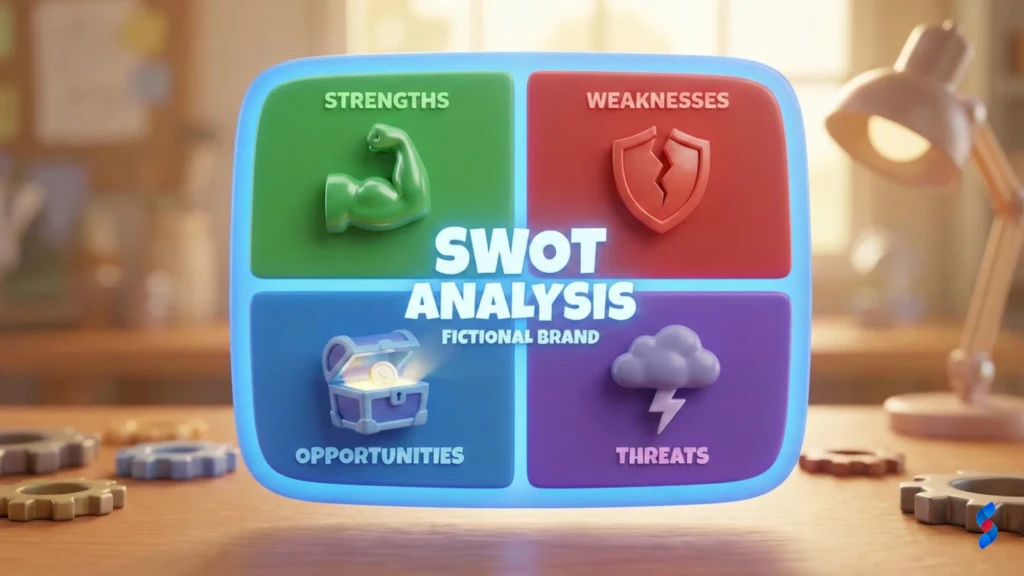
SWOT Analysis: Identify your brand’s strengths, weaknesses, opportunities, and threats.
Step 2: Defining Objectives – Setting Clear Goals
✅ Once we have a solid understanding of the landscape, it’s time to define what we want to achieve with our strategic design efforts. These objectives should be SMART: Specific, Measurable, Achievable, Relevant, and Time-bound.
Examples of strategic design objectives include:
Increase brand awareness by 20% in the next year.
Improve customer satisfaction scores by 15% in the next quarter.
Increase website traffic by 30% in the next six months.
Generate a 10% increase in sales through a new marketing campaign.
These objectives should align with your overall business goals and provide a clear roadmap for your design efforts. We emphasize that without clear objectives, the whole process becomes aimless.
Step 3: Ideation and Conceptualization – Brainstorming Solutions
💡 With a clear understanding of the problem and the desired outcome, we can now brainstorm creative solutions. This is where we generate a wide range of ideas for your brand identity, visual communication, user experience, and brand messaging.
Techniques for ideation and conceptualization include:
Brainstorming: Generate as many ideas as possible without judgment.
Mind Mapping: Visually organize ideas and explore connections.
Sketching: Create rough sketches of potential design solutions.
Mood Boards: Compile images, colors, and textures that inspire the brand’s visual identity.
[IMAGE: A mood board for a luxury skincare brand, showcasing elegant typography, soft colors, and images of natural ingredients]
Step 4: Prototyping and Testing – Validating Ideas
Now, take your best ideas and create prototypes. These can be simple sketches, wireframes, or even basic mockups. The goal is to get a tangible representation of your design concepts and test them with your target audience.
Methods for prototyping and testing include:
User Testing: Observe users interacting with your prototypes and gather feedback.
A/B Testing: Compare different versions of your designs to see which performs better.
Surveys: Collect feedback on your prototypes from a wider audience.
Heuristic Evaluation: Have design experts evaluate your prototypes based on established usability principles.
We once had a client who was convinced that a particular logo design was perfect, but user testing revealed that it was confusing and off-putting to their target audience. This highlights the importance of testing your assumptions and gathering feedback before investing in a final design.
Step 5: Implementation and Launch – Bringing the Design to Life
Once you’ve validated your designs, it’s time to bring them to life. This involves creating the final design assets, developing your website, launching your marketing campaigns, and implementing your brand strategy across all channels.
Key considerations for implementation and launch:
Consistency: Ensure that your brand is consistent across all platforms and touchpoints.
Quality: Maintain high-quality standards for all design assets and marketing materials.
Coordination: Coordinate your launch across all departments and channels.
Training: Train your employees on how to represent the brand and deliver a consistent customer experience.
Step 6: Measurement and Evaluation – Assessing Impact
The strategic design process doesn’t end with the launch. It’s crucial to measure the impact of your efforts and make adjustments as needed. This involves tracking key performance indicators (KPIs) such as brand awareness, customer satisfaction, website traffic, and sales growth.
Methods for measurement and evaluation include:
Website Analytics: Track website traffic, bounce rate, and conversion rates.
Social Media Analytics: Monitor brand mentions, engagement, and sentiment.
Customer Surveys: Gather feedback on customer satisfaction and brand perception.
Sales Data: Track sales growth and market share.
By continuously monitoring and evaluating your strategic design efforts, you can ensure that your brand remains relevant, effective, and aligned with your business goals.
Key Elements of Strategic Design
Strategic design encompasses several key elements that work together to create a cohesive and impactful brand experience. These elements include brand identity, visual communication, user experience, and brand messaging.
Brand Identity: Logo, Color Palette, Typography
Your brand identity is the visual representation of your brand. It includes your logo, color palette, typography, and other visual elements that create a unique and recognizable look and feel. A strong brand identity is essential for differentiating yourself from the competition and building brand recognition.
Logo: Your logo is the cornerstone of your brand identity. It should be memorable, versatile, and reflective of your brand values.
Color Palette: Your color palette should evoke the desired emotions and associations with your brand. Choose colors that are consistent with your brand personality and target audience.
Typography: Your typography should be legible, visually appealing, and consistent with your brand voice. Choose fonts that are appropriate for your industry and target audience.
Element
Description
Importance
Logo
A visual symbol representing your brand.
Creates instant recognition and differentiates you from competitors.
Color Palette
A set of colors that define your brand’s visual aesthetic.
Evokes emotions and associations, contributing to brand personality.
Typography
The style and appearance of text used in your brand communications.
Ensures readability and reinforces brand voice and tone.
Visual communication refers to the ways in which your brand communicates visually with your target audience. This includes your website design, marketing materials, social media content, and other visual assets. Effective visual communication is essential for conveying your brand message and engaging your audience.
Website Design: Your website is often the first point of contact for potential customers. It should be visually appealing, user-friendly, and optimized for conversions.
Marketing Materials: Your marketing materials should be consistent with your brand identity and effectively communicate your value proposition.
Social Media Content: Your social media content should be engaging, informative, and tailored to your target audience.
[IMAGE: A mockup of a clean and modern website design for a tech startup, featuring a hero image with a product demo video and clear call-to-action buttons]
User Experience (UX): Website and App Usability
User experience (UX) refers to the overall experience that users have when interacting with your brand, particularly on your website or app. A positive user experience is essential for driving customer satisfaction, loyalty, and conversions.
Key elements of UX include:
Usability: How easy it is for users to navigate your website or app and find what they’re looking for.
Accessibility: Ensuring that your website or app is accessible to users with disabilities.
Design: How visually appealing and engaging your website or app is.
Content: How clear, concise, and informative your website or app content is.
Good UX design focuses on understanding the customer journey. Understanding the customer journey provides opportunities to reduce friction and enhance satisfaction.
Brand Messaging: Tone of Voice and Storytelling
Your brand messaging refers to the way in which you communicate your brand’s message to your target audience. This includes your tone of voice, storytelling, and overall communication style. Effective brand messaging is essential for connecting with your audience on an emotional level and building brand loyalty.
Tone of Voice: Your tone of voice should be consistent with your brand personality and target audience. Are you formal or informal? Humorous or serious?
Storytelling: Share stories that resonate with your target audience and communicate your brand values.
Clarity: Ensure that your messaging is clear, concise, and easy to understand.
Brand messaging ensures your brand is communicating with one voice. This creates trust, loyalty, and brand recognition.
Implementing Design Thinking in Brand Strategy
Design thinking is a human-centered approach to problem-solving that can be applied to brand strategy. It involves understanding customer needs, generating creative solutions, and testing those solutions in the real world. By incorporating design thinking into your brand strategy, you can create a brand that is truly customer-centric and effective.
Empathize: Understanding Customer Needs and Pain Points
The first step in design thinking is to empathize with your customers. This involves understanding their needs, pain points, and motivations. You can do this through research, interviews, and observation.
Research: Conduct market research to understand your target audience’s demographics, psychographics, and behavior.
Interviews: Speak with your customers to understand their experiences with your brand.
Observation: Observe how your customers interact with your brand in the real world.
Define: Clearly Articulating the Problem
Once you’ve empathized with your customers, the next step is to define the problem you’re trying to solve. This involves clearly articulating the challenge you’re facing and the goals you’re trying to achieve.
Problem Statement: Create a clear and concise problem statement that summarizes the challenge you’re facing.
Goals: Define your goals and objectives for the design thinking process.
Ideate: Generating a Wide Range of Solutions
With a clear understanding of the problem, it’s time to generate a wide range of potential solutions. This involves brainstorming, sketching, and prototyping different ideas.
Brainstorming: Generate as many ideas as possible without judgment.
Sketching: Create rough sketches of potential solutions.
Prototyping: Create tangible prototypes of your best ideas.
Prototype: Creating Tangible Representations
Prototyping involves creating tangible representations of your ideas, whether it’s a simple sketch, a wireframe, or a fully functional mockup. Prototypes allow you to test your ideas and gather feedback before investing in a final solution.
Low-Fidelity Prototypes: Simple sketches or wireframes that illustrate the basic functionality of your design.
High-Fidelity Prototypes: Fully functional mockups that simulate the user experience.
Test: Gathering Feedback and Iterating
The final step in design thinking is to test your prototypes and gather feedback from your target audience. This feedback will help you refine your designs and ensure that they meet the needs of your customers.
User Testing: Observe users interacting with your prototypes and gather feedback.
Surveys: Collect feedback on your prototypes from a wider audience.
A/B Testing: Compare different versions of your designs to see which performs better.
Case Studies: Successful Brand Transformations
Examining real-world examples of successful brand transformations can provide valuable insights and inspiration for your own strategic design efforts.
Example 1: A Small Business Rebrands for Growth
A local bakery was struggling to attract new customers and compete with larger chains. They had a great product, but their branding was outdated and unappealing.
Challenge: Outdated branding and lack of differentiation.
Solution: We conducted a brand audit, identified their target audience, and developed a new brand identity that emphasized their artisanal baking techniques and high-quality ingredients. This included a new logo, color palette, website, and marketing materials.
Results: The bakery saw a 30% increase in sales within the first three months of the rebrand. They also attracted a new segment of customers who were drawn to their modern and sophisticated brand.
Example 2: A Large Corporation Revitalizes Its Image
A multinational corporation had a tarnished reputation due to a series of negative publicity events. They needed to revitalize their image and regain the trust of their customers.
Challenge: Tarnished reputation and loss of customer trust.
Solution: We developed a comprehensive brand strategy that focused on transparency, ethical practices, and social responsibility. This included a new brand messaging campaign, a redesigned website, and a commitment to sustainability.
Results: The corporation saw a significant improvement in their brand reputation scores. They also attracted a new generation of customers who were drawn to their commitment to social and environmental issues.
Key Takeaways from Successful Strategic Design Implementations
Successful strategic design implementations share several common characteristics:
Clear Objectives: They have clear and measurable objectives.
Customer-Centricity: They are focused on understanding and meeting the needs of their customers.
Consistency: They maintain a consistent brand identity across all channels.
Adaptability: They are able to adapt to changing market conditions and customer preferences.
By following these principles, you can increase your chances of achieving a successful brand transformation.
Measuring the ROI of Strategic Design
Measuring the return on investment (ROI) of strategic design can be challenging, but it’s essential for justifying your design investments and demonstrating their value. Here are some key performance indicators (KPIs) that you can use to track the impact of your strategic design efforts.
Key Performance Indicators (KPIs) for Brand Success
Brand Awareness: How familiar your target audience is with your brand.
Customer Satisfaction: How satisfied your customers are with your products, services, and overall experience.
Website Traffic: The number of visitors to your website.
Conversion Rates: The percentage of website visitors who complete a desired action, such as making a purchase or filling out a form.
Sales Growth: The increase in sales revenue over a specific period.
Market Share: The percentage of the total market that your brand controls.
Customer Lifetime Value (CLTV): Predicts the total revenue a business can expect from a single customer account.
These KPIs provide valuable insights into your brand’s effectiveness. Track these metrics to gauge the success of your brand’s strategic design.
Tracking Brand Awareness and Recognition
Brand awareness and recognition are crucial for attracting new customers and building brand loyalty. You can track these metrics through:
Surveys: Ask your target audience if they are familiar with your brand.
Social Media Mentions: Monitor how often your brand is mentioned on social media.
Website Traffic: Track the number of visitors to your website.
Search Engine Rankings: Monitor your website’s ranking in search engine results pages.
Increased brand awareness is a direct result of a strong brand strategy. Use these methods to monitor this lift.
Analyzing Customer Engagement and Loyalty
Customer engagement and loyalty are essential for driving repeat business and building long-term relationships. You can analyze these metrics through:
Customer Surveys: Ask your customers about their satisfaction with your brand and their likelihood of recommending it to others.
Social Media Engagement: Monitor how often your customers interact with your brand on social media.
Customer Retention Rates: Track the percentage of customers who continue to do business with you over time.
Measuring Sales Growth and Market Share
Ultimately, the goal of strategic design is to drive sales growth and increase market share. You can measure these metrics by:
Tracking Sales Revenue: Monitor your sales revenue over time.
Analyzing Market Share Data: Track your market share compared to your competitors.
Attribution Modeling: Determine which marketing channels are driving the most sales.
These financial metrics clearly demonstrate the impact of a well-executed design strategy.
Common Pitfalls and How to Avoid Them
Even with the best intentions, strategic design efforts can sometimes fall short. Here are some common pitfalls to avoid:
Lack of Clear Objectives
Without clear objectives, it’s difficult to measure the success of your strategic design efforts.
Pitfall: Failing to define specific, measurable, achievable, relevant, and time-bound objectives.
Solution: Set SMART objectives at the outset of your strategic design process.
Ignoring User Feedback
Ignoring user feedback can lead to designs that don’t meet the needs of your target audience.
Pitfall: Failing to gather and incorporate user feedback into your design process.
Solution: Conduct user testing and gather feedback throughout the design process.
Inconsistent Branding
Inconsistent branding can confuse customers and dilute your brand message.
Pitfall: Failing to maintain a consistent brand identity across all channels.
Solution: Develop a brand style guide and ensure that all employees adhere to it.
Failure to Adapt to Market Changes
Failing to adapt to market changes can make your brand irrelevant and outdated.
Pitfall: Failing to monitor market trends and adapt your brand strategy accordingly.
Solution: Continuously monitor market trends and adjust your brand strategy as needed.
Strategic design is an ongoing process. Be sure to adapt as trends and markets change.
Tools and Resources for Strategic Design
There are a variety of tools and resources available to help you with your strategic design efforts.
Design Software and Platforms
Adobe Creative Suite: Industry-standard design software for creating logos, marketing materials, and website designs.
Sketch: A popular design tool for creating user interfaces and prototypes.
Figma: A collaborative design tool that allows multiple users to work on the same project simultaneously.
Canva: An easy-to-use design tool for creating social media graphics and other marketing materials.
Online Collaboration Tools
Slack: A messaging app for team communication and collaboration.
Trello: A project management tool for organizing tasks and tracking progress.
Google Workspace: A suite of online productivity tools, including Google Docs, Sheets, and Slides.
Miro: An online whiteboard for brainstorming and collaboration.
Market Research Resources
Google Trends: A tool for analyzing search trends and identifying popular topics.
Statista: A database of statistics and market data.
Pew Research Center: A nonpartisan research organization that conducts surveys on a variety of topics.
Nielsen: A market research company that provides data on consumer behavior.
Brand Audit Templates
SWOT Analysis Template: A template for identifying your brand’s strengths, weaknesses, opportunities, and threats.
Brand Positioning Statement Template: A template for defining your brand’s unique value proposition.
Customer Persona Template: A template for creating detailed profiles of your target customers.
The Future of Strategic Design
Strategic design is constantly evolving to meet the changing needs of businesses and customers. Here are some emerging trends that are shaping the future of strategic design.
Emerging Trends in Design and Branding
Sustainability: Brands are increasingly focused on sustainability and ethical practices.
Personalization: Customers expect personalized experiences that are tailored to their individual needs.
Inclusivity: Brands are striving to be more inclusive and represent a diverse range of customers.
Artificial Intelligence: AI is being used to automate design tasks and personalize customer experiences.
The Role of AI in Strategic Design
AI is poised to play a significant role in the future of strategic design. AI-powered tools can:
Automate Design Tasks: AI can automate repetitive design tasks, such as creating social media graphics and generating website layouts.
Personalize Customer Experiences: AI can analyze customer data to personalize website content, marketing messages, and product recommendations.
Predict Customer Behavior: AI can predict customer behavior and identify opportunities for improvement.
Preparing Your Brand for Future Challenges
To prepare your brand for future challenges, you should:
Embrace Change: Be willing to adapt your brand strategy as needed.
Invest in Technology: Invest in the latest design tools and technologies.
Focus on Sustainability: Make sustainability a core part of your brand values.
Prioritize Customer Experience: Focus on creating exceptional customer experiences.
Strategic design is a constant process of change and growth. Embrace these trends to keep your brand at the top.
Conclusion: Elevate Your Brand with Strategic Design
In this guide, we’ve explored the power of strategic design and how it can elevate your brand profile. We’ve covered the core concepts, the strategic design process, key elements, and how to measure ROI. By understanding your brand’s foundation, implementing design thinking, and avoiding common pitfalls, you can create a brand that resonates with your target audience and drives business success.
Recap of Key Strategic Design Principles
Understand Your Brand’s Foundation: Define your mission, vision, and values.
Know Your Target Audience: Identify their needs and pain points.
Implement Design Thinking: Empathize, define, ideate, prototype, and test.
Maintain Consistency: Ensure your brand is consistent across all channels.
Measure Your Results: Track key performance indicators and make adjustments as needed.
The Ongoing Nature of Brand Evolution
Remember, brand evolution is an ongoing process. Staying agile and adapting to market changes is crucial for long-term success. By continuously monitoring your brand’s performance and making necessary adjustments, you can ensure that your brand remains relevant, effective, and aligned with your business goals. Strategic design is not a one-time project; it’s a continuous journey of improvement.
We at SkySol Media are committed to guiding you through every step of this journey, ensuring your brand not only survives but thrives in the ever-evolving landscape. We’re confident that by implementing these strategies, your brand will be well-positioned for success in 2025 and beyond.
Q: What is the difference between strategic design and graphic design?
A: Graphic design focuses on the visual elements of a brand, such as the logo, color palette, and typography. Strategic design, on the other hand, is a broader discipline that integrates design principles with business objectives. It involves understanding the market, defining the brand identity, developing the customer journey, and measuring the impact of the design. Strategic design uses graphic design as a tool to execute the overall vision.
Q: How long does it take to implement a strategic design plan?
A: The timeline for implementing a strategic design plan can vary depending on the scope of the project and the complexity of the brand. A simple rebrand for a small business might take a few weeks, while a comprehensive brand transformation for a large corporation could take several months. Factors that can affect the timeline include the amount of research required, the number of design concepts to be explored, and the availability of resources.
Q: What is the cost of strategic design services?
A: The cost of strategic design services can vary widely depending on the scope of the project, the experience of the design team, and the location of the agency. Some agencies charge by the hour, while others charge a fixed fee for the entire project. It’s important to get a detailed proposal from several agencies before making a decision. Be sure to ask about their experience, their process, and their approach to measuring ROI.
Q: How do I know if my brand needs a strategic design overhaul?
A: There are several signs that your brand might need a strategic design overhaul:
Your brand is outdated and no longer reflects your company’s values.
Your brand is inconsistent across different channels.
Your brand is not resonating with your target audience.
Your brand is struggling to compete with larger competitors.
Your brand has a negative reputation.
If you’re experiencing any of these issues, it’s time to consider a strategic design overhaul.
Unlock the power of effective catalog design! Discover the catalog design secrets to boost sales, captivate customers, and leave your competitors in the dust. Elevate your brand and drive revenue with our expert tips.
Learn how a stunning profile design can attract your ideal client. This guide provides actionable steps to optimize your profile and make a lasting first impression. Elevate your brand and connect with the right audience today!
Discover how effective catalog design can skyrocket your sales. Learn to avoid common pitfalls, optimize your catalog for maximum impact, and see real growth. Get expert tips to transform your catalog into a powerful sales tool.
Learn how strategic profile design can attract your ideal client. This guide covers key elements, optimization techniques, and common pitfalls to avoid for maximum impact. Elevate your online presence today!
Discover how a well-optimized profile design dramatically boosts your conversion rates. Learn the essential elements of effective profiles that attract and convert visitors into loyal customers. Unlock the secrets to maximizing your online presence and achieving unparalleled growth with the right design strategy.
Discover how your profile design impacts lead generation. Learn to optimize visuals, content, and calls-to-action to attract more prospects and convert them into valuable leads. Maximize your online presence and boost your business growth today.