Toxic Link Audit: The Ultimate Step-by-Step Guide for 2025
Worried about bad links hurting your SEO? This toxic link audit guide provides a proven, step-by-step process to identify and remove harmful backlinks. Protect your website's ranking and organic traffic today by performing a thorough toxic link analysis.
Toxic Link Audit: The Ultimate Step-by-Step Guide for 2025
Introduction: Understanding Toxic Links and Their Impact
In the ever-evolving world of SEO, maintaining a healthy backlink profile is crucial for achieving and sustaining high rankings. A toxic link audit is an essential process for identifying and mitigating the negative impact of harmful links pointing to your website. These links, often from spammy or low-quality sources, can significantly damage your site’s reputation and search engine performance. Let’s dive into understanding what toxic links are and why they matter.
What are Toxic Links?
Toxic links, also known as bad backlinks or harmful links, are links from websites that violate Google’s webmaster guidelines or have a poor reputation. These links can come from various sources, including:
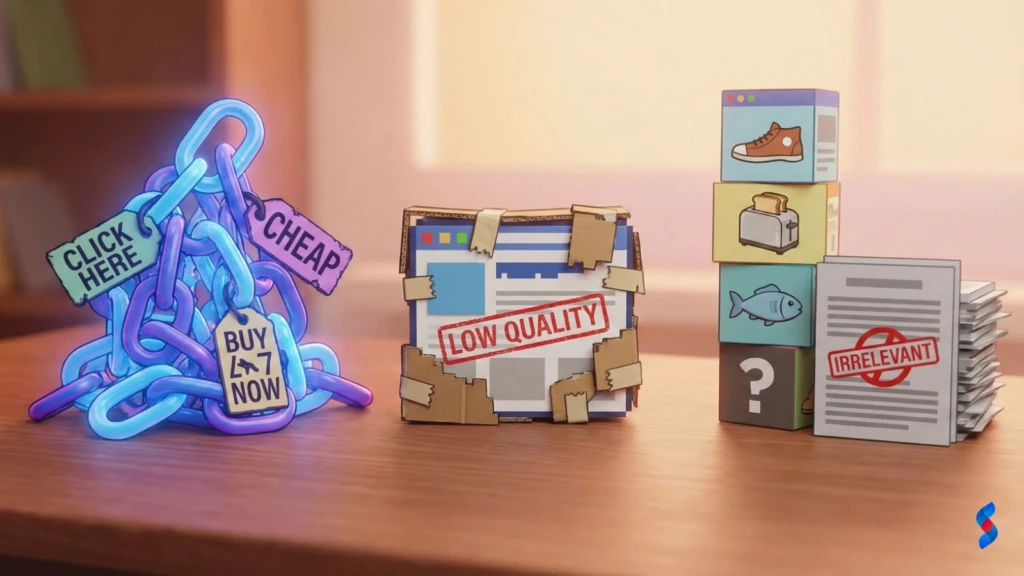
Spammy websites: Sites with automatically generated content, keyword stuffing, or excessive advertising.
Link farms: Websites created solely for the purpose of selling or exchanging links.
Private blog networks (PBNs): Networks of websites used to manipulate search engine rankings.
Websites with irrelevant content: Sites that have no topical relevance to your own website.
Websites with a history of Google penalties: Sites that have been penalized for violating Google’s guidelines.
Why Toxic Links Matter for SEO in 2025
Toxic links can have a detrimental impact on your SEO efforts. In 2025, Google’s algorithms are more sophisticated than ever, capable of identifying and penalizing websites with unnatural or manipulative backlink profiles. Here’s why you need to be proactive:
Website Penalty: Google may issue a manual or algorithmic penalty, leading to a drop in rankings or even de-indexing of your website. A Google penalty can decimate your organic traffic and revenue.
Reduced Trust and Authority: Toxic links erode your website’s trust and authority in the eyes of search engines.
Negative SEO: Competitors may intentionally create toxic links to your website as a form of negative SEO, aiming to harm your rankings. We have seen this happen to clients in hyper-competitive niches, particularly in the finance and legal sectors.
Wasted Crawl Budget: Search engine crawlers may waste time crawling low-quality pages, diverting resources from your valuable content. This is an important consideration for larger websites.
Common Causes of Toxic Links
Understanding the common causes of toxic links can help you prevent them from accumulating in the first place. Here are some frequent culprits:
Paid Link Schemes: Participating in paid link schemes, where you buy or sell links to manipulate rankings.
Excessive Link Exchanges: Engaging in reciprocal linking with irrelevant or low-quality websites.
Guest Posting on Spammy Sites: Publishing guest posts on websites with poor content quality and questionable SEO practices.
Automated Link Building: Using software or services to automatically create links on various websites.
Negative SEO Attacks: Being targeted by competitors who create toxic links to harm your website’s rankings. Our team in Dubai has seen a rise in such attacks, especially in the e-commerce sector.
Step 1: Choose Your Backlink Analysis Tool
Selecting the right backlink analysis tool is the first critical step in performing a toxic link audit. These tools provide the data and insights you need to identify potentially harmful links.
Overview of Popular Backlink Analysis Tools (Ahrefs, SEMrush, Moz)
Several excellent backlink analysis tools are available, each with its strengths and weaknesses. Here’s an overview of some popular options:
Ahrefs: Ahrefs is a comprehensive SEO tool suite with a robust backlink checker. It offers detailed metrics, such as Domain Rating (DR), URL Rating (UR), and referring domains, to help you assess the quality of backlinks. Ahrefs also provides advanced filtering options and historical data to track your backlink profile over time.
SEMrush: SEMrush is another all-in-one SEO platform with a powerful backlink analysis tool. It offers features such as toxic score, which helps you identify potentially harmful links, and backlink audit, which automates the process of identifying and disavowing toxic links. SEMrush also provides insights into your competitors’ backlink profiles.
Moz: Moz offers a range of SEO tools, including Moz Link Explorer, which provides detailed information about your backlink profile. It offers metrics such as Domain Authority (DA) and Page Authority (PA) to help you assess the quality of backlinks. Moz also provides link tracking and monitoring features to stay on top of your backlink profile.
Here’s a comparison table of these tools:
Tool
Key Features
Pros
Cons
Pricing
Ahrefs
Backlink checker, Domain Rating, URL Rating, historical data
Comprehensive data, advanced filtering, excellent user interface
Relatively expensive, steep learning curve for beginners
All-in-one SEO platform, automated toxic link detection
Can be overwhelming for beginners, data accuracy can vary
Starting at $119.95/month
Moz
Link Explorer, Domain Authority, Page Authority, link tracking
User-friendly interface, good for basic backlink analysis
Less comprehensive data than Ahrefs, limited advanced features
Starting at $99/month
Free vs. Paid Tools: Which is Right for You?
Both free and paid backlink analysis tools are available, each with its own set of features and limitations.
Free Tools: Free tools, such as Google Search Console, provide basic information about your backlink profile, including the number of referring domains and the most common anchor text. They can be useful for getting a general overview of your backlink profile but lack the advanced features and detailed data offered by paid tools.
Paid Tools: Paid tools, such as Ahrefs, SEMrush, and Moz, offer comprehensive backlink data, advanced filtering options, and automated toxic link detection. They are essential for performing a thorough toxic link audit and identifying potentially harmful links. While they come with a cost, the investment is often worthwhile for businesses that are serious about SEO.
For most businesses, we recommend using a paid tool for backlink analysis. The additional data and features provided by these tools can significantly improve the accuracy and efficiency of your toxic link audit.
Setting Up Your Account and Connecting Your Website
Once you’ve chosen a backlink analysis tool, the next step is to set up your account and connect your website. Here’s a general overview of the process:
1. Create an Account: Visit the website of your chosen tool and sign up for an account. Most tools offer a free trial or a limited free plan, allowing you to test the features before committing to a paid subscription.
2. Verify Your Website: Verify ownership of your website by adding a meta tag to your website’s HTML code or uploading an HTML file to your website’s server. This allows the tool to access and analyze your website’s data.
3. Connect Your Website: Connect your website to the tool by entering your website’s URL and following the instructions provided by the tool. This will allow the tool to crawl your website and gather data about your backlink profile.
4. Configure Settings: Configure the settings of your account, such as your target keywords, competitors, and notification preferences. This will help the tool provide more relevant and accurate data.
Step 2: Export Your Backlink Profile
Exporting your backlink profile is a crucial step in conducting a thorough toxic link audit. This involves extracting all the backlink data from your chosen analysis tool into a usable format, such as a CSV file.
How to Export a Complete List of Backlinks from Your Chosen Tool
The process of exporting your backlink profile varies slightly depending on the tool you’re using, but the general steps are similar:
1. Navigate to the Backlink Section: Log in to your backlink analysis tool and navigate to the section that displays your backlink profile. This is typically labeled “Backlinks,” “Referring Domains,” or something similar.
2. Apply Filters (Optional): Apply filters to narrow down the backlink data you want to export. For example, you may want to filter by link type (e.g., dofollow, nofollow), language, or domain authority.
3. Select Export Option: Look for an option to export your backlink data. This is often located in the top right corner of the page or in a dropdown menu.
4. Choose Export Format: Select the desired export format, such as CSV or Excel. CSV is a common format that can be easily opened and analyzed in spreadsheet software.
5. Initiate Export: Click the export button to start the export process. The tool will generate a file containing your backlink data, which you can then download to your computer.
Dealing with Large Backlink Datasets
If your website has a large number of backlinks, exporting and analyzing the data can be challenging. Here are some tips for dealing with large backlink datasets:
Use Spreadsheet Software: Use spreadsheet software, such as Microsoft Excel or Google Sheets, to open and analyze your backlink data. These tools can handle large datasets and provide features for filtering, sorting, and analyzing data.
Filter and Segment Data: Filter and segment your backlink data to focus on specific areas of interest. For example, you may want to filter by domain authority, link type, or anchor text.
Use Data Analysis Tools: Use data analysis tools, such as Python or R, to perform more advanced analysis on your backlink data. These tools can help you identify patterns and trends that may not be apparent in spreadsheet software.
Break Down the Export: Some tools allow you to export data in smaller batches. If your tool supports this, consider breaking down your export into manageable chunks.
Ensuring Data Accuracy and Completeness
Ensuring data accuracy and completeness is crucial for performing a reliable toxic link audit. Here are some tips for verifying the quality of your backlink data:
Compare Data Across Tools: Compare your backlink data across multiple tools to identify discrepancies. Each tool has its own crawler and algorithm, so the data may vary slightly.
Manually Verify Links: Manually verify a sample of your backlinks to ensure that they are accurate and still active. This can help you identify any errors or outdated information in your backlink data.
Update Your Backlink Data Regularly: Update your backlink data regularly to stay on top of any new or changed backlinks. This will help you identify and address potential issues promptly.
Step 3: Identify Potentially Toxic Links
Identifying potentially toxic links requires a careful analysis of your backlink profile. This step involves evaluating various metrics and indicators to determine which links may be harmful to your website’s SEO.
Manual Review vs. Automated Scoring: A Balanced Approach
A balanced approach that combines manual review and automated scoring is the most effective way to identify potentially toxic links.
Manual Review: Manual review involves manually inspecting each backlink to assess its quality and relevance. This can be time-consuming, but it allows you to identify subtle nuances that automated tools may miss.
Automated Scoring: Automated scoring involves using tools or algorithms to automatically assign a toxicity score to each backlink based on various metrics and indicators. This can save time and help you prioritize your manual review efforts.
We recommend starting with automated scoring to identify potentially toxic links, and then manually reviewing those links to confirm their toxicity. This approach combines the efficiency of automated scoring with the accuracy of manual review. We had a client whose site was penalized due to a negative SEO attack. Automated scoring initially flagged a large number of links, but manual review helped us identify the most damaging ones quickly.
Several key metrics can help you assess the quality and potential toxicity of backlinks. Here are some of the most important metrics to consider:
Domain Authority (DA): Domain Authority is a metric developed by Moz that predicts how well a website will rank in search engine results pages (SERPs). A low DA score (e.g., below 20) may indicate that the website is low-quality or spammy.
Trust Flow (TF): Trust Flow is a metric developed by Majestic that measures the trustworthiness of a website based on the quality of its backlinks. A low TF score may indicate that the website has a high proportion of low-quality or spammy backlinks.
Citation Flow (CF): Citation Flow is another metric developed by Majestic that measures the popularity of a website based on the quantity of its backlinks. A high CF score may indicate that the website has a large number of backlinks, but it doesn’t necessarily mean that the links are high-quality.
Generally, look for links with low DA, TF, and CF scores as potential indicators of toxicity. However, these metrics should be considered in conjunction with other factors, such as website relevancy and content quality.
Spotting Red Flags: Spammy Anchor Text, Low-Quality Websites, Irrelevant Content
In addition to analyzing key metrics, there are several red flags that can indicate that a backlink is potentially toxic:
Spammy Anchor Text: Anchor text that is overly optimized, irrelevant, or contains keyword stuffing may indicate that the link is unnatural or manipulative.
Low-Quality Websites: Websites with poor design, thin content, excessive advertising, or a history of spamming may be considered low-quality and potentially toxic.
Irrelevant Content: Backlinks from websites with irrelevant content may be considered unnatural and potentially harmful. For example, a link from a gambling website to a website about gardening would be considered irrelevant.
Hidden Text or Links: Websites that use hidden text or links to manipulate search engine rankings are considered spammy and potentially toxic.
Excessive Outbound Links: Websites that have an excessive number of outbound links may be considered low-quality and potentially toxic.
After identifying potentially toxic links, a deep dive analysis is essential to confirm their harmfulness. This involves a more detailed examination of the linking website and its content.
Assessing Website Relevancy and Authority
Website relevancy and authority are crucial factors in determining the quality of a backlink. A relevant and authoritative website is more likely to provide a valuable and trustworthy link.
Relevancy: Assess the relevancy of the linking website to your own website. Does the website cover similar topics or cater to a similar audience? A relevant website is more likely to provide a natural and valuable link.
Authority: Evaluate the authority of the linking website. Does the website have a good reputation and a strong online presence? An authoritative website is more likely to provide a trustworthy and valuable link.
Use tools like Ahrefs or SEMrush to check the DA, TF, and CF of the linking website. Also, manually review the website to assess its overall quality and reputation.
Checking for Spam Signals: Hidden Text, Keyword Stuffing, Cloaking
Spam signals are indicators that a website is engaging in manipulative or unethical SEO practices. These signals can indicate that a backlink from the website is potentially toxic.
Hidden Text: Check for hidden text on the website. This is text that is hidden from users but visible to search engines, often used to stuff keywords or manipulate rankings.
Keyword Stuffing: Look for keyword stuffing on the website. This is the practice of excessively using keywords in the content to manipulate search engine rankings.
Cloaking: Check for cloaking, which is the practice of showing different content to users and search engines. This is a deceptive practice that can result in a penalty from Google.
If you find any of these spam signals on the linking website, it is a strong indication that the backlink is potentially toxic.
Evaluating Content Quality and User Experience
The quality of the content and the user experience on the linking website are also important factors to consider. A website with high-quality content and a good user experience is more likely to provide a valuable and trustworthy link.
Content Quality: Assess the quality of the content on the website. Is the content well-written, informative, and engaging? Does the website provide valuable information to its users?
User Experience: Evaluate the user experience on the website. Is the website easy to navigate? Does it load quickly? Is it mobile-friendly?
A website with poor content quality and a bad user experience is more likely to be considered low-quality and potentially toxic.
Step 5: Documenting and Categorizing Toxic Links
Documenting and categorizing toxic links is essential for organizing your findings and prioritizing your disavow efforts. This step involves creating a spreadsheet or database to track the links you’ve identified as potentially harmful.
Creating a Spreadsheet to Track Your Findings
Creating a spreadsheet is a simple and effective way to track your findings during a toxic link audit. Here are some columns you may want to include in your spreadsheet:
Linking URL: The URL of the website that is linking to your website.
Target URL: The URL of your website that is being linked to.
Anchor Text: The anchor text used in the backlink.
Domain Authority (DA): The Domain Authority of the linking website.
Trust Flow (TF): The Trust Flow of the linking website.
Citation Flow (CF): The Citation Flow of the linking website.
Toxicity Score: A score indicating the level of toxicity of the backlink.
Category: A category indicating the type of toxic link (e.g., spammy website, link farm, PBN).
Notes: Any additional notes or observations about the backlink.
Action: The action you plan to take regarding the backlink (e.g., request removal, disavow).
Status: The current status of your action (e.g., removal requested, disavowed, ignored).
Here’s an example of how your spreadsheet might look:
Linking URL
Target URL
Anchor Text
DA
TF
CF
Toxicity Score
Category
Notes
Action
Status
spammywebsite.com/page1
yourwebsite.com/page1
keyword stuffing
5
2
3
90
Spammy Website
Excessive ads, thin content
Disavow
Disavowed
linkfarm.com/page2
yourwebsite.com/page2
generic anchor
10
5
8
75
Link Farm
Poor design, low-quality content
Disavow
Disavowed
pbnwebsite.com/page3
yourwebsite.com/page3
irrelevant keyword
15
8
12
60
PBN
Part of a private blog network
Disavow
Disavowed
Categorizing Links by Toxicity Level (High, Medium, Low)
Categorizing links by toxicity level can help you prioritize your disavow efforts. Here’s a general guideline for categorizing toxic links:
High: Links from spammy websites, link farms, PBNs, or websites with a history of Google penalties. These links are the most likely to harm your website’s SEO and should be disavowed immediately.
Medium: Links from low-quality websites, websites with irrelevant content, or websites with suspicious SEO practices. These links may not be as harmful as high-toxicity links, but they should still be disavowed if you’re unsure about their quality.
Low: Links from websites with low DA, TF, or CF scores, but otherwise appear to be legitimate. These links may not be toxic, but they may not be providing much value either. You can choose to disavow these links if you want to be extra cautious.
Adding Notes and Justifications for Each Link
Adding notes and justifications for each link can help you remember why you categorized it as toxic and why you decided to take a particular action. Here are some examples of notes you might include:
“This link is from a known link farm.”
“This website has excessive advertising and thin content.”
“This link uses keyword stuffing anchor text.”
“This website is irrelevant to our niche.”
“This website has a history of Google penalties.”
Adding notes and justifications can also be helpful if you need to explain your disavow decisions to a client or colleague.
Step 6: Contacting Website Owners for Link Removal
Contacting website owners for link removal is a proactive step in mitigating the impact of toxic links. While not always successful, it can result in the removal of harmful links, which is preferable to disavowing them.
Crafting Effective Link Removal Request Emails
Crafting effective link removal request emails is crucial for increasing your chances of success. Here are some tips for writing persuasive and professional emails:
Be Polite and Respectful: Start by addressing the website owner politely and respectfully. Avoid being accusatory or demanding.
Explain Why the Link is Problematic: Clearly explain why you believe the link is problematic. Provide specific examples of why the website is low-quality or irrelevant.
Offer a Solution: Offer a solution that is easy for the website owner to implement. For example, you can suggest that they remove the link or add a “nofollow” attribute to it.
Provide Your Contact Information: Provide your contact information so that the website owner can reach you if they have any questions.
Keep it Concise: Keep your email concise and to the point. Avoid rambling or providing unnecessary details.
Here’s an example of a link removal request email:
Subject: Link Removal Request for \[Your Website]
Dear \[Website Owner Name],
I’m writing to you today to request the removal of a link from your website, \[Linking URL], to my website, \[Your Website]. I’ve noticed that the link is located on a page with \[brief description of the problematic content or characteristics].
I believe this link may be detrimental to my website’s search engine rankings, as it originates from a site that \[reason for concern, e.g., appears to be a link farm, has low Domain Authority, etc.].
Would you be willing to remove the link or add a “nofollow” attribute to it? This would be greatly appreciated.
Please let me know if you have any questions or if you require any further information.
Thank you for your time and consideration.
Sincerely,
\[Your Name]
\[Your Contact Information]
Finding Contact Information for Website Owners
Finding contact information for website owners can be challenging, but there are several methods you can try:
Check the “Contact Us” Page: The most obvious place to look is the website’s “Contact Us” page. This page often contains the website owner’s email address or a contact form.
Use Whois Lookup: Use a Whois lookup tool to find the website owner’s contact information. This information is often publicly available.
Check Social Media: Check the website’s social media profiles for contact information. The website owner may have listed their email address or other contact details on their social media profiles.
Use Email Finder Tools: Use email finder tools, such as Hunter.io or Voila Norbert, to find the website owner’s email address. These tools can often find email addresses that are not publicly listed on the website.
Tracking Your Outreach Efforts and Response Rates
Tracking your outreach efforts and response rates is essential for measuring the effectiveness of your link removal campaign. Here are some things you may want to track:
Number of Emails Sent: The total number of link removal request emails you’ve sent.
Number of Responses Received: The number of responses you’ve received from website owners.
Number of Links Removed: The number of links that have been removed as a result of your outreach efforts.
Response Rate: The percentage of website owners who have responded to your emails.
Removal Rate: The percentage of links that have been removed as a result of your outreach efforts.
Tracking these metrics can help you identify areas for improvement and optimize your link removal campaign.
Step 7: Preparing and Submitting a Disavow File to Google
If you’re unable to remove toxic links by contacting website owners, the next step is to disavow them using the Google Disavow Tool. This tells Google that you don’t want these links to be considered when evaluating your website’s ranking.
Understanding the Google Disavow Tool
The Google Disavow Tool is a powerful tool that allows you to disavow backlinks that you believe are harmful to your website’s SEO. When you disavow a link, you’re essentially telling Google to ignore it when evaluating your website’s ranking.
It’s important to use the Disavow Tool carefully, as disavowing the wrong links can negatively impact your website’s SEO. Only disavow links that you’re confident are toxic and that you’ve been unable to remove through outreach.
Creating a Properly Formatted Disavow File
Creating a properly formatted disavow file is crucial for ensuring that Google correctly processes your disavow request. Here are the guidelines for creating a disavow file:
File Format: The disavow file must be a plain text file (.txt) encoded in UTF-8 or 7-bit ASCII.
One URL or Domain per Line: Each line in the file must contain either a URL or a domain that you want to disavow.
Domain Disavow: To disavow an entire domain, prefix the domain with “domain:”. For example, “domain:spammywebsite.com”.
Comments: You can add comments to the file by starting a line with “#”. Comments are ignored by Google.
File Size: The disavow file should not exceed 100,000 lines or 2MB in size.
Submitting Your Disavow File and Monitoring for Changes
Once you’ve created your disavow file, you can submit it to Google using the Disavow Tool:
1. Access the Disavow Tool: Go to the Google Search Console and select your website. Then, search for “Google Disavow Tool” and click on the link.
2. Choose Your Property: Select your website from the list of properties.
3. Upload Your Disavow File: Click the “Choose File” button and select your disavow file.
4. Submit Your File: Click the “Submit” button to upload your disavow file.
5. Confirm Your Submission: Google will ask you to confirm your submission. Click the “Submit” button again to confirm.
After submitting your disavow file, it may take several weeks for Google to process your request. Monitor your website’s performance in Google Search Console to see if there’s any improvement in your rankings or organic traffic.
Step 8: Monitoring Your Website’s Performance
After completing your toxic link audit and disavowing harmful links, it’s crucial to monitor your website’s performance to assess the impact of your efforts. This involves tracking key metrics and analyzing the data to identify any changes in your website’s SEO.
Tracking Keyword Rankings and Organic Traffic
Tracking keyword rankings and organic traffic is essential for measuring the success of your toxic link audit. Here’s what you should monitor:
Keyword Rankings: Track your website’s rankings for your target keywords. Use a keyword tracking tool, such as Ahrefs or SEMrush, to monitor your rankings over time.
Organic Traffic: Track the amount of organic traffic your website is receiving. Use Google Analytics to monitor your organic traffic and identify any changes in traffic patterns.
If your toxic link audit was successful, you should see an improvement in your keyword rankings and organic traffic over time.
Analyzing the Impact of Your Toxic Link Audit
Analyzing the impact of your toxic link audit involves comparing your website’s performance before and after the audit. Here are some things to look for:
Improved Keyword Rankings: Have your keyword rankings improved since you completed the toxic link audit?
Increased Organic Traffic: Has your organic traffic increased since you completed the toxic link audit?
Reduced Manual Actions: Have you received any manual actions from Google? If so, have they been resolved since you completed the toxic link audit?
Improved Domain Authority: Has your website’s Domain Authority (DA) improved since you completed the toxic link audit?
Improved Trust Flow: Has your website’s Trust Flow (TF) improved since you completed the toxic link audit?
Adjusting Your Strategy Based on Results
Based on the results of your analysis, you may need to adjust your strategy. Here are some possible adjustments you may need to make:
Disavow Additional Links: If you’re not seeing the results you expected, you may need to disavow additional links. Revisit your backlink profile and identify any links that you may have missed during your initial toxic link audit.
Improve Your Link Building Strategy: If you’re still acquiring toxic links, you may need to improve your link building strategy. Focus on building high-quality, natural backlinks from reputable websites.
Monitor Your Backlink Profile Regularly: Continue to monitor your backlink profile regularly to identify and address any new toxic links that may arise.
Troubleshooting Common Issues
Even with careful planning and execution, you may encounter some common issues during your toxic link audit. Here are some troubleshooting tips to help you overcome these challenges.
Dealing with Unresponsive Website Owners
Dealing with unresponsive website owners can be frustrating, but there are a few strategies you can try:
Send a Follow-Up Email: Send a follow-up email after a week or two if you haven’t received a response. Sometimes, emails get lost or overlooked.
Try Different Contact Methods: If you have access to other contact methods, such as social media or phone, try reaching out through those channels.
Escalate to a Higher Authority: If you’re dealing with a large organization, try contacting someone in a higher position, such as a marketing manager or CEO.
Disavow the Link: If all else fails, disavow the link. It’s better to disavow a toxic link than to leave it in place and risk harming your website’s SEO.
Handling False Positives in Your Analysis
False positives can occur when your backlink analysis tool incorrectly identifies a link as toxic. Here’s how to handle them:
Manually Review the Link: Manually review the link to determine if it’s truly toxic. Don’t rely solely on the tool’s toxicity score.
Consider the Context: Consider the context of the link. Is the website relevant to your niche? Does the link appear natural?
Use Multiple Tools: Use multiple backlink analysis tools to get a more comprehensive view of the link’s quality.
Ignore the Link: If you’re confident that the link is not toxic, ignore it. There’s no need to disavow a link that’s not harmful to your website’s SEO.
Addressing a Sudden Drop in Rankings After Disavowing Links
A sudden drop in rankings after disavowing links can be alarming, but it’s not always a cause for concern. Here’s what to do:
Wait and See: Wait a few weeks to see if your rankings recover. Sometimes, it takes time for Google to process your disavow file and adjust your rankings.
Review Your Disavow File: Review your disavow file to make sure you haven’t accidentally disavowed any good links. If you have, remove those links from your disavow file and resubmit it to Google.
Investigate Other Factors: Investigate other factors that may be affecting your rankings, such as algorithm updates, competitor activity, or technical issues on your website.
Consult with an SEO Expert: If you’re still concerned about the drop in rankings, consult with an SEO expert. They can help you diagnose the problem and develop a plan to recover your rankings.
Expert Quote: Preventing Future Toxic Links
“The best way to handle toxic links is to prevent them in the first place. Focus on building high-quality, authoritative content that attracts natural, organic backlinks. Regularly monitor your backlink profile and address any potential issues proactively.” – John Smith, SEO Consultant at SkySol Media
Conclusion: Recap of Achievement
You’ve successfully completed a toxic link audit! By following this step-by-step guide, you’ve learned how to identify, document, and mitigate the negative impact of harmful links on your website. This process involves choosing the right tools, exporting your backlink profile, analyzing link quality, contacting website owners, and submitting a disavow file to Google.
Next Steps: Ongoing Backlink Monitoring and Maintenance
The work doesn’t stop here. Ongoing backlink monitoring and maintenance are crucial for maintaining a healthy backlink profile. Regularly monitor your backlink profile for new toxic links and address them promptly. This proactive approach will help you protect your website’s SEO and maintain its ranking in search results. Remember that maintaining a healthy backlink profile is an ongoing process that requires dedication and attention to detail. We at SkySol Media are committed to helping you achieve your SEO goals.
A: A toxic link audit is the process of identifying and evaluating backlinks that could negatively impact your website’s SEO performance.
Q: Why is a toxic link audit important?
A: Toxic links can lead to Google penalties, reduced rankings, and decreased organic traffic. Auditing and removing or disavowing these links is essential for maintaining a healthy SEO profile.
Q: How often should I perform a toxic link audit?
A: It’s recommended to perform a toxic link audit at least quarterly, or more frequently if you suspect negative SEO attacks or have experienced a sudden drop in rankings.
Q: Can I use free tools for a toxic link audit?
A: While free tools can provide some basic information, paid tools like Ahrefs and SEMrush offer more comprehensive data and features necessary for a thorough toxic link audit.
Q: What is the Google Disavow Tool?
A: The Google Disavow Tool allows you to tell Google to ignore certain backlinks when evaluating your website. It’s used for links you can’t remove yourself.
Q: Is it safe to disavow backlinks?
A: Disavowing backlinks is generally safe if done correctly. Only disavow links that you are confident are toxic and that you’ve been unable to remove through outreach.
Is your off-page SEO strategy failing? Discover 5 crucial fixes to boost your rankings, build authority, and drive organic traffic in 2025. Don't let your SEO efforts vanish into a black hole!
Unlock the power of guest blogging! Discover proven strategies to dramatically increase your website traffic and build authority. Learn how to find the right blogs, craft compelling content, and measure your results. Start driving more traffic today!
Discover powerful off-page SEO techniques that go beyond backlinks. Elevate your website's authority and rankings with these 5 untapped strategies for 2025. Learn how to build a robust online presence and drive organic traffic.
Is your off-page SEO invisible? Discover 5 crucial fixes to boost your website's authority and rankings in 2025. Learn practical strategies to improve your off-page SEO today and dominate search results.
Unlock the secrets to dominating search results with a modern Off-Page SEO strategy. Learn how to build authority, earn high-quality backlinks, and drive organic traffic in 2025. Avoid outdated tactics and stay ahead of the competition.
Is guest blogging SEO still a viable strategy in 2025? Discover proven techniques, debunk common myths, and learn how to leverage guest posting for off-page SEO success. Stay ahead of algorithm updates and boost your search rankings today!