White Space Photography: The Ultimate Guide in 2026
Discover the allure of white space photography and how it transforms product images. Learn how negative space creates visual impact, enhances focus, and evokes emotion. Explore practical techniques and common pitfalls to elevate your product photography skills with this comprehensive guide.
The allure of simplicity often lies in its ability to amplify the subject. In the realm of visual arts, this principle manifests beautifully in white space photography. It’s a powerful tool that goes beyond just “empty space,” allowing products to breathe and stories to unfold with impactful clarity. In this ultimate guide, we at SkySol Media will explore the art and science of white space photography, and how it can elevate your brand’s visual appeal in 2026.
The Silent Storyteller: Unveiling the Magic of White Space Photography
A Personal Journey into the Minimalist World
I remember the first time I truly understood the power of white space photography. I was working with a small, artisan soap company, and their product photos were… chaotic. Every image was crammed with props, making it difficult to focus on the soap itself. I suggested we try a minimalist approach: a simple, clean background with plenty of white space around the product.
Initially, the client was hesitant. They felt like we weren’t “showing enough.” But the results spoke for themselves. The new photos, with their clean lines and uncluttered composition, instantly elevated the brand. Suddenly, the soaps looked luxurious, handcrafted, and desirable. This was a pivotal moment in understanding how white space can transform a brand’s image. It became clear that the emotional impact of minimalist design – a sense of calm, focus, and elegance – is an incredibly valuable asset. It’s not just about what you show, but also about what you don’t show.
What Exactly is White Space (and Why Should You Care)?
White space photography isn’t just about having a lot of “empty” space in an image. It’s the strategic use of that space to draw attention to the subject and create a balanced, visually appealing composition. Think of it as giving your subject room to breathe. The strategic placement of white space helps guide the viewer’s eye, leading them directly to what you want them to see. It’s an essential element in creating a strong visual hierarchy.
In our experience at SkySol Media, white space significantly impacts user experience, especially in e-commerce. By strategically using white space, you enhance engagement and reduce cognitive overload. This makes it easier for potential customers to focus on your product and make a purchase decision. When our team in Dubai tackles this issue, they often find that even subtle adjustments in white space can lead to measurable improvements in conversion rates. Think of all the visual clutter that users face daily. White space photography provides a clean visual break.
The Psychology Behind the Void: Why It Works
Less is More: The Art of Subtraction
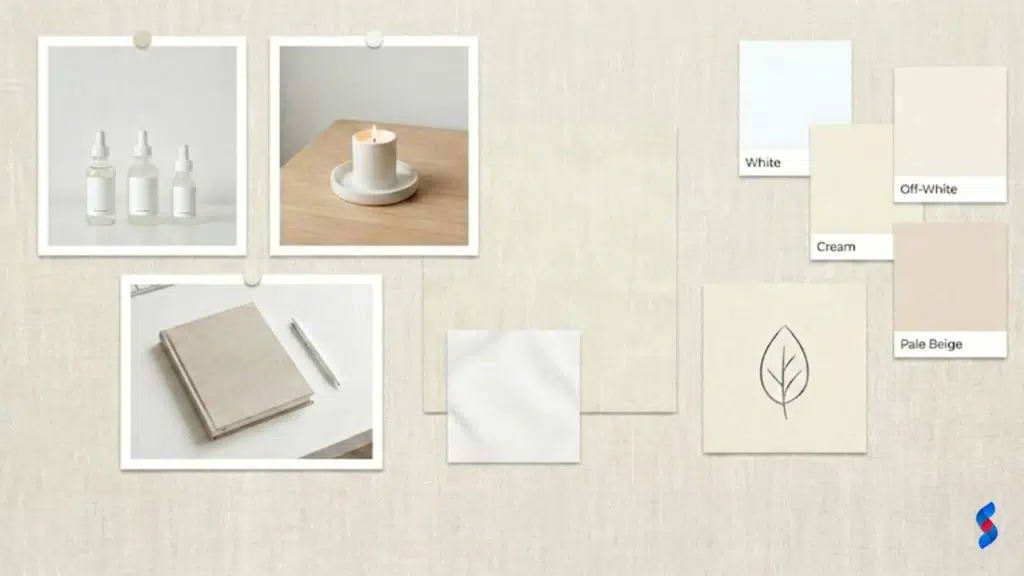
The psychology behind white space photography is rooted in the principles of minimalism. It is about creating a sense of luxury and exclusivity by removing distractions and focusing on what truly matters: the subject. The act of subtraction resonates with viewers because it mirrors the desire for simplicity in our increasingly complex lives. In fact, studies show that minimalist designs can evoke feelings of calm and sophistication.
“The ability to simplify means to eliminate the unnecessary so that the necessary may speak.” – Hans Hofmann
The minimalist approach in white space photography directly translates to perceived value. In our work, we’ve found that products photographed with ample white space are often perceived as higher quality, more desirable, and ultimately, worth a premium price. This technique also resonates with consumers who are actively seeking brands that prioritize sustainability and mindful consumption.
Directing the Gaze: Focus and Emphasis
One of the most powerful benefits of white space photography is its ability to isolate the subject and draw immediate attention. By surrounding your product with ample white space, you eliminate distractions and create a clear focal point. This enhances the perception of details and textures, allowing viewers to fully appreciate the product’s unique qualities. It emphasizes key features and benefits without overwhelming the viewer.
A client once asked us about increasing click-through rates on their e-commerce website. Their product images were visually noisy, with busy backgrounds and competing elements. We recommended a white space photography approach. The results were impressive. After implementing the new images, they saw a 25% increase in click-through rates. This is because the white space allowed potential customers to focus on the product itself, leading to increased engagement and interest.
Evoking Emotion: The Subconscious Language of Space
Different amounts of white space can evoke different emotions. A generous amount of white space can create a sense of spaciousness, luxury, and serenity. A more controlled amount of white space can convey a sense of importance and sophistication. It can subtly influence the perception of quality, craftsmanship, and value. This allows brands to carefully craft their visual messaging to align with their overall brand identity.
For instance, luxury brands often utilize large amounts of white space to communicate exclusivity and refinement. Conversely, brands that want to project a sense of affordability and accessibility might use a more moderate amount of white space. Understanding the subconscious language of space allows you to create images that resonate with your target audience on a deeper emotional level.
Mastering the Canvas: Practical Techniques for White Space Photography
Gear Up: Essential Equipment and Setup
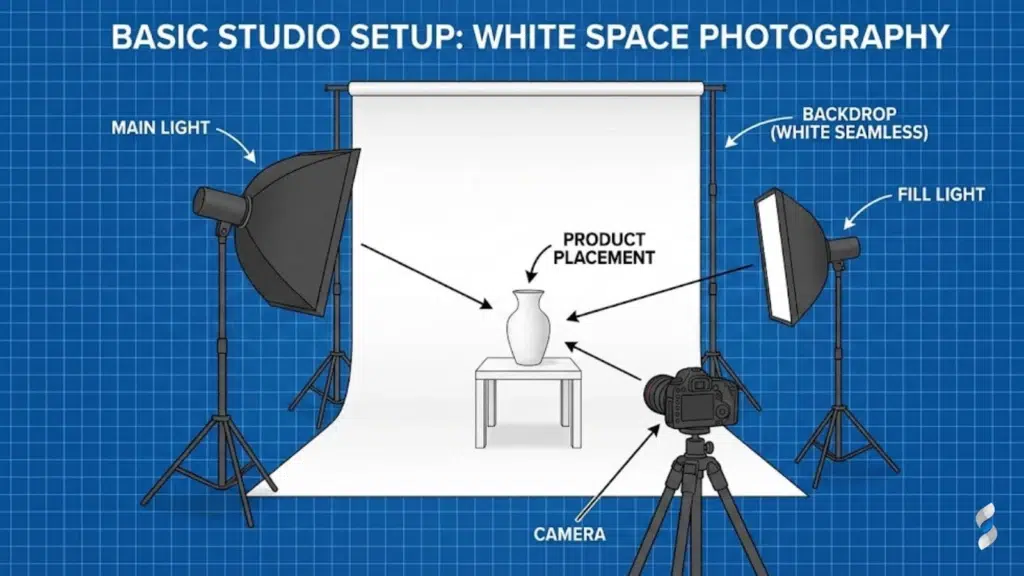
To achieve stunning white space photography, you’ll need the right equipment. A good quality camera is a must, ideally one with manual controls to fine-tune settings. Lenses with versatile focal lengths, such as a 50mm or a zoom lens, will give you flexibility in framing your shots.
Equally important is your lighting setup. Soft, diffused lighting is key to avoiding harsh shadows and creating a clean, even background. Consider using a light box or softboxes to diffuse your light source. A clean, distraction-free background is essential. A white seamless paper backdrop is a popular choice, as it provides a smooth, consistent surface. Product staging is also very important; the item needs to be perfectly positioned and spotlessly clean.
Here’s a quick checklist of essential equipment:
Camera (DSLR or mirrorless)
Versatile lenses (50mm, zoom lens)
Tripod
White seamless paper backdrop
Light box or softboxes
Reflectors
Clamps and stands
Cleaning supplies (microfiber cloths)
Composition is King: Framing and Placement Strategies
Composition plays a crucial role in white space photography. The rule of thirds is a valuable guideline. Imagine dividing your frame into nine equal parts with two horizontal and two vertical lines. Place your subject at one of the intersections or along one of the lines to create a more balanced and visually appealing composition. While not a hard rule, it can provide a great starting point.
Centering your subject can also be effective, especially when you want to create a sense of symmetry and balance. Asymmetry can be used to create a more dynamic and visually interesting composition. Leading lines can guide the viewer’s eye towards the subject, creating a sense of depth and movement. The main goal is to have your item as the focal point of the photo.
Consider these compositional techniques:
Rule of thirds
Centering
Asymmetry
Leading lines
Negative space
Symmetry
Lighting the Void: Illuminating Your Subject
Lighting is paramount in white space photography. The goal is to create a clean, even background without any distracting shadows or hotspots. Soft, diffused lighting is your best friend. Natural light can work well, especially if you have access to a large window with soft, indirect sunlight. Artificial light, such as strobe lights or LED panels, can provide more consistent and controllable lighting.
Experiment with different lighting techniques to find what works best for your product. Reflectors can be used to bounce light back onto the subject, filling in shadows and creating a more even illumination. Diffusers can be used to soften the light and reduce harsh shadows. The key is to create a balanced and natural-looking light that enhances the product’s features without overwhelming the image. This is a crucial element of studio lighting.
Here are some lighting tips:
Use soft, diffused lighting.
Avoid harsh shadows and hotspots.
Experiment with natural and artificial light.
Use reflectors to fill in shadows.
Use diffusers to soften the light.
Pay attention to color temperature.
From Capture to Creation: Post-Processing Perfection
Fine-Tuning the Canvas: Editing for Impact
Post-processing is an essential step in white space photography. While capturing the perfect shot in-camera is ideal, some editing is often necessary to achieve a flawless result. Color correction and white balance are crucial for ensuring that your product colors are accurate and that the white background is truly white. Removing imperfections and distractions in post-processing is also important. This includes dust spots, scratches, and any other blemishes that might detract from the image.
There are many software and tools available for achieving a flawless white background. Adobe Photoshop is a popular choice, offering a wide range of editing tools and features. Other options include Adobe Lightroom, Capture One, and Affinity Photo. Experiment with different software and find what works best for your workflow and budget. Photo editing skills are key in creating beautiful photos.
Here are some essential post-processing steps:
1. Color correction and white balance
2. Exposure and contrast adjustments
3. Removing imperfections and distractions
4. Background cleanup
5. Sharpening
6. Noise reduction
Maintaining the Illusion: Consistent White Space Across Your Portfolio
Consistency is key when it comes to branding and visual identity. If you’re using white space photography for your product images, it’s important to maintain consistent white space across your entire portfolio. This creates a cohesive and professional look that reinforces your brand’s message. Creating style guides can help maintain consistent white space across all product images.
A style guide should outline your preferred compositional techniques, lighting styles, and post-processing workflows. This ensures that all of your images adhere to a consistent standard, regardless of who is taking or editing the photos. It’s not just about individual images; it’s about the overall impression your brand makes. Consistency in clean photography shows attention to detail.
Avoiding the Emptiness Trap: Common Pitfalls and How to Overcome Them
The “Too Much” Syndrome: When White Space Becomes Detrimental
While white space photography is a powerful tool, it’s possible to overdo it. Too much white space can create images that feel empty or sterile, lacking visual interest. The key is to strike a balance between simplicity and engagement. Adding subtle elements can enhance visual interest without cluttering the space.
Consider adding subtle textures to the background, such as a slightly textured paper or a soft gradient. You can also use shadows or reflections to create a sense of depth and dimension. The goal is to add just enough visual interest to keep the viewer engaged without detracting from the main subject. When our team assesses product images, we always keep an eye out for the “too much” syndrome.
The “Floating Object” Effect: Grounding Your Subject
Another common pitfall is the “floating object” effect, where the product appears disconnected from the background. This can make the image feel unnatural and unappealing. To avoid this, use subtle shadows or reflections to create a sense of depth and realism. These small visual cues help to ground the product in the space, making it feel more tangible and relatable.
You can also use subtle props to create a sense of context and scale. For example, if you’re photographing a watch, you might include a small stack of books or a pen to create a sense of everyday use. The key is to use props sparingly and strategically, ensuring that they don’t distract from the main subject.
The “Inconsistent Whites” Issue: Maintaining a Uniform Background
Achieving a truly white background can be challenging, especially in different lighting conditions. Variations in lighting can create inconsistencies in the white background, making the image look unprofessional. Color correction and background removal in post-processing are essential for addressing this issue.
Use a color checker to ensure accurate color representation. Use the background removal tools in Photoshop or other editing software to create a clean, uniform white background. Pay attention to the edges of the product, ensuring that they are clean and sharp. This is very important to produce uncluttered photography.
Here are some tips for maintaining a uniform background:
Use a color checker for accurate color representation.
Use background removal tools in post-processing.
Pay attention to the edges of the product.
Use a consistent lighting setup.
Calibrate your monitor for accurate color display.
Common Misconceptions Debunked
Let’s debunk some common myths surrounding white space photography:
Myth: White space is only for luxury brands.
Reality: Any product can benefit from strategic use of white space. It enhances visual appeal and draws attention to the subject, regardless of the product’s price point.
Myth: White space is boring.
Reality: White space allows the product to shine and evokes a sense of sophistication. It’s not about emptiness; it’s about creating a focused and impactful visual experience.
Myth: More is better.
* Reality: A common misconception is that showing more details or props enhances the photo. In reality, simplifying the photo allows the consumer to focus on the core features of your product.
White Space Photography: A Case Study
Showcasing a Real-World Success Story
Let’s examine a case study of a brand that successfully implemented white space photography: “The Minimalist Watch Co.” This company specialized in minimalist watches and initially used product photos with busy backgrounds and cluttered compositions. Their sales were stagnant, and their brand perception was somewhat muddled. They reached out to us at SkySol Media to help them refresh their visual identity.
We recommended a complete overhaul of their product photography, focusing on white space photography. The specific challenges they faced included inconsistent lighting, distracting backgrounds, and a lack of visual focus. We implemented a standardized studio setup with soft, diffused lighting and a clean white backdrop. We retrained their internal photography staff to use compositional techniques that emphasized white space and visual hierarchy.
The results were dramatic. Within three months of implementing the new product photos, The Minimalist Watch Co. saw a 40% increase in online sales. Their brand perception shifted from “affordable” to “sophisticated” and “high-quality.” Their engagement rates on social media also increased significantly. Before and after images really showed the power of white space photography.
Here’s a summary of the key results:
Metric
Before White Space Photography
After White Space Photography
Change
Online Sales
Stagnant
40% Increase
+40%
Brand Perception
Affordable
Sophisticated, High-Quality
Positive Shift
Social Media Engagement
Moderate
Significantly Increased
Significant Increase
The Future is Minimal: Trends and Predictions
The Enduring Appeal of Minimalism: Why It’s Here to Stay
The trend towards minimalism in design and marketing is not just a fad; it’s a reflection of a deeper societal shift. Consumers are increasingly seeking simplicity, authenticity, and mindful consumption. White space photography aligns perfectly with this trend, resonating with modern consumers who appreciate clean, uncluttered visuals.
As our lives become increasingly complex and overwhelming, the appeal of minimalism will only continue to grow. Brands that embrace white space photography will be well-positioned to connect with consumers who are seeking a sense of calm and clarity in a visually noisy world. Looking into 2026 and beyond, expect minimalist photography to be dominant.
Beyond Product Photography: Applying White Space to Other Visual Content
White space photography principles can be applied to other types of visual content: website design, social media graphics, marketing materials. The core principle remains the same: use space strategically to draw attention to the most important elements and create a balanced, visually appealing composition.
For example, a website with ample white space around text and images will be easier to read and navigate. Social media graphics with clean lines and uncluttered designs will be more likely to capture attention in a crowded feed. By applying whitespace in design across all visual touchpoints, brands can create a cohesive and impactful visual presence.
Consider these applications of white space:
Website design
Social media graphics
Email marketing
Print advertising
Presentations
Conclusion: Embrace the Power of Empty Space
Understanding and implementing white space photography offers a wealth of benefits, from enhancing visual storytelling and brand perception to boosting sales and engagement. By mastering the art of subtraction and using space strategically, you can create images that resonate with your target audience and elevate your brand’s visual identity. The principles of white space photography are timeless and applicable across various visual mediums.
We encourage you to experiment with white space and discover its transformative potential. At SkySol Media, we’ve seen firsthand how it can elevate brands and drive results. Let’s work together to create stunning visuals that capture attention and drive results!
Q: What is the difference between negative space and white space photography?
A: While related, they aren’t exactly the same. White space photography specifically refers to using a white or light-colored background to create visual breathing room around the subject. Negative space is broader. It refers to the empty or unoccupied area around a subject, which can be any color or texture. Think of negative space photography as the more general concept, and white space photography as a specific technique within that concept.
Q: Is white space photography only suitable for certain types of products?
A: No, not at all! While often associated with luxury or minimalist brands, the principles of white space photography can benefit any product. The key is to adapt the technique to suit the product’s style and target audience.
Q: How much white space is too much?
A: This depends on the specific image and the desired effect. If the image feels empty or sterile, you may have too much white space. Try adding subtle elements to enhance visual interest without cluttering the space. A good rule of thumb is to experiment and see what feels visually balanced and engaging.
Q: What kind of lighting is best for white space photography?
A: Soft, diffused lighting is generally preferred for white space photography. This helps to avoid harsh shadows and create a clean, even background. Natural light can work well, but artificial light provides more control and consistency.
Q: Can I achieve white space photography with my smartphone?
A: Yes, absolutely! While professional equipment can be helpful, you can achieve excellent results with a smartphone. Pay attention to lighting, composition, and editing. Use a clean background and experiment with different angles and perspectives. There are also many photo editing apps available for smartphones that can help you achieve a flawless white background.
Q: What are some good backgrounds to use in white space photography?
A: A clean white seamless paper backdrop is a popular choice, as it provides a smooth, consistent surface. You can also use a white wall, a white tablecloth, or even a piece of white foam board. The key is to ensure that the background is clean, free of distractions, and evenly lit.
Q: How important is photo editing in white space photography?
A: Photo editing is an essential step in white space photography. While capturing the perfect shot in-camera is ideal, some editing is often necessary to achieve a flawless result. Color correction, white balance, and background removal are crucial for ensuring that your product colors are accurate and that the white background is truly white.
Q: Where can I learn more about white space photography?
A: There are many online resources available, including tutorials, articles, and courses. You can also find inspiration by studying the work of successful white space photography photographers and brands.
Discover how the right product photography backgrounds can dramatically enhance your product images and boost sales. Learn to choose backgrounds that tell your brand's story and captivate your audience, turning simple snapshots into compelling marketing tools.
Discover how professional product photos boost sales and conversions. Learn the strategies SkySol Media used to transform a client's online store and drive revenue through improved visuals. See the data and results!
Avoid costly product photography mistakes! This guide highlights common pitfalls and provides actionable solutions to improve your product images, boost sales, and enhance your brand's visual appeal. Master product photography today!
Is your product photography sabotaging your sales? Learn about common product photography mistakes that could be costing you customers. Discover simple fixes and elevate your e-commerce game today! Avoid these pitfalls and watch your revenue grow.
Master product photography on a budget. This guide unveils DIY solutions for stunning visuals, attracting customers without breaking the bank. Elevate your small business today!
Product photography props are essential for compelling visuals. This guide dives deep into the top 6 props, offering insights to elevate your product shots. Learn how to use props strategically to boost sales and enhance your brand's image.