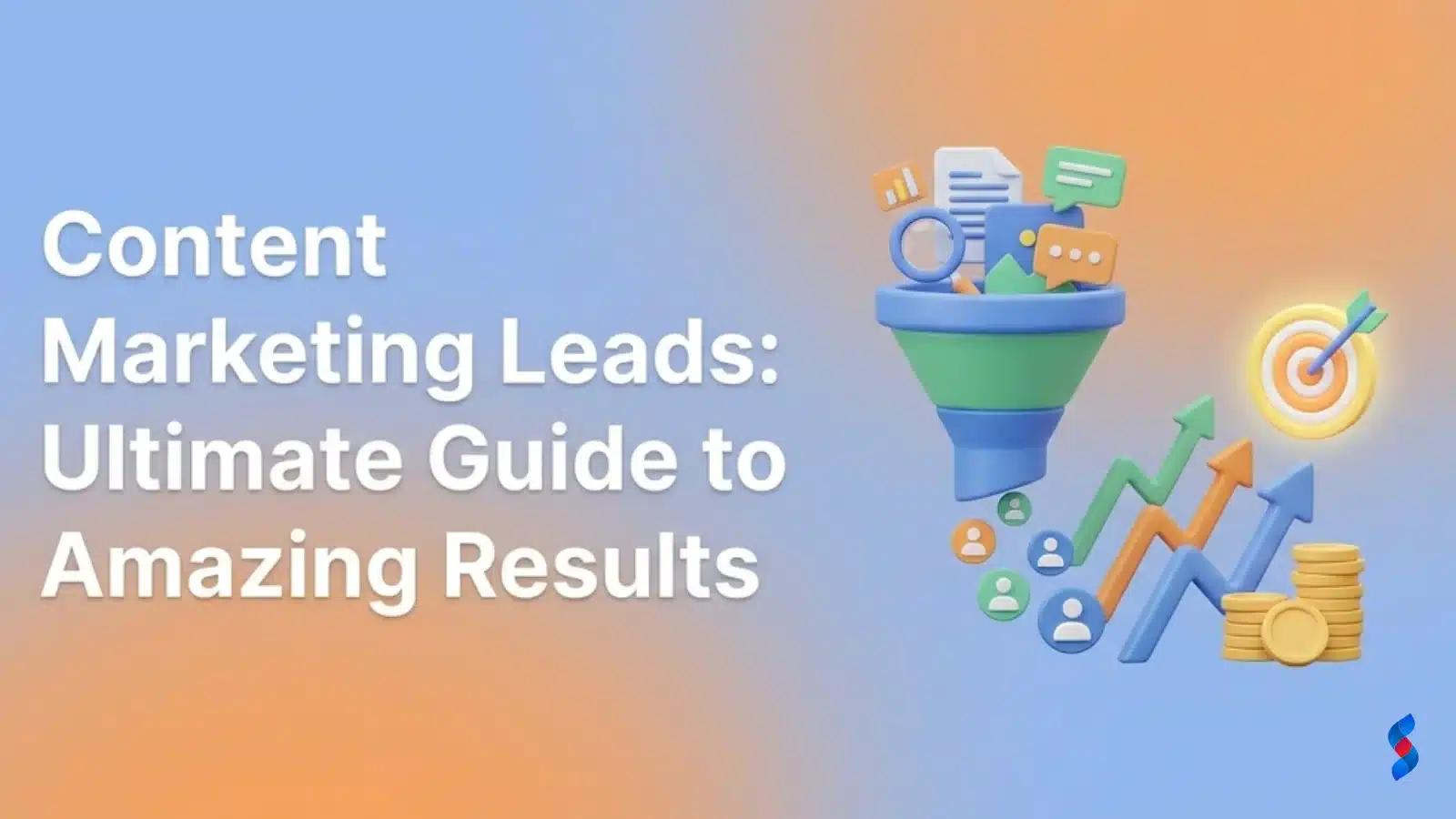
Content marketing leads are the lifeblood of any successful business in 2025. In today’s digital age, traditional marketing methods are losing their effectiveness, making content marketing an essential strategy for attracting and converting potential customers. This guide will delve deep into the world of content marketing leads and equip you with the knowledge and tools you need to generate amazing results.
Introduction: The Power of Content Marketing Leads in 2025
Content marketing has evolved from a supplementary marketing tactic to a core strategy for businesses of all sizes. At SkySol Media, we’ve seen firsthand how a well-executed content marketing plan can transform a company’s lead generation efforts. This guide focuses on how to generate high-quality content marketing leads that drive sales and increase your return on investment (ROI).
Why Content Marketing is Essential for Lead Generation Today
Content marketing is essential for lead generation today because it provides value to your audience, builds trust, and establishes your brand as an authority. People are tired of being bombarded with traditional advertising. They crave information, solutions, and authentic engagement. Content marketing delivers on these needs by offering valuable content that educates, entertains, and inspires.
By creating and distributing high-quality content, you attract potential customers to your website and social media channels. This inbound marketing approach is far more effective than outbound methods because it targets individuals who are already interested in your products or services. The power of content marketing lies in its ability to nurture leads through the sales funnel, guiding them from initial awareness to becoming loyal customers.
The Shifting Landscape of Lead Generation
The landscape of lead generation is constantly shifting, driven by changes in technology, consumer behavior, and search engine algorithms. Traditional methods like cold calling and mass email blasts are becoming less effective, as people are increasingly adept at filtering out unwanted messages.
Inbound marketing, particularly content marketing, has emerged as the leading approach to lead generation. This involves creating valuable content that attracts potential customers to your website, where they can learn more about your products or services and ultimately convert into leads.
The shift towards inbound marketing is fueled by several factors, including the rise of social media, the increasing importance of search engine optimization (SEO), and the growing demand for personalized experiences. As a result, businesses need to adapt their lead generation strategies to embrace these changes and stay ahead of the competition. At SkySol Media, we continuously monitor these shifts to provide our clients with the most up-to-date and effective strategies. Our team in Dubai finds that staying agile is the key to success.
Defining “Qualified Leads” in the Context of Content Marketing
Defining “qualified leads” is crucial for measuring the success of your content marketing efforts. A qualified lead is a potential customer who has expressed interest in your products or services and meets specific criteria that make them more likely to convert into a sale.
These criteria can vary depending on your industry, target audience, and business goals. However, some common factors include:
- Demographics: Age, location, job title, industry
- Behavior: Website visits, content downloads, social media engagement
- Needs: Specific problems they are trying to solve
- Budget: Ability to afford your products or services
- Authority: Decision-making power
By focusing on attracting and nurturing qualified leads, you can improve your conversion rates, increase your ROI, and ultimately drive more revenue. We had a client once who was generating a large number of leads, but their sales team was frustrated because few of them were actually qualified. By refining their content strategy to target a more specific audience, we helped them reduce the volume of leads but significantly increase the conversion rate.
Overview: What You’ll Learn in This Guide
This comprehensive guide will provide you with a step-by-step approach to generating amazing results with content marketing leads. You’ll learn how to:
- Understand your target audience and create buyer personas
- Craft content that attracts qualified leads
- Create lead magnets that convert
- Promote your content to reach a wider audience
- Nurture leads through the sales funnel
- Measure and analyze your results
- Implement advanced content marketing techniques
- Troubleshoot common problems
- Prepare for future trends in content marketing
By following the strategies outlined in this guide, you’ll be well-equipped to leverage the power of content marketing to generate a steady stream of qualified leads for your business.
Understanding Your Target Audience for Effective Lead Generation
Understanding your target audience is the foundation of any successful content marketing strategy. You can’t effectively attract and convert leads if you don’t know who you’re trying to reach. This section will guide you through the process of identifying your ideal customer profile (ICP), conducting audience research, and creating buyer personas.
Identifying Your Ideal Customer Profile (ICP)
Identifying your Ideal Customer Profile (ICP) is the first step in understanding your target audience. Your ICP is a fictional representation of the perfect customer for your products or services. This is the company or individual who will derive the most value from what you offer and, in turn, provide the most value to your business.
To identify your ICP, consider the following factors:
- Industry: What industries are your best customers in?
- Company Size: How many employees do they have? What is their annual revenue?
- Location: Where are they located geographically?
- Job Title: What are the job titles of the people you need to reach?
- Challenges: What are the biggest challenges they face?
- Goals: What are their key business goals?
By defining your ICP, you can focus your content marketing efforts on attracting the most promising leads. We often advise our clients to start by analyzing their existing customer base to identify common characteristics of their most successful and satisfied customers.
Conducting Audience Research: Tools and Techniques
Once you’ve identified your ICP, it’s time to conduct audience research to gain a deeper understanding of their needs, interests, and behaviors. There are several tools and techniques you can use for this purpose:
- Surveys: Create online surveys to gather direct feedback from your target audience.
- Interviews: Conduct one-on-one interviews with customers or potential customers to gain in-depth insights.
- Social Media Listening: Monitor social media channels to see what people are saying about your industry, competitors, and products or services.
- Website Analytics: Analyze your website traffic to see who is visiting your site, what content they are engaging with, and how they are finding you.
- Competitive Analysis: Research your competitors to see who they are targeting and what content they are creating.
By combining these research methods, you can develop a comprehensive understanding of your target audience and use this knowledge to inform your content marketing strategy.
Creating Buyer Personas to Guide Content Creation
Creating buyer personas is the next step in understanding your target audience. A buyer persona is a semi-fictional representation of your ideal customer, based on research and data about your existing and potential customers. Buyer personas provide a detailed picture of your target audience, including their demographics, motivations, goals, and pain points.
Each persona should have a name, a job title, and a detailed description of their background, responsibilities, and challenges. For example, you might create a persona called “Marketing Manager Mary,” who is responsible for generating leads for a B2B software company.
By creating buyer personas, you can tailor your content to address the specific needs and interests of your target audience. This will help you attract more qualified leads and improve your conversion rates. It’s not just about demographics; it’s about understanding their motivations and what keeps them up at night.
Aligning Content with Different Stages of the Buyer’s Journey
Aligning your content with different stages of the buyer’s journey is essential for effective lead nurturing. The buyer’s journey is the process that potential customers go through as they become aware of a problem, consider potential solutions, and ultimately make a purchase decision.
The buyer’s journey typically consists of three stages:
- Awareness Stage: The prospect is experiencing a problem or challenge and is looking for information to understand it better.
- Consideration Stage: The prospect has defined their problem and is researching potential solutions.
- Decision Stage: The prospect has chosen a solution and is comparing different vendors or products.
For each stage of the buyer’s journey, you should create content that addresses the specific needs and concerns of the prospect. For example, in the awareness stage, you might create blog posts or infographics that educate the prospect about their problem. In the consideration stage, you might offer case studies or white papers that compare different solutions. And in the decision stage, you might provide product demos or free trials to help the prospect make a final decision. Lead nurturing becomes significantly easier when you understand the buyer’s journey.
Crafting Content That Attracts Qualified Leads
Crafting content that attracts qualified leads is the heart of content marketing. This section will cover the importance of high-quality content, different content formats, keyword research, and SEO best practices.
The Importance of High-Quality, Valuable Content
High-quality, valuable content is the foundation of any successful content marketing strategy. Content that is well-written, informative, and engaging will attract and retain your target audience, build trust, and establish your brand as an authority.
To create high-quality content, focus on the following:
- Relevance: Ensure that your content is relevant to the needs and interests of your target audience.
- Originality: Create original content that offers a unique perspective or insights.
- Accuracy: Ensure that your content is accurate and well-researched.
- Clarity: Write in a clear and concise style that is easy to understand.
- Engagement: Use visuals, storytelling, and interactive elements to engage your audience.
Remember, your content is a reflection of your brand. By consistently producing high-quality content, you can build a strong reputation and attract more qualified leads. A common mistake we see is businesses prioritizing quantity over quality.
Content Formats That Drive Lead Generation (eBooks, Webinars, etc.)
Different content formats are effective for driving lead generation, depending on your target audience and goals. Here are some of the most popular and effective content formats:
- eBooks: In-depth guides that provide valuable information on a specific topic.
- Webinars: Online presentations that allow you to engage with your audience in real-time.
- Blog Posts: Short, informative articles that address specific questions or problems.
- Infographics: Visual representations of data that are easy to understand and share.
- Case Studies: Stories that showcase how your products or services have helped other customers.
- Templates: Ready-to-use documents that help your audience solve specific problems.
- Checklists: Step-by-step guides that help your audience accomplish specific tasks.
- White Papers: Detailed reports that provide in-depth analysis of a specific topic.
By experimenting with different content formats, you can determine which ones are most effective for attracting and converting leads. For instance, if you’re targeting a technical audience, white papers and eBooks might be more effective than infographics.
Keyword Research for Attracting the Right Audience
Keyword research is essential for attracting the right audience to your content. By identifying the keywords that your target audience is searching for, you can optimize your content to rank higher in search engine results pages (SERPs).
To conduct keyword research, use tools like Google Keyword Planner, SEMrush, or Ahrefs to identify relevant keywords with high search volume and low competition. Focus on long-tail keywords, which are longer, more specific phrases that indicate a higher level of intent.
Once you’ve identified your target keywords, incorporate them naturally into your content, including your title, headings, and body text. Avoid keyword stuffing, which can harm your search engine rankings.
Optimizing Content for Search Engines (SEO Best Practices)
Optimizing your content for search engines (SEO) is crucial for increasing its visibility and attracting more qualified leads. Here are some SEO best practices to follow:
- Keyword Optimization: Incorporate your target keywords naturally into your content.
- Title Tags: Create compelling title tags that accurately describe your content and include your target keywords.
- Meta Descriptions: Write concise meta descriptions that summarize your content and encourage users to click through from the SERPs.
- Header Tags: Use header tags (H1, H2, H3, etc.) to structure your content and highlight important keywords.
- Image Optimization: Optimize your images by using descriptive file names and alt tags.
- Internal Linking: Link to other relevant pages on your website to improve navigation and distribute link equity.
- External Linking: Link to authoritative websites to add credibility to your content.
- Mobile Optimization: Ensure that your website is mobile-friendly to provide a seamless user experience on all devices.
- Page Speed: Optimize your website’s loading speed to improve user experience and search engine rankings.
By following these SEO best practices, you can improve your content’s visibility and attract more qualified leads from search engines.
Creating Lead Magnets That Convert
Creating lead magnets that convert is a key component of any successful content marketing strategy. This section will cover what a lead magnet is, different types of lead magnets, how to create compelling offers, and how to design effective landing pages.
What is a Lead Magnet and Why is it Important?
A lead magnet is a valuable piece of content that you offer to potential customers in exchange for their contact information. It’s a way to attract leads and build your email list.
Lead magnets are important because they allow you to:
- Attract Qualified Leads: By offering valuable content, you can attract leads who are genuinely interested in your products or services.
- Build Your Email List: Lead magnets provide a way to capture contact information and build your email list, which you can then use for lead nurturing.
- Establish Your Authority: By offering valuable content, you can establish your brand as an authority in your industry.
- Drive Conversions: Lead magnets can help you drive conversions by providing potential customers with the information they need to make a purchase decision.
A successful lead magnet addresses a specific pain point of your target audience and offers a valuable solution.
Types of Lead Magnets That Work (Checklists, Templates, Guides)
Several types of lead magnets can be effective for attracting and converting leads. Here are some of the most popular options:
- Checklists: Step-by-step guides that help your audience accomplish specific tasks.
- Templates: Ready-to-use documents that help your audience solve specific problems.
- eBooks: In-depth guides that provide valuable information on a specific topic.
- Webinars: Online presentations that allow you to engage with your audience in real-time.
- Case Studies: Stories that showcase how your products or services have helped other customers.
- Free Trials: Access to your product or service for a limited time.
- Discount Codes: Exclusive discounts for new customers.
- Quizzes: Interactive assessments that provide personalized results.
- Calculators: Tools that help your audience solve specific problems or make decisions.
The best type of lead magnet for your business will depend on your target audience, your products or services, and your marketing goals. Experiment with different options to see what works best for you.
Creating Compelling Offers That Resonate with Your Audience
Creating compelling offers is crucial for maximizing the effectiveness of your lead magnets. Your offer should be irresistible to your target audience and clearly communicate the value they will receive in exchange for their contact information.
To create a compelling offer, focus on the following:
- Relevance: Ensure that your offer is highly relevant to the needs and interests of your target audience.
- Value: Clearly communicate the value that your audience will receive by downloading your lead magnet.
- Specificity: Be specific about what your audience will learn or achieve by using your lead magnet.
- Urgency: Create a sense of urgency by offering a limited-time bonus or discount.
- Scarcity: Highlight the limited availability of your lead magnet to increase its perceived value.
By crafting compelling offers, you can significantly increase the conversion rates of your lead magnets.
Designing Effective Landing Pages for Lead Magnet Downloads
Designing effective landing pages is essential for maximizing the number of leads you generate from your lead magnets. Your landing page should be visually appealing, easy to navigate, and optimized for conversions.
Here are some key elements of an effective landing page:
- Headline: A compelling headline that grabs the visitor’s attention and communicates the value of your offer.
- Subheadline: A supporting headline that provides additional details about your offer.
- Visuals: High-quality images or videos that showcase your lead magnet and its benefits.
- Bullet Points: A list of key benefits that highlights the value of your offer.
- Call-to-Action: A clear and concise call-to-action that encourages visitors to download your lead magnet.
- Form: A simple form that collects the visitor’s contact information.
- Social Proof: Testimonials, reviews, or social media shares that build trust and credibility.
By optimizing your landing pages for conversions, you can significantly increase the number of leads you generate from your lead magnets.
Promoting Your Content to Reach a Wider Audience
Promoting your content is crucial for reaching a wider audience and generating more qualified leads. This section will cover leveraging social media, email marketing, paid advertising, and influencer partnerships.
Leveraging Social Media for Content Distribution
Leveraging social media is an effective way to distribute your content and reach a wider audience. Share your content on relevant social media platforms, and engage with your followers to build relationships and drive traffic to your website.
Here are some tips for leveraging social media for content distribution:
- Choose the Right Platforms: Focus on the social media platforms that your target audience uses most frequently.
- Share Consistently: Post regularly to keep your content top-of-mind.
- Use Visuals: Incorporate images and videos into your social media posts to increase engagement.
- Engage with Your Followers: Respond to comments and questions, and participate in relevant conversations.
- Use Hashtags: Use relevant hashtags to increase the visibility of your posts.
- Run Contests and Giveaways: Run contests and giveaways to generate excitement and attract new followers.
- Promote Your Lead Magnets: Share your lead magnets on social media and encourage your followers to download them.
By effectively leveraging social media, you can significantly increase the reach and impact of your content.
Email Marketing for Promoting Content and Nurturing Leads
Email marketing is a powerful tool for promoting content and nurturing leads. Build an email list and send regular newsletters to your subscribers, featuring your latest content and exclusive offers.
Here are some tips for using email marketing for content promotion and lead nurturing:
- Segment Your Email List: Segment your email list based on demographics, interests, and behavior to send more targeted and personalized emails.
- Create Compelling Subject Lines: Write subject lines that grab the reader’s attention and encourage them to open your emails.
- Personalize Your Emails: Personalize your emails by using the recipient’s name and tailoring the content to their interests.
- Promote Your Latest Content: Share links to your latest blog posts, eBooks, and other content in your emails.
- Offer Exclusive Content: Provide exclusive content to your email subscribers to reward their loyalty.
- Nurture Your Leads: Send automated email sequences to nurture your leads through the sales funnel.
- Track Your Results: Monitor your email open rates, click-through rates, and conversion rates to measure the effectiveness of your campaigns.
By effectively using email marketing, you can build relationships with your audience, promote your content, and nurture leads through the sales funnel.
Paid Advertising Strategies for Content Promotion (PPC, Social Ads)
Paid advertising can be an effective way to promote your content and reach a wider audience, especially if you’re just starting out. Consider using pay-per-click (PPC) advertising on search engines like Google, or social media ads on platforms like Facebook, LinkedIn, and Twitter.
Here are some tips for using paid advertising for content promotion:
- Define Your Target Audience: Clearly define your target audience to ensure that your ads are shown to the right people.
- Choose the Right Keywords: Select relevant keywords that your target audience is searching for.
- Create Compelling Ad Copy: Write ad copy that grabs the reader’s attention and communicates the value of your content.
- Use Visuals: Incorporate images and videos into your ads to increase engagement.
- Set a Budget: Set a budget for your advertising campaigns and track your results to ensure that you’re getting a good return on investment.
- Track Your Results: Monitor your ad impressions, click-through rates, and conversion rates to measure the effectiveness of your campaigns.
By effectively using paid advertising, you can quickly reach a wider audience and generate more qualified leads.
Partnering with Influencers to Expand Reach
Partnering with influencers can be an effective way to expand your reach and generate more leads. Influencers are individuals who have a large and engaged following on social media.
Here are some tips for partnering with influencers:
- Identify Relevant Influencers: Identify influencers who are relevant to your industry and have a following that aligns with your target audience.
- Reach Out and Build Relationships: Reach out to influencers and build relationships with them before asking them to promote your content.
- Offer Value: Offer influencers value in exchange for their promotion, such as a free product, a discount code, or a commission on sales.
- Collaborate on Content: Collaborate with influencers to create content that is relevant to their audience.
- Track Your Results: Monitor the traffic, leads, and sales that you generate from your influencer partnerships.
By effectively partnering with influencers, you can significantly expand your reach and generate more qualified leads.
Lead Nurturing: Guiding Leads Through the Sales Funnel
Lead nurturing is the process of building relationships with potential customers and guiding them through the sales funnel. This section will cover what lead nurturing is, creating automated email sequences, personalizing communication, and segmenting your audience.
What is Lead Nurturing and Why is it Crucial?
Lead nurturing is the process of building relationships with potential customers and guiding them through the sales funnel. It’s about providing valuable information and support to leads at each stage of the buyer’s journey.
Lead nurturing is crucial because it helps you:
- Build Trust: By providing valuable information and support, you can build trust with potential customers.
- Increase Engagement: Lead nurturing keeps leads engaged with your brand and your content.
- Improve Conversion Rates: By nurturing leads through the sales funnel, you can improve your conversion rates and generate more sales.
- Increase Customer Lifetime Value: Lead nurturing can help you increase customer lifetime value by building long-term relationships with your customers.
A well-executed lead nurturing strategy can significantly improve your marketing ROI.
Creating Automated Email Sequences for Lead Nurturing
Creating automated email sequences is an effective way to nurture leads at scale. An automated email sequence is a series of emails that are sent to leads automatically based on their behavior or demographics.
Here are some tips for creating automated email sequences:
- Map Out the Buyer’s Journey: Map out the different stages of the buyer’s journey and identify the key questions and concerns that leads have at each stage.
- Create Targeted Content: Create content that addresses the specific needs and concerns of leads at each stage of the buyer’s journey.
- Segment Your Audience: Segment your audience based on demographics, interests, and behavior to send more targeted and personalized emails.
- Set Up Triggers: Set up triggers that automatically enroll leads into your email sequences based on their behavior, such as downloading a lead magnet or visiting a specific page on your website.
- Track Your Results: Monitor your email open rates, click-through rates, and conversion rates to measure the effectiveness of your campaigns.
By creating automated email sequences, you can nurture leads at scale and improve your conversion rates.
Personalizing Communication to Build Relationships
Personalizing your communication is essential for building relationships with your leads. People are more likely to engage with content that is relevant to their needs and interests.
Here are some tips for personalizing your communication:
- Use the Lead’s Name: Use the lead’s name in your emails and other communications.
- Segment Your Audience: Segment your audience based on demographics, interests, and behavior to send more targeted and personalized emails.
- Tailor Your Content: Tailor your content to the specific needs and interests of each segment of your audience.
- Use Dynamic Content: Use dynamic content to display different content based on the lead’s demographics, interests, or behavior.
- Ask Questions: Ask questions to learn more about your leads and their needs.
By personalizing your communication, you can build stronger relationships with your leads and improve your conversion rates.
Segmenting Your Audience for Targeted Nurturing
Segmenting your audience is crucial for targeted nurturing. By segmenting your audience based on demographics, interests, and behavior, you can send more relevant and personalized emails.
Here are some ways to segment your audience:
- Demographics: Age, gender, location, job title, industry
- Interests: Topics they are interested in, content they have downloaded
- Behavior: Website visits, email engagement, social media activity
By segmenting your audience, you can send more targeted and personalized emails that resonate with their needs and interests, leading to higher engagement and conversion rates.
Measuring and Analyzing Your Content Marketing Lead Generation Efforts
Measuring and analyzing your content marketing lead generation efforts is essential for understanding what’s working and what’s not. This section will cover key metrics, using analytics tools, analyzing data, and making data-driven adjustments.
Key Metrics for Tracking Content Marketing ROI
Several key metrics can be used to track your content marketing ROI. Here are some of the most important metrics to monitor:
- Website Traffic: The number of visitors to your website.
- Lead Generation: The number of leads you generate from your content.
- Conversion Rates: The percentage of leads that convert into customers.
- Cost Per Lead: The cost of generating each lead.
- Customer Acquisition Cost: The cost of acquiring each customer.
- Customer Lifetime Value: The total revenue you generate from each customer over their lifetime.
- Social Media Engagement: The number of likes, shares, and comments on your social media posts.
- Email Engagement: The open rates, click-through rates, and conversion rates of your email campaigns.
- Search Engine Rankings: The position of your content in search engine results pages (SERPs).
By monitoring these key metrics, you can gain valuable insights into the effectiveness of your content marketing efforts.
Using Analytics Tools to Monitor Performance (Google Analytics, etc.)
Using analytics tools is essential for monitoring the performance of your content marketing efforts. Here are some of the most popular analytics tools:
- Google Analytics: A free web analytics tool that provides detailed insights into your website traffic, user behavior, and conversion rates.
- Google Search Console: A free tool that provides insights into your website’s performance in Google search results.
- SEMrush: A paid tool that provides comprehensive SEO and content marketing analytics.
- Ahrefs: A paid tool that provides comprehensive SEO and content marketing analytics.
- HubSpot: A marketing automation platform that provides a wide range of analytics tools.
By using these analytics tools, you can track your key metrics, identify areas for improvement, and optimize your content marketing strategy.
Analyzing Data to Identify What’s Working and What’s Not
Analyzing data is crucial for identifying what’s working and what’s not in your content marketing strategy. Look for patterns and trends in your data to identify the types of content that are generating the most leads, the channels that are driving the most traffic, and the campaigns that are delivering the best results.
Here are some questions to ask when analyzing your data:
- What types of content are generating the most leads?
- Which channels are driving the most traffic to your website?
- Which campaigns are delivering the best results?
- What are the most popular keywords that are driving traffic to your website?
- What are the pages on your website with the highest bounce rates?
- What are the pages on your website with the highest conversion rates?
By analyzing your data, you can identify areas for improvement and optimize your content marketing strategy to generate even better results.
Making Data-Driven Adjustments to Improve Results
Making data-driven adjustments is essential for continuously improving your content marketing results. Based on your analysis of your data, make adjustments to your content, your channels, and your campaigns to optimize your performance.
Here are some examples of data-driven adjustments you can make:
- Create more of the types of content that are generating the most leads.
- Focus on the channels that are driving the most traffic to your website.
- Optimize the pages on your website with the highest bounce rates.
- Improve the conversion rates of the pages on your website with the highest traffic.
- Target the keywords that are driving the most traffic to your website.
By making data-driven adjustments, you can continuously improve your content marketing results and generate more leads, sales, and revenue.
Content Marketing Leads: A Case Study
Let’s examine a real-world example of how we at SkySol Media helped a client achieve significant success with content marketing leads. To protect their privacy, we’ll refer to them as “[Client Name Redacted]”.
[Client Name Redacted] – Our Success Story
[Client Name Redacted] is a B2B software company that provides project management solutions. They were struggling to generate enough leads to meet their sales goals. They had a website and a blog, but their content wasn’t attracting the right audience or generating enough leads.
The Challenges They Faced
[Client Name Redacted] faced several challenges:
- Low Website Traffic: Their website traffic was low, and they weren’t attracting enough qualified leads.
- Poor Content Engagement: Their content wasn’t engaging their target audience, and they weren’t generating enough leads.
- Lack of Lead Nurturing: They didn’t have a lead nurturing strategy in place, and they were losing potential customers.
- Limited Resources: They had limited resources and expertise in content marketing.
These challenges were hindering their growth and preventing them from reaching their full potential.
Our Strategic Content Solutions
At SkySol Media, we developed a strategic content marketing plan to address [Client Name Redacted]’s challenges. Our solutions included:
- Target Audience Research: We conducted in-depth research to identify [Client Name Redacted]’s ideal customer profile and understand their needs and interests.
- Keyword Research: We performed keyword research to identify the keywords that their target audience was searching for.
- Content Creation: We created high-quality content that addressed the needs and interests of their target audience, including blog posts, eBooks, and case studies.
- SEO Optimization: We optimized their content for search engines to improve their website’s visibility in search results.
- Lead Magnet Creation: We created compelling lead magnets to attract qualified leads and build their email list.
- Lead Nurturing: We developed an automated email sequence to nurture leads through the sales funnel.
- Social Media Promotion: We promoted their content on social media to reach a wider audience.
This comprehensive approach was designed to attract, engage, and convert their target audience.
Measurable Results and Key Takeaways
Our strategic content solutions delivered measurable results for [Client Name Redacted]:
- Increased Website Traffic: Their website traffic increased by 150% in six months.
- Improved Lead Generation: They generated 300% more leads in six months.
- Higher Conversion Rates: Their conversion rates increased by 50% in six months.
- Increased Sales Revenue: Their sales revenue increased by 20% in six months.
Key takeaways from this case study:
- Target Audience Research is Crucial: Understanding your target audience is essential for creating effective content.
- High-Quality Content is Essential: High-quality content is essential for attracting and engaging your target audience.
- SEO Optimization is Essential: Optimizing your content for search engines is essential for improving your website’s visibility in search results.
- Lead Nurturing is Essential: Lead nurturing is essential for guiding leads through the sales funnel and converting them into customers.
This case study demonstrates the power of content marketing to generate leads, drive sales, and increase revenue.
Advanced Content Marketing Lead Generation Techniques
This section explores advanced techniques for generating content marketing leads.
Account-Based Marketing (ABM) and Content Personalization
Account-Based Marketing (ABM) is a strategy that focuses on targeting specific high-value accounts with personalized content and marketing efforts. Content personalization involves tailoring your content to the specific needs and interests of individual leads or accounts.
By combining ABM and content personalization, you can create highly targeted and effective content that resonates with your target audience and drives conversions.
Here are some tips for implementing ABM and content personalization:
- Identify Your Target Accounts: Identify the high-value accounts that you want to target.
- Research Your Target Accounts: Research your target accounts to understand their needs, challenges, and goals.
- Create Personalized Content: Create personalized content that addresses the specific needs and interests of each target account.
- Use Marketing Automation: Use marketing automation to deliver personalized content to your target accounts at the right time.
- Track Your Results: Monitor your results to measure the effectiveness of your ABM and content personalization efforts.
ABM and content personalization can be highly effective for generating leads from high-value accounts.
Interactive Content (Quizzes, Calculators) for Lead Capture
Interactive content, such as quizzes and calculators, is a powerful way to engage your audience and capture leads. Interactive content requires active participation from the user, making it more engaging and memorable than static content.
Here are some examples of interactive content:
- Quizzes: Quizzes that test the user’s knowledge or personality.
- Calculators: Calculators that help the user solve a specific problem or make a decision.
- Assessments: Assessments that provide personalized feedback to the user.
- Polls: Polls that allow the user to vote on a specific topic.
- Surveys: Surveys that collect feedback from the user.
Interactive content can be used to generate leads by requiring users to provide their contact information in order to access their results or feedback.
Video Marketing for Engaging and Converting Leads
Video marketing is an increasingly important channel for engaging and converting leads. Video is a highly engaging format that can be used to communicate complex information in a clear and concise way.
Here are some tips for using video marketing for lead generation:
- Create High-Quality Videos: Create videos that are well-produced, informative, and engaging.
- Optimize Your Videos for Search: Optimize your videos for search engines by using relevant keywords in your titles, descriptions, and tags.
- Promote Your Videos: Promote your videos on social media, email, and your website.
- Use Video Lead Magnets: Offer valuable video content in exchange for contact information.
- Track Your Results: Monitor your video views, engagement, and conversion rates to measure the effectiveness of your campaigns.
Video marketing can be a highly effective way to engage and convert leads. We have noticed video becoming increasingly important for lead generation.
Utilizing AI for Content Creation and Optimization
Utilizing AI for content creation and optimization is a growing trend in content marketing. AI can be used to automate tasks such as keyword research, content planning, and content creation.
Here are some ways to use AI for content creation and optimization:
- Keyword Research: Use AI-powered tools to identify relevant keywords for your content.
- Content Planning: Use AI-powered tools to plan your content strategy and identify topics that are likely to resonate with your target audience.
- Content Creation: Use AI-powered tools to generate content, such as blog posts, articles, and social media posts.
- Content Optimization: Use AI-powered tools to optimize your content for search engines and improve its readability.
While AI cannot replace human creativity and expertise, it can be a valuable tool for streamlining your content creation process and improving your results.
Troubleshooting Common Content Marketing Lead Generation Problems
Even with the best strategies, challenges can arise. Let’s address some common problems and how to solve them.
Not Attracting Enough Qualified Leads
If you’re not attracting enough qualified leads, it could be due to several factors:
- Poorly Defined Target Audience: You may not have a clear understanding of your ideal customer profile.
- Irrelevant Content: Your content may not be addressing the needs and interests of your target audience.
- Poor SEO: Your content may not be optimized for search engines, making it difficult for potential customers to find you.
- Ineffective Promotion: You may not be promoting your content effectively, limiting its reach.
To solve this problem, revisit your target audience research, create more relevant content, optimize your content for search engines, and implement a more effective promotion strategy.
High Bounce Rates on Landing Pages
High bounce rates on landing pages indicate that visitors are leaving your page quickly without taking any action. This could be due to:
- Misleading Headline: Your headline may be misleading, causing visitors to leave when they