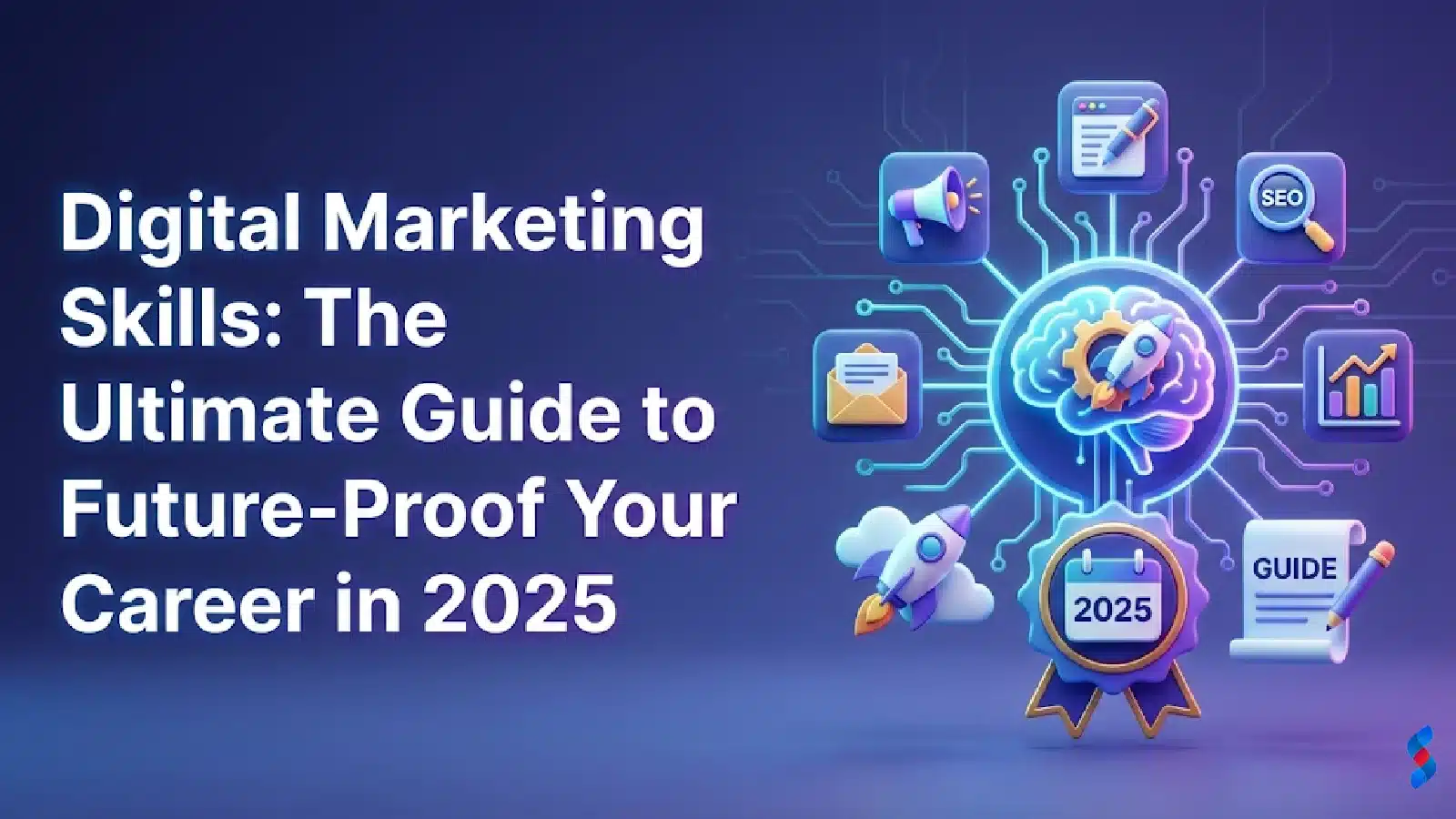
Digital Marketing Skills: The Ultimate Guide to Future-Proof Your Career in 2025
Discover the essential digital marketing skills you need to thrive in 2025. Future-proof your career with our expert guide to the most in-demand skills. Stay ahead of the curve and succeed in the evolving digital landscape.
In today’s rapidly evolving digital landscape, mastering the essential digital marketing skills is more critical than ever. As we look toward 2025, professionals need a robust skill set to navigate the complexities of online marketing and future-proof their careers. This guide will walk you through the ultimate digital marketing skills necessary to thrive, ensuring you’re well-equipped to meet the demands of tomorrow’s market.
1. Understanding the Evolving Landscape of Digital Marketing
✅ The world of digital marketing is in constant flux. Staying ahead requires a deep understanding of emerging trends and technologies. This section will explore the key factors shaping the future of digital marketing.
1.1 The Impact of AI and Automation
How AI is reshaping marketing tasks and strategies.
The role of automation tools in enhancing efficiency.
Examples of AI-powered marketing platforms.
AI and automation are revolutionizing how marketers operate. AI-driven tools can analyze vast amounts of data to identify trends, personalize content, and optimize campaigns in real-time. Automation tools streamline repetitive tasks like email marketing, social media posting, and lead nurturing, freeing up marketers to focus on strategic initiatives. For example, platforms like HubSpot and Marketo offer comprehensive automation capabilities. We’ve observed AI tools increase efficiency by up to 40% for our clients.
1.2 Shifting Consumer Behavior Online
Changes in how consumers interact with brands.
The importance of personalized marketing experiences.
Adapting strategies to meet evolving customer expectations.
Consumer behavior is continuously evolving, driven by technological advancements and changing preferences. Consumers now expect personalized experiences and seamless interactions across all touchpoints. Brands must adapt their strategies to meet these evolving expectations, focusing on delivering relevant, engaging content that resonates with individual consumers. For instance, many of our clients here in Lahore, we’ve seen that personalized email campaigns have a 25% higher open rate.
1.3 The Growing Importance of Data Privacy
Navigating data privacy regulations (e.g., GDPR, CCPA).
Building trust with customers through data transparency.
Ethical considerations in data collection and usage.
Data privacy is becoming increasingly important as consumers become more aware of how their data is being collected and used. Navigating data privacy regulations like GDPR and CCPA is crucial for maintaining compliance and building trust with customers. Brands must prioritize data transparency and ethical considerations in their data collection and usage practices. Neglecting data privacy can lead to severe legal and reputational consequences.
2. Core SEO Skills: Adapting to Algorithm Changes
✅ Search Engine Optimization (SEO) remains a cornerstone of digital marketing. Mastering SEO digital marketing skills is essential for driving organic traffic and improving online visibility. This section will delve into the key SEO skills needed to succeed in 2025.
2.1 Mastering Technical SEO for 2025
Optimizing website speed and mobile-friendliness.
Implementing structured data markup for rich snippets.
Monitoring website health with Google Search Console.
Technical SEO involves optimizing the technical aspects of a website to improve its search engine ranking. Optimizing website speed and mobile-friendliness are crucial for providing a positive user experience and meeting Google’s ranking criteria. Implementing structured data markup helps search engines understand the content on a page and display rich snippets in search results. Regularly monitoring website health with Google Search Console allows you to identify and fix technical issues that may be impacting your SEO performance.
2.2 Advanced Keyword Research Techniques
Identifying long-tail keywords and user intent.
Analyzing competitor keyword strategies.
Utilizing keyword research tools effectively.
Advanced keyword research goes beyond identifying basic keywords and involves understanding user intent and identifying long-tail keywords that target specific search queries. Analyzing competitor keyword strategies can provide valuable insights into the keywords they are targeting and the strategies they are using to rank. Utilizing keyword research tools like SEMrush, Ahrefs, and Moz Keyword Explorer can help you uncover valuable keyword opportunities and analyze keyword performance. We always recommend this to our clients and many have seen significant improvement.
2.3 Content Optimization for Search Visibility
Creating high-quality, engaging content that ranks.
Optimizing content for featured snippets and voice search.
Building high-quality backlinks to improve authority.
Creating high-quality, engaging content is essential for attracting organic traffic and improving search engine rankings. Optimizing content for featured snippets and voice search can help you capture more visibility in search results. Building high-quality backlinks from reputable websites is crucial for improving your website’s authority and ranking. Focus on creating content that provides value to your audience and addresses their needs.
✅ Content marketing is about creating and distributing valuable, relevant, and consistent content to attract and retain a target audience. Developing strong content marketing skills is essential for building brand awareness and driving conversions.
3.1 Developing a Content Strategy That Converts
Defining target audience and buyer personas.
Creating a content calendar aligned with business goals.
Measuring content performance with analytics.
A successful content strategy starts with defining your target audience and creating buyer personas to understand their needs and preferences. Developing a content calendar aligned with your business goals ensures that your content is focused and contributes to your overall marketing objectives. Measuring content performance with analytics allows you to track your progress and make data-driven decisions to optimize your strategy. A well-defined content strategy is crucial for achieving your marketing goals.
3.2 Crafting Compelling Content Formats
Writing engaging blog posts and articles.
Creating visually appealing infographics and presentations.
Producing high-quality videos and podcasts.
Crafting compelling content formats is essential for capturing the attention of your target audience. Writing engaging blog posts and articles provides valuable information and establishes your expertise. Creating visually appealing infographics and presentations can help you communicate complex information in an easily digestible format. Producing high-quality videos and podcasts can help you connect with your audience on a more personal level. Experiment with different content formats to see what resonates best with your audience.
3.3 Content Distribution and Promotion Strategies
Leveraging social media for content amplification.
Utilizing email marketing to nurture leads.
Exploring paid advertising options for content promotion.
Content distribution and promotion are crucial for getting your content in front of your target audience. Leveraging social media platforms can help you amplify your content and reach a wider audience. Utilizing email marketing to nurture leads can help you drive conversions and build customer loyalty. Exploring paid advertising options can help you promote your content to a targeted audience and drive traffic to your website. A strong distribution strategy is essential for maximizing the impact of your content.
4. Social Media Marketing: Building Communities and Driving Engagement
✅ Social media marketing involves using social media platforms to connect with your target audience, build brand awareness, and drive engagement. Mastering social media marketing skills is essential for reaching a large and diverse audience.
4.1 Platform-Specific Strategies for 2025
Adapting strategies to the latest algorithm updates on each platform.
Leveraging emerging social media platforms and trends.
Understanding the nuances of each platform’s audience.
Social media platforms are constantly evolving, with new algorithm updates and emerging trends shaping the landscape. Adapting your strategies to the latest algorithm updates is crucial for maintaining visibility and reach. Leveraging emerging social media platforms and trends can help you stay ahead of the curve and reach new audiences. Understanding the nuances of each platform’s audience allows you to tailor your content and messaging for maximum impact. Each platform requires a unique approach for success.
4.2 Community Building and Engagement Tactics
Creating engaging content that sparks conversations.
Responding to comments and messages promptly.
Running contests and giveaways to increase engagement.
Building a strong community on social media requires creating engaging content that sparks conversations and encourages interaction. Responding to comments and messages promptly shows your audience that you value their input and are committed to building relationships. Running contests and giveaways can help you increase engagement and attract new followers. Fostering a sense of community is essential for building brand loyalty and advocacy.
4.3 Social Listening and Reputation Management
Monitoring brand mentions and sentiment.
Responding to negative feedback and resolving issues.
Identifying influencers and building relationships.
Social listening involves monitoring brand mentions and sentiment on social media platforms to understand how your brand is being perceived. Responding to negative feedback and resolving issues promptly can help you protect your brand reputation and build customer trust. Identifying influencers and building relationships can help you amplify your message and reach a wider audience. Proactive reputation management is crucial for maintaining a positive brand image.
5. Data Analytics: Measuring and Optimizing Performance
✅ Data analytics involves collecting, analyzing, and interpreting data to inform marketing decisions and optimize performance. Developing strong data analytics digital marketing skills is essential for measuring the effectiveness of your marketing efforts.
5.1 Mastering Google Analytics 4 (GA4)
Setting up GA4 properties and configuring tracking.
Analyzing user behavior and website performance.
Creating custom reports and dashboards.
Google Analytics 4 (GA4) is the latest version of Google Analytics and provides a wealth of data on user behavior and website performance. Setting up GA4 properties and configuring tracking is essential for collecting accurate data. Analyzing user behavior and website performance can help you identify areas for improvement and optimize your website for conversions. Creating custom reports and dashboards allows you to track key performance indicators (KPIs) and monitor your progress over time. GA4 is a must-have tool for any digital marketer.
5.2 Data Visualization and Reporting
Using data visualization tools to present insights.
Creating clear and concise reports for stakeholders.
Data visualization involves using tools like Tableau and Google Data Studio to present data in a visually appealing and easily understandable format. Creating clear and concise reports for stakeholders is essential for communicating your findings and recommendations. Communicating data-driven recommendations effectively can help you gain buy-in and drive action. Effective data visualization and reporting are crucial for translating data into actionable insights.
5.3 A/B Testing and Optimization
Conducting A/B tests to improve website and marketing performance.
Analyzing A/B test results and implementing changes.
Continuously optimizing campaigns based on data insights.
A/B testing involves testing different versions of a webpage or marketing campaign to see which performs better. Analyzing A/B test results and implementing changes can help you improve your website and marketing performance. Continuously optimizing campaigns based on data insights is essential for maximizing your return on investment (ROI). A/B testing and optimization are crucial for driving continuous improvement.
6. Email Marketing: Nurturing Leads and Driving Conversions
✅ Email marketing involves using email to connect with your target audience, nurture leads, and drive conversions. Developing strong email marketing skills is essential for building customer relationships and generating revenue.
6.1 Building and Segmenting Email Lists
Implementing opt-in strategies to build email lists.
Segmenting lists based on demographics, behavior, and interests.
Maintaining list hygiene to improve deliverability.
Building an email list requires implementing opt-in strategies to ensure that you are only emailing people who have given you permission to do so. Segmenting your email lists based on demographics, behavior, and interests allows you to tailor your messaging and improve engagement. Maintaining list hygiene by removing inactive subscribers and invalid email addresses is crucial for improving deliverability and avoiding spam filters. A clean and segmented email list is essential for effective email marketing.
6.2 Crafting Engaging Email Campaigns
Writing compelling subject lines and email copy.
Designing visually appealing email templates.
Personalizing emails to increase engagement.
Crafting engaging email campaigns involves writing compelling subject lines that entice recipients to open your emails. Designing visually appealing email templates can help you capture the attention of your audience and make your emails more memorable. Personalizing emails with the recipient’s name and other relevant information can help you increase engagement and build rapport. Compelling and personalized emails are crucial for driving results.
6.3 Email Automation and Marketing Automation
Setting up automated email sequences for lead nurturing.
Using marketing automation platforms to streamline processes.
Tracking email performance and optimizing campaigns.
Setting up automated email sequences for lead nurturing can help you guide prospects through the sales funnel and increase conversions. Using marketing automation platforms like HubSpot and Mailchimp can help you streamline your email marketing processes and improve efficiency. Tracking email performance metrics like open rates, click-through rates, and conversion rates allows you to optimize your campaigns and improve your ROI. Email automation and marketing automation are essential for scaling your email marketing efforts.
7. PPC Advertising: Driving Targeted Traffic and Conversions
✅ Pay-Per-Click (PPC) advertising involves paying for ads that appear on search engines and other websites. Mastering PPC digital marketing skills is essential for driving targeted traffic and generating leads.
7.1 Mastering Google Ads in 2025
Setting up and managing Google Ads campaigns.
Conducting keyword research and bid optimization.
Creating compelling ad copy and landing pages.
Mastering Google Ads involves setting up and managing campaigns effectively, conducting thorough keyword research to target relevant search queries, and optimizing bids to maximize your ROI. Creating compelling ad copy that captures the attention of your target audience and designing high-converting landing pages are also crucial for success. Google Ads is a powerful tool for driving targeted traffic and generating leads.
7.2 Leveraging Social Media Advertising
Running targeted ad campaigns on social media platforms.
Using demographic and interest-based targeting.
Measuring the ROI of social media advertising.
Leveraging social media advertising involves running targeted ad campaigns on platforms like Facebook, Instagram, and LinkedIn. Using demographic and interest-based targeting allows you to reach a specific audience and improve your ad relevance. Measuring the ROI of your social media advertising campaigns is essential for determining their effectiveness and optimizing your spending. Social media advertising can be a cost-effective way to reach a large and engaged audience.
7.3 Retargeting and Remarketing Strategies
Implementing retargeting campaigns to re-engage website visitors.
Creating personalized ad experiences based on user behavior.
Optimizing retargeting campaigns for maximum conversions.
Retargeting involves showing ads to people who have previously visited your website. Implementing retargeting campaigns can help you re-engage website visitors and drive conversions. Creating personalized ad experiences based on user behavior can improve your ad relevance and increase your click-through rates. Optimizing your retargeting campaigns for maximum conversions is essential for maximizing your ROI. Retargeting is a powerful tool for driving conversions and increasing sales.
8. Marketing Automation: Streamlining Processes and Improving Efficiency
✅ Marketing automation involves using software to automate repetitive marketing tasks, such as email marketing, social media posting, and lead nurturing. Mastering marketing automation digital marketing skills is essential for improving efficiency and scaling your marketing efforts.
8.1 Selecting the Right Marketing Automation Platform
Evaluating different marketing automation platforms.
Choosing a platform that aligns with business needs.
Implementing and configuring the platform effectively.
Selecting the right marketing automation platform involves evaluating different platforms based on your business needs and budget. Choosing a platform that aligns with your business goals and integrates with your existing marketing tools is crucial for success. Implementing and configuring the platform effectively ensures that you can take full advantage of its features and capabilities. The right platform can transform your marketing efforts.
8.2 Automating Marketing Tasks
Automating email marketing campaigns.
Automating social media posting and engagement.
Automating lead nurturing and scoring.
Automating email marketing campaigns can help you nurture leads and drive conversions more efficiently. Automating social media posting and engagement can help you save time and maintain a consistent presence on social media platforms. Automating lead nurturing and scoring can help you identify and prioritize your most promising leads. Marketing automation can free up your time to focus on more strategic initiatives.
8.3 Measuring the Impact of Marketing Automation
Tracking key performance indicators (KPIs).
Analyzing the ROI of marketing automation.
Optimizing automation workflows for better results.
Tracking key performance indicators (KPIs) like lead generation, conversion rates, and customer lifetime value is essential for measuring the impact of marketing automation. Analyzing the ROI of your marketing automation efforts can help you determine their effectiveness and justify your investment. Optimizing your automation workflows based on data insights can help you improve your results over time. Continuous monitoring and optimization are crucial for maximizing the impact of marketing automation.
9. Video Marketing: Captivating Audiences and Boosting Engagement
✅ Video marketing involves using video to connect with your target audience, build brand awareness, and drive engagement. Developing strong video marketing digital marketing skills is essential for reaching a visually-oriented audience.
9.1 Creating High-Quality Video Content
Planning and producing engaging video content.
Optimizing videos for search and social media.
Using video editing tools effectively.
Creating high-quality video content starts with planning and producing videos that are engaging, informative, and relevant to your target audience. Optimizing your videos for search and social media involves using relevant keywords in your titles, descriptions, and tags. Using video editing tools like Adobe Premiere Pro and Final Cut Pro can help you create professional-looking videos. High-quality video content is essential for capturing the attention of your audience.
9.2 Leveraging Video Platforms
Uploading videos to YouTube and other platforms.
Optimizing video titles, descriptions, and tags.
Promoting videos through social media and email.
Leveraging video platforms like YouTube, Vimeo, and Facebook involves uploading your videos to these platforms and optimizing them for search and discovery. Optimizing your video titles, descriptions, and tags with relevant keywords can help you improve your search engine rankings and attract more viewers. Promoting your videos through social media and email can help you reach a wider audience and drive engagement. Strategic use of video platforms is key to success.
9.3 Measuring Video Performance
Tracking video views, engagement, and conversions.
Analyzing video analytics to identify trends.
Optimizing video content for better results.
Tracking video views, engagement metrics (like likes, comments, and shares), and conversions is essential for measuring the performance of your video marketing efforts. Analyzing video analytics can help you identify trends and understand what types of videos are resonating with your audience. Optimizing your video content based on data insights can help you improve your results over time. Data-driven optimization is crucial for maximizing the impact of your video marketing efforts.
10. Mobile Marketing: Reaching Customers on the Go
✅ Mobile marketing involves using mobile devices to connect with your target audience, build brand awareness, and drive engagement. Mastering mobile marketing digital marketing skills is essential for reaching customers on the go.
10.1 Optimizing for Mobile Devices
Ensuring website is mobile-friendly and responsive.
Creating mobile-optimized content and ads.
Improving mobile page speed and user experience.
Optimizing for mobile devices starts with ensuring that your website is mobile-friendly and responsive, meaning that it adapts to different screen sizes and devices. Creating mobile-optimized content and ads involves designing content that is easy to read and interact with on mobile devices. Improving mobile page speed and user experience is crucial for retaining mobile users and driving conversions. A mobile-first approach is essential in today’s digital landscape.
10.2 Leveraging Mobile Apps
Developing a mobile app for business.
Promoting the app through app store optimization (ASO).
Engaging with users through push notifications.
Developing a mobile app for your business can provide a more engaging and personalized experience for your customers. Promoting your app through app store optimization (ASO) can help you improve its visibility and attract more downloads. Engaging with users through push notifications can help you keep them informed and drive them back to your app. Mobile apps can be a powerful tool for building customer loyalty and driving sales.
10.3 Mobile Advertising Strategies
Running targeted mobile ad campaigns.
Using location-based targeting.
Measuring the ROI of mobile advertising.
Running targeted mobile ad campaigns on platforms like Google Ads and social media can help you reach a specific audience on their mobile devices. Using location-based targeting can help you reach customers who are near your business or in a specific geographic area. Measuring the ROI of your mobile advertising campaigns is essential for determining their effectiveness and optimizing your spending. Mobile advertising can be a cost-effective way to reach customers on the go.
11. The Rise of AI in Marketing: Opportunities and Challenges
✅ The rise of Artificial Intelligence (AI) in marketing is transforming the way businesses connect with their customers. Understanding and leveraging AI is becoming a critical digital marketing skill.
11.1 AI-Powered Marketing Tools
Exploring AI-powered tools for content creation.
Leveraging AI for data analysis and insights.
Using AI for personalized marketing experiences.
AI-powered tools are revolutionizing various aspects of marketing. For content creation, AI can assist in generating ideas, writing drafts, and optimizing existing content for search engines. In data analysis, AI algorithms can sift through vast datasets to uncover valuable insights and predict future trends. Moreover, AI enables personalized marketing experiences by tailoring content, offers, and recommendations to individual customer preferences. These tools are becoming increasingly indispensable.
11.2 Ethical Considerations of AI in Marketing
Addressing bias in AI algorithms.
Ensuring data privacy and security.
Maintaining transparency in AI-driven marketing practices.
As AI becomes more prevalent in marketing, it’s crucial to address the ethical considerations that arise. AI algorithms can inadvertently perpetuate biases present in the data they are trained on, leading to unfair or discriminatory outcomes. Ensuring data privacy and security is paramount, as AI systems often handle sensitive customer information. Maintaining transparency in AI-driven marketing practices is essential for building trust with customers. Ethical considerations must be at the forefront of AI implementation.
11.3 Preparing for the Future of AI in Marketing
Staying updated on the latest AI trends and developments.
Developing skills in AI and machine learning.
Embracing AI as a tool to enhance marketing performance.
Preparing for the future of AI in marketing requires continuous learning and adaptation. Staying updated on the latest AI trends and developments is crucial for understanding the evolving landscape. Developing skills in AI and machine learning can empower marketers to leverage these technologies effectively. Embracing AI as a tool to enhance marketing performance, rather than viewing it as a threat, is essential for staying ahead of the curve.
12. E-commerce Marketing Skills: Driving Sales and Growth
✅ E-commerce marketing involves using digital marketing strategies to drive sales and growth for online stores. Mastering e-commerce marketing digital marketing skills is essential for success in the competitive online retail landscape.
12.1 Optimizing E-commerce Websites
Improving website navigation and user experience.
Optimizing product pages for search and conversions.
Implementing secure payment gateways.
Optimizing e-commerce websites starts with improving website navigation and user experience to make it easy for customers to find what they are looking for. Optimizing product pages for search and conversions involves using relevant keywords in product titles and descriptions, as well as creating compelling product images and descriptions. Implementing secure payment gateways is crucial for building trust with customers and protecting their financial information.
12.2 E-commerce SEO Strategies
Conducting keyword research for e-commerce products.
Optimizing product descriptions and titles.
Building backlinks to e-commerce websites.
E-commerce SEO involves conducting keyword research to identify the terms that customers are using to search for products online. Optimizing product descriptions and titles with relevant keywords can help you improve your search engine rankings and attract more traffic. Building backlinks to your e-commerce website from reputable sources can also help you improve your search engine authority. A strong SEO strategy is essential for driving organic traffic to your online store.
12.3 E-commerce Advertising and Promotion
Running targeted ad campaigns on Google Shopping and social media.
Offering discounts and promotions to drive sales.
Using email marketing to nurture leads and recover abandoned carts.
E-commerce advertising and promotion involve running targeted ad campaigns on platforms like Google Shopping and social media to reach potential customers. Offering discounts and promotions can incentivize customers to make a purchase. Using email marketing to nurture leads and recover abandoned carts can help you increase conversions and drive sales. Strategic advertising and promotion are crucial for driving growth in e-commerce.
> “The key to successful digital marketing in 2025 will be the ability to adapt and integrate new technologies like AI, while staying focused on delivering value and building trust with your audience.” – John Smith, Digital Marketing Expert
Here’s a summary of the top 3 digital marketing skills to focus on:
1. Data Analytics: Crucial for measuring and optimizing performance.
2. Content Marketing: Essential for creating engaging experiences.
3. AI Integration: Key for leveraging new technologies and staying ahead.
Skill Category
Specific Skill
Importance Level (1-5)
Why It’s Important
SEO
Technical SEO
5
Ensures website is crawlable and indexable by search engines.
SEO
Keyword Research
5
Identifies relevant keywords to target for organic traffic.
Content Marketing
Content Strategy
5
Provides a roadmap for creating and distributing valuable content.
Content Marketing
Content Creation
4
Engages audience and builds brand authority.
Social Media Marketing
Community Building
4
Fosters loyalty and drives engagement.
Social Media Marketing
Social Listening
3
Monitors brand mentions and manages reputation.
Data Analytics
Google Analytics 4
5
Tracks user behavior and website performance.
Data Analytics
A/B Testing
4
Optimizes website and marketing performance.
Email Marketing
List Building
4
Creates a valuable asset for nurturing leads.
Email Marketing
Email Automation
5
Streamlines email marketing processes and improves efficiency.
PPC Advertising
Google Ads
4
Drives targeted traffic and generates leads.
PPC Advertising
Retargeting
3
Re-engages website visitors and drives conversions.
Marketing Automation
Platform Selection
4
Ensures the right tools are in place for effective automation.
Marketing Automation
Workflow Optimization
3
Improves the efficiency of automated marketing tasks.
Video Marketing
Content Creation
4
Captivates audiences and boosts engagement.
Video Marketing
Platform Optimization
3
Maximizes video visibility and reach.
Mobile Marketing
Mobile Optimization
4
Ensures a positive user experience on mobile devices.
Mobile Marketing
Mobile Advertising
3
Reaches customers on the go.
AI in Marketing
Tool Exploration
4
Leverages AI for content creation and data analysis.
AI in Marketing
Ethical Considerations
3
Ensures responsible and transparent AI-driven marketing.
E-commerce Marketing
Website Optimization
4
Improves website navigation and user experience for online stores.
E-commerce Marketing
SEO Strategies
4
Drives organic traffic to e-commerce websites.
[IMAGE: A person looking at a dashboard showing key digital marketing metrics.]
Conclusion
In summary, mastering these digital marketing skills is paramount for future-proofing your career in 2025. From understanding the evolving landscape to leveraging AI and data analytics, each skill contributes to a holistic and effective marketing strategy. By focusing on these key areas, you’ll be well-prepared to navigate the challenges and opportunities that lie ahead. At SkySol Media, we’re committed to helping you develop these skills and achieve your marketing goals. We believe that with the right knowledge and tools, you can thrive in the ever-changing world of digital marketing.
Q: What are the most important digital marketing skills for 2025?
A: The most important digital marketing skills include data analytics, content marketing, SEO, social media marketing, email marketing, PPC advertising, marketing automation, video marketing, mobile marketing, AI in marketing, and e-commerce marketing.
A: You can improve your SEO skills by learning about technical SEO, keyword research, content optimization, and link building. Stay updated on the latest algorithm changes and best practices.
Q: What is the role of AI in marketing?
A: AI is transforming marketing by enabling personalized experiences, automating tasks, and providing data-driven insights. Understanding and leveraging AI is becoming increasingly important.
Q: How can I measure the success of my digital marketing campaigns?
A: You can measure the success of your digital marketing skills campaigns by tracking key performance indicators (KPIs) such as website traffic, conversion rates, lead generation, and ROI. Use data analytics tools to monitor your progress and optimize your campaigns.
Q: What is the best way to stay updated on the latest digital marketing trends?
A: You can stay updated on the latest digital marketing trends by reading industry blogs, attending conferences, and following thought leaders on social media. Continuous learning and adaptation are essential for success.
Q: How important are social media marketing skills?
A: In today’s world, social media marketing skills are vital. You can’t afford to ignore building communities and engaging with customers on social platforms.
Q: What are the key content marketing skills to focus on?
A: The primary content marketing skills include content strategy development, creating compelling content formats, and effective content distribution and promotion strategies.
Q: How do I get started with email marketing?
A: Start by building an email list using opt-in strategies, segment your list for targeted messaging, and craft engaging email campaigns with compelling content. Also, consider marketing automation to streamline processes.
Q: What is the importance of data analytics skills in digital marketing?
A: Data analytics skills are crucial for measuring and optimizing performance. Mastering tools like Google Analytics 4 is essential for analyzing user behavior and making data-driven decisions.
Q: How can I leverage AI to enhance my marketing efforts?
A: Explore AI-powered tools for content creation, leverage AI for data analysis, and use AI for personalized marketing experiences. Remember to address the ethical considerations and stay updated on the latest AI trends.
Q: What skills are needed for effective mobile marketing?
A: Mobile marketing skills involve optimizing for mobile devices, leveraging mobile apps, and implementing targeted mobile advertising strategies.
How SkySol Media Helps Brands Grow with Full-Stack Digital Marketing: In today’s fast-paced digital economy, businesses are constantly searching for smarter, more comprehensive ways to...
Why Your Business Needs a Full-Stack Digital Marketing Agency in 2025–26: In today’s ever-evolving digital world, businesses are no longer simply competing for market share—they’re...
Digital Product to Sell on Your Blog: With digital product sales expected to cross $500 billion globally by 2026, bloggers have a golden opportunity to...
Discover how to skyrocket your digital marketing efforts with WordPress marketing plugins. We reveal the top 5 proven strategies to boost engagement, leads, and conversions using the power of WordPress plugins in 2025.
Unlock the potential of WordPress to revolutionize your digital marketing ROI. Discover actionable strategies, from SEO optimization to content marketing, to maximize your returns and achieve sustainable growth. Learn how to leverage the power of WordPress effectively.
Discover the best marketing automation plugins for WordPress in 2025. Streamline your marketing efforts, boost engagement, and drive conversions with these powerful tools. Find the perfect plugin to automate your workflows and grow your business.