Why a Unique Logo Design Can Make or Break Your Brand in 2025–26
Why a Unique Logo Design Can Make or Break Your Brand in 2025–26: In today’s hyper-digital world, where first impressions are everything and brand identity...

Need help? Call us:
+92 320 1516585

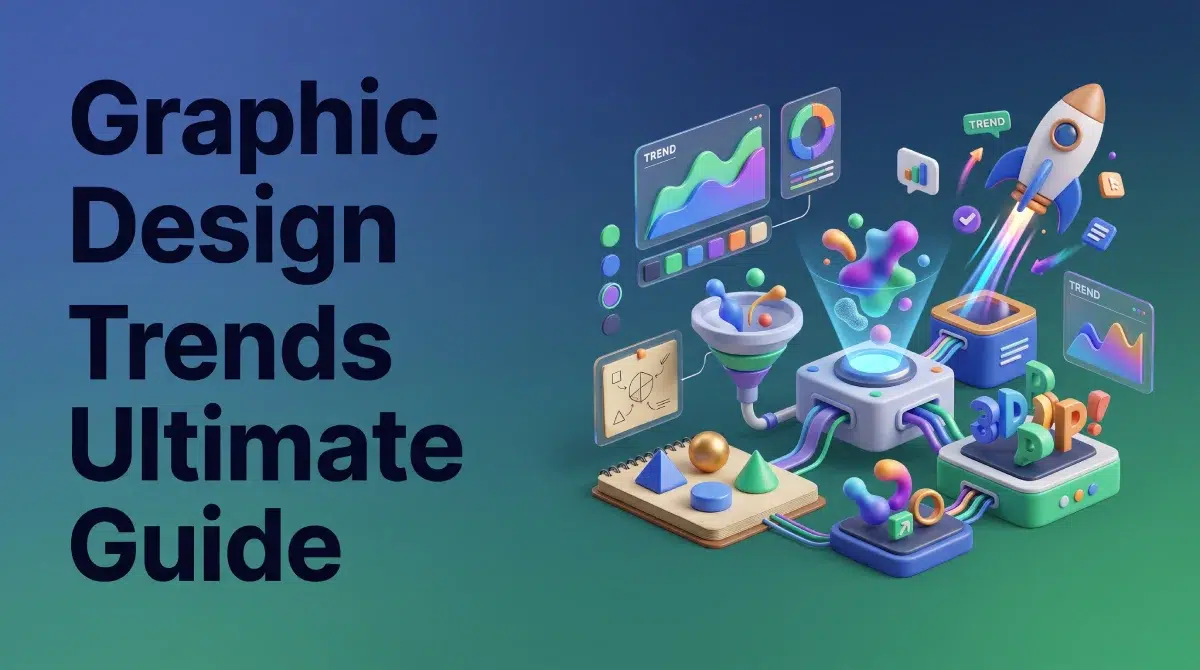
Graphic Design Trends 2026 are set to redefine the visual landscape, blending technological advancements with a renewed focus on ethical and sustainable practices. The design world is constantly evolving, and 2026 promises to be a year of exciting transformations. Staying ahead of these changes is critical for designers and businesses alike. Understanding these shifts will enable you to create more impactful and relevant designs. In this guide, we’ll explore the key Graphic Design Trends 2024: What’s In, What’s Out?, providing insights and practical advice to help you navigate this dynamic field.
The world of graphic design never stands still. It’s a dynamic realm constantly adapting to the latest technological innovations, cultural shifts, and societal demands. What was cutting-edge just a few years ago can quickly become outdated, making it crucial for designers and businesses to stay informed about the emerging Graphic Design Trends 2024: What’s In, What’s Out?
The driving forces behind these trends are multifaceted. Technology plays a significant role, with advancements in AI, augmented reality, and 3D design opening up new creative possibilities. Cultural and societal factors also exert a strong influence, shaping design aesthetics and priorities. For instance, the growing awareness of sustainability and inclusivity is driving a demand for more eco-friendly and representative designs.
Staying updated on these trends isn’t just about aesthetics; it’s about staying relevant and competitive. By understanding the latest Graphic Design Trends 2024: What’s In, What’s Out?, designers can create visuals that resonate with their target audiences, while businesses can enhance their brand image and marketing effectiveness. As expert consultants from SkySol Media, we emphasize that failing to adapt can lead to missed opportunities and a disconnect with evolving consumer preferences.
[IMAGE: A visual representation of graphic design evolution over the past decade, highlighting key shifts.]
One of the most interesting developments in Graphic Design Trends 2024: What’s In, What’s Out? is the ongoing interplay between maximalism and minimalism. While minimalism has dominated the design scene for years, we’re now seeing a resurgence of maximalism, offering a vibrant alternative to clean, pared-down aesthetics. However, minimalism isn’t going away entirely; it’s finding new applications and coexisting with maximalism in unexpected ways.
Maximalism is all about embracing complexity, ornamentation, and bold expressions. It’s a design philosophy that rejects the “less is more” mantra in favor of “more is more.” Think vibrant colors, intricate patterns, layered textures, and a playful disregard for conventional design rules.
In branding, maximalism can manifest as elaborate logos, richly detailed packaging, and visually arresting marketing campaigns. In web design, it can involve using unconventional layouts, animated elements, and a profusion of images and illustrations. Illustration can include hyper-realistic details, mixing mediums, and bold color combinations.
In our experience with clients, we’ve seen that maximalism appeals to audiences who crave novelty, excitement, and a sense of visual abundance. In a digitally saturated world, where attention spans are short and competition is fierce, maximalist designs can cut through the noise and capture people’s imagination.
Despite the rise of maximalism, minimalism remains a powerful and relevant design approach. Minimalism is characterized by simplicity, clean lines, negative space, and a focus on essential elements. It’s about stripping away the unnecessary and creating designs that are both visually appealing and highly functional.
Minimalism is particularly well-suited for UI/UX design, where clarity and ease of use are paramount. It’s also a popular choice for corporate branding, where a clean and sophisticated aesthetic can convey professionalism and trustworthiness. One of the consistent successes our team in Dubai has found is leveraging minimalist design for Fintech brands.
A common mistake we help businesses fix is assuming minimalism is always the right choice. While it offers clarity, it can also lack personality. Understanding the target audience and brand identity is crucial in deciding whether minimalism or maximalism is the better fit.
The most successful designs often strike a balance between minimalism and maximalism. This can involve using a minimalist layout as a foundation and adding maximalist elements to create visual interest and personality. For example, a website might feature a clean, minimalist interface with bold, maximalist typography or illustrations.
Another approach is to use maximalism in specific areas of a design, such as the hero section of a website or the packaging of a product, while keeping the rest of the design relatively simple and uncluttered. This allows you to capture attention and create a memorable impression without overwhelming the viewer. We’ve consistently seen that this balanced approach yields the best results, providing both visual excitement and clarity.
[IMAGE: A split-screen comparison of maximalist and minimalist designs, highlighting the key differences.]
Artificial intelligence (AI) is rapidly transforming the landscape of graphic design. AI-powered tools are becoming increasingly sophisticated, offering designers new ways to enhance their creativity, streamline their workflows, and create more innovative designs. Understanding how to leverage AI is essential for staying ahead in the Graphic Design Trends 2024: What’s In, What’s Out?
A growing number of AI-powered design platforms and software are now available. These tools can assist with a wide range of tasks, from automating repetitive processes to generating design variations and assisting with content creation.
Adobe Sensei, for example, is an AI platform integrated into Adobe Creative Cloud applications like Photoshop and Illustrator. It offers features such as intelligent object selection, content-aware fill, and automated image editing. Canva AI provides AI-powered design assistance within its user-friendly platform, making it accessible to both professional designers and non-designers.
AI can automate repetitive tasks such as image resizing, background removal, and color correction, freeing up designers to focus on more creative and strategic aspects of their work. It can also generate design variations based on specific parameters, allowing designers to quickly explore different options and refine their ideas.
However, the ethical considerations of using AI in design must be carefully considered. It’s important to ensure that AI-generated designs are original and do not infringe on existing copyrights. Additionally, designers should be transparent about the use of AI in their work and avoid misleading clients or consumers.
“AI is a powerful tool that can augment human creativity, but it’s not a replacement for human designers. The best results come from a collaboration between human designers and AI.” – Debbie Millman
One of the biggest questions surrounding AI in design is whether it will replace human designers. While AI is capable of automating certain design tasks, it’s unlikely to replace designers entirely. Design requires creativity, strategic thinking, and an understanding of human emotions and motivations – qualities that AI cannot fully replicate.
Instead, AI is more likely to augment the role of designers, enabling them to work more efficiently and effectively. Designers who can adapt and leverage AI to enhance their skills and productivity will be in high demand. This includes learning how to use AI-powered design tools, understanding the limitations of AI, and developing the critical thinking skills needed to evaluate and refine AI-generated designs.
The importance of human creativity and strategic thinking in the age of AI cannot be overstated. Designers will need to focus on developing their unique creative vision, honing their problem-solving skills, and cultivating their ability to connect with audiences on an emotional level.
[IMAGE: A graphic showcasing the workflow of an AI-assisted design process, illustrating the collaboration between human designers and AI.]
Immersive experiences are becoming increasingly prevalent in graphic design, driven by advancements in 3D design and augmented reality (AR) technologies. These technologies offer new ways to engage audiences, create memorable brand experiences, and enhance user interaction.
3D design is no longer limited to specialized fields like animation and video games. It’s now finding applications in a wide range of graphic design contexts, including branding, advertising, and web design. 3D visuals can add depth, realism, and visual interest to designs, making them more engaging and impactful.
Tools like Blender and Cinema 4D are becoming increasingly popular among graphic designers. These software packages offer powerful features for creating realistic 3D models, textures, and animations. We often find when our team here in Lahore leverages these tools, the designs stand out significantly.
The impact of 3D design on user engagement and visual storytelling is significant. 3D visuals can create a sense of immersion and allow viewers to explore designs from different perspectives. They can also be used to create interactive experiences that allow users to manipulate and customize designs in real time.
Augmented reality (AR) is transforming the way users interact with brands and products. AR allows users to overlay digital content onto the real world, creating interactive and engaging experiences. In the realm of Graphic Design Trends 2024: What’s In, What’s Out?, this is a game-changer.
AR-enhanced marketing campaigns are becoming increasingly common. For example, a furniture retailer might allow customers to use an AR app to visualize how a piece of furniture would look in their home before making a purchase. A cosmetics brand might allow customers to virtually try on different makeup products using an AR filter.
The potential of AR to create personalized and engaging design solutions is immense. AR can be used to create interactive packaging, personalized advertising, and immersive brand experiences. It can also be used to provide users with real-time information and assistance, enhancing their overall experience with a product or service.
[IMAGE: A mockup of an AR-enhanced product packaging, showcasing how users can interact with the design in a real-world setting.]
Typography plays a crucial role in graphic design, conveying messages, establishing brand identity, and creating visual impact. In 2026, typography trends are characterized by bold statements, expressive fonts, and a focus on creating unique typographic experiences.
Variable fonts are a relatively new technology that offers designers unprecedented flexibility and control over typography. Unlike traditional fonts, which consist of a fixed set of glyphs, variable fonts allow designers to adjust various parameters such as weight, width, and slant.
This flexibility can enhance brand identity by allowing designers to create unique typographic variations that reflect the brand’s personality and values. It can also create more dynamic and engaging typographic experiences by allowing fonts to adapt to different screen sizes, devices, and user preferences.
Examples of innovative variable font designs include fonts that change weight or width based on the time of day or fonts that respond to user interactions. We once worked with a client who struggled with creating a responsive website with impactful typography. By implementing variable fonts, they saw a 20% improvement in user engagement across devices.
The trend towards bold, eye-catching fonts that make a statement is gaining momentum. Designers are using typography as a primary design element, creating striking visuals that command attention. These fonts often feature unusual shapes, exaggerated serifs, and unconventional letterforms.
While boldness is important, it’s crucial to balance it with readability and accessibility. Designers should ensure that their chosen fonts are legible and easy to read, even at small sizes. They should also consider the needs of users with visual impairments and choose fonts that are accessible to everyone.
The revival of vintage-inspired fonts and typographic styles is another notable trend. Designers are drawing inspiration from the past, using retro typography to evoke specific emotions and time periods. This trend is particularly popular in branding and advertising, where it can be used to create a sense of nostalgia and authenticity.
Retro typography can be combined with modern design elements to create a unique and unexpected aesthetic. For example, a website might feature a retro-inspired logo with a modern, minimalist layout. Or a marketing campaign might use vintage typography with contemporary imagery and messaging.
[IMAGE: A typographic showcase featuring different font styles and trends, highlighting the diversity and expressiveness of modern typography.]
Color is a powerful tool in graphic design, evoking emotions, creating visual hierarchy, and establishing brand identity. In 2026, color palette trends are diverse, ranging from vibrant hues to monochromatic schemes and natural tones.
Designers are increasingly embracing bold and saturated colors in their work. This trend reflects a desire for optimism, energy, and visual excitement. Vibrant colors can be used to create eye-catching designs that stand out from the crowd.
The psychological impact of vibrant colors on viewers is well-documented. Red, for example, is associated with energy, passion, and excitement. Blue is associated with trust, stability, and calmness. Yellow is associated with happiness, optimism, and creativity.
Monochromatic color schemes, which use different shades and tints of a single color, offer an elegant and sophisticated alternative to vibrant palettes. Monochromatic designs can create a sense of harmony and visual coherence.
Different shades and tints of a single color can be used to create depth and visual interest. For example, a website might use a dark shade of blue for the background, a lighter shade for the text, and a subtle tint for the buttons.
Monochromatic palettes can be combined with accent colors for contrast. A pop of vibrant color can draw attention to specific elements and create a more dynamic and engaging design. When our team in Dubai tackles this issue, they often find that adding a single, vibrant accent color to a monochromatic palette can transform the entire design.
The growing popularity of natural and organic color palettes reflects a broader trend towards sustainability and environmental awareness. Earthy tones such as browns, greens, and beiges can convey a sense of authenticity, connection to nature, and eco-friendliness.
These tones can be used to create calming and inviting designs that resonate with audiences who value sustainability and environmental responsibility. Natural tones can be combined with pops of vibrant color for a balanced look. For example, a website might feature a natural color palette with a bright green call-to-action button.
[IMAGE: A collection of different color palettes representing various trends, including vibrant, monochromatic, and natural schemes.]
Inclusive design is a critical aspect of Graphic Design Trends 2024: What’s In, What’s Out?, ensuring that designs are accessible to everyone, regardless of their abilities or backgrounds. It involves creating visuals that are representative of diverse cultures, ethnicities, and identities, and avoiding stereotypes and biases.
Accessibility in graphic design means creating designs that are usable by people with disabilities. This includes ensuring that websites, apps, and marketing materials are accessible to users with visual impairments, hearing impairments, motor impairments, and cognitive impairments.
The Web Content Accessibility Guidelines (WCAG) provide a set of standards for making web content more accessible. These guidelines cover a wide range of topics, including color contrast, font size, keyboard navigation, and alternative text for images.
Designing for users with disabilities requires careful consideration of their needs. For example, designers should use sufficient color contrast to ensure that text is legible for users with color blindness. They should also provide alternative text for images so that users with visual impairments can understand the content of the image.
Showcasing diverse cultures, ethnicities, and identities in visual communication is essential for creating inclusive and representative designs. This means avoiding stereotypes and biases and ensuring that designs reflect the diversity of the audience they are intended to reach.
Designers should strive to create authentic representations of people, avoiding tokenism and superficial portrayals. They should also be mindful of cultural sensitivities and avoid using imagery that could be offensive or discriminatory.
The importance of showcasing diversity and inclusion cannot be overstated. By creating inclusive designs, designers can help to promote understanding, empathy, and respect among people from different backgrounds.
[IMAGE: A visual example of inclusive design principles, showcasing accessible color palettes, clear typography, and diverse representations of people.]
Sustainable design is another critical aspect of Graphic Design Trends 2024: What’s In, What’s Out?, focusing on reducing the environmental impact of design activities. This includes using eco-friendly materials, optimizing digital assets for energy efficiency, and promoting responsible consumption.
Reducing the environmental impact of graphic design requires a holistic approach that considers all stages of the design process, from material selection to production and disposal. Designers can use sustainable materials such as recycled paper, plant-based inks, and biodegradable packaging.
They can also optimize printing processes to reduce waste and energy consumption. This includes using double-sided printing, reducing the amount of ink used, and choosing printers that use eco-friendly practices.
Designing for longevity and recyclability is another important principle of sustainable design. Designers should create designs that are durable and can be easily recycled or repurposed at the end of their life.
Optimizing websites and digital assets for energy efficiency is an important aspect of digital sustainability. This includes reducing the size of images and videos, optimizing code, and choosing web hosting providers that use renewable energy sources.
Reducing carbon emissions from digital design activities is another important goal. Designers can reduce their carbon footprint by using energy-efficient computers, minimizing travel, and offsetting their carbon emissions.
Promoting responsible digital consumption is also important. Designers can encourage users to reduce their digital consumption by creating websites and apps that are efficient and easy to use. They can also educate users about the environmental impact of digital consumption and encourage them to adopt sustainable practices.
Visual cues can be used to convey eco-friendliness and sustainability. This includes using natural colors, earthy textures, and imagery of nature. Highlighting environmental initiatives and commitments in branding can also help to communicate a brand’s commitment to sustainability.
Educating consumers about sustainable practices through design is another important aspect of communicating sustainability. Designers can use their designs to inform consumers about the environmental impact of their choices and encourage them to adopt sustainable practices.
[IMAGE: Examples of sustainable packaging designs and eco-friendly branding materials.]
As new trends emerge, some design styles inevitably fall out of favor. It’s important to be aware of these outdated trends and avoid them in your work. Here are some trends to avoid in 2026:
Skeuomorphism, the practice of making digital interfaces resemble real-world objects, is becoming increasingly outdated. While it was popular in the early days of digital design, it now feels clunky and unnecessary.
The shift towards flat design and abstract representations reflects a desire for simplicity and clarity. Flat design uses simple shapes, clean lines, and minimal textures to create visually appealing and highly functional interfaces.
Using authentic and original visuals is crucial for creating designs that stand out and resonate with audiences. Generic stock photos often lack personality and can make designs feel impersonal and uninspired.
Alternatives to generic stock photos include custom photography, illustrations, and user-generated content. Custom photography allows you to create visuals that are tailored to your specific brand and message. Illustrations can add a unique and artistic touch to your designs. User-generated content can provide a more authentic and relatable perspective.
Simplicity and clear visual hierarchy are essential for creating effective designs. Overwhelming users with too much information can lead to confusion and frustration. Avoiding cluttered and confusing layouts is crucial for ensuring that your designs are easy to understand and navigate.
The value of simplicity cannot be overstated. By focusing on essential elements and eliminating unnecessary clutter, you can create designs that are both visually appealing and highly functional.
[IMAGE: A visual comparison of outdated design trends and their modern counterparts, highlighting the improvements in usability and aesthetics.]
Staying ahead of the curve in the ever-evolving world of graphic design requires a commitment to continuous learning, experimentation, and innovation. Designers need to embrace new technologies, adapt to changing trends, and build a strong portfolio that showcases their skills and creativity.
Staying updated on the latest design trends and technologies is essential for future-proofing your design skills. This includes reading design blogs, attending industry conferences, taking online courses, and experimenting with new tools and techniques.
Resources for learning and skill development are abundant. Online learning platforms like Coursera, Udemy, and Skillshare offer a wide range of design courses taught by industry experts. Design blogs like Awwwards, Dribbble, and Behance provide inspiration and insights into the latest design trends.
Encouraging creativity and pushing the boundaries of design is crucial for staying ahead of the curve. This means experimenting with new tools, techniques, and styles and challenging conventional design rules.
Experimentation can lead to new and innovative design solutions that set you apart from the competition. It can also help you to develop your unique creative vision and hone your problem-solving skills. As expert consultants, SkySol Media actively encourages its team to experiment and innovate.
Showcasing your best work and demonstrating your skills is essential for attracting clients and landing job opportunities. Your portfolio should highlight your design skills, creativity, and ability to solve problems.
Tailoring your portfolio to specific industries and job opportunities can increase your chances of success. This means showcasing projects that are relevant to the type of work you are seeking.
[IMAGE: A visual representation of a designer’s journey of continuous learning and skill development.]
In conclusion, Graphic Design Trends 2024: What’s In, What’s Out? are about embracing innovation, sustainability, and inclusivity. Staying informed and adapting to these trends will be crucial for success. By focusing on AI-powered tools, immersive experiences, and ethical design practices, you can future-proof your career and create impactful visuals. We at SkySol Media are here to help you navigate this dynamic landscape. Let us empower your brand with cutting-edge designs that resonate with your audience and drive results.
A: The biggest trends include AI-powered design, immersive experiences, maximalism, bold typography, and a focus on sustainability and inclusivity.
A: Follow design blogs, attend industry conferences, take online courses, and experiment with new tools and techniques.
A: AI is unlikely to replace designers entirely, but it will change the way designers work. Designers who can leverage AI to enhance their skills and productivity will be in high demand.
A: Key skills include proficiency in design software, knowledge of design principles, creativity, problem-solving skills, and the ability to adapt to new technologies.
* A: Use eco-friendly materials, optimize digital assets for energy efficiency, and design for longevity and recyclability.
Don’t forget to share it

We’ll Design & Develop a Professional Website Tailored to Your Brand
Enjoy this post? Join our newsletter
Newsletter
Related Articles

Why a Unique Logo Design Can Make or Break Your Brand in 2025–26

How Professional Graphic Design Boosts Your Brand Identity in 2025–26

Top 10 Reasons to Outsource Your Graphic Design Needs Today
Graphic Design SEO: 7 Amazing Ways to Boost Your Website in 2025
Graphic Design Skills: The Amazing 2025 Boost for WordPress Traffic
Ultimate Guide to Boosting WordPress Website Success with Graphic Design Experience in 2025
SkySol Media
We firmly believe that the internet should be available and accessible to anyone, and are committed to providing a website that is accessible to the widest possible audience, regardless of circumstance and ability.
To fulfill this, we aim to adhere as strictly as possible to the World Wide Web Consortium’s (W3C) Web Content Accessibility Guidelines 2.1 (WCAG 2.1) at the AA level. These guidelines explain how to make web content accessible to people with a wide array of disabilities. Complying with those guidelines helps us ensure that the website is accessible to all people: blind people, people with motor impairments, visual impairment, cognitive disabilities, and more.
This website utilizes various technologies that are meant to make it as accessible as possible at all times. We utilize an accessibility interface that allows persons with specific disabilities to adjust the website’s UI (user interface) and design it to their personal needs.
Additionally, the website utilizes an AI-based application that runs in the background and optimizes its accessibility level constantly. This application remediates the website’s HTML, adapts Its functionality and behavior for screen-readers used by the blind users, and for keyboard functions used by individuals with motor impairments.
If you’ve found a malfunction or have ideas for improvement, we’ll be happy to hear from you. You can reach out to the website’s operators by using the following email
Our website implements the ARIA attributes (Accessible Rich Internet Applications) technique, alongside various different behavioral changes, to ensure blind users visiting with screen-readers are able to read, comprehend, and enjoy the website’s functions. As soon as a user with a screen-reader enters your site, they immediately receive a prompt to enter the Screen-Reader Profile so they can browse and operate your site effectively. Here’s how our website covers some of the most important screen-reader requirements, alongside console screenshots of code examples:
Screen-reader optimization: we run a background process that learns the website’s components from top to bottom, to ensure ongoing compliance even when updating the website. In this process, we provide screen-readers with meaningful data using the ARIA set of attributes. For example, we provide accurate form labels; descriptions for actionable icons (social media icons, search icons, cart icons, etc.); validation guidance for form inputs; element roles such as buttons, menus, modal dialogues (popups), and others. Additionally, the background process scans all the website’s images and provides an accurate and meaningful image-object-recognition-based description as an ALT (alternate text) tag for images that are not described. It will also extract texts that are embedded within the image, using an OCR (optical character recognition) technology. To turn on screen-reader adjustments at any time, users need only to press the Alt+1 keyboard combination. Screen-reader users also get automatic announcements to turn the Screen-reader mode on as soon as they enter the website.
These adjustments are compatible with all popular screen readers, including JAWS and NVDA.
Keyboard navigation optimization: The background process also adjusts the website’s HTML, and adds various behaviors using JavaScript code to make the website operable by the keyboard. This includes the ability to navigate the website using the Tab and Shift+Tab keys, operate dropdowns with the arrow keys, close them with Esc, trigger buttons and links using the Enter key, navigate between radio and checkbox elements using the arrow keys, and fill them in with the Spacebar or Enter key.Additionally, keyboard users will find quick-navigation and content-skip menus, available at any time by clicking Alt+1, or as the first elements of the site while navigating with the keyboard. The background process also handles triggered popups by moving the keyboard focus towards them as soon as they appear, and not allow the focus drift outside it.
Users can also use shortcuts such as “M” (menus), “H” (headings), “F” (forms), “B” (buttons), and “G” (graphics) to jump to specific elements.
We aim to support the widest array of browsers and assistive technologies as possible, so our users can choose the best fitting tools for them, with as few limitations as possible. Therefore, we have worked very hard to be able to support all major systems that comprise over 95% of the user market share including Google Chrome, Mozilla Firefox, Apple Safari, Opera and Microsoft Edge, JAWS and NVDA (screen readers).
Despite our very best efforts to allow anybody to adjust the website to their needs. There may still be pages or sections that are not fully accessible, are in the process of becoming accessible, or are lacking an adequate technological solution to make them accessible. Still, we are continually improving our accessibility, adding, updating and improving its options and features, and developing and adopting new technologies. All this is meant to reach the optimal level of accessibility, following technological advancements. For any assistance, please reach out to