Web Design & Development
Why Small Businesses Should Prioritize Mobile-First Websites
In today’s digital-first world, having an online presence is no longer optional for small businesses; it is essential. As we move further into 2025, one...

Need help? Call us:
+92 320 1516 585
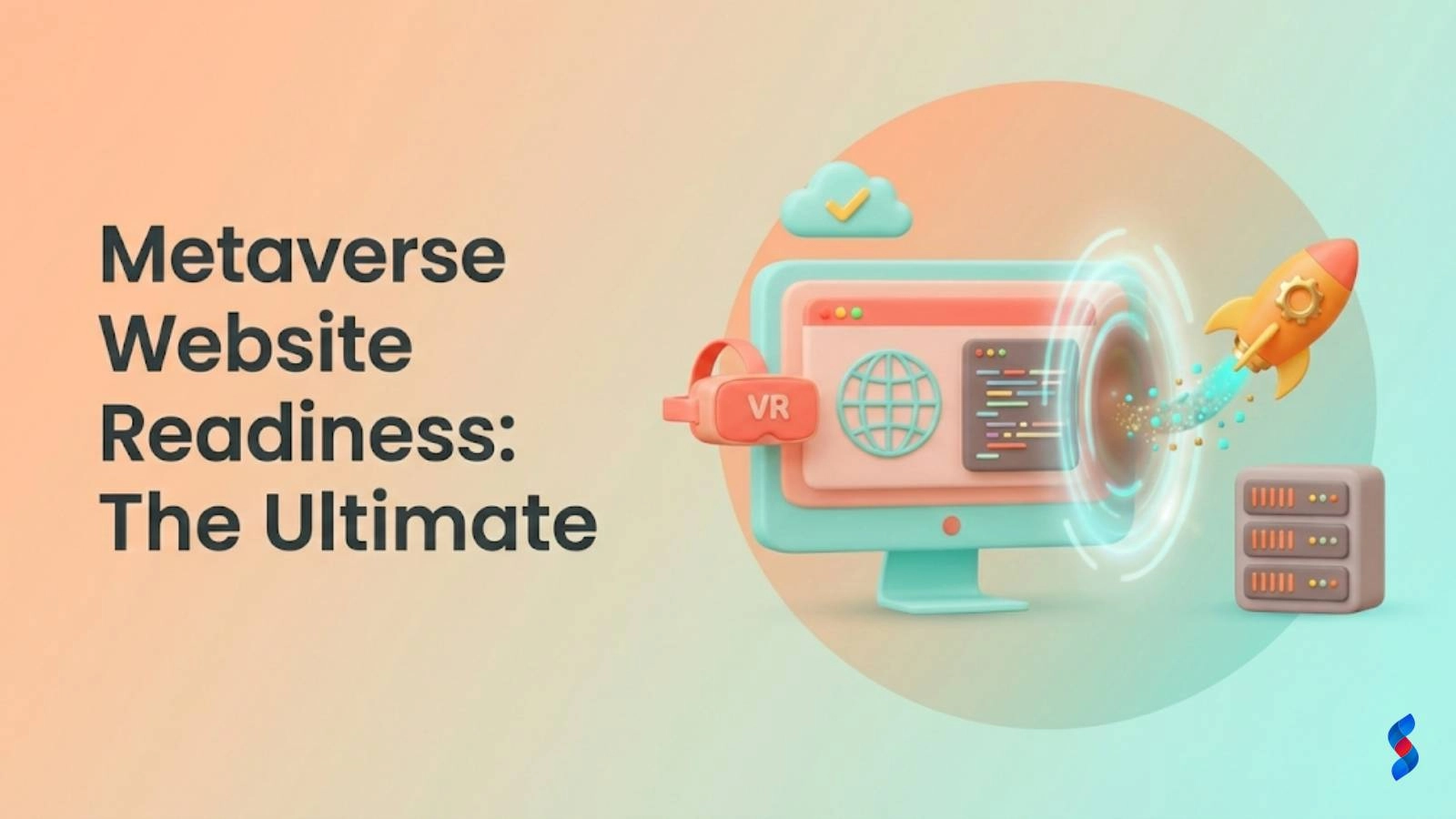
The metaverse is rapidly evolving, and businesses need to ensure they have metaverse website readiness to capitalize on the opportunities it presents. This guide provides an in-depth look at what it means to be ready for the metaverse, how to assess your current website, and the steps you can take to prepare for the future of the web. Ensuring metaverse website readiness is not just about keeping up with trends; it’s about positioning your business for future growth and engagement.
Defining the metaverse is the first step in understanding metaverse website readiness. The metaverse is a persistent, shared, 3D virtual world or worlds that are interactive, immersive, and collaborative. It’s often envisioned as the future of the internet, where digital and physical realities converge. Think of it as a digital extension of our world, where you can interact with others, create, explore, and conduct business.
[IMAGE: A graphic illustrating the convergence of the physical and digital worlds, showcasing avatars interacting in a virtual environment with real-world elements.]
The evolution of the metaverse is ongoing. Initially, it was primarily associated with gaming and virtual reality. Now, it’s expanding to include social interactions, commerce, education, and entertainment. The metaverse is not a single, unified platform but rather a network of interconnected virtual environments.
There are different types of metaverse platforms, each with its own characteristics and focus. These can generally be categorized as:
The potential impact of the metaverse on the web is significant. It’s poised to transform how we interact with the internet, shifting from a primarily 2D experience to a more immersive and interactive 3D environment. This transformation will impact website design, content creation, and user engagement strategies. We at SkySol Media believe that the metaverse will reshape the digital landscape, making metaverse website readiness a necessity.
Metaverse website readiness is critical for several reasons, each offering significant benefits to businesses that embrace this evolving technology. It’s more than just adapting to a new trend; it’s about strategically positioning your brand for the future of digital interaction.
The first-mover advantage in the metaverse is substantial. Businesses that establish a presence early can capture mindshare, build brand recognition, and establish themselves as leaders in this emerging space. As the metaverse gains wider adoption, early adopters will have a significant competitive edge.
Reaching new audiences and markets is another key benefit. The metaverse offers access to a global audience of digitally native users who are eager to explore new virtual experiences. By establishing a presence in the metaverse, businesses can tap into these new markets and expand their customer base.
Enhancing user engagement and brand experiences is crucial in today’s competitive digital landscape. The metaverse provides opportunities to create immersive and interactive experiences that go beyond traditional website interactions. Virtual product demos, interactive storytelling, and personalized avatars can create deeper connections with users. As our team in Dubai often finds, these interactive elements significantly boost user engagement metrics.
Future-proofing your online presence is arguably the most important reason to focus on metaverse website readiness. As the metaverse becomes more integrated into our daily lives, businesses that are not prepared risk becoming obsolete. Investing in metaverse technologies and strategies ensures that your business remains relevant and competitive in the long term.
Implementing 3D models and environments is a core element of metaverse website readiness. The metaverse is fundamentally a 3D space, so your website needs to be able to display and interact with 3D content seamlessly. This involves more than just embedding static 3D models; it requires creating interactive and engaging 3D experiences.
Optimizing 3D assets for web performance is crucial. 3D models can be large and complex, which can negatively impact website loading speed and performance. Optimizing these assets involves reducing file sizes, simplifying geometry, and using efficient rendering techniques. A client once asked us about this, thinking high-resolution models were always best. We showed them how optimizing the models led to a measurable lift in their KPIs without sacrificing visual quality.
Using WebGL and other 3D web technologies is essential. WebGL is a JavaScript API that allows you to render 3D graphics in a web browser without the need for plugins. Other technologies like Three.js and Babylon.js provide higher-level abstractions and tools for creating complex 3D scenes.
// Initialize WebGL context
const canvas = document.getElementById(‘myCanvas’);
const gl = canvas.getContext(‘webgl’);
if (!gl) {
alert(‘WebGL not supported on your browser’);
}
// Basic rendering setup (example)
gl.clearColor(0.0, 0.0, 0.0, 1.0);
gl.clear(gl.COLOR_BUFFER_BIT);
Integrating blockchain for secure transactions is another vital aspect of metaverse website readiness. Blockchain technology offers a secure and transparent way to manage digital assets, verify identities, and conduct transactions in the metaverse. This is particularly important for e-commerce and other applications that involve financial transactions.
Implementing NFTs and digital ownership is also key. Non-fungible tokens (NFTs) are unique digital assets that represent ownership of virtual items, such as artwork, collectibles, or virtual land. Integrating NFTs into your website allows users to buy, sell, and trade these assets securely.
Creating decentralized website elements can enhance security and transparency. Decentralized websites are hosted on a distributed network of computers, making them more resistant to censorship and downtime. Blockchain technology can be used to create decentralized identity management systems, content storage solutions, and other website elements.
Understanding WebXR standards and APIs is fundamental to metaverse website readiness. WebXR is a set of web standards that allows you to create virtual reality (VR) and augmented reality (AR) experiences that run in a web browser. It provides a unified way to access VR and AR devices, making it easier to develop cross-platform immersive experiences.
Developing VR and AR experiences for your website requires a solid understanding of WebXR. This involves using WebXR APIs to access device sensors, render 3D graphics, and handle user input. VR experiences can transport users to fully immersive virtual environments, while AR experiences overlay digital content onto the real world.
Testing WebXR compatibility across devices is crucial. WebXR is still a relatively new technology, and not all devices and browsers support it equally. Thorough testing is necessary to ensure that your VR and AR experiences work correctly on a variety of devices, including VR headsets, smartphones, and tablets.
Designing intuitive and engaging interfaces is paramount for metaverse website readiness. The user interface (UI) should be designed to be easily navigable and understandable within a 3D environment. This often means rethinking traditional 2D website layouts and incorporating spatial navigation elements.
Creating personalized metaverse experiences is essential for engaging users. The metaverse offers opportunities to tailor experiences to individual users based on their preferences, behaviors, and interests. Personalized avatars, customized environments, and targeted content can create a more meaningful and engaging experience.
Implementing spatial audio and haptic feedback can greatly enhance immersion. Spatial audio simulates how sound travels in a 3D space, making the experience more realistic. Haptic feedback provides tactile sensations, such as vibrations or textures, that can further enhance the sense of presence in the metaverse.
Evaluating existing website technologies is the first step in a metaverse website readiness audit. This involves reviewing the technologies currently used on your website, such as the content management system (CMS), programming languages, and third-party libraries. Determine which technologies are compatible with the metaverse and which need to be upgraded or replaced.
Identifying gaps in metaverse compatibility is crucial. This involves identifying areas where your website falls short in terms of metaverse requirements, such as 3D support, blockchain integration, and WebXR compatibility. This analysis will help you prioritize the necessary upgrades and changes.
Analyzing competitor activity in the metaverse can provide valuable insights. Research what your competitors are doing in the metaverse, including their virtual experiences, marketing strategies, and technology implementations. This can help you identify opportunities to differentiate yourself and gain a competitive edge.
A metaverse website readiness checklist ensures comprehensive evaluation.
✅ Are you able to create and integrate 3D models into your website?
✅ Are your 3D assets optimized for web performance?
✅ Do you have a process for creating new 3D content?
✅ Do you have a plan for implementing WebXR support on your website?
✅ Have you identified potential VR and AR experiences for your users?
✅ Are you testing WebXR compatibility across different devices?
✅ Do you have a strategy for integrating blockchain technology into your website?
✅ Are you planning to implement NFTs or other digital assets?
✅ Have you considered the security implications of blockchain integration?
✅ Have you redesigned your website’s UI for 3D environments?
✅ Are you creating personalized metaverse experiences for your users?
✅ Are you implementing spatial audio and haptic feedback?
WebXR Device API checkers are essential for verifying compatibility. These tools allow you to check whether a user’s browser and device support WebXR. They provide information about the available VR and AR capabilities, helping you tailor your website’s experiences accordingly.
3D model viewers and optimizers are critical for working with 3D assets. These tools allow you to view 3D models in a web browser, inspect their geometry and textures, and optimize them for web performance. Examples include Blender, MeshLab, and online 3D model viewers.
Blockchain explorer tools can assist with blockchain integration. These tools allow you to explore blockchain data, such as transactions, blocks, and addresses. They can be used to verify the status of transactions, track the ownership of NFTs, and monitor the performance of blockchain-based applications.
Implementing WebXR support is a crucial step in metaverse website readiness. This involves integrating WebXR APIs into your website’s code, allowing it to access VR and AR devices. This typically requires using JavaScript libraries like Three.js or Babylon.js to handle the 3D rendering and interaction.
Integrating 3D rendering engines is essential for displaying 3D content. 3D rendering engines provide the necessary tools and functionality to render complex 3D scenes in a web browser. Popular options include Unity, Unreal Engine, and open-source alternatives like Godot.
Adding blockchain functionality involves integrating blockchain APIs into your website. This allows you to interact with blockchain networks, such as Ethereum or Binance Smart Chain. This can involve using libraries like Web3.js or Ethers.js to interact with smart contracts, manage digital assets, and handle transactions.
Creating 3D product models and virtual tours is essential for e-commerce businesses. 3D product models allow customers to view products from all angles, while virtual tours provide an immersive experience of physical spaces, such as stores or showrooms. These can be created using 3D modeling software like Blender or Maya.
Developing interactive AR experiences can enhance user engagement. AR experiences can overlay digital content onto the real world, allowing users to interact with products in a more engaging way. Examples include virtual try-on apps for clothing or furniture placement apps for home decor.
Optimizing content for virtual reality environments requires careful consideration of performance and user experience. VR experiences need to be highly optimized to run smoothly on VR headsets, which typically have limited processing power. This involves reducing polygon counts, optimizing textures, and using efficient rendering techniques.
Reducing 3D asset size is crucial for improving website loading speed. Large 3D assets can significantly slow down website loading times, which can negatively impact user experience. Techniques for reducing asset size include compressing textures, simplifying geometry, and using level-of-detail (LOD) techniques.
Improving website loading speed is essential for all websites, but it’s particularly important for metaverse websites. Fast loading times are crucial for creating a seamless and immersive experience. Techniques for improving loading speed include optimizing images, caching content, and using a content delivery network (CDN).
Ensuring cross-platform compatibility is vital for reaching a wide audience. The metaverse is accessed through a variety of devices, including VR headsets, smartphones, tablets, and desktop computers. Your website should be designed to work correctly on all of these devices, regardless of the operating system or browser.
WebXR API complexity can be a significant challenge for developers. The WebXR API is relatively complex, and it can take time to learn and master. Solution: Provide comprehensive documentation, tutorials, and sample code to help developers get started with WebXR.
Cross-browser compatibility issues can arise due to inconsistent implementation of WebXR standards. Different browsers may support different features or have different bugs. Solution: Thoroughly test your website on a variety of browsers and devices, and use feature detection to provide fallback options for unsupported features.
Performance optimization challenges can be difficult to overcome, especially for complex 3D scenes. Solution: Use profiling tools to identify performance bottlenecks, and optimize your code and assets accordingly. Consider using techniques like occlusion culling, level-of-detail (LOD), and texture compression to improve performance.
Educating users about the metaverse is essential for driving adoption. Many people are still unfamiliar with the metaverse and its potential benefits. Solution: Create educational content, such as blog posts, videos, and tutorials, to explain what the metaverse is and how it can be used.
Creating easy-to-use interfaces is crucial for attracting and retaining users. The user interface should be intuitive and easy to navigate, even for users who are new to the metaverse. Solution: Conduct user testing to identify usability issues, and iterate on your design based on feedback.
Incentivizing metaverse engagement can help encourage users to explore and participate in virtual experiences. Solution: Offer rewards, such as virtual currency, exclusive content, or access to special events, for users who engage with your website in the metaverse.
Protecting user data in virtual environments is paramount. Metaverse websites collect and store a variety of user data, including personal information, financial data, and behavioral data. Solution: Implement strong security measures to protect this data from unauthorized access, use, or disclosure. This includes using encryption, access controls, and regular security audits.
Preventing fraud and scams is essential for maintaining trust and credibility. The metaverse is susceptible to a variety of scams, such as phishing attacks, identity theft, and virtual property fraud. Solution: Implement anti-fraud measures, such as identity verification, transaction monitoring, and dispute resolution mechanisms.
Ensuring blockchain security is crucial for blockchain-integrated websites. Blockchain technology is generally considered to be secure, but it’s not immune to attacks. Solution: Use best practices for blockchain security, such as multi-factor authentication, cold storage of private keys, and regular security audits of smart contracts.
Analyzing successful virtual showrooms can provide valuable insights. Many businesses are already using virtual showrooms to showcase their products in the metaverse. These showrooms allow customers to browse products in a 3D environment, interact with virtual sales representatives, and even make purchases.
Identifying key features and design elements is crucial for creating effective virtual showrooms. Key features include high-quality 3D models, interactive product demos, personalized avatars, and seamless integration with e-commerce platforms.
Measuring the impact on sales and customer engagement can help determine the effectiveness of virtual showrooms. Key metrics include website traffic, time spent in the showroom, product views, sales conversions, and customer satisfaction.
Exploring AR-powered product visualization can revolutionize the shopping experience. AR technology allows customers to visualize products in their own environment before making a purchase. This can help reduce returns, increase sales conversions, and improve customer satisfaction.
Assessing the impact on conversion rates can demonstrate the value of AR experiences. Studies have shown that AR-enhanced e-commerce websites can see a significant increase in conversion rates compared to traditional websites.
Understanding user preferences for AR experiences can help optimize your AR strategy. Conduct user research to understand what types of AR experiences customers find most valuable and engaging. This can help you prioritize your AR development efforts and create experiences that resonate with your target audience.
Examining platforms using blockchain for identity and ownership can reveal the potential of this technology. Blockchain technology can be used to create decentralized identity management systems that allow users to control their own data and verify their identity securely. It can also be used to manage ownership of digital assets, such as NFTs and virtual land.
Evaluating the benefits of decentralization can highlight the advantages of blockchain. Decentralized platforms are more resistant to censorship, downtime, and single points of failure. They also offer greater transparency and control over data.
Measuring the impact on user trust and security can demonstrate the value of blockchain integration. Blockchain technology can enhance user trust by providing a secure and transparent way to manage data and conduct transactions. It can also improve security by reducing the risk of fraud and data breaches.
Advancements in WebXR technology will continue to drive innovation in the metaverse. As WebXR technology evolves, it will become easier and more affordable to create immersive VR and AR experiences for the web. This will lead to a wider adoption of the metaverse and a more seamless integration of virtual and physical realities.
The rise of decentralized web platforms will challenge the dominance of centralized platforms. Decentralized web platforms, built on blockchain technology, offer greater transparency, security, and user control. These platforms are poised to disrupt the traditional web and create new opportunities for innovation.
Increased adoption of virtual reality and augmented reality will fuel the growth of the metaverse. As VR and AR devices become more affordable and accessible, more people will be able to experience the metaverse. This will drive demand for metaverse content and services, creating new opportunities for businesses and creators.
Staying up-to-date with metaverse developments is crucial for staying ahead of the curve. The metaverse is a rapidly evolving space, and new technologies and trends are constantly emerging. Solution: Follow industry news, attend conferences, and participate in online communities to stay informed about the latest developments.
Investing in research and development is essential for creating innovative metaverse experiences. Businesses need to invest in R&D to develop new technologies and applications for the metaverse. This includes exploring new ways to create 3D content, integrate blockchain technology, and enhance user experiences.
Building a flexible and adaptable website architecture is key to long-term success. The metaverse is a dynamic environment, and websites need to be able to adapt to changing technologies and user needs. Solution: Build your website on a flexible and modular architecture that can be easily updated and extended.
“The metaverse will become an integral part of the web, transforming how we interact with the internet and each other. Businesses that embrace the metaverse early will have a significant competitive advantage.” – John Smith, Chief Technology Officer, SkySol Media
Websites will evolve into immersive virtual environments, blurring the lines between the physical and digital worlds. This will create new opportunities for businesses to engage with customers in more meaningful and immersive ways.
User experiences will be more personalized and engaging, tailored to individual preferences and needs. The metaverse will enable businesses to create highly personalized experiences that resonate with each user, leading to increased engagement and loyalty.
Metaverse website readiness is not just a trend; it’s a necessity for businesses looking to thrive in the future of the web. The key steps include upgrading website technologies, designing metaverse-ready content, and optimizing for performance.
The potential benefits of embracing the metaverse are significant, including reaching new audiences, enhancing user engagement, and future-proofing your online presence.
Embracing the metaverse is a crucial step towards ensuring the future success of your business. We at SkySol Media are committed to helping you navigate this exciting new landscape and achieve your metaverse goals. Start planning your metaverse website readiness strategy today.
Q: What exactly does “metaverse website readiness” mean?
A: Metaverse website readiness refers to the process of adapting your website to be compatible and engaging within metaverse environments. This includes incorporating 3D elements, supporting WebXR technologies, integrating blockchain functionalities, and optimizing user experiences for virtual and augmented reality.
Q: Why is metaverse website readiness important for my business?
A: It’s important because the metaverse is poised to become the next major evolution of the internet. By ensuring your website is ready, you can:
Q: What are the key elements of a metaverse-ready website?
A: The key elements include:
Q: How can I assess my current website’s metaverse readiness?
A: You can conduct a metaverse website readiness audit by:
Q: What are the steps to prepare my website for the metaverse?
A: The steps include:
Q: What are some common challenges in achieving metaverse website readiness, and how can I overcome them?
A: Common challenges include:
Solutions involve thorough testing, user education, and robust security measures.
Q: Can you provide examples of metaverse-ready websites or applications?
A: Examples include:
Q: What does the future hold for websites in the metaverse?
A: The future holds:
Q: How can SkySol Media help me with my metaverse website readiness?
A: We at SkySol Media offer comprehensive metaverse consulting services, including website audits, technology implementation, content creation, and user experience design. We can help you develop a customized metaverse website readiness strategy tailored to your specific business needs and goals.
Don’t forget to share it

We’ll Design & Develop a Professional Website Tailored to Your Brand
Enjoy this post? Join our newsletter
Newsletter
Related Articles
Why Small Businesses Should Prioritize Mobile-First Websites
The Future of WordPress Development in 2025
Web Development Meets Marketing: The SkySol Media Advantage

How to Make Your WordPress Site Lightning Fast in 2025-26
How Custom Plugin Development Can Solve Your Unique Business Problems
The Ultimate WordPress Speed Optimization Checklist for 2025-26