Mobile App Readiness: The Ultimate 2025 Guide to Ensure Success
Discover if your business is truly ready for its own mobile app. This guide helps you assess your mobile app readiness, covering essential aspects from market research to infrastructure and team capabilities. Ensure your app launch is a success with our expert tips.
In today’s rapidly evolving digital landscape, a successful mobile app can be a game-changer for businesses. However, launching an app without proper mobile app readiness can lead to wasted resources, frustrated users, and ultimately, failure. This guide is designed to provide you with a comprehensive understanding of what it takes to ensure your business is truly ready for a mobile app in 2025, covering everything from defining your app’s purpose to monitoring its ongoing performance.
Is Your Business Truly Ready for a Mobile App? A 2025 Assessment
Launching a mobile app is a significant undertaking that requires careful planning, execution, and ongoing management. Many businesses rush into app development without fully understanding the complexities involved. Before diving into coding and design, it’s crucial to assess your organization’s mobile app readiness to avoid costly mistakes and maximize your chances of success.
Introduction: Why Mobile App Readiness Matters
Mobile apps have become indispensable tools for businesses across various industries. They offer unparalleled opportunities to engage with customers, streamline operations, and generate revenue. The rising importance of mobile apps is evident in the statistics: global app revenue is projected to reach hundreds of billions of dollars in the coming years. However, this lucrative market is also highly competitive, making mobile app readiness more critical than ever.
Launching an unsuccessful app can be incredibly costly. Not only do you lose the initial investment in development, but you also risk damaging your brand reputation and losing potential customers. A poorly designed or buggy app can lead to negative reviews, low ratings, and ultimately, a failed project. This is why mobile app readiness, including a solid mobile strategy, is absolutely essential.
“Readiness” in this context means much more than just having a good idea. It encompasses a thorough understanding of your target audience, a well-defined business strategy, a realistic budget, a capable team, and a robust plan for ongoing maintenance and improvement. It’s about ensuring that you have all the necessary pieces in place to create and sustain a successful mobile app. When our team in Dubai tackles this issue, they often find that initial planning is the most undervalued aspect.
Step 1: Defining Your App’s Purpose and Objectives
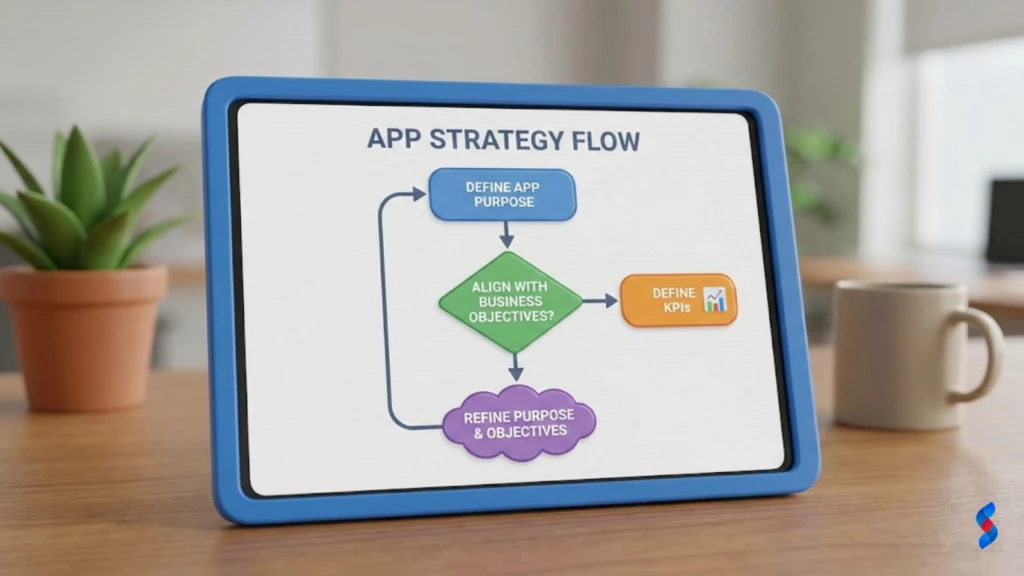
The first step in achieving mobile app readiness is to clearly define your app’s purpose and objectives. What problem does your app solve for your target audience? What are the specific goals you want to achieve with your app? Without a clear understanding of these fundamental questions, your app is likely to lack direction and fail to resonate with users.
Identifying the core problem your app solves is crucial. Your app should address a specific need or pain point for your target audience. For instance, if you run a restaurant, your app could solve the problem of long wait times by allowing customers to place orders and make reservations online.
Aligning app goals with overall business objectives ensures that your app contributes to your company’s broader strategic goals. For example, if your business objective is to increase customer loyalty, your app could offer exclusive rewards and personalized content to foster stronger relationships with your customers.
Defining measurable key performance indicators (KPIs) allows you to track your app’s progress and measure its success. Common KPIs include app downloads, user engagement, conversion rates, and customer retention. By monitoring these metrics, you can identify areas for improvement and optimize your app’s performance over time.
We once had a client who got stuck on this step. They had a great idea for an app, but they hadn’t clearly defined the problem it solved. As a result, the app lacked focus and failed to attract a significant user base. The trick to avoid this common issue is to conduct thorough app market research and validate your app idea with potential users before you start development.
Step 2: Conducting Thorough Market Research
Thorough app market research is a vital component of mobile app readiness. It involves gathering information about your target audience, competitors, and the overall market landscape. This research will help you understand the needs and preferences of your potential users, identify opportunities to differentiate your app, and make informed decisions about your app’s features and functionality.
Analyzing your target audience’s needs and behaviors is essential for creating an app that resonates with them. Conduct surveys, interviews, and focus groups to gather insights into their demographics, interests, and pain points. Understanding your target audience will enable you to tailor your app to their specific needs and preferences.
Identifying competitors and their mobile strategies is important for understanding the competitive landscape. Analyze your competitors’ apps to identify their strengths and weaknesses. Look for opportunities to differentiate your app by offering unique features or addressing unmet needs in the market. This also involves app feasibility study of the market.
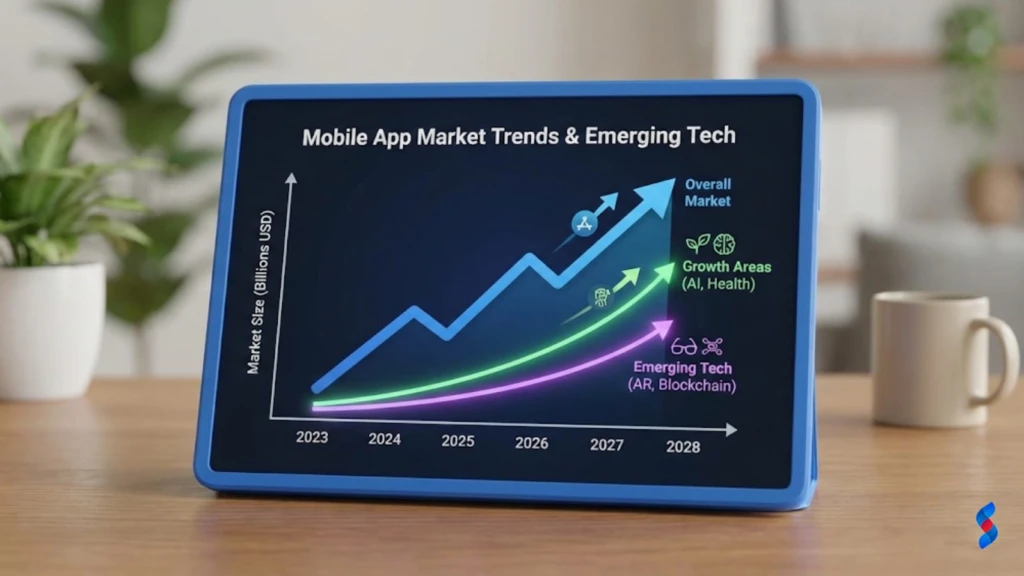
Evaluating market trends and emerging opportunities can help you identify potential niches and emerging technologies. Stay up-to-date on the latest trends in the mobile app industry, such as artificial intelligence, augmented reality, and blockchain. Consider how these technologies could be integrated into your app to create a unique and innovative user experience.
> “The key to successful market research is to go beyond basic demographics and delve into the psychographics of your target audience. Understand their values, motivations, and lifestyle to create an app that truly resonates with them.” – John Smith, Mobile App Strategist
Step 3: Assessing the Technical Feasibility
Assessing the technical feasibility of your app is a critical aspect of mobile app readiness. This involves evaluating the technical requirements of your app, considering platform choices, and assessing your current app infrastructure. A realistic assessment of technical feasibility will help you avoid costly development delays and ensure that your app can be built and maintained effectively.
Evaluating the technical requirements of your app involves identifying the specific technologies and resources needed to build your app. Consider factors such as the complexity of your app’s features, the amount of data it will process, and the level of security it requires.
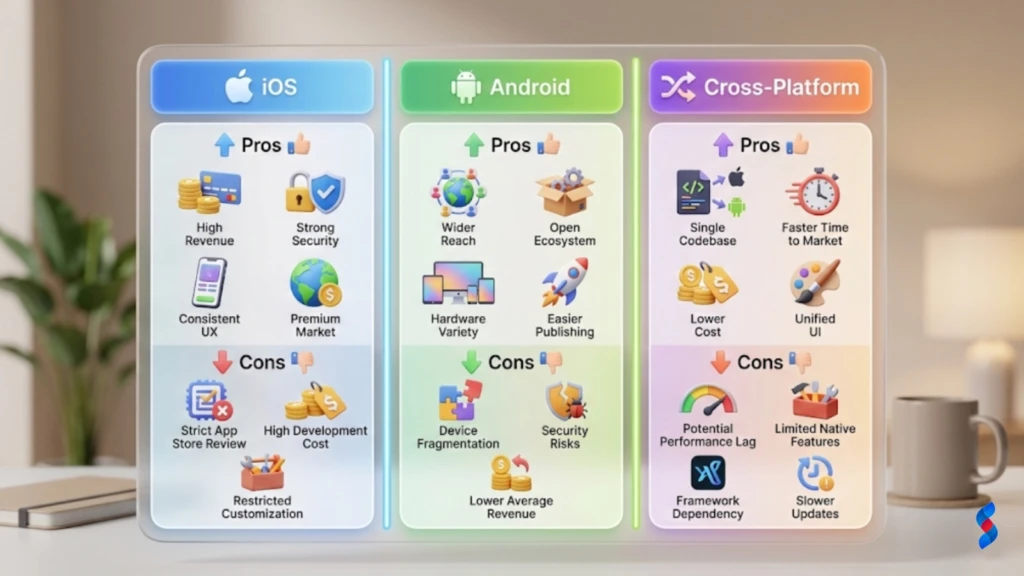
Considering platform choices (iOS, Android, or cross-platform) is a key decision that will impact your app’s development costs, reach, and performance. iOS apps are typically more expensive to develop but offer access to a high-value user base. Android apps have a larger potential reach but may require more testing due to the fragmentation of the Android ecosystem. Cross-platform development allows you to build apps for both iOS and Android using a single codebase, which can save time and money.
Assessing your current infrastructure and identifying necessary upgrades is essential for ensuring that your app can be hosted and maintained effectively. Consider factors such as server capacity, database performance, and network bandwidth. If your current infrastructure is not adequate, you may need to invest in upgrades or migrate to a cloud-based solution.
When our team in Dubai evaluates app infrastructure, they often find that businesses underestimate the importance of scalable server capacity. As your app’s user base grows, you’ll need to ensure that your servers can handle the increased traffic and data processing demands. Failing to do so can lead to slow performance, crashes, and ultimately, a poor user experience.
Step 4: Budgeting and Financial Planning
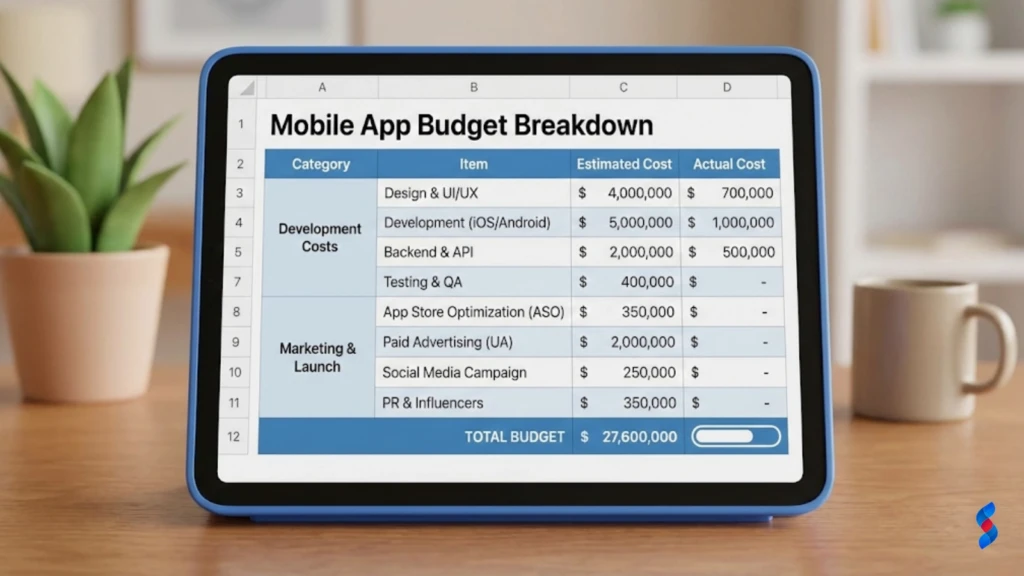
Budgeting and financial planning are essential for mobile app readiness. Developing a mobile app can be a significant investment, and it’s important to have a clear understanding of the costs involved. A well-defined budget will help you avoid overspending and ensure that you have the resources needed to launch and maintain your app successfully.
Estimating development costs, including design, coding, and testing, is a crucial step in the budgeting process. Obtain quotes from multiple app development companies to get a sense of the market rates. Be sure to factor in costs for project management, quality assurance, and ongoing support.
Planning for ongoing maintenance and updates is often overlooked but is a critical aspect of mobile app readiness. Mobile apps require regular maintenance to fix bugs, improve performance, and add new features. Be sure to allocate a portion of your budget for ongoing maintenance and updates.
Forecasting potential revenue streams and ROI is essential for justifying the investment in your mobile app. Consider various revenue models, such as in-app advertising, subscriptions, and in-app purchases. Develop a financial model to project your potential revenue and calculate your return on investment. Your mobile app budget is a crucial consideration to be made.
Step 5: Evaluating Your Team’s Capabilities
Evaluating your team’s capabilities is a critical step in ensuring mobile app readiness. Developing a successful mobile app requires a diverse set of skills and expertise, including developers, designers, marketers, and project managers. Assessing your team’s strengths and weaknesses will help you identify any gaps in your skillset and determine whether to hire in-house or outsource.
Identifying necessary skills and expertise (developers, designers, marketers) is essential for building a capable team. Developers are responsible for coding and building the app. Designers are responsible for creating the app’s user interface and user experience. Marketers are responsible for promoting the app and driving downloads.
Determining whether to hire in-house or outsource depends on your budget, timeline, and the availability of talent. Hiring in-house gives you more control over the development process but can be more expensive. Outsourcing can be more cost-effective but requires careful management to ensure quality.
Assessing the project management capabilities of your team is crucial for ensuring that the project stays on track and within budget. A skilled project manager can help you define project scope, manage timelines, and coordinate communication between team members.
[IMAGE: An organizational chart showing the different roles and responsibilities of a mobile app development team.]
Step 6: Developing a User Acquisition Strategy
Developing a user acquisition strategy is a crucial element of mobile app readiness. A great app is useless if no one knows about it. Your user acquisition strategy should outline how you plan to attract users to your app and drive downloads. This involves identifying your target users, understanding their preferred channels, and creating a marketing plan to reach them.
Identifying target users and their preferred channels is essential for crafting an effective mobile app marketing plan. Understanding your target audience’s demographics, interests, and online behavior will help you choose the right marketing channels and tailor your messaging to resonate with them.
Creating a mobile app marketing plan to drive app downloads and engagement involves selecting the right marketing tactics and allocating your budget effectively. Consider a mix of organic and paid marketing channels, such as social media, paid advertising, app store optimization (ASO), and influencer marketing.
Considering various marketing channels, such as social media, paid advertising, app store optimization (ASO), is crucial for maximizing your reach and driving downloads. Social media can be used to build brand awareness and engage with potential users. Paid advertising can be used to target specific demographics and interests. ASO can help improve your app’s visibility in app store search results.
[IMAGE: A diagram illustrating the different components of a user acquisition strategy, including target audience, marketing channels, and messaging.]
Step 7: Planning for App Maintenance and Updates
Planning for app maintenance plan and updates is often overlooked but is a critical aspect of mobile app readiness. Mobile apps are not static products. They require regular maintenance to fix bugs, improve performance, and add new features. A well-defined maintenance plan will ensure that your app remains functional, secure, and engaging over time.
Establishing a process for bug fixes and performance improvements is essential for maintaining a high-quality app. Implement a bug tracking system to identify and prioritize bugs. Regularly monitor your app’s performance to identify areas for improvement.
Planning for regular content updates and new feature releases is crucial for keeping your app fresh and engaging. Plan to release regular updates with new content, features, and improvements. This will keep your users coming back for more and help you stay ahead of the competition.
Budgeting for ongoing maintenance and support is essential for ensuring that you have the resources needed to maintain your app over the long term. Allocate a portion of your budget for bug fixes, performance improvements, content updates, and customer support.
[IMAGE: A timeline showing the schedule for app maintenance and updates, including bug fixes, performance improvements, and new feature releases.]
Step 8: Prioritizing Security and Data Privacy
Prioritizing mobile app security and data privacy is paramount in today’s digital landscape. Users are increasingly concerned about the security of their personal data, and a data breach can have serious consequences for your business. Implementing robust security measures and complying with relevant data privacy regulations are essential for building trust with your users and protecting your business.
Implementing security measures to protect user data is crucial for preventing data breaches and protecting user privacy. Use encryption to protect sensitive data, such as passwords and credit card numbers. Implement strong authentication measures to prevent unauthorized access to user accounts.
Complying with relevant data privacy regulations (e.g., GDPR, CCPA) is essential for avoiding legal penalties and building trust with your users. Understand the requirements of these regulations and implement policies and procedures to comply with them.
Conducting regular security audits is crucial for identifying and addressing potential vulnerabilities. Hire a security expert to conduct regular audits of your app’s security. Implement a process for addressing any vulnerabilities that are identified.
[IMAGE: A diagram illustrating the different security measures that should be implemented to protect user data, including encryption, authentication, and access control.]
Step 9: Testing and Quality Assurance
Testing and quality assurance (QA) are essential steps in ensuring mobile app readiness. Thorough testing can help you identify and fix bugs, improve performance, and ensure that your app meets your users’ expectations. A well-defined testing plan will ensure that your app is thoroughly tested before it is released to the public.
Developing a comprehensive testing plan is crucial for ensuring that all aspects of your app are thoroughly tested. Your testing plan should include functional testing, usability testing, performance testing, and security testing.
Conducting usability testing with target users is essential for identifying any usability issues. Observe users as they interact with your app and gather feedback on their experience. Use this feedback to make improvements to your app’s user interface and user experience.
Implementing a bug tracking and resolution process is crucial for ensuring that bugs are identified, tracked, and resolved efficiently. Use a bug tracking system to manage the bug fixing process. Prioritize bugs based on their severity and impact on users.
[IMAGE: A screenshot of a bug tracking system, showing the status of different bugs and their priority levels.]
Step 10: Monitoring Performance and Gathering User Feedback
Monitoring app performance monitoring and gathering user feedback are ongoing processes that are essential for ensuring the long-term success of your mobile app. By tracking your app’s performance and gathering feedback from your users, you can identify areas for improvement and make data-driven decisions about your app’s future development.
Using analytics tools to track app performance and user behavior is crucial for understanding how users are interacting with your app. Monitor key metrics such as app usage, user engagement, conversion rates, and customer retention.
Collecting user feedback through surveys, reviews, and in-app feedback mechanisms is essential for understanding your users’ needs and preferences. Use surveys to gather feedback on specific features or aspects of your app. Monitor app store reviews to identify common issues and areas for improvement. Implement an in-app feedback mechanism to allow users to easily submit feedback directly from the app.
Iterating on the app based on performance data and user feedback is crucial for ensuring that your app continues to meet your users’ needs. Use the data and feedback you collect to make improvements to your app’s features, functionality, and user experience.
[IMAGE: A dashboard showing key app performance metrics, such as app usage, user engagement, and conversion rates.]
Conclusion: Ensuring Long-Term Mobile App Success
In conclusion, mobile app readiness is not a one-time event but rather an ongoing process that requires continuous attention and effort. By carefully considering the key factors outlined in this guide, you can increase your chances of launching a successful mobile app that meets your business objectives and delights your users. Remember, a well-planned and executed mobile app can be a powerful tool for engaging with customers, streamlining operations, and generating revenue. We at SkySol Media are ready to help you navigate this complex process and achieve long-term success in the mobile app market.
Q: How important is market research before developing a mobile app?
A: Market research is absolutely crucial. It helps you understand your target audience, identify competitors, and validate your app idea. Without it, you risk building an app that no one wants or needs.
Q: What are the key factors to consider when budgeting for a mobile app?
A: Key factors include development costs (design, coding, testing), ongoing maintenance and updates, marketing expenses, and server infrastructure. Don’t forget to factor in potential unexpected costs.
Q: Should I hire in-house developers or outsource app development?
A: It depends on your budget, timeline, and expertise. Hiring in-house gives you more control, while outsourcing can be more cost-effective. Carefully weigh the pros and cons of each option.
Q: How do I choose the right platform for my mobile app (iOS or Android)?
A: Consider your target audience, budget, and technical resources. iOS apps often target a higher-value user base, while Android has a broader reach. Cross-platform development can be a good option if you want to target both platforms efficiently.
Q: What are some effective strategies for user acquisition?
A: Effective strategies include app store optimization (ASO), social media marketing, paid advertising, content marketing, and influencer marketing. Choose the channels that best reach your target audience.
Q: How important is app maintenance and updates?
A: App maintenance and updates are critical for ensuring the long-term success of your app. Regular maintenance helps fix bugs, improve performance, and add new features, keeping your users engaged.
Q: How can I ensure the security of my mobile app?
A: Implement security measures such as encryption, strong authentication, and regular security audits. Comply with relevant data privacy regulations (e.g., GDPR, CCPA) to protect user data.
Q: What role does testing play in mobile app development?
A: Testing is essential for identifying and fixing bugs, improving performance, and ensuring that your app meets your users’ expectations. Conduct thorough testing throughout the development process.
Q: How can I gather user feedback and improve my app?
A: Collect user feedback through surveys, reviews, and in-app feedback mechanisms. Monitor app performance using analytics tools. Use this data to make improvements to your app’s features, functionality, and user experience.
Q: What are the long-term benefits of mobile app readiness?
A: Long-term benefits include increased customer engagement, improved brand loyalty, streamlined operations, and new revenue streams. By ensuring mobile app readiness, you can maximize your chances of success in the competitive mobile app market.
Confused about app development cost? This guide breaks down all factors influencing price in 2025, from platform to complexity, helping you budget effectively and avoid overspending. Get a clear understanding today!
Uncover the true app development cost in 2025. This guide breaks down the factors influencing price, from platform to features. Plan your budget effectively and avoid hidden expenses. Get a realistic estimate for your next app project.
Uncover the real app development cost in 2025! Our comprehensive guide breaks down expenses, hidden fees, and ways to optimize your budget. Plan your project effectively and avoid costly mistakes with expert insights.
Uncover the complexities of app development costs in 2025. Our guide breaks down the factors influencing pricing, helping you estimate your project budget accurately. Learn from industry experts and plan your app development journey effectively.
Uncover the true app development cost in 2025. Our guide breaks down the factors influencing price, helping you budget effectively and avoid hidden expenses. Learn how to plan your app project for success.
Uncover the secrets of app development cost in 2025. Our guide provides a complete budget breakdown, helping you estimate expenses and plan your project effectively. Learn about factors affecting cost, development stages, and expert tips for saving money on your app development journey.
This mode enables people with epilepsy to use the website safely by eliminating the risk of seizures that result from flashing or blinking animations and risky color combinations.
Visually Impaired Mode
Improves website's visuals
This mode adjusts the website for the convenience of users with visual impairments such as Degrading Eyesight, Tunnel Vision, Cataract, Glaucoma, and others.
Cognitive Disability Mode
Helps to focus on specific content
This mode provides different assistive options to help users with cognitive impairments such as Dyslexia, Autism, CVA, and others, to focus on the essential elements of the website more easily.
ADHD Friendly Mode
Reduces distractions and improve focus
This mode helps users with ADHD and Neurodevelopmental disorders to read, browse, and focus on the main website elements more easily while significantly reducing distractions.
Blindness Mode
Allows using the site with your screen-reader
This mode configures the website to be compatible with screen-readers such as JAWS, NVDA, VoiceOver, and TalkBack. A screen-reader is software for blind users that is installed on a computer and smartphone, and websites must be compatible with it.
Online Dictionary
Readable Experience
Content Scaling
Default
Text Magnifier
Readable Font
Dyslexia Friendly
Highlight Titles
Highlight Links
Font Sizing
Default
Line Height
Default
Letter Spacing
Default
Left Aligned
Center Aligned
Right Aligned
Visually Pleasing Experience
Dark Contrast
Light Contrast
Monochrome
High Contrast
High Saturation
Low Saturation
Adjust Text Colors
Adjust Title Colors
Adjust Background Colors
Easy Orientation
Mute Sounds
Hide Images
Hide Emoji
Reading Guide
Stop Animations
Reading Mask
Highlight Hover
Highlight Focus
Big Dark Cursor
Big Light Cursor
Cognitive Reading
Virtual Keyboard
Navigation Keys
Voice Navigation
Accessibility Statement
skysolmedia.com
October 12, 2026
Compliance status
We firmly believe that the internet should be available and accessible to anyone, and are committed to providing a website that is accessible to the widest possible audience,
regardless of circumstance and ability.
To fulfill this, we aim to adhere as strictly as possible to the World Wide Web Consortium’s (W3C) Web Content Accessibility Guidelines 2.1 (WCAG 2.1) at the AA level.
These guidelines explain how to make web content accessible to people with a wide array of disabilities. Complying with those guidelines helps us ensure that the website is accessible
to all people: blind people, people with motor impairments, visual impairment, cognitive disabilities, and more.
This website utilizes various technologies that are meant to make it as accessible as possible at all times. We utilize an accessibility interface that allows persons with specific
disabilities to adjust the website’s UI (user interface) and design it to their personal needs.
Additionally, the website utilizes an AI-based application that runs in the background and optimizes its accessibility level constantly. This application remediates the website’s HTML,
adapts Its functionality and behavior for screen-readers used by the blind users, and for keyboard functions used by individuals with motor impairments.
If you’ve found a malfunction or have ideas for improvement, we’ll be happy to hear from you. You can reach out to the website’s operators by using the following email
Screen-reader and keyboard navigation
Our website implements the ARIA attributes (Accessible Rich Internet Applications) technique, alongside various different behavioral changes, to ensure blind users visiting with
screen-readers are able to read, comprehend, and enjoy the website’s functions. As soon as a user with a screen-reader enters your site, they immediately receive
a prompt to enter the Screen-Reader Profile so they can browse and operate your site effectively. Here’s how our website covers some of the most important screen-reader requirements,
alongside console screenshots of code examples:
Screen-reader optimization: we run a background process that learns the website’s components from top to bottom, to ensure ongoing compliance even when updating the website.
In this process, we provide screen-readers with meaningful data using the ARIA set of attributes. For example, we provide accurate form labels;
descriptions for actionable icons (social media icons, search icons, cart icons, etc.); validation guidance for form inputs; element roles such as buttons, menus, modal dialogues (popups),
and others. Additionally, the background process scans all the website’s images and provides an accurate and meaningful image-object-recognition-based description as an ALT (alternate text) tag
for images that are not described. It will also extract texts that are embedded within the image, using an OCR (optical character recognition) technology.
To turn on screen-reader adjustments at any time, users need only to press the Alt+1 keyboard combination. Screen-reader users also get automatic announcements to turn the Screen-reader mode on
as soon as they enter the website.
These adjustments are compatible with all popular screen readers, including JAWS and NVDA.
Keyboard navigation optimization: The background process also adjusts the website’s HTML, and adds various behaviors using JavaScript code to make the website operable by the keyboard. This includes the ability to navigate the website using the Tab and Shift+Tab keys, operate dropdowns with the arrow keys, close them with Esc, trigger buttons and links using the Enter key, navigate between radio and checkbox elements using the arrow keys, and fill them in with the Spacebar or Enter key.Additionally, keyboard users will find quick-navigation and content-skip menus, available at any time by clicking Alt+1, or as the first elements of the site while navigating with the keyboard. The background process also handles triggered popups by moving the keyboard focus towards them as soon as they appear, and not allow the focus drift outside it.
Users can also use shortcuts such as “M” (menus), “H” (headings), “F” (forms), “B” (buttons), and “G” (graphics) to jump to specific elements.
Disability profiles supported in our website
Epilepsy Safe Mode: this profile enables people with epilepsy to use the website safely by eliminating the risk of seizures that result from flashing or blinking animations and risky color combinations.
Visually Impaired Mode: this mode adjusts the website for the convenience of users with visual impairments such as Degrading Eyesight, Tunnel Vision, Cataract, Glaucoma, and others.
Cognitive Disability Mode: this mode provides different assistive options to help users with cognitive impairments such as Dyslexia, Autism, CVA, and others, to focus on the essential elements of the website more easily.
ADHD Friendly Mode: this mode helps users with ADHD and Neurodevelopmental disorders to read, browse, and focus on the main website elements more easily while significantly reducing distractions.
Blindness Mode: this mode configures the website to be compatible with screen-readers such as JAWS, NVDA, VoiceOver, and TalkBack. A screen-reader is software for blind users that is installed on a computer and smartphone, and websites must be compatible with it.
Keyboard Navigation Profile (Motor-Impaired): this profile enables motor-impaired persons to operate the website using the keyboard Tab, Shift+Tab, and the Enter keys. Users can also use shortcuts such as “M” (menus), “H” (headings), “F” (forms), “B” (buttons), and “G” (graphics) to jump to specific elements.
Additional UI, design, and readability adjustments
Font adjustments – users, can increase and decrease its size, change its family (type), adjust the spacing, alignment, line height, and more.
Color adjustments – users can select various color contrast profiles such as light, dark, inverted, and monochrome. Additionally, users can swap color schemes of titles, texts, and backgrounds, with over seven different coloring options.
Animations – person with epilepsy can stop all running animations with the click of a button. Animations controlled by the interface include videos, GIFs, and CSS flashing transitions.
Content highlighting – users can choose to emphasize important elements such as links and titles. They can also choose to highlight focused or hovered elements only.
Audio muting – users with hearing devices may experience headaches or other issues due to automatic audio playing. This option lets users mute the entire website instantly.
Cognitive disorders – we utilize a search engine that is linked to Wikipedia and Wiktionary, allowing people with cognitive disorders to decipher meanings of phrases, initials, slang, and others.
Additional functions – we provide users the option to change cursor color and size, use a printing mode, enable a virtual keyboard, and many other functions.
Browser and assistive technology compatibility
We aim to support the widest array of browsers and assistive technologies as possible, so our users can choose the best fitting tools for them, with as few limitations as possible. Therefore, we have worked very hard to be able to support all major systems that comprise over 95% of the user market share including Google Chrome, Mozilla Firefox, Apple Safari, Opera and Microsoft Edge, JAWS and NVDA (screen readers).
Notes, comments, and feedback
Despite our very best efforts to allow anybody to adjust the website to their needs. There may still be pages or sections that are not fully accessible, are in the process of becoming accessible, or are lacking an adequate technological solution to make them accessible. Still, we are continually improving our accessibility, adding, updating and improving its options and features, and developing and adopting new technologies. All this is meant to reach the optimal level of accessibility, following technological advancements. For any assistance, please reach out to