Introduction: The Crossroads of App Development
- ### Setting the Scene: A Tale of Two Apps
Imagine two app developers, both brimming with innovative ideas. One opts for native app development, while the other chooses hybrid app development. The question is, why? The decision between Native vs Hybrid is a pivotal one, impacting everything from performance to budget. Let’s delve into the factors that influence their choices and, ultimately, the success of their respective apps.
- ### The Native vs. Hybrid Dilemma: A Universal Challenge
The Native vs Hybrid dilemma transcends mere coding preferences; it’s a strategic decision that weighs user experience, budgetary constraints, and long-term objectives. This isn’t a one-size-fits-all situation. For many of our clients here in Lahore, we’ve seen that understanding the nuances of each approach is critical. We’ll dissect the key considerations, helping you navigate this complex landscape.
- ### Why This Comparison Matters to You
Whether you’re a startup founder, an experienced developer, or simply curious about mobile app development, understanding the Native vs Hybrid landscape is essential for making informed decisions. The insights shared here will empower you to assess your project’s unique needs and choose the development approach that aligns best with your goals. We aim to give you the knowledge to make the correct choice.
Deep Dive: Defining Native and Hybrid Apps
- ### Native Apps: Born and Bred for a Specific Platform
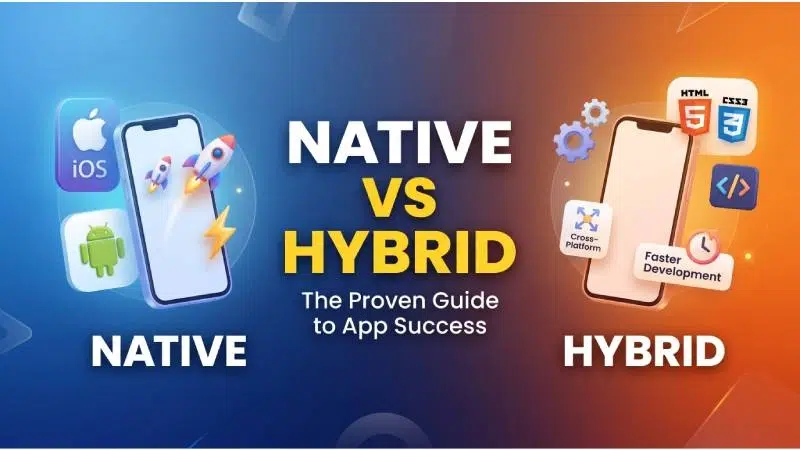
Native apps are meticulously crafted for a single operating system, be it iOS or Android, utilizing platform-specific languages and tools. This means leveraging Swift or Objective-C for iOS and Java or Kotlin for Android. This approach allows for seamless integration with the device’s hardware and software, resulting in optimal performance and user experience. Native vs Hybrid choices often revolve around this level of platform dedication.
- ### Hybrid Apps: The Cross-Platform Chameleon
Hybrid apps, on the other hand, are essentially web apps encased in a native container, allowing them to function across multiple platforms using a single codebase. Popular frameworks like React Native, Flutter, Xamarin, and Ionic empower developers to write code once and deploy it on both iOS and Android. This cross-platform app development approach offers significant advantages in terms of cost and development time.
- ### Visual Analogy: The House Metaphor
[IMAGE: A split image showing a custom-built house on one side representing native apps, and a pre-fabricated house being placed in different environments on the other side representing hybrid apps.]
To illustrate the difference, imagine a native app as a custom-built house designed specifically for its environment, meticulously tailored to every detail. In contrast, a hybrid app is like a prefabricated home, adapted to fit various landscapes. The custom home offers bespoke features and perfect harmony with its surroundings, while the prefab home provides convenience and cost-effectiveness. This analogy perfectly encapsulates the essence of the Native vs Hybrid debate.
Performance: Speed, Responsiveness, and the User Experience
- ### Native Performance: The Gold Standard
Native apps generally reign supreme in performance, owing to their direct access to device hardware and optimized code. This translates to faster loading times, smoother animations, and an overall more responsive user experience. For resource-intensive applications like gaming or video editing, native performance is often the preferred choice. When it comes to Native vs Hybrid, performance is a major deciding factor.
- ### Hybrid Performance: Bridging the Gap
Hybrid apps can sometimes lag behind native apps in terms of performance, particularly when dealing with complex graphics or heavy processing. This is because hybrid apps rely on a bridge to communicate between the web-based code and the device’s native functionalities. However, modern frameworks and optimization techniques are continuously narrowing this performance gap. With advancements in React Native and Flutter, hybrid app development can deliver surprisingly performant results.
- ### The Impact of Performance on User Satisfaction
A sluggish or unresponsive app can quickly lead to user frustration and abandonment. In today’s fast-paced digital world, users expect seamless performance. According to a recent study, 53% of mobile users abandon a website or app if it takes longer than three seconds to load. Performance is not just a technical detail; it’s a crucial determinant of user satisfaction and app success. This is why the Native vs Hybrid decision is so critical.
- ### Real-World Scenario: The E-Commerce App Example
We once worked with an e-commerce client who needed a robust mobile app to handle peak shopping seasons, such as Black Friday and Cyber Monday. The app needed to process thousands of transactions per minute without crashing or slowing down. After careful consideration, native app development was the obvious choice for them. The ability to optimize the app for specific devices and operating systems ensured the required level of performance and stability. For many of our clients in similar situations, native app development consistently provides the reliability they need.
Development Costs: Budgeting for Your App’s Future
- ### Native Development: Higher Initial Investment
Developing separate native apps for iOS and Android typically requires a higher initial investment compared to hybrid app development. This is because you need separate codebases, platform-specific expertise, and dedicated development teams for each platform. The increased complexity and resource requirements translate to higher app development costs. However, some businesses find that the long-term benefits justify the initial expense.
- ### Hybrid Development: Cost-Effective Cross-Platform Solution
Hybrid app development offers a cost-effective solution by leveraging a single codebase for multiple platforms. This reduces development time, resource requirements, and overall app development costs. With frameworks like React Native, Flutter, and Ionic, developers can write code once and deploy it on both iOS and Android, saving significant time and money. This is a compelling advantage when evaluating Native vs Hybrid.
- ### Long-Term Costs: Maintenance and Updates
When considering app development costs, it’s crucial to factor in the ongoing expenses of maintaining and updating your app on both platforms. Native apps may require more maintenance due to platform-specific updates and compatibility issues. Hybrid apps, on the other hand, can often be updated more easily through web technologies. Remember that consistent maintenance is critical for long-term success.
- ### Finding the Right Balance: Budget vs. Quality
The Native vs Hybrid choice often boils down to finding the right balance between budget and quality. How much are you willing to invest in performance, user experience, and access to device features? If budget is a major constraint, hybrid app development may be the more viable option. However, if you prioritize performance and a seamless user experience above all else, native app development may be worth the higher investment. It’s all about aligning your budget with your priorities.
User Interface (UI) and User Experience (UX): Crafting a Seamless Experience
- ### Native UI/UX: Platform-Specific Elegance
Native apps can seamlessly integrate with platform-specific UI elements and design guidelines, creating a familiar and intuitive experience for users. By adhering to Apple’s Human Interface Guidelines (HIG) for iOS and Google’s Material Design for Android, native apps can provide a truly native look and feel. This platform-specific elegance can significantly enhance user engagement and satisfaction. The user experience of a native app is often considered superior.
- ### Hybrid UI/UX: Balancing Consistency and Customization
Hybrid apps strive to deliver a consistent UI across platforms but may require extra effort to achieve a truly native look and feel. While frameworks like React Native and Flutter offer UI components that mimic native elements, achieving pixel-perfect consistency can be challenging. Developers may need to customize UI elements and implement platform-specific styling to ensure a seamless user experience on both iOS and Android.
- ### Accessibility: Ensuring Inclusivity for All Users
Both native and hybrid apps should prioritize accessibility to cater to users with disabilities. This includes providing features like screen reader compatibility, alternative text for images, and keyboard navigation support. By adhering to accessibility guidelines, you can ensure that your app is inclusive and usable by all users, regardless of their abilities. Accessibility is a crucial aspect of mobile app development that should not be overlooked.
Development Speed: Time to Market and Iteration Cycles
- ### Native Development: A Marathon, Not a Sprint
Native development can often take longer compared to hybrid development due to the need for separate codebases and platform-specific testing. Developing two separate apps from scratch requires more time, resources, and expertise. This can delay your time to market and impact your ability to respond quickly to changing market demands. This extended timeline must be factored into the Native vs Hybrid decision.
- ### Hybrid Development: Faster Time to Market
Hybrid development can significantly accelerate the development process, allowing you to launch your app sooner. By leveraging a single codebase for multiple platforms, you can reduce development time and resource requirements. This faster time to market can be a critical advantage, especially for startups and businesses that need to validate their ideas quickly. Cross-platform app development offers a clear advantage in terms of speed.
- ### Iteration and Updates: Agility and Responsiveness
How quickly can you respond to user feedback and release updates? Hybrid apps often allow for faster iteration and updates due to their web-based nature. Changes can be deployed more easily without requiring users to download a new version from the app store. This agility and responsiveness can be invaluable for continuously improving your app and keeping users engaged. When comparing Native vs Hybrid, the speed of updates is a key consideration.
- ### “A hybrid approach allowed us to launch our MVP faster” – CTO, Startup X
> “A hybrid approach allowed us to launch our MVP faster, giving us invaluable user feedback early on.” – CTO, Startup X
Feature Access: Device Capabilities and Integrations
- ### Native Feature Access: Unrestricted Potential
Native apps have unrestricted access to all device features, such as the camera, GPS, Bluetooth, NFC, and sensors. This allows developers to fully leverage the capabilities of the device and create rich, immersive experiences. Native apps can seamlessly integrate with device-specific APIs and frameworks, unlocking the full potential of the hardware. When full access is needed, Native vs Hybrid is an easy choice.
- ### Hybrid Feature Access: Potential Limitations
Hybrid apps may face limitations in accessing certain device features, requiring native plugins or workarounds. While frameworks like React Native and Flutter provide access to many device features, some functionalities may not be directly accessible from the JavaScript codebase. In such cases, developers may need to write custom native modules or rely on third-party plugins to bridge the gap. These limitations should be considered when evaluating Native vs Hybrid.
- ### The Importance of Seamless Integrations
How important is it for your app to fully leverage device capabilities? If your app relies heavily on device features like augmented reality, advanced camera functionality, or specialized sensors, native app development may be the better choice. However, if your app primarily focuses on core functionalities like content delivery, social networking, or e-commerce, hybrid app development may suffice. Seamless integrations are crucial for delivering a compelling user experience.
Security: Protecting User Data and Privacy
- ### Native Security: Platform-Level Protection
Native apps benefit from platform-level security features and undergo rigorous app store review processes. Apple and Google have strict security guidelines and review processes to ensure that apps meet certain standards before being published on their respective app stores. This provides an added layer of protection against malicious code and security vulnerabilities. Native app development benefits from this inherent security.
- ### Hybrid Security: Vigilance and Best Practices
Hybrid apps require careful attention to security best practices to protect against vulnerabilities. Since hybrid apps rely on web technologies, they are susceptible to common web-based threats like cross-site scripting (XSS) and SQL injection. Developers must implement robust security measures, such as input validation, data sanitization, and secure authentication, to mitigate these risks. Vigilance and adherence to security best practices are essential for hybrid app development.
- ### Data Encryption and User Authentication
Both native and hybrid apps must prioritize data encryption and secure user authentication to protect user data and privacy. Sensitive data, such as passwords, financial information, and personal details, should be encrypted both in transit and at rest. Secure user authentication mechanisms, such as multi-factor authentication and biometric authentication, should be implemented to prevent unauthorized access. Data encryption and user authentication are fundamental security requirements for all mobile app development projects.
Maintenance: Long-Term Support and Updates
- ### Native Maintenance: Platform-Specific Updates
Maintaining native apps requires keeping up with platform updates and addressing compatibility issues. Apple and Google regularly release new versions of their operating systems, which may introduce changes that affect native apps. Developers must ensure that their apps are compatible with the latest OS versions and address any compatibility issues that arise. Native apps may also require platform-specific updates to take advantage of new features and APIs.
- ### Hybrid Maintenance: Streamlined Updates
Hybrid apps can often be updated more easily through web technologies. Since hybrid apps are essentially web apps wrapped in a native container, updates can be deployed without requiring users to download a new version from the app store. This streamlined update process allows developers to quickly address bugs, implement new features, and improve the user experience. Cross-platform app development offers advantages in terms of maintenance.
- ### The Importance of Regular Maintenance
Neglecting maintenance can lead to bugs, security vulnerabilities, and a degraded user experience. Regular maintenance is crucial for ensuring that your app remains stable, secure, and performant. This includes addressing bug fixes, implementing security patches, and optimizing performance. A well-maintained app will provide a better user experience and encourage user retention.
Scalability: Future-Proofing Your App
- ### Native Scalability: Built for Growth
Native apps are generally well-suited for scaling to handle increasing user loads and feature additions. The platform-specific nature of native apps allows for efficient resource utilization and optimized performance, making them capable of handling large volumes of traffic and data. Native apps can also be easily scaled by leveraging cloud-based infrastructure and server-side technologies.
- ### Hybrid Scalability: Careful Planning Required
Hybrid apps may require careful planning and optimization to ensure scalability. While hybrid frameworks like React Native and Flutter offer performance optimizations, hybrid apps may still face challenges when handling extremely high traffic loads or complex data processing. Developers must carefully architect their hybrid apps and implement performance optimizations to ensure scalability and prevent performance bottlenecks.
Expert Opinions and Industry Trends
We’ll gather insights from industry experts and thought leaders on the Native vs Hybrid debate. Many experts believe that the best approach depends on the specific requirements of the project. Some argue that native apps offer superior performance and user experience, while others emphasize the cost-effectiveness and faster time to market of hybrid apps. The consensus is that a thorough assessment of project needs is crucial for making the right decision.
- ### Emerging Technologies and Trends
Staying ahead of the curve with the latest app development technologies is crucial for long-term success. Emerging technologies like serverless computing, artificial intelligence, and blockchain are transforming the mobile app development landscape. By embracing these technologies, developers can create innovative and engaging apps that provide unique value to users. Keeping up with industry trends is essential for staying competitive.
- ### Expert Quote: The Developer’s Perspective
> “The choice between native and hybrid depends heavily on the project requirements. Native offers superior performance, while hybrid allows for faster development and broader reach.” – John Smith, Lead Mobile Developer
Final Verdict: Choosing the Right Path for Your App
- ### Native: The Powerhouse for Demanding Apps
Choose native if performance, security, and access to device features are paramount. Native app development offers unparalleled control over the user experience and the ability to fully leverage device capabilities. If your app requires high performance, seamless integrations, and robust security, native is the way to go.
- ### Hybrid: The Agile Solution for Cross-Platform Reach
Choose hybrid if you need to launch quickly, reach a wider audience, and have a limited budget. Hybrid app development offers a cost-effective and efficient way to build cross-platform apps. If time to market and budget are major constraints, hybrid is a viable option.
- ### Considering All Factors: A Holistic Approach
Evaluate your specific needs, priorities, and resources to make the best decision. The Native vs Hybrid decision is not always straightforward. It requires a holistic approach that considers all relevant factors, including performance, cost, time to market, user experience, and security.
- ### The Road Ahead: Your App Development Journey
No matter which path you choose, remember that success requires careful planning, execution, and ongoing optimization. App development is an iterative process that requires continuous improvement and adaptation. By staying focused on your goals and embracing best practices, you can create a successful app that delivers value to your users.
- ### Final Recommendations and
Ultimately, the best choice between native and hybrid depends on your unique circumstances. We at SkySol Media have extensive experience in both native and hybrid app development. For many of our clients, especially here in Lahore, we’ve seen firsthand how a tailored approach, leveraging the strengths of each method, leads to the best results. We encourage you to thoroughly evaluate your needs and consider seeking expert guidance to make the most informed decision. [CTA: Let's build your dream app!]
FAQ Section
Q: What are the main differences between native and hybrid apps?
A: Native apps are built specifically for a single platform (iOS or Android) using platform-specific languages and tools, while hybrid apps are web apps wrapped in a native container that can run on multiple platforms. Native apps generally offer better performance and access to device features, but they require more development time and resources. Hybrid apps are more cost-effective and faster to develop, but they may have performance limitations.
Q: Which is better for user experience, native or hybrid?
A: Native apps typically offer a better user experience due to their seamless integration with platform-specific UI elements and optimized performance. However, modern hybrid frameworks like React Native and Flutter can deliver a surprisingly good user experience, especially with careful optimization.
Q: How much does it cost to develop a native app?
A: The cost of developing a native app depends on various factors, including the complexity of the app, the features required, and the location of the development team. Native app development typically requires a higher initial investment compared to hybrid app development due to the need for separate codebases and platform-specific expertise.
Q: What are the advantages of hybrid app development?
A: The main advantages of hybrid app development are cost-effectiveness, faster time to market, and cross-platform compatibility. Hybrid apps can be built using a single codebase that can be deployed on both iOS and Android, reducing development time and resource requirements.
Q: Which frameworks are commonly used for hybrid app development?
A: Popular frameworks for hybrid app development include React Native, Flutter, Xamarin, and Ionic. These frameworks provide developers with tools and components for building cross-platform apps using web technologies like HTML, CSS, and JavaScript.
Q: Is hybrid app development suitable for complex apps?
A: Hybrid app development can be suitable for complex apps, but it requires careful planning and optimization. Hybrid apps may face performance limitations when dealing with complex graphics or heavy processing. Developers must carefully architect their hybrid apps and implement performance optimizations to ensure scalability and prevent performance bottlenecks.
Q: How can I choose between native and hybrid app development?
A: To choose between native and hybrid app development, you should carefully evaluate your project’s specific needs, priorities, and resources. Consider factors like performance requirements, budget constraints, time to market, user experience goals, and security needs. If you are unsure which approach is best for you, consider seeking expert guidance from a mobile app development company like SkySol Media.
Q: What is the future of native vs hybrid app development?
A: Both native and hybrid app development are likely to coexist in the future. Native apps will continue to be the preferred choice for performance-critical applications and apps that require full access to device features. Hybrid apps will remain a popular option for businesses that need to launch quickly, reach a wider audience, and have a limited budget. The advancements in hybrid frameworks are continually narrowing the gap between native and hybrid performance. The trends in 2026 are leaning towards more sophisticated hybrid solutions.
Q: How does SkySol Media approach the native vs. hybrid decision for clients?
A: At SkySol Media, we take a consultative approach to the Native vs Hybrid decision. We begin by thoroughly understanding your business goals, target audience, budget, and technical requirements. We then analyze the pros and cons of each approach in the context of your specific project and provide you with a clear recommendation. We have experience building both native and hybrid apps, and we can help you choose the best path for your app development journey.