Is shared hosting enough for your website? This guide explores the capabilities, limitations, and alternatives to shared hosting. Make an informed decision about your web hosting needs and avoid costly mistakes. Learn when shared hosting is sufficient and when it's time to upgrade.
Shared hosting enough? That’s a question we at SkySol Media get asked frequently, especially by startups and small businesses just getting their online presence established. The truth is, whether shared hosting is “enough” depends entirely on your specific needs, goals, and technical capabilities. This article will delve into the amazing truth about shared hosting in 2025, exploring its benefits, limitations, and when it’s time to consider other hosting options.
Understanding Shared Hosting: The Basics
What is Shared Hosting?
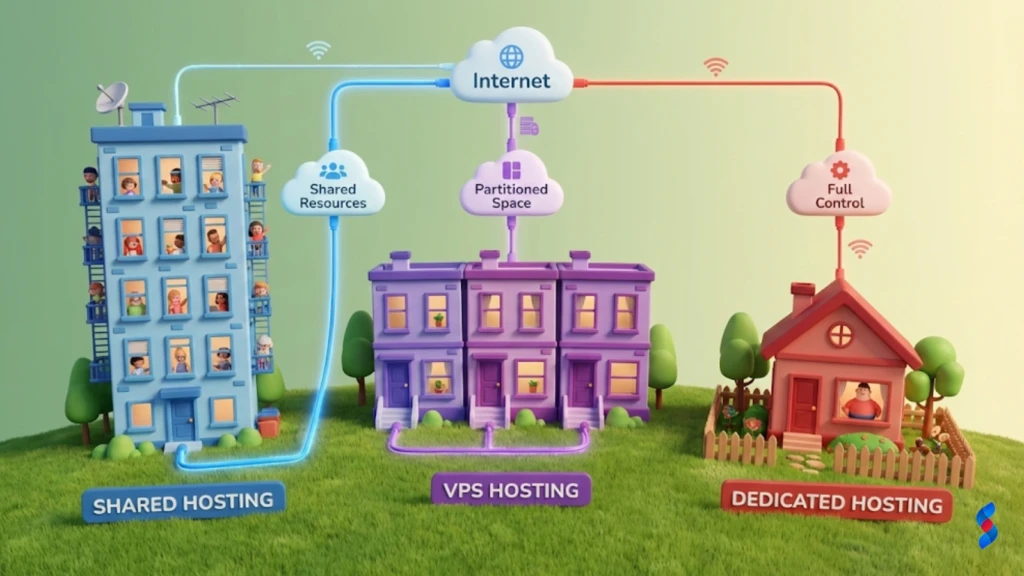
Shared web hosting is a type of web hosting where multiple websites reside on a single physical server. This means that the server’s resources, such as CPU, RAM, and storage space, are shared among all the websites hosted on that server. Think of it like an apartment building.
In our experience, understanding this shared environment is crucial for making an informed decision.
Each website has its own allocated space, but they all share the same underlying infrastructure.
This sharing of resources is what makes shared hosting so affordable, but it also comes with certain limitations.
SkySol Media’s team in Dubai often encounters businesses that initially chose cheap hosting, not realizing the potential performance impact.
Key Features of Shared Hosting
Shared web hosting comes with several key features that make it an attractive option for many website owners:
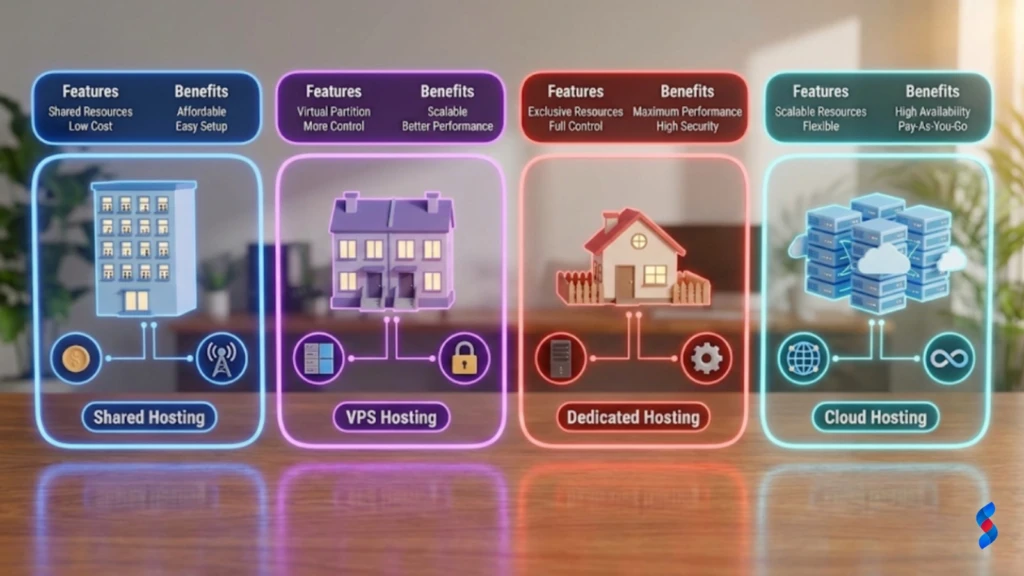
Affordability: It’s generally the most budget-friendly hosting option, making it accessible to individuals and small businesses with limited financial resources.
Ease of Use: Most providers offer user-friendly control panels like cPanel or Plesk, which simplify website management tasks.
Managed Services: The hosting provider handles server maintenance, security updates, and technical support, reducing the burden on the website owner.
We often advise clients that shared website hosting is like renting a fully furnished apartment where the landlord takes care of all the maintenance.
Who is Shared Hosting Ideal For?
Shared hosting is particularly well-suited for:
Small businesses and startups with limited budgets
Personal blogs and portfolio websites
Websites with low to moderate traffic
Individuals new to web hosting and website creation
If you’re just starting out and don’t anticipate a large volume of traffic, shared hosting can be a cost-effective way to get your website online. Our experience shows that many successful businesses began with shared hosting before scaling up.
Advantages of Shared Hosting
Cost-Effectiveness
The primary advantage of shared hosting is its cost-effectiveness.
Monthly fees are significantly lower compared to other hosting options like VPS or dedicated hosting.
You don’t have to worry about the costs associated with server hardware, maintenance, or security.
Entry-level plans are designed to be affordable for budget-conscious users.
For startups, every dollar counts, and shared hosting allows them to allocate resources to other critical areas of their business.
Simplicity and Ease of Management
Shared hosting simplifies website management.
User-friendly control panels like cPanel and Plesk provide an intuitive interface for managing your website files, databases, and email accounts.
Many providers offer pre-installed applications and scripts that make it easy to set up popular content management systems (CMS) like WordPress, Joomla, or Drupal.
You don’t need extensive technical expertise to perform basic website operations.
This ease of use allows website owners to focus on creating content and marketing their website rather than dealing with complex server administration tasks.
Server Maintenance Included
With shared hosting, the hosting provider takes care of all the server maintenance tasks.
They handle server updates, security patches, and other technical aspects of server administration.
This frees you from the responsibility of managing the server, allowing you to focus on your website content and marketing efforts.
This is particularly beneficial for those who lack the technical skills or time to manage a server themselves.
Scalability (Within Limits)
Shared hosting offers some degree of scalability, although it’s limited compared to other hosting options.
You can typically upgrade to higher-tier shared hosting plans as your website grows.
These upgrades provide increased storage space, bandwidth, and other resources.
However, there are limitations to how much you can scale within a shared hosting environment.
When our clients ask about scalability, we emphasize the importance of understanding the long-term growth potential of their website.
Limitations of Shared Hosting
Resource Constraints
One of the main limitations of shared hosting is resource constraints.
Because you’re sharing server resources with other websites, you’re limited in terms of CPU, RAM, and storage space.
This can impact your website’s performance, especially during peak traffic periods.
If another website on the server experiences a surge in traffic, it can affect the performance of your website.
Performance Issues
Shared hosting can sometimes lead to performance issues.
The “noisy neighbor” effect, where other websites on the server impact your website’s performance, is a common concern.
Slower loading times and potential downtime can occur during high traffic periods.
Shared hosting is generally not suitable for resource-intensive websites or applications that require significant server resources.
Security Risks
Security is another concern with shared hosting.
The shared server environment increases security vulnerabilities.
There’s a potential for cross-site contamination and security breaches.
You’re reliant on the hosting provider’s security measures to protect your website.
We always recommend implementing additional security measures, such as strong passwords and regular backups, to mitigate these risks.
You typically have restricted access to server configuration and customization options.
You may not be able to install custom software or modules.
There are often limitations on server-level optimizations for performance.
This lack of customization can be a hindrance for websites that require specific software or configurations.
When is Shared Hosting Not Enough?
High Traffic Websites
If your website consistently experiences high traffic volumes, shared hosting may not be sufficient.
High traffic websites require dedicated resources to handle user requests.
Shared hosting can become slow and unresponsive under heavy load.
Switching to VPS or dedicated hosting is often necessary to maintain optimal performance.
Resource-Intensive Applications
Websites running complex applications or databases may also outgrow shared hosting.
Resource-intensive applications require significant CPU, RAM, and storage resources.
Shared hosting may not provide adequate performance for these types of websites.
VPS or dedicated hosting can offer the dedicated resources needed to run these applications smoothly.
E-commerce Websites
E-commerce websites require enhanced security and performance, which shared hosting may not always provide.
E-commerce websites handle transactions and sensitive customer data.
They need enhanced security measures and PCI compliance to protect customer information.
VPS or dedicated hosting offers greater control and security for e-commerce websites.
Custom Software Requirements
If your website requires specific software or server configurations, shared hosting may not be suitable.
Shared hosting typically doesn’t allow you to install custom modules or scripts.
VPS or dedicated hosting provides complete control over the server environment, allowing you to install any software you need.
This is essential for websites that rely on custom software or applications.
Exploring Alternatives to Shared Hosting
Virtual Private Server (VPS) Hosting
VPS hosting is a type of web hosting that provides a virtualized server with dedicated resources.
It offers greater control, scalability, and performance compared to shared hosting.
Each VPS has its own operating system, CPU, RAM, and storage space.
VPS hosting is suitable for growing websites and resource-intensive applications.
Dedicated Server Hosting
Dedicated server hosting provides an entire physical server dedicated to your website.
It offers maximum control, performance, and security.
You have complete control over the server’s hardware and software.
Dedicated server hosting is ideal for large enterprises and high-traffic websites.
Cloud Hosting
Cloud hosting utilizes a network of virtual servers to provide scalable resources.
It offers a pay-as-you-go pricing model and flexible resource allocation.
You can easily scale your resources up or down as needed.
Cloud hosting is suitable for websites with fluctuating traffic patterns.
Managed WordPress Hosting
Managed WordPress hosting is a hosting environment optimized specifically for WordPress websites.
It offers enhanced performance, security, and WordPress-specific features.
Simplified management and automatic updates are included.
This type of hosting is ideal for WordPress users who want a hassle-free experience.
Key Factors to Consider When Choosing Hosting
Website Traffic and Growth Projections
Estimating your current and future website traffic is crucial when choosing a hosting plan.
Choose a hosting plan that can accommodate your current traffic volume and anticipated growth.
Consider scalability options for handling traffic spikes.
It’s better to overestimate your traffic needs than to underestimate them.
Resource Requirements (CPU, RAM, Storage)
Assessing the CPU, RAM, and storage needs of your website is essential.
Select a hosting plan with sufficient resources to handle your website’s demands.
Monitor your resource usage and upgrade as needed.
Resource-intensive websites require more CPU and RAM than simple websites.
Security Needs and Compliance
Evaluating the security requirements for your website is critical.
Ensure compliance with relevant regulations (e.g., PCI DSS for e-commerce).
Choose a hosting provider with robust security measures.
Implement additional security measures to protect your website.
Technical Expertise and Management Preferences
Consider your technical skills and comfort level with server management.
Choose between managed and unmanaged hosting options.
Select a user-friendly control panel and support resources.
If you lack technical expertise, managed hosting is often the best option.
Real-World Examples: Shared Hosting Success Stories and Failures
Case Study 1: A Successful Blog on Shared Hosting
A personal blog with low traffic, a simple design, and minimal resource requirements can thrive on shared hosting. This demonstrates the suitability of shared web hosting for basic websites. Many hobby bloggers find that shared hosting meets their needs perfectly.
Case Study 2: An E-commerce Website Overwhelmed by Shared Hosting
An online store struggling with slow loading times, security vulnerabilities, and scalability issues highlights the need for VPS or dedicated hosting for e-commerce. These websites often require more robust solutions to handle transactions and customer data securely.
Case Study 3: A Startup Migrating from Shared Hosting to VPS
A growing startup transitioning from shared hosting to VPS due to increased traffic, resource demands, and the need for greater control illustrates the scalability benefits of VPS hosting. As their business expands, they need more resources and control over their server environment.
Common Misconceptions About Shared Hosting
Myth: Shared hosting is always slow and unreliable.
This isn’t always true. Optimized shared hosting environments, offered by reputable hosting providers with quality infrastructure, can provide good performance. Website speed is also affected by factors beyond hosting, such as website optimization and the use of a CDN.
Myth: Shared hosting is not secure.
While shared hosting can have security vulnerabilities, hosting providers implement security measures to protect shared hosting environments. Furthermore, website security best practices (e.g., strong passwords, regular backups) and additional security tools can enhance security.
Future Trends in Shared Hosting
Increased Focus on Performance Optimization
Hosting providers are increasingly implementing technologies to improve shared hosting performance. This includes SSD storage, caching mechanisms, and optimized server configurations. Efforts are also being made to minimize the “noisy neighbor” effect.
Enhanced Security Measures
Advanced security features are being implemented to protect shared hosting environments. This includes intrusion detection systems, malware scanning, and DDoS protection. Compliance with stricter data privacy regulations is also becoming increasingly important.
AI-Powered Hosting Management
Artificial intelligence is being used to automate server management tasks, predict resource allocation, optimize performance, and proactively monitor security threats. This helps to improve the efficiency and reliability of shared hosting environments.
“Shared hosting is a fantastic entry point for many online ventures, offering an accessible and budget-friendly start. However, it’s crucial to recognize its limitations, especially when anticipating growth or dealing with resource-intensive applications. Planning for scalability from the outset is the key to long-term success.” – Sarah Jones, Lead Web Consultant
Conclusion: Is Shared Hosting Enough for You?
Determining whether shared hosting enough for you hinges on a thorough evaluation of your website’s unique requirements, projected traffic, and your comfort level with technical management. While its affordability and user-friendliness are undeniable advantages, the inherent limitations can impede performance for websites experiencing growth or demanding significant resources. A proactive approach to assessing your needs and planning for future scalability is essential to ensure you select a hosting solution that aligns with your long-term objectives. At SkySol Media, we’re committed to guiding you in making informed decisions that empower your online success.
Q: What is the main difference between shared hosting and VPS hosting?
A: The main difference is that shared hosting involves sharing server resources with other websites, while VPS hosting provides you with a virtualized server with dedicated resources. VPS hosting offers greater control, scalability, and performance.
Q: Is shared hosting suitable for e-commerce websites?
A: Shared hosting can be suitable for very small e-commerce websites with minimal traffic and security needs. However, for most e-commerce websites, VPS or dedicated hosting is recommended for enhanced security, performance, and PCI compliance.
Q: Can I upgrade from shared hosting to VPS hosting later?
A: Yes, most hosting providers offer easy upgrade paths from shared hosting to VPS or dedicated hosting. This allows you to start with shared hosting and scale up as your website grows.
Q: What are the key factors to consider when choosing a shared hosting provider?
A: Key factors to consider include the provider’s reputation, server uptime guarantee, customer support quality, pricing, and available features. Look for a provider that offers a user-friendly control panel and robust security measures.
Q: How can I improve the performance of my website on shared hosting?
A: You can improve performance by optimizing your website’s code, using a content delivery network (CDN), caching your website’s content, and choosing a reputable hosting provider with optimized servers. Avoid using excessive plugins or resource-intensive themes.
Q: What happens if my website exceeds the resource limits of my shared hosting plan?
A: If your website exceeds the resource limits, your hosting provider may throttle your website’s performance, suspend your account, or recommend upgrading to a higher-tier plan. It’s important to monitor your resource usage and upgrade as needed.
Q: Is shared hosting a good option for beginners?
A: Yes, shared hosting is often a good option for beginners due to its affordability, ease of use, and managed services. It provides a low-risk way to get your website online without requiring extensive technical expertise.
Q: What are some common control panels used with shared hosting?
A: Common control panels include cPanel, Plesk, and DirectAdmin. These control panels provide a user-friendly interface for managing your website files, databases, email accounts, and other settings.
Q: How important is customer support when choosing a shared hosting provider?
A: Customer support is very important. Choose a hosting provider that offers 24/7 support via phone, email, or live chat. Prompt and helpful customer support can be invaluable when you encounter technical issues or have questions about your hosting plan.
Q: What are the benefits of using SSD storage with shared hosting?
A: SSD (Solid State Drive) storage offers significantly faster read and write speeds compared to traditional HDD (Hard Disk Drive) storage. This can lead to faster website loading times and improved overall performance. Many hosting providers now offer SSD storage with their shared hosting plans.
Q: Does SkySol Media offer shared hosting services?
A: While we don’t focus primarily on shared hosting, we offer comprehensive consultations to help you determine the best hosting options for your needs. We specialize in VPS, dedicated, and cloud solutions tailored to scalability and performance.
Q: What if I decide shared hosting isn’t enough after I’ve already signed up?
A: Most reputable hosting providers offer a money-back guarantee period, allowing you to cancel your plan within a certain timeframe if you’re not satisfied. This gives you the flexibility to try shared hosting and switch to a different plan if it doesn’t meet your needs.
Why Our Web Hosting Services Are Perfect for Your Online Growth in 2025: In today’s digital age, where businesses are expected to provide lightning-fast user...
The Ultimate Guide to Choosing Our Reliable Web Hosting Plans: In the ever-evolving digital ecosystem of 2025, your website’s performance, reliability, and security are more...
Is slow web hosting killing your business? This guide provides actionable steps to diagnose and fix slow loading times. Learn how to optimize your website and choose the right hosting provider for peak performance and improved user experience.
Considering shared hosting? Don't jump in without asking the right questions! This guide helps you determine if it's the right choice for your website in 2025, covering essential factors like performance, security, and scalability.
Is your web host secretly sabotaging your SEO? This guide reveals the hidden ways your hosting provider can hurt your rankings and how to choose a web host that boosts your search engine optimization. Learn how to select the best option for SEO success.