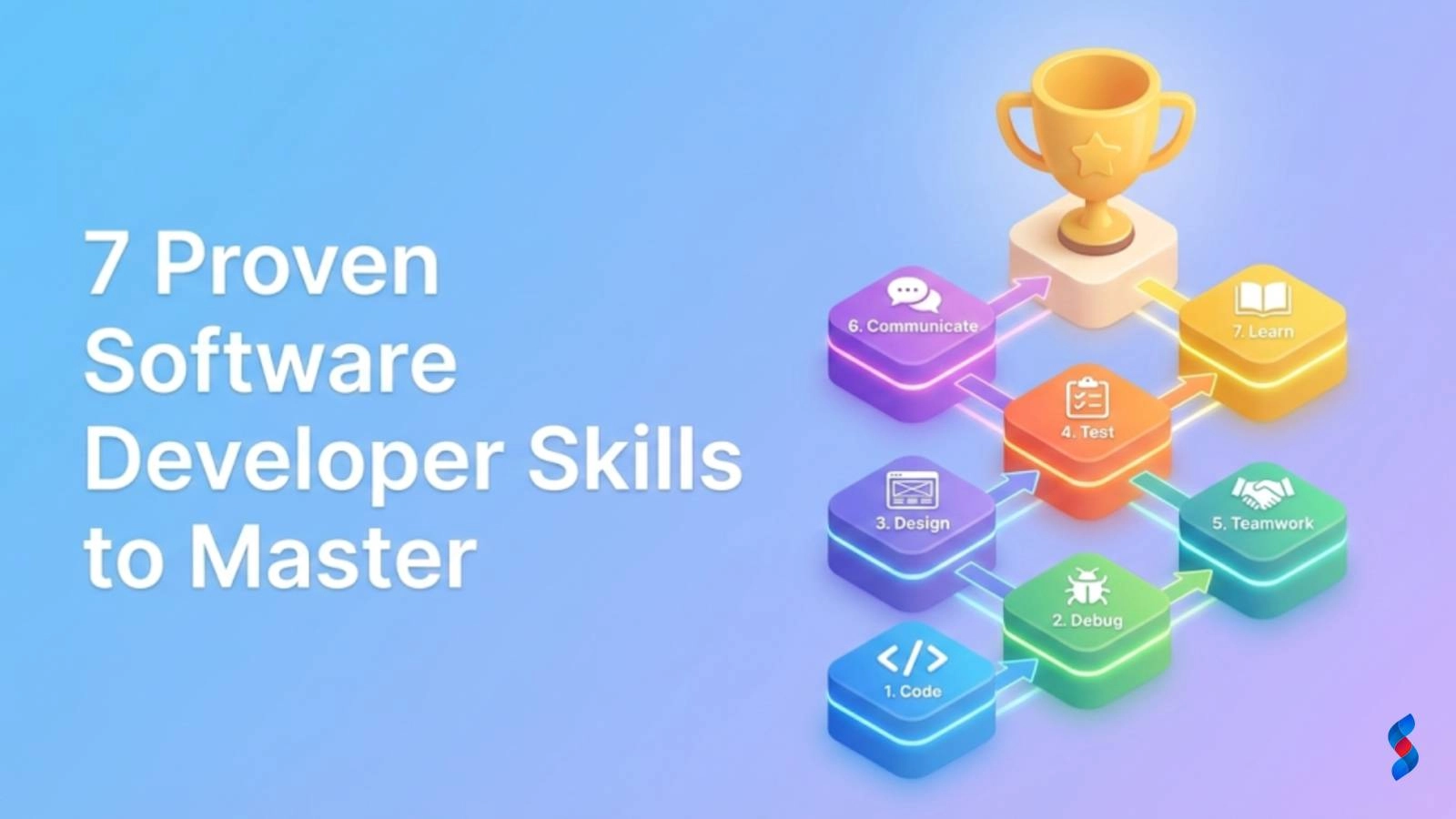
As we move into 2026, the landscape of software development continues to evolve at a rapid pace. To stay competitive and effective, software developers must continually update their skills and knowledge. This article explores the top software developer skills that are essential for success in 2026, ranging from foundational programming languages to cutting-edge technologies like cloud computing and artificial intelligence. Mastering these skills will not only enhance your career prospects but also enable you to contribute to innovative and impactful projects.
1. ✅ Foundational Programming Languages: Still King in 2026
Essential Languages Remain Relevant
Despite the emergence of new programming languages and frameworks, a strong foundation in established languages like Java, Python, and JavaScript remains crucial for any aspiring software developer. These languages form the backbone of many existing systems and are widely used in new software development projects. For example, Python is increasingly important in both backend and cloud development, making it a versatile skill to possess.
Adapting to Language Evolutions
It’s not enough to simply know these languages; staying updated with the latest versions, frameworks, and best practices is vital. We always encourage our team members to explore newer versions of Java or Javascript (ES6+) to enhance performance and maintainability. Understanding TypeScript for larger Javascript projects is also a plus, providing a more robust and scalable alternative. We have found this to enhance our programming skills and the quality of our software development projects.
2. 💡 Cloud Computing Expertise: The New Normal
Demand for Cloud Skills Soars
Cloud platforms like Amazon Web Services (AWS), Microsoft Azure, and Google Cloud Platform (GCP) are rapidly becoming the standard for software deployment. As more companies migrate to the cloud, software developers need to understand cloud architecture, services, and deployment strategies. We see an increased demand for serverless technologies and microservices architectures in our client projects.
Essential Cloud Certifications
Earning cloud certifications, such as AWS Certified Developer, Azure Developer Associate, or Google Cloud Certified Professional Cloud Architect, can significantly boost career prospects. These certifications demonstrate practical knowledge and commitment to cloud technologies. We advise our team members to focus on hands-on experience with cloud services for effective implementation, as this reinforces theoretical knowledge.
3. ➡️ Cybersecurity Awareness: Coding Securely from the Start
Security as a Core Development Principle
Cybersecurity is no longer an afterthought but a fundamental aspect of software development. Software developers need to understand common vulnerabilities, such as SQL injection, cross-site scripting (XSS), and cross-site request forgery (CSRF). The trend is shifting towards DevSecOps, which integrates security practices into the entire software development lifecycle. This ensures that security is considered from the very beginning of a project, rather than being tacked on at the end.
Implementing Security Best Practices
Using secure coding practices, performing regular security audits, and staying updated on the latest threats are crucial. We emphasize utilizing security tools for static and dynamic code analysis to detect vulnerabilities early in the development process. Educating development teams on secure coding standards and potential risks is also essential to maintain a strong security posture.
“Secure coding isn’t just a practice; it’s a mindset. It requires developers to think like attackers and proactively mitigate potential vulnerabilities.” – Jane Doe, Cybersecurity Expert
4. ✨ Data Science and Machine Learning Fundamentals: Broadening Horizons
The Intersection of Software Development and Data
Understanding data structures, algorithms, and basic statistical analysis is increasingly valuable for software developers. Knowledge of machine learning concepts allows developers to build smarter, data-driven applications. We observe the increasing integration of artificial intelligence and machine learning into various software applications, from recommendation systems to predictive analytics.
Practical Applications in Software Development
Implementing machine learning models for tasks like fraud detection, personalized recommendations, and automated testing is becoming more common. Data visualization tools are also essential for communicating insights and driving decision-making. We recommend leveraging cloud-based machine learning services to simplify model deployment and management, which can significantly reduce the time and effort required to implement AI solutions.
5. ✅ DevOps Practices: Streamlining Development and Deployment
The Rise of DevOps Culture
DevOps combines software development and IT operations to improve collaboration and efficiency. Software developers need to understand CI/CD pipelines, automated testing, and infrastructure as code (IaC). We’ve seen an increased adoption of GitOps, which manages infrastructure and application configurations as code, allowing for more reliable and repeatable deployments.
Essential DevOps Tools and Technologies
Proficiency in tools like Docker, Kubernetes, Jenkins, and Ansible is highly desirable for modern software developers. Understanding containerization, orchestration, and automation is crucial for streamlining the software development lifecycle. Implementing robust monitoring and logging solutions is also essential to ensure system stability and performance, allowing for quick identification and resolution of issues.
6. 💡 API Design and Development: Connecting the Digital World
The Importance of APIs
APIs (Application Programming Interfaces) enable different software systems to communicate and exchange data. Software developers need to understand RESTful API design principles, authentication methods, and API documentation. We’ve noted a growing popularity of GraphQL, which provides more efficient and flexible data querying compared to traditional REST APIs.
Best Practices for API Development
Designing APIs that are scalable, secure, and easy to use is critical for ensuring the interoperability of software systems. Using API gateways to manage traffic, enforce security policies, and monitor performance is also essential. Implementing versioning strategies to maintain backward compatibility is crucial for ensuring that existing integrations continue to function as new features are added.
7. ➡️ Mobile Development: Still a Critical Arena
Cross-Platform Development Gains Momentum
While native iOS and Android development remain important, cross-platform frameworks like React Native and Flutter are gaining traction. Software developers need to choose the right approach based on project requirements and performance considerations. We are witnessing continued growth of low-code/no-code platforms for mobile app development, making it easier for non-developers to create basic mobile applications.
Optimizing Mobile Experiences
Focusing on performance, responsiveness, and user experience is crucial for mobile apps. Understanding mobile-specific challenges such as battery life, network connectivity, and screen size variations is also essential. We suggest leveraging mobile testing tools to ensure app quality and stability, as this helps to deliver a seamless and engaging user experience.
8. ✨ Soft Skills: Collaboration and Communication
Effective Communication is Key
Being able to clearly communicate with teammates and stakeholders is crucial for software developers. We always try to use appropriate language with non-technical team members to help them understand challenges and solutions. Solid communication skills help create a positive and productive work environment.
Collaboration in Agile Environments
Agile development requires working collaboratively with others. Contributing ideas during sprint planning and daily stand-ups is essential for ensuring that everyone is aligned on the project goals. Assisting in resolving problems and helping clear roadblocks is also important for maintaining momentum and delivering high-quality software.
9. ✅ Low-Code and No-Code Development
Democratization of Software Development
Low-code and no-code platforms are making software development more accessible to non-programmers. Software developers can leverage these platforms to build simple applications and automate tasks more quickly. We are seeing continued expansion of low-code/no-code capabilities and increased adoption in enterprise environments.
Integrating Low-Code/No-Code with Traditional Development
Using low-code/no-code platforms for rapid prototyping, proof-of-concept development, and citizen development initiatives can significantly accelerate the development process. Integrating low-code/no-code applications with existing systems via APIs and other integration methods is also essential. Establishing governance policies to ensure security and compliance in low-code/no-code environments is crucial for maintaining data integrity and preventing unauthorized access.
10. 💡 WebAssembly (Wasm)
Bringing Near-Native Performance to the Web
WebAssembly is a binary instruction format that allows developers to run code written in multiple languages (e.g., C++, Rust) in web browsers at near-native speeds. This technology is particularly useful for performance-critical applications such as games, simulations, and video editing. We anticipate increased adoption of WebAssembly for serverless computing and edge computing.
Practical Applications of WebAssembly
Using WebAssembly to optimize web application performance and reduce latency can significantly improve the user experience. Integrating WebAssembly modules with JavaScript to enhance existing web applications is also becoming more common. Leveraging WebAssembly for building cross-platform applications that can run on both web and native environments provides developers with greater flexibility and portability.
11. ➡️ Blockchain Technology
Beyond Cryptocurrency: Exploring Blockchain Applications
Blockchain is a distributed ledger technology that enables secure and transparent data sharing. While often associated with cryptocurrencies, blockchain has numerous other applications in areas such as supply chain management, healthcare, and voting systems. We are observing increased adoption of blockchain for enterprise solutions and the emergence of decentralized applications (dApps).
Developing Blockchain Applications
Understanding blockchain concepts such as consensus mechanisms, smart contracts, and decentralized identity is essential for developing blockchain-based solutions. Using blockchain development platforms and tools to build dApps and other blockchain-based solutions is also crucial. Integrating blockchain with existing systems via APIs and other integration methods allows for seamless data exchange and interoperability.
12. ✨ Edge Computing
Processing Data Closer to the Source
Edge computing involves processing data closer to the source, rather than sending it to a centralized cloud server. This approach reduces latency, improves performance, and enhances privacy, making it suitable for applications such as IoT, autonomous vehicles, and augmented reality. We predict increased adoption of edge computing for real-time data processing and analytics.
Implementing Edge Computing Solutions
Designing and deploying edge computing infrastructure, including edge servers, gateways, and devices, is essential for enabling edge computing capabilities. Developing edge applications that can process data locally and communicate with the cloud is also crucial. Leveraging edge computing frameworks and tools to simplify development and deployment allows for faster and more efficient implementation of edge computing solutions.
For many of our clients here in Lahore, we’ve seen that edge computing dramatically improves the efficiency of their data processing and the responsiveness of their applications.
Expert Quote:
“The future of computing is decentralized, with edge computing playing a critical role in bringing processing power closer to the data source.” – Dr. Emily Carter, Computing Innovator
Top 3 Software Developer Skills to Master in 2026:
1. Cloud Computing Expertise: Essential for modern deployment and scalability.
2. Cybersecurity Awareness: Integrating security into every stage of development.
3. DevOps Practices: Streamlining development and deployment processes.
In conclusion, the software developer skills highlighted in this article represent the most critical areas for success in 2026. By focusing on these technologies and practices, developers can enhance their capabilities, contribute to innovative projects, and advance their careers. The software development landscape is constantly evolving, and staying current with these trends is essential for long-term success.
Conclusion:
In conclusion, mastering these software developer skills is paramount for success in 2026. We, at SkySol Media, are dedicated to helping developers stay ahead of the curve.
FAQ Section
Q: Why are foundational programming languages still important?
A: Foundational languages like Java, Python, and JavaScript are the backbone of many existing systems and new projects. They provide a strong base for understanding more complex concepts and technologies. Proficiency in these languages also makes it easier to learn new languages and frameworks as needed.
Q: What are the benefits of cloud certifications?
A: Cloud certifications demonstrate practical knowledge and commitment to cloud technologies. They can significantly boost career prospects and provide a competitive edge in the job market. Certifications also validate your ability to effectively implement and manage cloud-based solutions.
Q: How can developers integrate cybersecurity into their workflow?
A: Developers can integrate cybersecurity by using secure coding practices, performing regular security audits, and staying updated on the latest threats. Utilizing security tools for static and dynamic code analysis can also help detect vulnerabilities early in the development process. Educating development teams on secure coding standards and potential risks is essential for maintaining a strong security posture.
Q: What is the role of data science and machine learning in software development?
A: Data science and machine learning are increasingly integrated into software development to build smarter, data-driven applications. Understanding data structures, algorithms, and basic statistical analysis is valuable for developers. Implementing machine learning models for tasks like fraud detection, personalized recommendations, and automated testing can enhance application capabilities.
Q: How does DevOps improve software development?
A: DevOps combines software development and IT operations to improve collaboration and efficiency. It enables faster and more reliable software releases through CI/CD pipelines, automated testing, and infrastructure as code (IaC). DevOps practices streamline the software development lifecycle and improve system stability and performance.
Q: Why are APIs important for software developers?
A: APIs (Application Programming Interfaces) enable different software systems to communicate and exchange data. Understanding RESTful API design principles, authentication methods, and API documentation is crucial for developing interoperable and scalable software systems. Designing APIs that are secure, easy to use, and well-documented is essential for ensuring their adoption and effectiveness.
Q: What are the advantages of cross-platform mobile development?
A: Cross-platform mobile development allows developers to build applications that can run on multiple platforms (e.g., iOS and Android) using a single codebase. This can reduce development time and cost compared to native development. Cross-platform frameworks like React Native and Flutter provide tools and components for building high-quality mobile apps.
Q: How can soft skills enhance a software developer’s career?
A: Soft skills such as communication, collaboration, and problem-solving are essential for software developers. Being able to effectively communicate with teammates and stakeholders, work collaboratively in agile environments, and resolve problems quickly can significantly enhance a developer’s career prospects.
Q: What are low-code and no-code platforms, and how can developers use them?
A: Low-code and no-code platforms are tools that allow developers (and even non-developers) to build applications with minimal coding. These platforms provide visual interfaces and pre-built components that can be assembled to create applications more quickly. Developers can use low-code/no-code platforms for rapid prototyping, proof-of-concept development, and automating simple tasks.
Q: What is WebAssembly (Wasm), and why is it important?
A: WebAssembly is a binary instruction format that allows developers to run code written in multiple languages in web browsers at near-native speeds. It is particularly useful for performance-critical applications such as games, simulations, and video editing. WebAssembly can optimize web application performance and reduce latency, providing a better user experience.
Q: How can blockchain technology be applied beyond cryptocurrencies?
A: Blockchain technology can be applied to various areas beyond cryptocurrencies, such as supply chain management, healthcare, and voting systems. It provides a secure and transparent way to manage data and transactions. Understanding blockchain concepts such as consensus mechanisms and smart contracts is essential for developing blockchain-based solutions.
Q: What is edge computing, and how does it improve performance?
A: Edge computing involves processing data closer to the source, rather than sending it to a centralized cloud server. This reduces latency, improves performance, and enhances privacy. Edge computing is suitable for applications such as IoT, autonomous vehicles, and augmented reality, where real-time data processing is critical.