The Ultimate SEO Guide for Growing Your Trading Business Online
The Ultimate SEO Guide for Growing Your Trading Business Online: In today’s digital age, the success of your trading business relies heavily on your online...


Understanding SEO in 2025: Key Strategies for Success: Search Engine Optimization (SEO) has always been the cornerstone of digital marketing, but as we approach 2025, the landscape is evolving at a rapid pace. To remain competitive, businesses must adapt their SEO strategies to meet changing algorithms, user expectations, and technological advancements. In this blog post, we will dive deep into SEO in 2025, covering the top strategies that will help you stay ahead of the curve and achieve success in an increasingly crowded online world.
To understand SEO in 2025, it’s crucial to reflect on the history of search engine optimization. Over the years, search engines have become more sophisticated, incorporating AI, machine learning, and natural language processing (NLP). These advancements allow them to better understand user intent, personalize results, and deliver more relevant content.
As we look towards 2025, the main focus of SEO will shift even further towards user experience, relevance, and personalization. Google, for instance, is already moving toward a “zero-click” search model, where answers appear directly on the search page rather than requiring users to click through to a website. In this environment, SEO will need to be more refined and focused on providing value upfront.
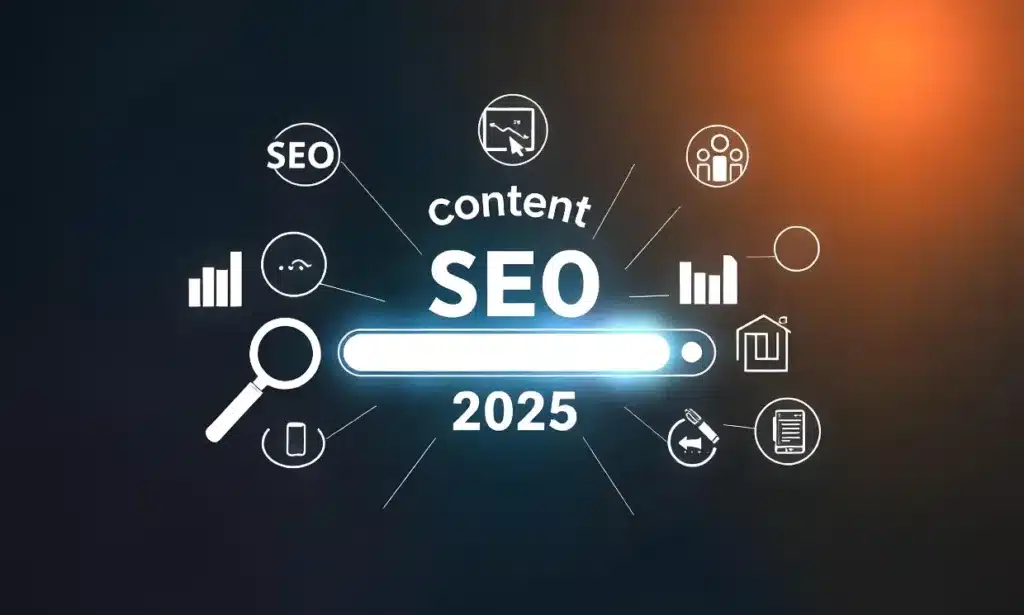
AI is not just a buzzword for SEO in 2025—it’s the foundation of many emerging trends. Google’s BERT and MUM algorithms have already shown how AI can help search engines understand context and user intent, which allows for more accurate and relevant search results. In 2025, we can expect even more reliance on AI-driven insights to optimize SEO strategies.
AI-Powered Content Creation: Content is still king, but AI tools will play a significant role in assisting businesses with content creation. Tools like GPT models (like ChatGPT) will help businesses produce high-quality, relevant content that aligns with user intent. This will streamline content strategies, especially for small businesses that don’t have large content teams.
Automated Analysis and Reporting: Machine learning tools will offer more precise analytics, predicting trends, and suggesting optimizations in real time. This will make SEO more data-driven and reduce the guesswork involved in SEO decisions.
The SEO strategies of 2025 will be deeply rooted in improving user experience (UX) while aligning with search engine requirements. Here are some strategies to consider:
Mobile-first indexing will continue to be a crucial ranking factor. With more users accessing the internet via mobile devices than ever before, optimizing your website for mobile responsiveness is not optional. In 2025, websites that aren’t optimized for mobile devices will face steep penalties in rankings. It’s essential to have:
Voice search will dominate SEO in 2025. With the rise of smart speakers like Amazon Alexa and Google Assistant, people are increasingly using voice commands to search for information. Optimizing your website for voice search means focusing on long-tail keywords and conversational language that aligns with how people speak.
Google’s Core Web Vitals will continue to be a critical ranking factor in 2025. These metrics focus on the user experience, including loading time, interactivity, and visual stability. To rank well, your website must meet these standards:
By optimizing your website’s performance based on these metrics, you’ll improve your SEO rankings and user satisfaction.
The SEO landscape is ever-changing, and to succeed in 2025, businesses must stay on top of emerging trends. Here are the top SEO trends to watch:
Video continues to rise in importance for SEO, especially with platforms like YouTube becoming the second-largest search engine after Google. Businesses need to optimize their video content for SEO by focusing on:
Google’s focus on E-A-T will remain significant in 2025. Websites that demonstrate authority and expertise in their field will be rewarded with higher rankings. To build E-A-T:
While social media isn’t a direct ranking factor, it can influence SEO by driving traffic, increasing brand awareness, and encouraging engagement. By integrating social media strategies with your SEO efforts, you can improve your overall online presence.
Businesses looking to succeed in 2025 must take a strategic approach to SEO. Here’s how to stay competitive:
In 2025, businesses will need to make data-driven decisions based on real-time insights. Tools like Google Analytics, Ahrefs, and SEMrush will provide detailed reports on website performance, backlinks, keyword rankings, and user behavior. By leveraging this data, businesses can refine their SEO strategies, optimize high-performing content, and eliminate underperforming areas.
Personalization will be key in 2025. By understanding user behavior and preferences, businesses can create highly targeted and relevant content. AI and machine learning tools can help track user behavior across platforms, providing insights into their interests and needs. Tailor your content to match these insights, making the user experience more engaging and increasing the likelihood of conversions.
For small businesses and service-based industries, local SEO will remain a critical focus. With more people using mobile devices to search for nearby businesses, optimizing for local SEO will be vital. This includes claiming and optimizing your Google My Business listing, building local citations, and acquiring local backlinks to improve your visibility in local search results.
As SEO continues to evolve in 2025, working with an experienced SEO agency like Skysol Media can give your business a competitive edge. Skysol Media specializes in crafting tailored SEO strategies that ensure your website ranks higher and attracts more traffic. With a deep understanding of SEO trends and the ever-changing digital landscape, Skysol Media will help you stay ahead of the competition in 2025.
At Skysol Media, we understand that SEO is more than just a service—it’s a strategy for long-term success. We offer comprehensive SEO services designed to improve your website’s visibility, traffic, and conversion rates. Whether you’re a small business or a large enterprise, our customized SEO strategies are tailored to meet your specific needs. Our team of experts is dedicated to keeping your website optimized according to the latest SEO best practices and trends.
Let Skysol Media help you dominate search engine rankings and grow your online presence. Learn more about our SEO services here.
SEO in 2025 will require a multi-faceted approach, combining technological advancements, data-driven insights, and a deep understanding of user behavior. By focusing on key strategies such as mobile-first optimization, voice search, video content, and E-A-T, businesses can thrive in this competitive environment. Whether you’re a small business or a large enterprise, adopting these strategies will ensure your SEO efforts are aligned with the latest trends and search engine algorithms.
As you plan your SEO strategy for 2025, remember that continuous optimization is essential. Work with experts like SkySol Media to stay on top of the latest developments and unlock your business’s full potential in the digital world.
Incorporating the strategies mentioned above will ensure that your SEO efforts remain relevant and effective in 2025. Stay ahead of the curve by continuously refining your approach to SEO. With a focus on user experience, personalization, and the right technologies, your business can dominate search engine rankings and secure


The Ultimate SEO Guide for Growing Your Trading Business Online

Drive More Organic Traffic to Your Trading Platform with These Proven Tactics

Optimized for Success: How SkySol Media Builds SEO-First Websites

Boost Your Google Rankings: Proven SEO Tactics for Modern Brands

How to Write SEO-Friendly Blog Posts That Google Loves

SEO for Blog Posts: What Google Wants in 2025-26