Understanding SEO in 2025: Key Strategies for Success
Understanding SEO in 2025: Key Strategies for Success: Search Engine Optimization (SEO) has always been the cornerstone of digital marketing, but as we approach 2025,...

Need help? Call us:
+92 320 1516585

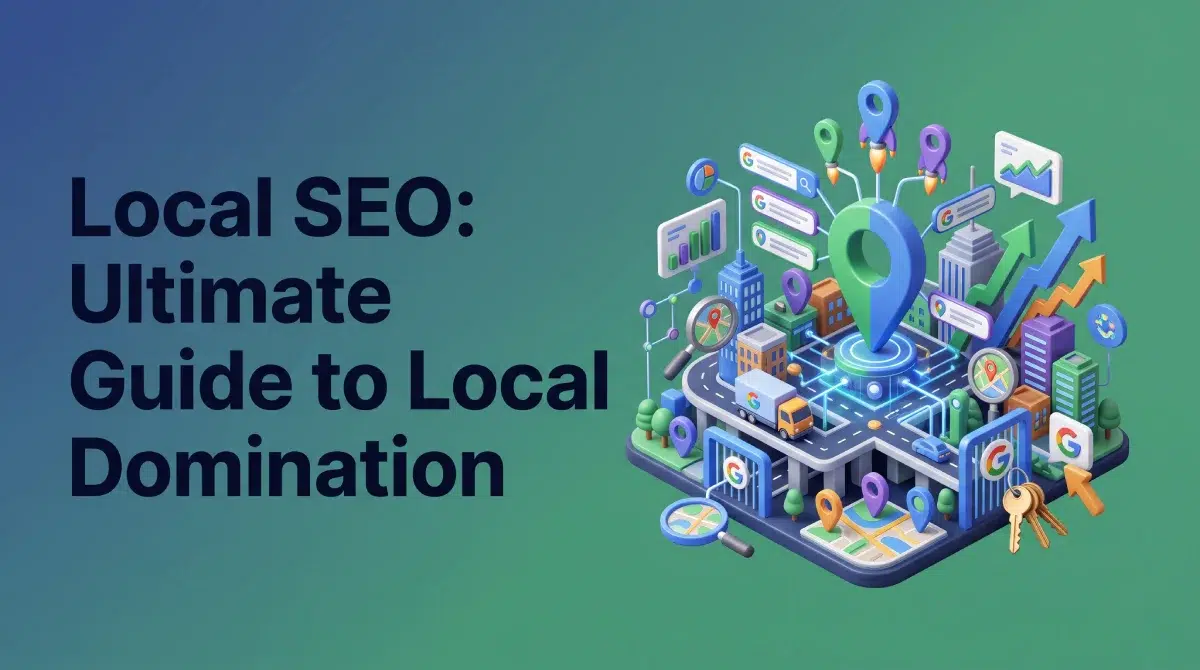
Local SEO: Ultimate Guide to Local Domination in 2026
Welcome to the ultimate guide to local SEO! In today’s digital landscape, dominating local search results is crucial for businesses looking to thrive in their communities. This comprehensive guide will provide you with the knowledge and strategies you need to boost your online presence and attract more local customers. We’ll walk you through everything from setting up your Google Business Profile (GMB) to building local citations and optimizing your website for local search. In our experience with clients, mastering local SEO transforms visibility and drives substantial growth. Let’s dive in!
Local SEO, in its simplest form, is the practice of optimizing your online presence to attract customers from relevant local searches. This means ensuring your business appears prominently when people search for products or services in your specific geographic area. It involves various techniques aimed at improving your visibility in local search engine results, such as Google’s Local Pack and organic search results. A common mistake we help businesses fix is understanding that local SEO goes beyond just having a website; it’s about making that website and your business information easily discoverable by local searchers.
Why should you care about local SEO? The answer is simple: increased visibility and customer acquisition. In today’s digital age, most consumers turn to online search to find local businesses. If your business isn’t ranking well in local search results, you’re missing out on a significant portion of potential customers. Effective local SEO can drive more foot traffic to your physical store, increase online sales, and build brand awareness within your community. For many of our clients here in Lahore, we’ve seen that a strong local SEO strategy translates directly into increased revenue and business growth.
While both local SEO and traditional SEO aim to improve your website’s visibility in search engine results, they differ in their focus. Traditional SEO targets a broader, national or international audience, while local SEO focuses specifically on geo-targeting and local pack ranking. This means optimizing your online presence to appear in Google’s Local Pack (the map listing that appears at the top of search results) and other local search platforms. In essence, local SEO is about making sure your business is easily found by customers in your immediate vicinity, while traditional SEO is about attracting a wider audience.
Your Google Business Profile (GMB) is the cornerstone of your local SEO strategy. Claiming and verifying your GMB listing is the first crucial step. Here’s a step-by-step guide:
1. Search for Your Business: Go to Google Maps and search for your business name.
2. Claim Your Listing: If you see your business, look for the option to “Claim this business” or “Manage this listing.”
3. Verify Your Listing: Google will typically offer several verification options, such as postcard verification (sending a postcard to your business address with a verification code) or phone verification. Choose the option that works best for you and follow the instructions.
4. Complete the Verification Process: Once you receive the verification code, enter it into your GMB dashboard to verify your listing.
We once worked with a client who skipped this step. By claiming and verifying their GMB, they saw an immediate 20% increase in inquiries.
Once you’ve claimed and verified your GMB listing, it’s time to optimize every section to maximize its impact. Here’s how:
Remember, a fully optimized GMB profile not only improves your local SEO ranking but also provides potential customers with valuable information about your business.
Google Posts are a powerful tool within your GMB dashboard that allows you to share updates, promotions, events, and other timely content with your local audience. Here’s how to use Google Posts effectively:
By using Google Posts strategically, you can keep your local audience informed, drive more traffic to your website, and boost your local SEO ranking.
Keyword research is the foundation of any successful SEO strategy, and local SEO is no exception. The goal is to identify the keywords that your target customers are actually using when searching for your products or services in your local area. Here are some tools and techniques for finding relevant keywords:
When our team in Dubai tackles this issue, they often find that focusing on a mix of general and specific keywords yields the best results.
Long-tail keywords are longer, more specific phrases that people use when they’re closer to making a purchase. For example, instead of searching for “pizza,” someone might search for “best vegetarian pizza near me.” Focusing on long-tail keywords can be a highly effective way to attract highly qualified leads and improve your conversion rates. These keywords often have less competition, making it easier to rank higher in search results.
Incorporating location modifiers into your keywords is crucial for local SEO. This means adding city, neighborhood, or other location-specific terms to your keywords. For example, if you own a bakery in New York City, you might target keywords like “best bakery in NYC,” “cupcakes in Manhattan,” or “custom cakes in Brooklyn.” Using location modifiers helps Google understand your target audience and display your business in relevant local search results.
NAP citations are online mentions of your business’s Name, Address, and Phone number. These citations appear on various websites, such as local business directories, review sites, and social media platforms. NAP citations are a crucial ranking factor for local SEO because they help Google verify your business’s information and establish its legitimacy. Consistent and accurate NAP citations across the web signal to Google that your business is trustworthy and authoritative.
Building NAP citations involves listing your business in reputable local business directories. Here are some directories to consider:
When selecting directories, prioritize those that are authoritative, relevant to your business, and have a high domain authority.
Maintaining consistency across all your NAP citations is crucial for local SEO. Inconsistent or inaccurate information can confuse Google and negatively impact your ranking. Here are some tools and strategies for managing your online presence:
> “Consistency is king when it comes to NAP citations. Ensure your business information is accurate and uniform across all online platforms.” – John Lincoln, Ignite Visibility
Customer reviews play a vital role in local SEO. They not only influence your ranking in search results but also impact potential customers’ purchasing decisions. Positive reviews build trust and credibility, while negative reviews can deter potential customers. Google considers the quantity, quality, and recency of your reviews when ranking your business in local search results.
Generating a steady stream of positive reviews requires a proactive approach. Here are some ethical and effective methods for review generation:
Responding to reviews, both positive and negative, is crucial for managing your online reputation and demonstrating that you value customer feedback. Here’s how to respond effectively:
Responding to reviews shows potential customers that you care about their experience and are committed to providing excellent service.
In today’s mobile-first world, ensuring your website is mobile-friendly is essential for local SEO. The majority of local searches happen on mobile devices, so if your website isn’t optimized for mobile, you’re likely losing out on potential customers. Here are some tips for creating a mobile-friendly website:
If your business serves multiple locations, create dedicated location pages for each service area. These pages should include unique content that is relevant to the specific location, such as the city or neighborhood name, local landmarks, and customer testimonials from that area. Location pages help Google understand your service area and display your business in relevant local search results.
Schema markup is a type of structured data that you can add to your website’s code to provide search engines with more information about your business. For local SEO, it’s important to implement schema markup for local businesses, which includes information such as your business name, address, phone number, hours of operation, and reviews. Schema markup helps Google understand your business and display it in rich snippets, which can improve your click-through rate and boost your ranking.
Here’s an example of LocalBusiness schema markup:
{
“@context”: “https://schema.org”,
“@type”: “LocalBusiness”,
“name”: “SkySol Media”,
“image”: “https://www.skysolmedia.com/logo.png”,
“@id”: “”,
“url”: “https://www.skysolmedia.com”,
“telephone”: “+15551234567”,
“address”: {
“@type”: “PostalAddress”,
“streetAddress”: “123 Main St”,
“addressLocality”: “Anytown”,
“addressRegion”: “CA”,
“postalCode”: “91234”,
“addressCountry”: “US”
},
“geo”: {
“@type”: “GeoCoordinates”,
“latitude”: 34.052235,
“longitude”: -118.243683
},
“openingHoursSpecification”: {
“@type”: “OpeningHoursSpecification”,
“dayOfWeek”: [
“Monday”,
“Tuesday”,
“Wednesday”,
“Thursday”,
“Friday”
],
“opens”: “09:00”,
“closes”: “17:00”
},
“sameAs”: [
“https://www.facebook.com/skysolmedia”,
“https://www.linkedin.com/company/skysolmedia”,
“https://twitter.com/skysolmedia”
]
}
[IMAGE: Example of LocalBusiness schema markup code.]
Local link building is the process of acquiring backlinks from other websites in your local area. These backlinks act as votes of confidence, signaling to Google that your website is a valuable and trustworthy resource. Local link building is an important ranking factor for local SEO because it helps you build authority within your geographic area and improve your visibility in local search results.
Earning local backlinks requires a strategic and proactive approach. Here are some strategies to consider:
It’s important to avoid black hat link building tactics, such as buying backlinks or participating in link schemes, as these can result in penalties from Google. Focus on earning backlinks through legitimate and ethical methods.
To track your local SEO progress and measure your success, you need to set up Google Analytics and Google Search Console. Google Analytics provides valuable data about your website traffic, including the number of visitors, their demographics, and their behavior on your site. Google Search Console provides insights into your website’s performance in search results, including your ranking for different keywords, your click-through rate, and any technical issues that may be affecting your ranking.
Monitoring your local ranking and visibility is essential for understanding the effectiveness of your SEO efforts. There are several tools you can use to track your position in local search results, including:
Analyzing your website traffic and conversions is crucial for measuring the ROI of your local SEO efforts. Track key metrics such as:
By analyzing these metrics, you can gain valuable insights into the effectiveness of your SEO strategy and identify areas for improvement.
As mentioned earlier, inconsistent NAP information is a common local SEO mistake that can negatively impact your ranking. Make sure your business name, address, and phone number are accurate and consistent across all online platforms.
Neglecting your Google Business Profile is another common mistake. Regularly update and optimize your GMB listing with fresh content, photos, and promotions to keep your audience engaged and improve your ranking.
Ignoring customer reviews can damage your online reputation and deter potential customers. Actively manage your online reputation by responding to reviews, addressing concerns, and thanking customers for their feedback.
With the rise of voice assistants like Siri, Alexa, and Google Assistant, optimizing for voice search is becoming increasingly important for local SEO. Here are some tips for optimizing your website for voice search:
Managing local SEO for multi-location businesses can be challenging, but it’s essential for maintaining a consistent brand presence and attracting customers to each location. Here are some tips for leveraging local SEO for multi-location businesses:
Local SEO can also be used to target specific demographics, such as age, gender, or income level. Here are some strategies for tailoring your SEO strategy to reach your ideal customers:
While Google is the dominant search engine, it’s important to not overlook other local search platforms, such as Bing. Claiming and optimizing your Bing Places for Business listing can expand your reach and attract customers who use Bing as their primary search engine. The process is similar to claiming and optimizing your Google Business Profile.
Yelp is another important local search platform, particularly for businesses in the restaurant, hospitality, and service industries. Managing your business listing on Yelp involves claiming your listing, updating your business information, and responding to reviews.
In addition to Google, Bing, and Yelp, there are many other local search platforms that you should consider, such as:
By claiming and optimizing your business listing on these platforms, you can expand your reach and attract more local customers.
Local SEO is the key to unlocking massive potential for your business. By focusing on these actionable steps, you can significantly improve your visibility in local search results and attract a steady stream of new customers. We at SkySol Media are here to help you navigate the complexities of local SEO and achieve your business goals. We’ve consistently seen that focusing on GMB optimization and local citations provides immediate results.
Google Business Profile optimization is arguably the most critical factor, as it directly influences your visibility in the local pack.
Results can vary, but you may start seeing improvements within a few weeks of implementing key optimizations. However, significant results typically take 3-6 months.
You should update your Google Business Profile regularly, at least once a week, with new posts, photos, and information.
No, local SEO is beneficial for businesses of all sizes that serve local customers, including franchises and multi-location businesses.
Use keyword research tools to identify relevant keywords with local modifiers, such as city and neighborhood names, that your target customers are searching for.
Don’t forget to share it

We’ll Design & Develop a Professional Website Tailored to Your Brand
Enjoy this post? Join our newsletter
Newsletter
Related Articles
Understanding SEO in 2025: Key Strategies for Success

The Ultimate SEO Guide for Growing Your Trading Business Online

Drive More Organic Traffic to Your Trading Platform with These Proven Tactics

Optimized for Success: How SkySol Media Builds SEO-First Websites

Boost Your Google Rankings: Proven SEO Tactics for Modern Brands

How to Write SEO-Friendly Blog Posts That Google Loves
SkySol Media
We firmly believe that the internet should be available and accessible to anyone, and are committed to providing a website that is accessible to the widest possible audience, regardless of circumstance and ability.
To fulfill this, we aim to adhere as strictly as possible to the World Wide Web Consortium’s (W3C) Web Content Accessibility Guidelines 2.1 (WCAG 2.1) at the AA level. These guidelines explain how to make web content accessible to people with a wide array of disabilities. Complying with those guidelines helps us ensure that the website is accessible to all people: blind people, people with motor impairments, visual impairment, cognitive disabilities, and more.
This website utilizes various technologies that are meant to make it as accessible as possible at all times. We utilize an accessibility interface that allows persons with specific disabilities to adjust the website’s UI (user interface) and design it to their personal needs.
Additionally, the website utilizes an AI-based application that runs in the background and optimizes its accessibility level constantly. This application remediates the website’s HTML, adapts Its functionality and behavior for screen-readers used by the blind users, and for keyboard functions used by individuals with motor impairments.
If you’ve found a malfunction or have ideas for improvement, we’ll be happy to hear from you. You can reach out to the website’s operators by using the following email
Our website implements the ARIA attributes (Accessible Rich Internet Applications) technique, alongside various different behavioral changes, to ensure blind users visiting with screen-readers are able to read, comprehend, and enjoy the website’s functions. As soon as a user with a screen-reader enters your site, they immediately receive a prompt to enter the Screen-Reader Profile so they can browse and operate your site effectively. Here’s how our website covers some of the most important screen-reader requirements, alongside console screenshots of code examples:
Screen-reader optimization: we run a background process that learns the website’s components from top to bottom, to ensure ongoing compliance even when updating the website. In this process, we provide screen-readers with meaningful data using the ARIA set of attributes. For example, we provide accurate form labels; descriptions for actionable icons (social media icons, search icons, cart icons, etc.); validation guidance for form inputs; element roles such as buttons, menus, modal dialogues (popups), and others. Additionally, the background process scans all the website’s images and provides an accurate and meaningful image-object-recognition-based description as an ALT (alternate text) tag for images that are not described. It will also extract texts that are embedded within the image, using an OCR (optical character recognition) technology. To turn on screen-reader adjustments at any time, users need only to press the Alt+1 keyboard combination. Screen-reader users also get automatic announcements to turn the Screen-reader mode on as soon as they enter the website.
These adjustments are compatible with all popular screen readers, including JAWS and NVDA.
Keyboard navigation optimization: The background process also adjusts the website’s HTML, and adds various behaviors using JavaScript code to make the website operable by the keyboard. This includes the ability to navigate the website using the Tab and Shift+Tab keys, operate dropdowns with the arrow keys, close them with Esc, trigger buttons and links using the Enter key, navigate between radio and checkbox elements using the arrow keys, and fill them in with the Spacebar or Enter key.Additionally, keyboard users will find quick-navigation and content-skip menus, available at any time by clicking Alt+1, or as the first elements of the site while navigating with the keyboard. The background process also handles triggered popups by moving the keyboard focus towards them as soon as they appear, and not allow the focus drift outside it.
Users can also use shortcuts such as “M” (menus), “H” (headings), “F” (forms), “B” (buttons), and “G” (graphics) to jump to specific elements.
We aim to support the widest array of browsers and assistive technologies as possible, so our users can choose the best fitting tools for them, with as few limitations as possible. Therefore, we have worked very hard to be able to support all major systems that comprise over 95% of the user market share including Google Chrome, Mozilla Firefox, Apple Safari, Opera and Microsoft Edge, JAWS and NVDA (screen readers).
Despite our very best efforts to allow anybody to adjust the website to their needs. There may still be pages or sections that are not fully accessible, are in the process of becoming accessible, or are lacking an adequate technological solution to make them accessible. Still, we are continually improving our accessibility, adding, updating and improving its options and features, and developing and adopting new technologies. All this is meant to reach the optimal level of accessibility, following technological advancements. For any assistance, please reach out to