How to Make AI-Generated Content Feel Real, Relatable & Human
How to Make AI-Generated Content Feel Real, Relatable & Human: In a world increasingly shaped by artificial intelligence, the content we read, watch, and interact...

Need help? Call us:
+92 320 1516585

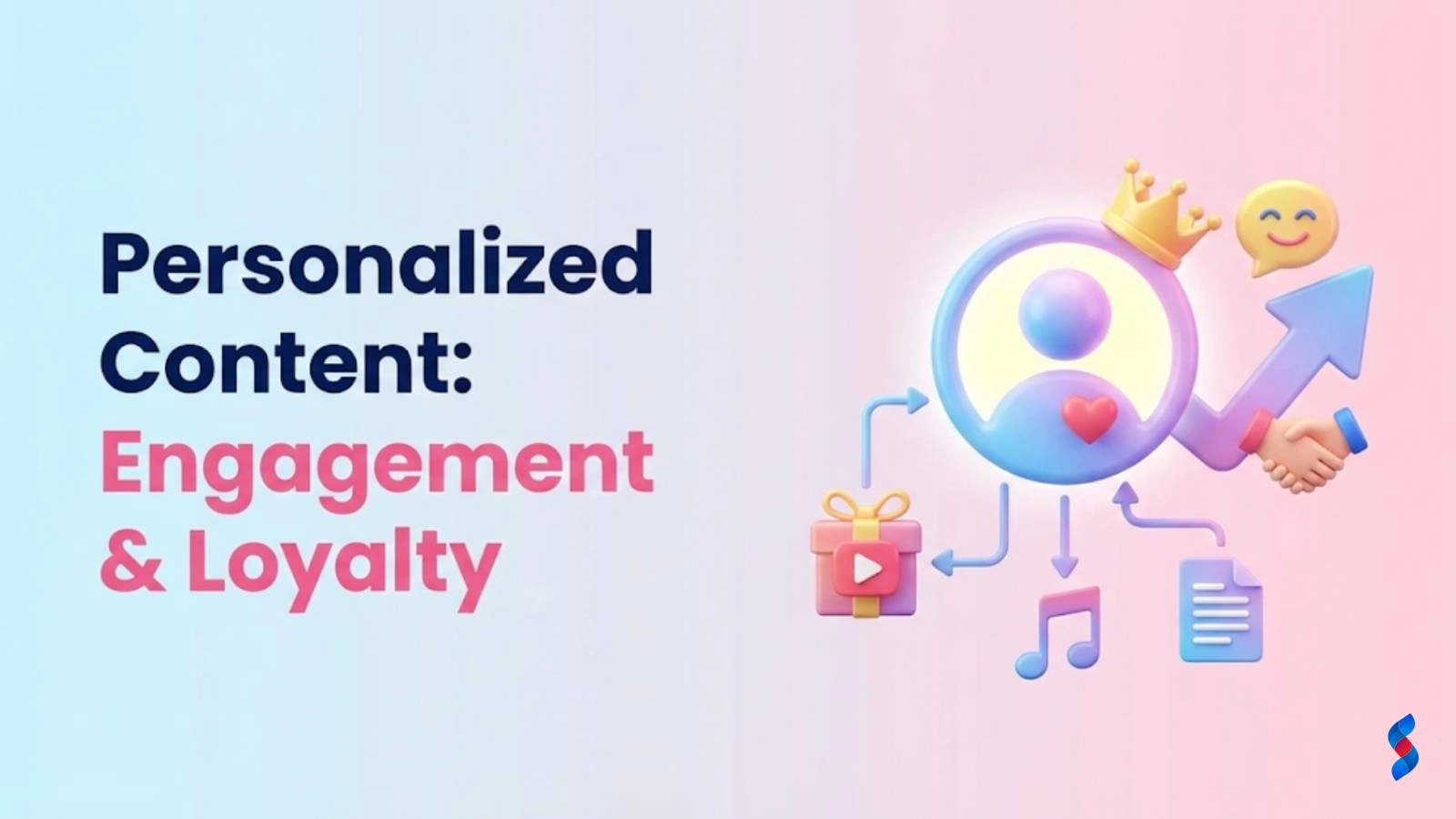
The concept of personalized content experiences has revolutionized the way businesses interact with their customers, and it’s essential to understand how can personalized content experiences boost customer engagement and loyalty. In today’s digital landscape, customers expect a tailored experience that caters to their individual needs and preferences. By leveraging personalized marketing, customer engagement strategies, and loyalty programs, businesses can create a unique and memorable experience that fosters brand loyalty and customer retention. At SkySol Media, we’ve seen firsthand the impact of personalized content experiences on customer engagement and loyalty, and we’re excited to share our expertise with you.
Personalized content experiences refer to the practice of creating and delivering content that is tailored to an individual customer’s needs, preferences, and behaviors. This approach involves using data and analytics to understand customer behavior, preferences, and interests, and then using that information to create content that resonates with them. The importance of personalization cannot be overstated, as it allows businesses to build a deeper connection with their customers, increase customer engagement, and ultimately drive loyalty and retention.
Personalization is the process of tailoring a product, service, or experience to meet the individual needs and preferences of a customer. In the context of content experiences, personalization involves using data and analytics to create content that is relevant, timely, and engaging. The importance of personalization lies in its ability to create a unique and memorable experience that sets a business apart from its competitors. By personalizing content experiences, businesses can increase customer satisfaction, loyalty, and retention, while also driving revenue growth and competitiveness.
The benefits of personalized content experiences are numerous and well-documented. Some of the key benefits include:
By leveraging personalized content experiences, businesses can create a win-win situation that benefits both the customer and the business. At SkySol Media, we’ve seen how personalized content experiences can help businesses achieve their goals and drive long-term success.
Customer engagement and loyalty are critical components of any successful business strategy. Customer engagement refers to the interactions and relationships that a business has with its customers, while loyalty refers to the customer’s willingness to continue doing business with a company over time. Understanding the factors that influence customer engagement and loyalty is essential for creating effective personalized content experiences.
Customer experience plays a critical role in customer engagement, as it encompasses all aspects of a customer’s interaction with a business. A positive customer experience can increase customer engagement, loyalty, and retention, while a negative experience can have the opposite effect. By focusing on creating a seamless and personalized customer experience, businesses can increase customer satisfaction, loyalty, and retention.
Several factors can influence customer loyalty, including:
By understanding these factors and using them to inform personalized content experiences, businesses can increase customer loyalty and retention.
Creating personalized content experiences requires a strategic approach that involves several key components. Some of the key strategies include:
Customer journey mapping involves creating a visual representation of the customer’s journey, from initial awareness to post-purchase support. By mapping the customer journey, businesses can identify areas for personalization and optimization, and create a more seamless and personalized experience.
Content personalization techniques involve using data and analytics to create content that is tailored to an individual customer’s needs and preferences. Some common techniques include:
By using these techniques, businesses can create content that is relevant, timely, and engaging.
Marketing automation tools involve using software and technology to automate and optimize marketing processes. Some common tools include:
By using these tools, businesses can streamline and optimize their marketing efforts, and create more personalized and effective content experiences.
Implementing personalized content experiences requires a structured approach that involves several key components. Some of the key steps include:
Data collection and analysis involve gathering and analyzing data on customer behavior, preferences, and interests. This data can be used to inform personalized content experiences, and to measure and optimize their effectiveness.
Content creation and distribution involve creating and delivering content that is tailored to an individual customer’s needs and preferences. This can involve using a range of channels and formats, including email, social media, and website content.
Measurement and optimization involve tracking and analyzing the effectiveness of personalized content experiences, and using that data to inform future improvements and optimizations. By continuously measuring and optimizing personalized content experiences, businesses can ensure that they are delivering the best possible experience for their customers.
Best practices for personalized content experiences involve following a set of guidelines and principles that can help ensure success. Some of the key best practices include:
Segmenting and targeting audiences involve dividing customers into distinct groups based on their needs, preferences, and behaviors. By targeting specific segments with personalized content experiences, businesses can increase customer engagement and loyalty.
Using customer feedback and preferences involves gathering and using customer input to inform personalized content experiences. By using customer feedback and preferences, businesses can create content that is relevant, timely, and engaging.
Ensuring data privacy and security involves protecting customer data and ensuring that it is used in a responsible and ethical manner. By prioritizing data privacy and security, businesses can build trust with their customers and ensure that their personalized content experiences are effective and sustainable.
Common challenges and solutions for personalized content experiences involve addressing a range of issues and obstacles that can arise during implementation. Some of the key challenges and solutions include:
Overcoming data quality issues involves addressing problems with data accuracy, completeness, and relevance. By using data validation and cleansing techniques, businesses can ensure that their data is high-quality and reliable.
Addressing the personalization paradox involves balancing the need for personalization with the risk of overwhelming or annoying customers. By using personalization techniques in a thoughtful and nuanced manner, businesses can create content that is relevant and engaging without being overly intrusive.
Balancing personalization and scalability involves finding a balance between creating personalized content experiences and scaling them to reach a large audience. By using marketing automation tools and techniques, businesses can create personalized content experiences that are both effective and scalable.
Case studies and success stories for personalized content experiences involve highlighting the achievements and successes of businesses that have implemented personalized content experiences. Some of the key case studies and success stories include:
Examples of successful personalized content experiences involve highlighting the achievements of businesses that have implemented personalized content experiences. For example, a company that uses personalized email marketing to increase customer engagement and loyalty might see a significant increase in sales and revenue.
Lessons learned from failed implementations involve highlighting the mistakes and challenges that businesses have faced when implementing personalized content experiences. By learning from these mistakes, businesses can avoid common pitfalls and ensure that their personalized content experiences are effective and sustainable.
The future of personalized content experiences involves exploring the emerging trends and technologies that will shape the industry in the years to come. Some of the key trends and technologies include:
Emerging trends and technologies for personalized content experiences involve exploring the latest developments and innovations in the industry. Some of the key trends and technologies include artificial intelligence, machine learning, and the Internet of Things.
Predictions for the future of personalization involve forecasting the future of the industry and identifying the key trends and technologies that will shape it. By understanding these trends and technologies, businesses can stay ahead of the curve and ensure that their personalized content experiences are effective and sustainable.
In conclusion, personalized content experiences have the power to transform the way businesses interact with their customers, and it’s essential to understand how can personalized content experiences boost customer engagement and loyalty. By leveraging personalized marketing, customer engagement strategies, and loyalty programs, businesses can create a unique and memorable experience that fosters brand loyalty and customer retention. At SkySol Media, we’re confident that personalized content experiences will continue to play a critical role in driving business success, and we’re excited to help businesses achieve their goals.
.
Q: What is personalized content experience?
A: Personalized content experience refers to the practice of creating and delivering content that is tailored to an individual customer’s needs, preferences, and behaviors.
Q: Why is personalization important?
A: Personalization is important because it allows businesses to build a deeper connection with their customers, increase customer engagement, and ultimately drive loyalty and retention.
Q: What are some common challenges and solutions for personalized content experiences?
A: Common challenges and solutions for personalized content experiences include overcoming data quality issues, addressing the personalization paradox, and balancing personalization and scalability.
Q: What is the future of personalized content experiences?
A: The future of personalized content experiences involves exploring the emerging trends and technologies that will shape the industry in the years to come, including artificial intelligence, machine learning, and the Internet of Things.
For more information on personalized content experiences, we recommend checking out the following resources:
Don’t forget to share it

We’ll Design & Develop a Professional Website Tailored to Your Brand
Enjoy this post? Join our newsletter
Newsletter
Related Articles

How to Make AI-Generated Content Feel Real, Relatable & Human

How Many Blog Posts Do You Really Need in 2025 to Rank on Google?
How to Build a Real Business From Your Blog in 2025–26
Content Marketing Secrets: The Amazing 2025 Guide for WordPress
Content Marketing WordPress: The Amazing Ultimate Guide for 2025
Content Pillars: The Amazing Way to Boost WordPress SEO in 2025
SkySol Media
We firmly believe that the internet should be available and accessible to anyone, and are committed to providing a website that is accessible to the widest possible audience, regardless of circumstance and ability.
To fulfill this, we aim to adhere as strictly as possible to the World Wide Web Consortium’s (W3C) Web Content Accessibility Guidelines 2.1 (WCAG 2.1) at the AA level. These guidelines explain how to make web content accessible to people with a wide array of disabilities. Complying with those guidelines helps us ensure that the website is accessible to all people: blind people, people with motor impairments, visual impairment, cognitive disabilities, and more.
This website utilizes various technologies that are meant to make it as accessible as possible at all times. We utilize an accessibility interface that allows persons with specific disabilities to adjust the website’s UI (user interface) and design it to their personal needs.
Additionally, the website utilizes an AI-based application that runs in the background and optimizes its accessibility level constantly. This application remediates the website’s HTML, adapts Its functionality and behavior for screen-readers used by the blind users, and for keyboard functions used by individuals with motor impairments.
If you’ve found a malfunction or have ideas for improvement, we’ll be happy to hear from you. You can reach out to the website’s operators by using the following email
Our website implements the ARIA attributes (Accessible Rich Internet Applications) technique, alongside various different behavioral changes, to ensure blind users visiting with screen-readers are able to read, comprehend, and enjoy the website’s functions. As soon as a user with a screen-reader enters your site, they immediately receive a prompt to enter the Screen-Reader Profile so they can browse and operate your site effectively. Here’s how our website covers some of the most important screen-reader requirements, alongside console screenshots of code examples:
Screen-reader optimization: we run a background process that learns the website’s components from top to bottom, to ensure ongoing compliance even when updating the website. In this process, we provide screen-readers with meaningful data using the ARIA set of attributes. For example, we provide accurate form labels; descriptions for actionable icons (social media icons, search icons, cart icons, etc.); validation guidance for form inputs; element roles such as buttons, menus, modal dialogues (popups), and others. Additionally, the background process scans all the website’s images and provides an accurate and meaningful image-object-recognition-based description as an ALT (alternate text) tag for images that are not described. It will also extract texts that are embedded within the image, using an OCR (optical character recognition) technology. To turn on screen-reader adjustments at any time, users need only to press the Alt+1 keyboard combination. Screen-reader users also get automatic announcements to turn the Screen-reader mode on as soon as they enter the website.
These adjustments are compatible with all popular screen readers, including JAWS and NVDA.
Keyboard navigation optimization: The background process also adjusts the website’s HTML, and adds various behaviors using JavaScript code to make the website operable by the keyboard. This includes the ability to navigate the website using the Tab and Shift+Tab keys, operate dropdowns with the arrow keys, close them with Esc, trigger buttons and links using the Enter key, navigate between radio and checkbox elements using the arrow keys, and fill them in with the Spacebar or Enter key.Additionally, keyboard users will find quick-navigation and content-skip menus, available at any time by clicking Alt+1, or as the first elements of the site while navigating with the keyboard. The background process also handles triggered popups by moving the keyboard focus towards them as soon as they appear, and not allow the focus drift outside it.
Users can also use shortcuts such as “M” (menus), “H” (headings), “F” (forms), “B” (buttons), and “G” (graphics) to jump to specific elements.
We aim to support the widest array of browsers and assistive technologies as possible, so our users can choose the best fitting tools for them, with as few limitations as possible. Therefore, we have worked very hard to be able to support all major systems that comprise over 95% of the user market share including Google Chrome, Mozilla Firefox, Apple Safari, Opera and Microsoft Edge, JAWS and NVDA (screen readers).
Despite our very best efforts to allow anybody to adjust the website to their needs. There may still be pages or sections that are not fully accessible, are in the process of becoming accessible, or are lacking an adequate technological solution to make them accessible. Still, we are continually improving our accessibility, adding, updating and improving its options and features, and developing and adopting new technologies. All this is meant to reach the optimal level of accessibility, following technological advancements. For any assistance, please reach out to