How to Make AI-Generated Content Feel Real, Relatable & Human
How to Make AI-Generated Content Feel Real, Relatable & Human: In a world increasingly shaped by artificial intelligence, the content we read, watch, and interact...

Need help? Call us:
+92 320 1516585

Generating qualified leads is the lifeblood of any successful business. However, the process of finding and nurturing these leads can be complex and often frustrating, particularly when marketing efforts yield a stream of unqualified prospects. In this guide, we at SkySol Media will explore how a strategic content marketing approach can be your most powerful tool for attracting and converting qualified leads in 2026.
Defining a “qualified lead” isn’t always straightforward; it varies significantly from one company to another. What constitutes a qualified lead for a SaaS company offering enterprise solutions will differ vastly from a local bakery seeking to increase its customer base. A qualified lead is essentially someone who has shown interest in your product or service and meets specific criteria that indicate they are likely to become a paying customer. These criteria often include factors like job title, company size, industry, budget, and level of engagement with your content.
Many businesses face the frustration of generating leads that simply don’t convert. These “leads” might fill out a form or download a resource, but they lack the genuine interest or financial capacity to become customers. This often stems from a misalignment between the content being produced and the target audience’s actual needs and pain points.
Generic content, while easy to produce, tends to cast too wide a net. It attracts a diverse audience, many of whom are not a good fit for your business. This type of content fails to address the specific challenges and interests of your ideal customer, resulting in a low lead generation rate of qualified leads.
The pursuit of qualified leads is not just about increasing sales; it’s also about optimizing resource allocation and maximizing efficiency.
Wasting sales team efforts on dead-end prospects is a significant drain on resources. Sales representatives spend valuable time pursuing leads that are unlikely to convert, diverting their attention from genuine opportunities. This not only reduces overall sales productivity but also impacts employee morale. Our team in Dubai has seen this firsthand: businesses often see a dip in sales team performance when they’re bogged down with unqualified leads.
Increased marketing spend with minimal ROI is another major consequence. When marketing campaigns target the wrong audience or fail to effectively qualify leads, the cost per acquisition skyrockets. Businesses end up spending more to acquire fewer qualified leads, eroding their profit margins.
The negative impact on overall business growth is perhaps the most significant long-term effect. When businesses struggle to generate qualified leads, they miss out on opportunities to expand their customer base, increase revenue, and achieve sustainable growth. This can create a cycle of stagnation and ultimately hinder their ability to compete in the market.
“Focusing on attracting qualified leads is crucial for sustainable business growth. It allows you to optimize your marketing efforts, improve sales efficiency, and ultimately drive revenue.” – Sarah Jones, Marketing Strategist at SkySol Media
Content marketing, when executed strategically, is exceptionally effective at attracting the right audience. Instead of relying on disruptive advertising or aggressive sales tactics, content marketing focuses on providing valuable, informative, and engaging content that resonates with your target audience. By creating content that addresses their specific needs and pain points, you can attract prospects who are genuinely interested in your product or service.
Educating prospects and building trust before the sales pitch is a cornerstone of content marketing. By providing valuable information and insights, you can establish yourself as a trusted authority in your industry. This builds credibility and fosters a relationship with your audience, making them more receptive to your sales message when the time comes.
Positioning your brand as a thought leader in your industry is a major benefit. Consistently creating high-quality content that demonstrates your expertise can elevate your brand’s reputation and attract qualified leads who are seeking knowledgeable partners. This thought leadership can also attract media attention and further amplify your brand’s reach.
Understanding your ideal customer profile (ICP) intimately is paramount. Before you can create content that attracts qualified leads, you need to have a deep understanding of your target audience. This involves identifying their demographics, psychographics, buying behaviors, and the specific challenges they face.
Creating content that addresses their specific pain points and needs is key. Once you understand your ideal customer, you can start creating content that directly addresses their concerns and offers solutions to their problems. This targeted content is far more likely to resonate with qualified leads and drive conversions.
Using keywords that resonate with your target audience is crucial for discoverability. Conducting thorough keyword research to identify the terms and phrases that your target audience uses when searching for information online. Incorporating these keywords into your content will help you attract more qualified leads from search engines.
Detailed demographics, psychographics, and buying behaviors are essential elements. Start by gathering data on your existing customers, including their age, location, industry, job title, and income level. Then, delve deeper into their psychographics, such as their values, interests, lifestyle, and online behavior. Finally, analyze their buying behaviors, including their purchase history, decision-making process, and preferred communication channels.
Understanding their challenges, goals, and motivations is equally important. What are the biggest obstacles preventing your ideal customers from achieving their goals? What are their aspirations and what motivates them to take action? By understanding their challenges, goals, and motivations, you can create content that directly addresses their needs and resonates with their aspirations.
Creating buyer personas to represent your ideal customers helps to humanize your target audience. A buyer persona is a fictional representation of your ideal customer based on research and data. Each persona should have a name, a job title, a background, and a set of goals, challenges, and motivations. Creating buyer personas helps you to visualize your target audience and create more targeted and effective content.
[IMAGE: An example of a detailed buyer persona document, showing demographics, psychographics, goals, and challenges.]
The buyer’s journey is the process that potential customers go through from initial awareness to making a purchase decision. It typically consists of three stages: awareness, consideration, and decision. Mapping your content to the buyer’s journey ensures that you’re providing the right information at the right time, increasing the likelihood of converting leads into customers.
Here’s an example of how content can be mapped to the buyer’s journey for a hypothetical CRM software company:
| Buyer’s Journey Stage | Content Type | Example Title | Goal |
|---|---|---|---|
| Awareness | Blog Post | “5 Signs Your Business Needs a CRM” | Identify the problem |
| Consideration | Ebook | “CRM Comparison Guide: Choosing the Right Solution for Your Business” | Evaluate potential solutions |
| Decision | Case Study | “How Company X Increased Sales by 30% with Our CRM” | Demonstrate value and build trust |
Focus on providing value and solving problems. Every piece of content you create should offer something of value to your target audience. Whether it’s providing actionable advice, sharing insightful data, or offering a fresh perspective, make sure your content is genuinely helpful and relevant.
Use a variety of content formats to keep your audience engaged. Don’t rely solely on blog posts or ebooks. Experiment with different formats like videos, podcasts, infographics, and interactive tools. Variety keeps your audience interested and allows you to cater to different learning styles.
Optimize content for search engines and social media. Use relevant keywords, write compelling headlines and descriptions, and format your content for readability. Share your content on social media platforms where your target audience is active and engage with comments and questions.
Placing CTAs in prominent locations within your content is critical. Don’t bury your CTAs at the bottom of the page where they’re likely to be missed. Place them strategically throughout your content, such as within the introduction, after key points, and at the conclusion.
Using compelling language to encourage action is essential. Your CTAs should be clear, concise, and action-oriented. Use strong verbs and highlight the benefits of taking the desired action. For example, instead of saying “Submit,” try “Download Your Free Guide Now!”
A/B testing different CTAs to optimize performance is a must. Experiment with different wording, colors, and placements to see which CTAs generate the most clicks and conversions. Use A/B testing tools to track the performance of different CTAs and make data-driven decisions.
Creating valuable free resources like ebooks, checklists, and templates is a proven tactic. Lead magnets are free resources that you offer in exchange for a prospect’s contact information, typically their email address. These resources should be highly valuable and relevant to your target audience, addressing a specific pain point or offering a solution to a common problem.
Offering exclusive content in exchange for email addresses is a standard practice. Make sure your lead magnet is truly valuable and offers something that your audience can’t easily find elsewhere. This could be a unique dataset, an exclusive interview, or a step-by-step guide.
Promoting lead magnets through your content and social media channels is vital for visibility. Integrate your lead magnets into your blog posts, website pages, and social media updates. Use compelling visuals and clear messaging to highlight the benefits of downloading your lead magnet.
Creating dedicated landing pages for each lead magnet is a best practice. A landing page is a dedicated webpage designed to capture leads. Each lead magnet should have its own landing page with a clear and concise description of the offer and a simple form for collecting contact information.
Using clear and concise messaging to highlight the benefits is key. Your landing page should clearly communicate the value of your lead magnet and explain how it will benefit the visitor. Use bullet points, headings, and visuals to make your message easy to understand.
Optimizing landing pages for conversions with A/B testing is vital for maximizing results. Test different headlines, images, form fields, and CTAs to see which variations generate the most conversions. Use A/B testing tools to track your results and make data-driven improvements.
[IMAGE: An example of a well-designed landing page for a lead magnet, showcasing a clear headline, concise description, and a simple form.]
Segmenting your email list based on lead source and behavior is crucial for personalization. Don’t send the same email to everyone on your list. Segment your audience based on factors like their lead source, their engagement with your website, and their interests. This allows you to send more targeted and relevant emails, increasing the likelihood of conversion.
Sending targeted emails with valuable content and personalized offers is essential. Provide valuable content that addresses their specific needs and interests. Offer personalized recommendations and exclusive deals based on their past behavior.
Tracking email performance and optimizing your campaigns is a must. Monitor metrics like open rates, click-through rates, and conversion rates. Use this data to identify what’s working and what’s not, and make adjustments to your campaigns accordingly.
Using retargeting ads to show relevant content to website visitors who didn’t convert is a highly effective strategy. Retargeting allows you to show ads to people who have visited your website but didn’t take a desired action, such as filling out a form or making a purchase. By showing them relevant content and offers, you can re-engage them and drive them back to your website to complete the conversion.
Tailoring your retargeting ads to their specific interests is key. Show them ads that are relevant to the pages they visited on your website and the content they consumed. This will make your ads more engaging and increase the likelihood of them clicking through.
Driving qualified leads back to your website to complete the conversion is the ultimate goal. Make sure your retargeting ads have a clear call to action and direct them to a landing page where they can take the next step.
Website traffic, lead generation rate, conversion rate, and ROI are crucial metrics. Track the number of visitors to your website, the number of leads generated, the conversion rate of leads into customers, and the overall return on investment of your content marketing efforts.
Tracking the performance of individual content pieces is equally important. Identify which content pieces are generating the most traffic, leads, and conversions. This will help you understand what type of content resonates with your audience and what topics are most effective at driving lead generation.
Using analytics tools like Google Analytics and marketing automation platforms is a must for accurate data tracking. Google Analytics provides valuable insights into website traffic, user behavior, and content performance. Marketing automation platforms offer more advanced features like lead scoring, email marketing, and campaign tracking.
Analyzing your results to identify what’s working and what’s not is key. Use your data to identify the strengths and weaknesses of your content strategy. What types of content are performing well? What topics are resonating with your audience? Where are you seeing drop-offs in the funnel?
Making adjustments to your content strategy based on data is crucial. Based on your analysis, make adjustments to your content strategy to improve your results. This might involve creating more of the content that’s performing well, experimenting with new formats, or refining your targeting.
Continuously testing and optimizing your content for better lead generation is a best practice. Content marketing is an ongoing process of testing, learning, and optimizing. Continuously test different approaches and track your results to identify what works best for your business.
By implementing a strategic content marketing strategy, you can effectively attract qualified leads, nurture them through the buyer’s journey, and ultimately convert them into loyal customers. We’ve shown you how to define your ideal customer profile, create targeted content, optimize your website for lead capture, and measure your results to continuously improve your efforts. We are confident that following these steps will significantly enhance your lead generation efforts and drive sustainable business growth.
Q: What is the difference between a marketing qualified lead (MQL) and a sales qualified lead (SQL)?
A: A marketing qualified lead (MQL) is a lead who has shown interest in your product or service and meets certain criteria that indicate they are likely to become a customer. However, they are not yet ready to be contacted by the sales team. A sales qualified lead (SQL) is an MQL who has been further qualified by the sales team and is deemed ready for a sales conversation. This typically involves verifying their interest, budget, and authority to make a purchase decision.
Q: How do I determine the right lead magnet for my target audience?
A: Start by understanding your audience’s pain points and needs. What problems are they trying to solve? What information are they seeking? Create a lead magnet that directly addresses those needs and provides valuable information or tools that they can use. Consider offering a variety of lead magnets to cater to different interests and needs.
Q: How often should I update my content?
A: Regularly updating your content is important for maintaining its relevance and freshness. Aim to update your evergreen content at least once a year, and more frequently if the topic is rapidly changing. Also, monitor your content’s performance and update any pieces that are underperforming. By keeping your content up-to-date, you can ensure that it continues to attract qualified leads and drive conversions. The strategies described in this article are relevant in 2026 and beyond.
Don’t forget to share it

We’ll Design & Develop a Professional Website Tailored to Your Brand
Enjoy this post? Join our newsletter
Newsletter
Related Articles

How to Make AI-Generated Content Feel Real, Relatable & Human

How Many Blog Posts Do You Really Need in 2025 to Rank on Google?
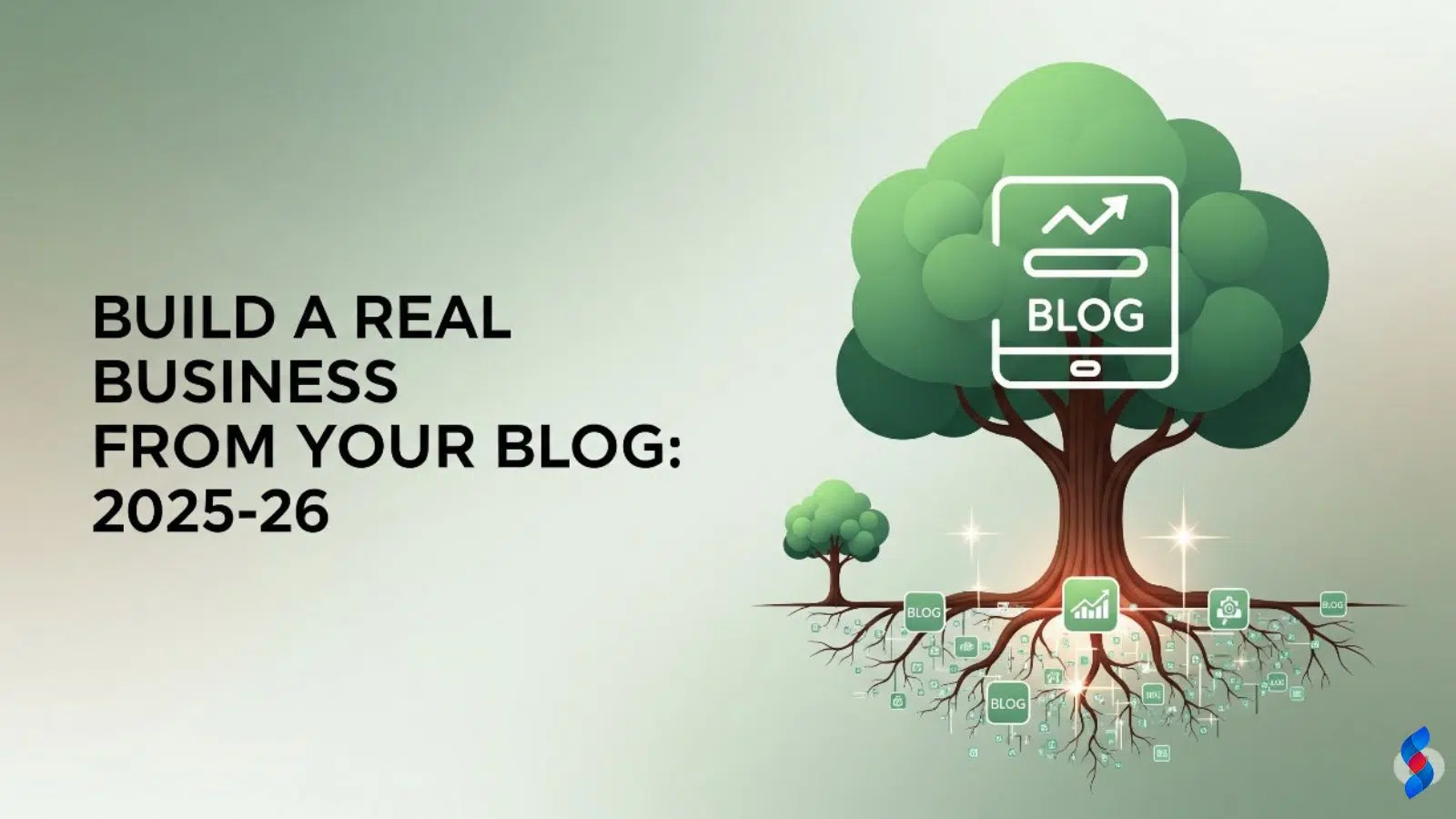
How to Build a Real Business From Your Blog in 2025–26
Content Marketing Secrets: The Amazing 2025 Guide for WordPress
Content Marketing WordPress: The Amazing Ultimate Guide for 2025
Content Pillars: The Amazing Way to Boost WordPress SEO in 2025
SkySol Media
We firmly believe that the internet should be available and accessible to anyone, and are committed to providing a website that is accessible to the widest possible audience, regardless of circumstance and ability.
To fulfill this, we aim to adhere as strictly as possible to the World Wide Web Consortium’s (W3C) Web Content Accessibility Guidelines 2.1 (WCAG 2.1) at the AA level. These guidelines explain how to make web content accessible to people with a wide array of disabilities. Complying with those guidelines helps us ensure that the website is accessible to all people: blind people, people with motor impairments, visual impairment, cognitive disabilities, and more.
This website utilizes various technologies that are meant to make it as accessible as possible at all times. We utilize an accessibility interface that allows persons with specific disabilities to adjust the website’s UI (user interface) and design it to their personal needs.
Additionally, the website utilizes an AI-based application that runs in the background and optimizes its accessibility level constantly. This application remediates the website’s HTML, adapts Its functionality and behavior for screen-readers used by the blind users, and for keyboard functions used by individuals with motor impairments.
If you’ve found a malfunction or have ideas for improvement, we’ll be happy to hear from you. You can reach out to the website’s operators by using the following email
Our website implements the ARIA attributes (Accessible Rich Internet Applications) technique, alongside various different behavioral changes, to ensure blind users visiting with screen-readers are able to read, comprehend, and enjoy the website’s functions. As soon as a user with a screen-reader enters your site, they immediately receive a prompt to enter the Screen-Reader Profile so they can browse and operate your site effectively. Here’s how our website covers some of the most important screen-reader requirements, alongside console screenshots of code examples:
Screen-reader optimization: we run a background process that learns the website’s components from top to bottom, to ensure ongoing compliance even when updating the website. In this process, we provide screen-readers with meaningful data using the ARIA set of attributes. For example, we provide accurate form labels; descriptions for actionable icons (social media icons, search icons, cart icons, etc.); validation guidance for form inputs; element roles such as buttons, menus, modal dialogues (popups), and others. Additionally, the background process scans all the website’s images and provides an accurate and meaningful image-object-recognition-based description as an ALT (alternate text) tag for images that are not described. It will also extract texts that are embedded within the image, using an OCR (optical character recognition) technology. To turn on screen-reader adjustments at any time, users need only to press the Alt+1 keyboard combination. Screen-reader users also get automatic announcements to turn the Screen-reader mode on as soon as they enter the website.
These adjustments are compatible with all popular screen readers, including JAWS and NVDA.
Keyboard navigation optimization: The background process also adjusts the website’s HTML, and adds various behaviors using JavaScript code to make the website operable by the keyboard. This includes the ability to navigate the website using the Tab and Shift+Tab keys, operate dropdowns with the arrow keys, close them with Esc, trigger buttons and links using the Enter key, navigate between radio and checkbox elements using the arrow keys, and fill them in with the Spacebar or Enter key.Additionally, keyboard users will find quick-navigation and content-skip menus, available at any time by clicking Alt+1, or as the first elements of the site while navigating with the keyboard. The background process also handles triggered popups by moving the keyboard focus towards them as soon as they appear, and not allow the focus drift outside it.
Users can also use shortcuts such as “M” (menus), “H” (headings), “F” (forms), “B” (buttons), and “G” (graphics) to jump to specific elements.
We aim to support the widest array of browsers and assistive technologies as possible, so our users can choose the best fitting tools for them, with as few limitations as possible. Therefore, we have worked very hard to be able to support all major systems that comprise over 95% of the user market share including Google Chrome, Mozilla Firefox, Apple Safari, Opera and Microsoft Edge, JAWS and NVDA (screen readers).
Despite our very best efforts to allow anybody to adjust the website to their needs. There may still be pages or sections that are not fully accessible, are in the process of becoming accessible, or are lacking an adequate technological solution to make them accessible. Still, we are continually improving our accessibility, adding, updating and improving its options and features, and developing and adopting new technologies. All this is meant to reach the optimal level of accessibility, following technological advancements. For any assistance, please reach out to