Understanding SEO in 2025: Key Strategies for Success
Understanding SEO in 2025: Key Strategies for Success: Search Engine Optimization (SEO) has always been the cornerstone of digital marketing, but as we approach 2025,...

Need help? Call us:
+92 320 1516585

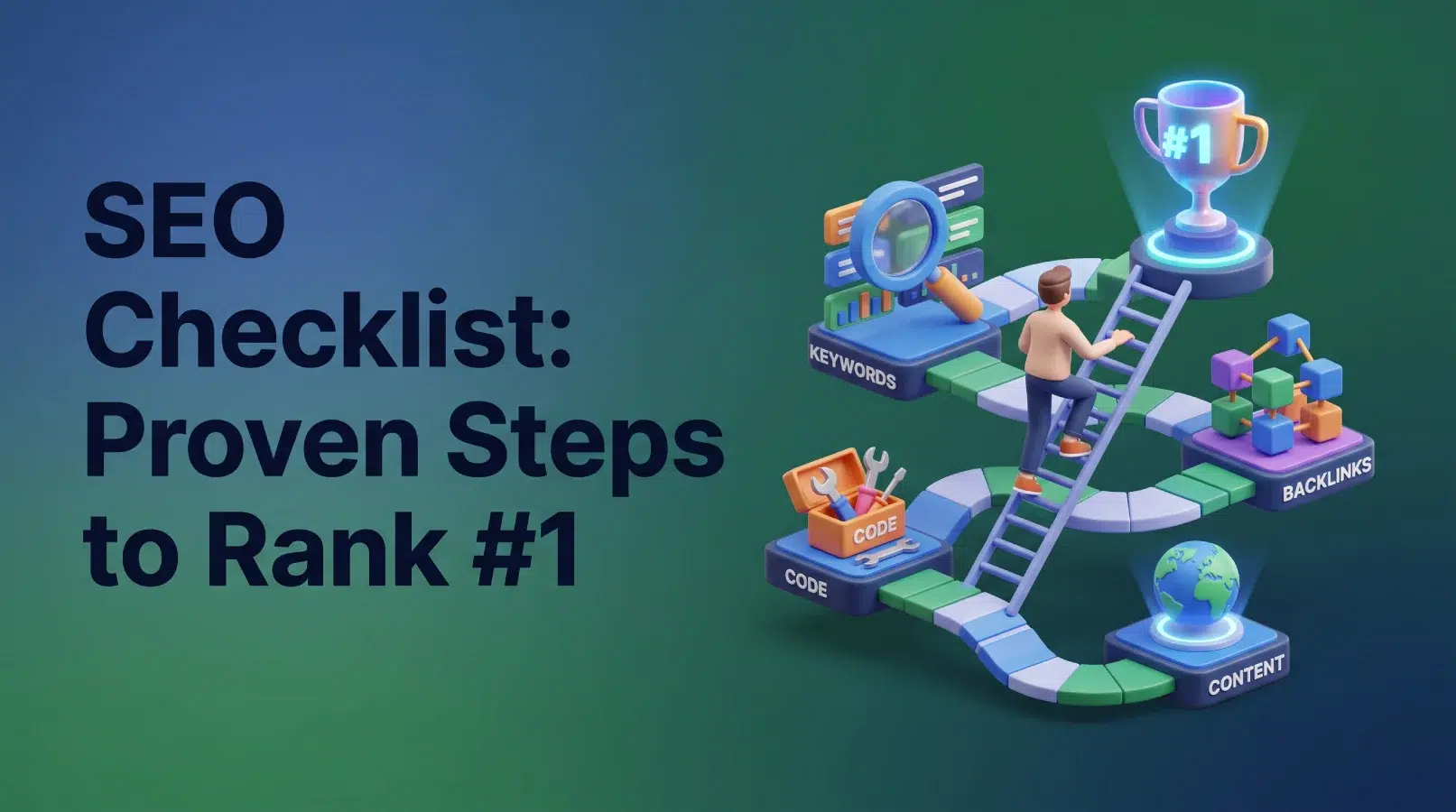
An SEO checklist is essential for achieving and maintaining top rankings in search engine results pages (SERPs). This comprehensive SEO checklist provides proven steps to rank #1 in 2026, covering everything from technical aspects to content strategy and off-page optimization. In our experience with clients at SkySol Media, a structured approach using an SEO checklist ensures no critical element is overlooked, leading to significant improvements in search visibility. This SEO checklist is your roadmap to success, guiding you through the essential tasks to boost your website’s ranking.
A thorough website audit is the first step in any successful search engine optimization campaign. It helps you identify areas where your website is underperforming and provides a baseline for measuring your progress. We’ve consistently seen that websites that undergo regular audits perform better in the long run.
A technical SEO audit focuses on the technical aspects of your website that can impact its search engine ranking. These elements are often invisible to the average user but are crucial for search engine crawlers.
[IMAGE: Screenshot of Google Search Console showing crawl errors]
A content audit involves evaluating the quality and effectiveness of your existing website content. This helps you identify content that needs to be updated, improved, or removed.
“Content is king, but quality content is queen and rules the kingdom.” – Gary Vaynerchuk
A backlink audit involves analyzing your website’s backlink profile to identify and disavow toxic or low-quality backlinks. A strong backlink profile is crucial for off-page SEO.
| Audit Type | Description | Tools |
|---|---|---|
| Technical SEO Audit | Checks for crawl errors, broken links, page speed, mobile-friendliness. | Google Search Console, PageSpeed Insights, Screaming Frog |
| Content Audit | Evaluates content quality, relevance, and keyword optimization. | Google Analytics, Yoast SEO, Copyscape |
| Backlink Audit | Analyzes backlink profile for toxic links and relevance. | Ahrefs, SEMrush, Google Disavow Tool |
Keyword research is the foundation of any successful SEO strategy. It involves identifying the keywords that your target audience is using to search for your products or services. Effective keyword research is an ongoing process that should be revisited regularly.
Seed keywords are the initial keywords that you use to start your keyword research process. They are typically broad keywords that are related to your business and industry.
Analyzing your competitors’ keyword strategies can provide valuable insights into the keywords that are working for them.
Long-tail keywords are longer, more specific keywords that have lower competition and higher conversion rates. They often target specific user needs or questions.
Keyword clustering involves grouping keywords into clusters based on search intent and topic. This helps you create content that is highly relevant to each keyword cluster.
[IMAGE: Example of a keyword cluster diagram]
On-page SEO involves optimizing the elements on your website pages to improve their search engine ranking. This includes optimizing title tags, meta descriptions, header tags, content, images, and URLs.
The title tag is an HTML element that specifies the title of a web page. It is displayed in search engine results pages (SERPs) and is an important ranking factor.
The meta description is an HTML element that provides a brief summary of a web page. It is displayed in search engine results pages (SERPs) below the title tag.
Header tags (H1-H6) are HTML elements that are used to structure the content on a web page. They help search engines understand the hierarchy and importance of the content.
High-quality, original content is essential for successful SEO. Your content should provide value to users and be optimized for relevant keywords.
Images can enhance user experience and improve your website’s SEO.
URLs should be short, descriptive, and include your primary keyword.
| On-Page Element | Optimization Tips |
|---|---|
| Title Tag | Include primary keyword, keep under 60 characters, write compelling titles. |
| Meta Description | Include primary keyword, keep under 160 characters, write engaging descriptions. |
| Header Tags | Use header tags to structure content, include relevant keywords, use only one H1 per page. |
| Content | Write high-quality, original content, optimize for readability, include relevant keywords naturally. |
| Images | Use descriptive alt text, compress images, use relevant file names. |
| URLs | Use short, descriptive URLs, use hyphens to separate words, avoid special characters. |
Technical SEO ensures your website is easily crawlable and indexable by search engines. It also focuses on providing a smooth user experience, which is a crucial ranking factor.
With the increasing use of mobile devices, mobile optimization is critical for SEO success.
Page speed is a crucial ranking factor and a key element of user experience.
HTTPS encryption is essential for website security and a ranking signal.
An XML sitemap helps search engines crawl and index your website more efficiently.
The robots.txt file controls which pages search engines can crawl.
Off-page SEO involves building your website’s authority and trust through activities that take place outside of your website. This includes link building, social media marketing, and online reputation management.
Link building is the process of acquiring backlinks from other websites. Backlinks are a strong signal of authority and trust to search engines.
Social media marketing can help you amplify your reach, drive traffic to your website, and build brand awareness.
Online reputation management involves monitoring and managing your online reputation to protect your brand.
[IMAGE: Example of a backlink profile analysis tool]
Content marketing involves creating and sharing valuable, relevant, and consistent content to attract and engage a target audience. This drives traffic, generates leads, and builds brand awareness.
Blog posts are a great way to share your expertise, provide valuable information to your audience, and improve your website’s SEO.
Ebooks and whitepapers are a great way to provide in-depth information on complex topics and generate leads.
Infographics are a visually appealing way to present data and information in an engaging way.
Video marketing is a powerful way to capture attention, engage your audience, and drive traffic to your website.
Local SEO focuses on optimizing your website to rank higher in local search results. This is important if you have a physical business location or serve a specific geographic area.
Google My Business is a free tool that allows you to manage your online presence on Google, including Search and Maps.
Local citations are online mentions of your business name, address, and phone number (NAP). They help build your local authority and improve your local search ranking.
Target local keywords in your website content to reach local searchers.
Rank tracking and monitoring are essential for measuring the success of your SEO efforts. By tracking your keyword rankings and website traffic, you can identify what’s working and what’s not.
Keyword rank tracking involves monitoring your website’s ranking for specific keywords over time.
Website traffic analysis involves analyzing your website’s traffic using tools like Google Analytics.
[IMAGE: Example of a Google Analytics dashboard]
Competitive analysis involves identifying your top competitors and analyzing their SEO strategies and tactics. This helps you identify opportunities to improve your own SEO and stay ahead of the game.
Identify your top competitors in the search results for your target keywords.
Analyze your competitors’ content to identify gaps in your own content strategy.
Analyze your competitors’ backlink profiles to identify potential link building opportunities.
User experience (UX) is a crucial ranking factor. Google prioritizes websites that provide a positive and engaging user experience.
Ensure your website is easy to navigate and users can find what they are looking for quickly and easily.
Ensure your website is mobile-friendly and provides a positive user experience on mobile devices.
Optimize your website for page speed to provide a smooth and seamless user experience.
Write clear and concise content that is easy to read and understand.
SEO is an ongoing process that requires regular maintenance to sustain your results.
Regularly monitor your website for technical issues, such as crawl errors and broken links.
Regularly update your content to keep it fresh and relevant.
Stay up-to-date with the latest SEO trends and best practices.
Once you’ve mastered the basics of SEO, you can start exploring advanced techniques to level up your game.
Featured snippets are short excerpts of text that appear at the top of Google’s search results. Optimizing for featured snippets can significantly increase your website’s visibility and drive more traffic.
Voice search is becoming increasingly popular, so it’s important to optimize your content for voice search.
AI-powered SEO tools can help you automate tasks like keyword research, content optimization, and rank tracking.
Conclusion
This SEO checklist provides a comprehensive guide to improving your website’s search engine ranking in 2026. By following these steps, you can ensure your website is optimized for both search engines and users, leading to increased traffic, leads, and sales. This SEO checklist will help you achieve digital marketing success. We’re confident that by implementing these strategies, you’ll see a significant improvement in your SEO performance.
FAQ Section
Q: How often should I perform a website audit?
A: We recommend performing a website audit at least once a quarter. This will help you identify and fix any issues that may be impacting your website’s SEO.
Q: How long does it take to see results from SEO?
A: The time it takes to see results from SEO can vary depending on a number of factors, such as the competitiveness of your industry and the quality of your SEO efforts. However, you should start to see some improvements within a few months.
Q: What is the most important ranking factor?
A: While there is no single most important ranking factor, high-quality content and backlinks are generally considered to be the most important.
Q: How do I disavow toxic backlinks?
A: You can disavow toxic backlinks using Google’s Disavow Tool. This tool allows you to tell Google that you don’t want certain backlinks to be considered when ranking your website.
Q: How do I stay up-to-date with the latest SEO trends?
A: You can stay up-to-date with the latest SEO trends by reading industry blogs, attending conferences, and following SEO experts on social media.
Don’t forget to share it

We’ll Design & Develop a Professional Website Tailored to Your Brand
Enjoy this post? Join our newsletter
Newsletter
Related Articles
Understanding SEO in 2025: Key Strategies for Success

The Ultimate SEO Guide for Growing Your Trading Business Online

Drive More Organic Traffic to Your Trading Platform with These Proven Tactics

Optimized for Success: How SkySol Media Builds SEO-First Websites

Boost Your Google Rankings: Proven SEO Tactics for Modern Brands

How to Write SEO-Friendly Blog Posts That Google Loves
SkySol Media
We firmly believe that the internet should be available and accessible to anyone, and are committed to providing a website that is accessible to the widest possible audience, regardless of circumstance and ability.
To fulfill this, we aim to adhere as strictly as possible to the World Wide Web Consortium’s (W3C) Web Content Accessibility Guidelines 2.1 (WCAG 2.1) at the AA level. These guidelines explain how to make web content accessible to people with a wide array of disabilities. Complying with those guidelines helps us ensure that the website is accessible to all people: blind people, people with motor impairments, visual impairment, cognitive disabilities, and more.
This website utilizes various technologies that are meant to make it as accessible as possible at all times. We utilize an accessibility interface that allows persons with specific disabilities to adjust the website’s UI (user interface) and design it to their personal needs.
Additionally, the website utilizes an AI-based application that runs in the background and optimizes its accessibility level constantly. This application remediates the website’s HTML, adapts Its functionality and behavior for screen-readers used by the blind users, and for keyboard functions used by individuals with motor impairments.
If you’ve found a malfunction or have ideas for improvement, we’ll be happy to hear from you. You can reach out to the website’s operators by using the following email
Our website implements the ARIA attributes (Accessible Rich Internet Applications) technique, alongside various different behavioral changes, to ensure blind users visiting with screen-readers are able to read, comprehend, and enjoy the website’s functions. As soon as a user with a screen-reader enters your site, they immediately receive a prompt to enter the Screen-Reader Profile so they can browse and operate your site effectively. Here’s how our website covers some of the most important screen-reader requirements, alongside console screenshots of code examples:
Screen-reader optimization: we run a background process that learns the website’s components from top to bottom, to ensure ongoing compliance even when updating the website. In this process, we provide screen-readers with meaningful data using the ARIA set of attributes. For example, we provide accurate form labels; descriptions for actionable icons (social media icons, search icons, cart icons, etc.); validation guidance for form inputs; element roles such as buttons, menus, modal dialogues (popups), and others. Additionally, the background process scans all the website’s images and provides an accurate and meaningful image-object-recognition-based description as an ALT (alternate text) tag for images that are not described. It will also extract texts that are embedded within the image, using an OCR (optical character recognition) technology. To turn on screen-reader adjustments at any time, users need only to press the Alt+1 keyboard combination. Screen-reader users also get automatic announcements to turn the Screen-reader mode on as soon as they enter the website.
These adjustments are compatible with all popular screen readers, including JAWS and NVDA.
Keyboard navigation optimization: The background process also adjusts the website’s HTML, and adds various behaviors using JavaScript code to make the website operable by the keyboard. This includes the ability to navigate the website using the Tab and Shift+Tab keys, operate dropdowns with the arrow keys, close them with Esc, trigger buttons and links using the Enter key, navigate between radio and checkbox elements using the arrow keys, and fill them in with the Spacebar or Enter key.Additionally, keyboard users will find quick-navigation and content-skip menus, available at any time by clicking Alt+1, or as the first elements of the site while navigating with the keyboard. The background process also handles triggered popups by moving the keyboard focus towards them as soon as they appear, and not allow the focus drift outside it.
Users can also use shortcuts such as “M” (menus), “H” (headings), “F” (forms), “B” (buttons), and “G” (graphics) to jump to specific elements.
We aim to support the widest array of browsers and assistive technologies as possible, so our users can choose the best fitting tools for them, with as few limitations as possible. Therefore, we have worked very hard to be able to support all major systems that comprise over 95% of the user market share including Google Chrome, Mozilla Firefox, Apple Safari, Opera and Microsoft Edge, JAWS and NVDA (screen readers).
Despite our very best efforts to allow anybody to adjust the website to their needs. There may still be pages or sections that are not fully accessible, are in the process of becoming accessible, or are lacking an adequate technological solution to make them accessible. Still, we are continually improving our accessibility, adding, updating and improving its options and features, and developing and adopting new technologies. All this is meant to reach the optimal level of accessibility, following technological advancements. For any assistance, please reach out to