Understanding SEO in 2025: Key Strategies for Success
Understanding SEO in 2025: Key Strategies for Success: Search Engine Optimization (SEO) has always been the cornerstone of digital marketing, but as we approach 2025,...

Need help? Call us:
+92 320 1516 585

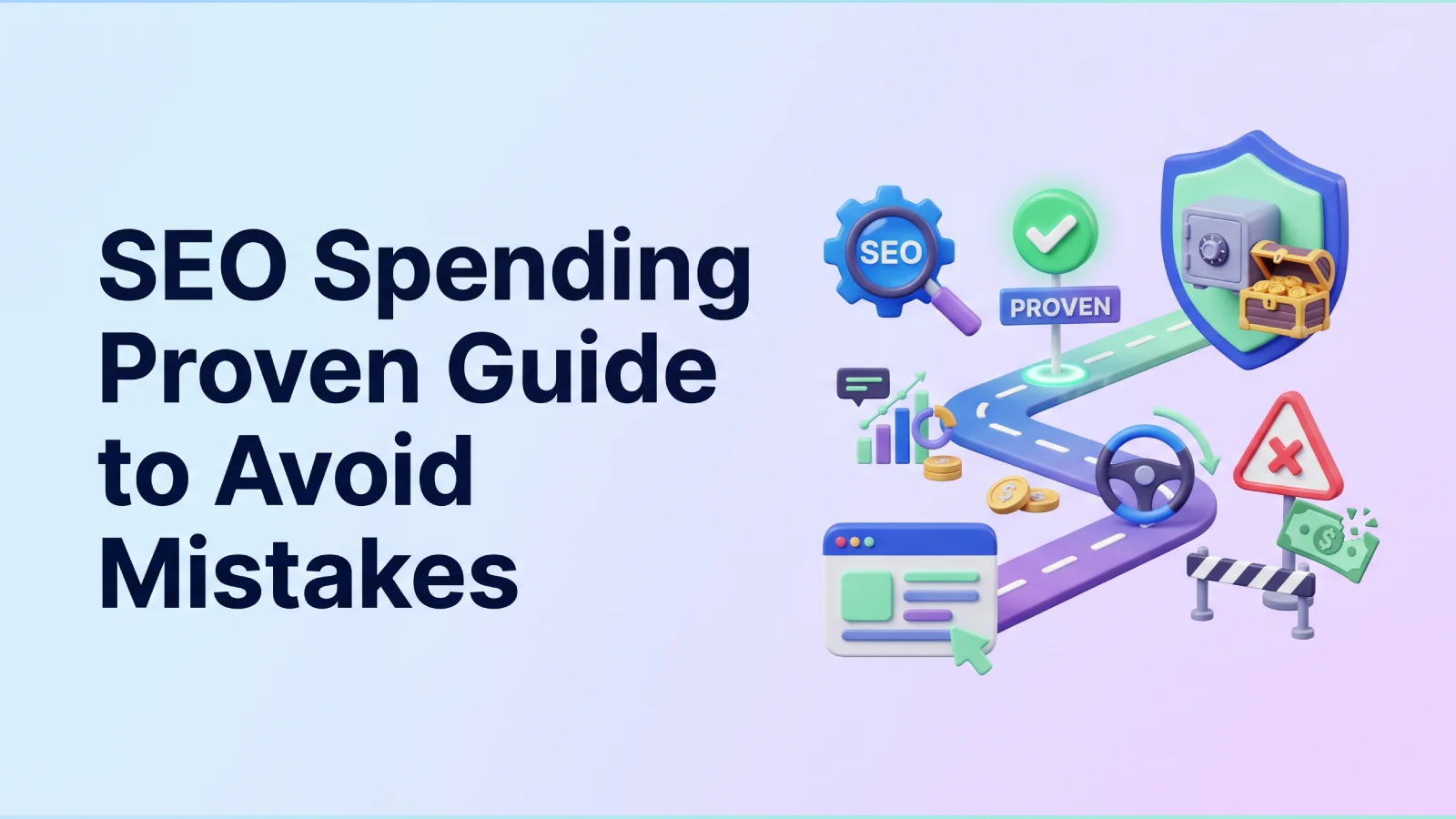
SEO spending can often feel like navigating a minefield. Many businesses allocate resources based on guesswork or outdated information, leading to wasted investments and disappointing results. In this guide, we’ll explore common SEO spending mistakes and provide proven solutions to help you optimize your online marketing spend and achieve a strong return on SEO.
SEO, or search engine optimization, is a critical component of any successful digital marketing budget. However, many businesses approach their SEO investment with a level of uncertainty that can be detrimental. Without a clear understanding of what drives results and how to measure them, SEO spending becomes a shot in the dark, more akin to gambling than a strategic business decision.
The importance of a data-driven approach to SEO budgeting cannot be overstated. In today’s competitive online landscape, every dollar counts. A well-informed SEO strategy, backed by data and analytics, ensures that your SEO budget is allocated to the most effective tactics, maximizing your SEO ROI and driving sustainable growth.
There are several common misconceptions about SEO costs and ROI that contribute to ineffective SEO spending. Some businesses believe that SEO is a one-time fix, while others overestimate the speed at which results can be achieved. Understanding the true nature of SEO – a long-term, iterative process – is essential for setting realistic expectations and allocating resources wisely.
One of the most frequent errors we see at SkySol Media is businesses pulling an SEO budget number “out of thin air.” Perhaps it’s a percentage of overall revenue, a figure based on what someone heard at a conference, or just a round number that feels comfortable. This approach is fundamentally flawed because it doesn’t connect the SEO investment with actual business goals or the realities of the competitive landscape.
Basing your SEO budget solely on what competitors are doing can also backfire. While competitor analysis is valuable, it shouldn’t be the sole determinant of your SEO spending. Your competitors may have different business objectives, target audiences, or existing online authority. Simply mirroring their online marketing spend doesn’t guarantee success and could lead to misallocation of your SEO budget.
“The biggest mistake businesses make with SEO is treating it as an expense instead of an investment. When you understand the potential return, you’re more likely to allocate resources strategically and see meaningful results.” – John Lincoln, CEO of Ignite Visibility
Instead of guessing, begin with a comprehensive SEO audit to identify your website’s strengths and weaknesses. This audit should assess factors such as website architecture, keyword rankings, content quality, backlink profile, and technical SEO issues. The SEO cost will vary depending on the scope of the audit.
[IMAGE: Screenshot of a comprehensive SEO audit report, highlighting key areas of improvement]
Define specific, measurable, achievable, relevant, and time-bound (SMART) SEO goals. What do you want to achieve with SEO? Increase organic traffic by a certain percentage? Improve keyword rankings for specific terms? Generate more leads or sales? Your SEO budget should be directly tied to achieving these goals.
Align your budget with these clearly defined goals. Once you understand the current state of your website, your desired outcomes, and the resources required to bridge the gap, you can create a realistic and effective SEO budget. We’ve seen cases where a modest, well-targeted SEO investment has yielded far better results than a larger, poorly planned SEO budget.
Many businesses only consider agency fees or SEO tool subscriptions when calculating their SEO cost, failing to account for the hidden costs that can significantly impact their overall SEO investment. This incomplete picture can lead to budget shortfalls and hinder the effectiveness of your SEO strategy.
The value of content creation is often underestimated, yet it’s a cornerstone of successful SEO. High-quality, engaging content not only attracts and retains website visitors but also signals to search engines that your website is a valuable resource. Neglecting content creation can severely limit your SEO potential.
When budgeting for SEO, be sure to factor in all SEO-related expenses, including both direct and indirect costs. A comprehensive approach ensures that you have sufficient resources to execute your SEO strategy effectively. When our team in Dubai tackles this issue, they often find that hidden costs dramatically alter the true SEO pricing.
Content creation costs encompass writing, editing, and design. Budget for professional writers, editors, and graphic designers who can create compelling content that resonates with your target audience and is optimized for search engines. Don’t underestimate the importance of visuals in enhancing user engagement and content shareability.
SEO tool subscriptions provide access to valuable data and insights that inform your SEO strategy. Consider the cost of keyword research tools, rank tracking software, website analytics platforms, and other tools that can help you monitor your progress and identify areas for improvement. Some affordable SEO options exist, but ensure they meet your data requirements.
Technical SEO fixes may require website development time to address issues such as slow loading speeds, crawl errors, and mobile optimization. Factor in the cost of developer time to implement these fixes and ensure that your website is technically sound. Overlooking technical SEO can negate even the best content and link building efforts.
Link building and outreach efforts are crucial for building authority and driving organic traffic. Budget for the time and resources required to identify relevant websites, craft compelling outreach emails, and build relationships with influencers and industry experts. Link building is a long-term investment that pays off in improved search engine rankings.
Ongoing monitoring and reporting are essential for tracking your progress and making data-driven decisions. Allocate resources for regularly monitoring your website’s performance, analyzing key metrics, and generating reports that provide insights into your SEO ROI. This ongoing analysis allows you to adapt your strategy and optimize your SEO investment.
It’s easy to get caught up in chasing vanity metrics like keyword rankings or social media likes, while neglecting the business results that truly matter, such as leads, sales, and revenue. This misdirection can lead to overspending on SEO tactics that don’t contribute to your bottom line.
Investing in outdated or ineffective SEO techniques can also waste your SEO budget. The SEO landscape is constantly evolving, and tactics that worked in the past may no longer be effective today. Staying up-to-date with the latest SEO trends and best practices is crucial for making informed decisions about your SEO investment.
Focus on keyword research that aligns with user intent. Instead of targeting broad, generic keywords, focus on long-tail keywords that reflect the specific questions and needs of your target audience. This approach will attract more qualified traffic and improve your conversion rates.
Invest in high-quality content that answers user questions. Create comprehensive, informative, and engaging content that provides value to your audience. This type of content not only attracts organic traffic but also establishes your website as a trusted authority in your industry.
Build a strong backlink profile through ethical outreach. Focus on earning backlinks from reputable websites in your industry through content marketing, guest blogging, and relationship building. Avoid buying backlinks or engaging in other black-hat tactics that can harm your website’s ranking.
Prioritize mobile optimization and website speed. Ensure that your website is mobile-friendly and loads quickly on all devices. Mobile optimization is essential for reaching the growing number of users who access the internet on their smartphones and tablets. Website speed is a ranking factor that affects user experience and SEO performance.
A technically flawed website can severely hinder your SEO performance, regardless of how great your content or link building efforts are. Issues such as slow loading speeds, crawl errors, and poor mobile optimization can prevent search engines from properly indexing and ranking your website.
The impact of slow loading speeds and poor mobile optimization on user experience and SEO is significant. Users are more likely to abandon a website that loads slowly or is difficult to navigate on their mobile devices, resulting in higher bounce rates and lower conversion rates. These factors can negatively impact your search engine rankings.
Conduct regular website speed audits using tools like Google PageSpeed Insights. Identify and fix any issues that are slowing down your website, such as large images, unoptimized code, and excessive HTTP requests. Optimizing website speed will improve user experience and boost your search engine rankings.
Ensure mobile-friendliness across all devices by using a responsive website design. This ensures that your website adapts to different screen sizes and provides a seamless user experience on smartphones, tablets, and desktops. Mobile-friendliness is a crucial ranking factor in Google’s mobile-first index.
Fix crawl errors and broken links to ensure that search engines can properly index your website. Use tools like Google Search Console to identify and fix crawl errors, and use a broken link checker to find and fix any broken links on your website. Addressing these issues will improve your website’s crawlability and indexability.
Implement structured data markup to help search engines understand the content on your website. Structured data markup provides context and meaning to your content, making it easier for search engines to display your website in rich snippets and other enhanced search results. This can improve your click-through rates and drive more organic traffic.
Valuable, engaging content is essential for attracting and retaining website visitors, as well as signaling to search engines that your website is a valuable resource. Content that is well-written, informative, and relevant to your target audience will naturally attract organic traffic and improve your search engine rankings.
Thin or duplicated content can hurt your rankings by signaling to search engines that your website is not a valuable resource. Avoid creating content that is simply copied from other websites or that provides little value to your audience. Focus on creating original, high-quality content that sets you apart from the competition.
Research your audience’s needs and interests to understand what type of content they are looking for. Use keyword research tools, social media monitoring, and customer surveys to identify the topics and questions that are most relevant to your target audience.
Develop comprehensive and informative content that answers user questions and provides value to your audience. Aim to create content that is not only well-written but also visually appealing and easy to consume. Use images, videos, and other multimedia elements to enhance your content and engage your audience.
Optimize content for relevant keywords by incorporating target keywords into your titles, headings, and body text. However, avoid keyword stuffing, which can harm your search engine rankings. Focus on using keywords naturally and strategically to improve your content’s relevance to search queries.
Promote your content across multiple channels to reach a wider audience. Share your content on social media, email newsletters, and other marketing channels to drive traffic to your website and increase its visibility. The more people who see and share your content, the more likely it is to rank well in search engines.
Data-driven decision-making is essential for optimizing your SEO strategy and maximizing your SEO ROI. Without tracking and measuring your results, you’re essentially flying blind, making it difficult to determine what’s working and what’s not.
Relying on gut feelings alone is a recipe for disaster in the world of SEO. While intuition can be valuable, it should always be backed up by data and analytics. Use data to inform your SEO strategy and make adjustments as needed to improve your results.
Use Google Analytics to track website traffic and user behavior. Google Analytics provides valuable insights into how users are interacting with your website, including the pages they are visiting, the amount of time they are spending on each page, and the actions they are taking.
Monitor keyword rankings and organic search visibility to track your progress in search engine results pages (SERPs). Use rank tracking tools to monitor your keyword rankings over time and identify any fluctuations that may require attention. Organic search visibility is a measure of how visible your website is in organic search results for your target keywords.
Track conversions and ROI from SEO efforts to determine the effectiveness of your SEO strategy. Set up conversion tracking in Google Analytics to track the number of leads, sales, or other desired actions that are generated from organic search traffic. Use this data to calculate your SEO ROI and determine the value of your SEO investment.
Adjust your strategy based on data insights to continuously improve your results. Regularly analyze your data to identify trends, patterns, and areas for improvement. Use these insights to make adjustments to your SEO strategy and optimize your SEO investment for maximum ROI.
Understanding the long-term nature of SEO is essential for setting realistic expectations and avoiding disappointment. SEO is not a quick fix; it’s a long-term strategy that requires patience, persistence, and consistent effort.
Quick fixes and black-hat tactics can be tempting, but they are ultimately risky and can harm your website’s ranking. Avoid using tactics such as keyword stuffing, link buying, and cloaking, which can result in penalties from search engines.
Set realistic expectations for SEO results by understanding that it takes time to build authority, improve keyword rankings, and generate organic traffic. Don’t expect to see results overnight; it may take several months or even years to achieve your desired outcomes.
Focus on building a sustainable SEO foundation by creating high-quality content, building a strong backlink profile, and optimizing your website for user experience. This approach will not only improve your search engine rankings but also create a valuable asset for your business.
Be patient and persistent with your efforts, even when you don’t see immediate results. SEO is a marathon, not a sprint. Stay focused on your goals, continue to implement your strategy, and track your progress over time.
Ignoring local SEO best practices can significantly limit your visibility in your local area. Local SEO is essential for businesses that serve customers in a specific geographic location, such as restaurants, retail stores, and service providers.
[IMAGE: Example of a Google Maps search result for a local business, highlighting the importance of local SEO]
Claim and optimize your Google Business Profile (GBP). Your GBP is a free listing that appears in Google Search and Maps, providing valuable information about your business, such as your address, phone number, hours of operation, and customer reviews. Optimizing your GBP with accurate and complete information can improve your visibility in local search results.
Build local citations on relevant websites, such as online directories, review sites, and industry associations. Local citations are mentions of your business name, address, and phone number (NAP) on other websites. Building local citations can improve your local search rankings and increase your online visibility.
Target local keywords in your content by incorporating location-specific terms into your website copy, blog posts, and other content. This will help search engines understand that your business serves customers in a particular geographic area.
A poor UX can negatively impact your SEO efforts by increasing bounce rates, decreasing time on site, and lowering conversion rates. Search engines prioritize websites that provide a positive user experience, so it’s essential to ensure that your website is user-friendly and engaging.
Ensure easy navigation and clear calls to action to guide users through your website and encourage them to take desired actions. Use clear and concise language, and make it easy for users to find the information they are looking for.
Optimize website speed and mobile responsiveness to provide a seamless user experience on all devices. A fast-loading, mobile-friendly website will keep users engaged and reduce bounce rates.
Make sure your website is accessible to all users, including those with disabilities. Follow accessibility guidelines to ensure that your website is usable by people with visual, auditory, motor, or cognitive impairments.
The SEO landscape is constantly changing as search engine algorithms evolve and new tactics emerge. Failing to stay up-to-date with the latest SEO trends can lead to outdated strategies and missed opportunities.
Follow reputable SEO blogs and industry experts to stay informed about the latest SEO trends and best practices. Subscribe to newsletters, attend webinars, and follow social media accounts to stay up-to-date on the latest news and insights.
Attend SEO conferences and webinars to learn from industry experts and network with other SEO professionals. Conferences and webinars provide valuable opportunities to learn about new SEO techniques and strategies and to connect with others in the industry.
Experiment with new SEO techniques to see what works best for your website. Don’t be afraid to try new things and test different approaches. The SEO landscape is constantly evolving, so it’s important to be willing to adapt and experiment.
In this guide, we’ve covered ten common SEO spending mistakes and provided proven solutions to help you avoid them. By setting realistic goals, factoring in all costs, prioritizing ROI-driven tactics, and staying up-to-date with the latest trends, you can optimize your SEO investment and achieve long-term success.
Remember that SEO is a continuous process that requires ongoing monitoring and adaptation. Regularly analyze your results, adjust your strategy as needed, and stay focused on providing value to your audience. With a strategic and data-driven approach, you can maximize your SEO ROI and drive sustainable growth for your business. We at SkySol Media can help you take your SEO investment to the next level.
Q: What is the average SEO budget for a small business?
A: The average SEO budget for a small business can vary widely depending on factors such as industry, competition, and geographic location. However, a general guideline is to allocate between \$500 to \$5,000 per month for SEO services. For a more precise figure, we recommend conducting a thorough SEO audit to assess your specific needs and goals. This will ensure your SEO investment aligns perfectly with your business objectives.
Q: How long does it take to see results from SEO?
A: The timeframe for seeing results from SEO can vary depending on various factors, including the competitiveness of your industry, the current state of your website, and the effectiveness of your SEO strategy. Generally, it can take anywhere from 3 to 6 months to start seeing noticeable improvements in your keyword rankings and organic traffic. Keep in mind that SEO is a long-term strategy, and it may take longer to achieve your desired outcomes. Building a strong online presence requires consistency and patience.
Q: What is the difference between affordable SEO and enterprise SEO?
A: Affordable SEO typically caters to small businesses with limited budgets, offering basic SEO services such as keyword research, on-page optimization, and link building. Enterprise SEO, on the other hand, is designed for large organizations with complex websites and demanding SEO needs. Enterprise SEO services often include advanced technical SEO, content marketing at scale, and custom reporting. The SEO pricing reflects the scope and complexity of the services provided. The key is to choose an SEO package that aligns with your business’s specific requirements and resources.
Q: How can I track the ROI of my SEO investment?
A: Tracking the ROI of your SEO investment involves measuring the revenue generated from organic search traffic. You can use Google Analytics to track conversions, such as leads, sales, or other desired actions, that originate from organic search. By attributing revenue to your SEO efforts, you can calculate your SEO ROI and determine the value of your SEO investment. We recommend setting up conversion tracking in Google Analytics and regularly monitoring your results to ensure that your SEO strategy is delivering a positive return.
Don’t forget to share it

We’ll Design & Develop a Professional Website Tailored to Your Brand
Enjoy this post? Join our newsletter
Newsletter
Related Articles
Understanding SEO in 2025: Key Strategies for Success

The Ultimate SEO Guide for Growing Your Trading Business Online

Drive More Organic Traffic to Your Trading Platform with These Proven Tactics

Optimized for Success: How SkySol Media Builds SEO-First Websites

Boost Your Google Rankings: Proven SEO Tactics for Modern Brands

How to Write SEO-Friendly Blog Posts That Google Loves
SkySol Media
We firmly believe that the internet should be available and accessible to anyone, and are committed to providing a website that is accessible to the widest possible audience, regardless of circumstance and ability.
To fulfill this, we aim to adhere as strictly as possible to the World Wide Web Consortium’s (W3C) Web Content Accessibility Guidelines 2.1 (WCAG 2.1) at the AA level. These guidelines explain how to make web content accessible to people with a wide array of disabilities. Complying with those guidelines helps us ensure that the website is accessible to all people: blind people, people with motor impairments, visual impairment, cognitive disabilities, and more.
This website utilizes various technologies that are meant to make it as accessible as possible at all times. We utilize an accessibility interface that allows persons with specific disabilities to adjust the website’s UI (user interface) and design it to their personal needs.
Additionally, the website utilizes an AI-based application that runs in the background and optimizes its accessibility level constantly. This application remediates the website’s HTML, adapts Its functionality and behavior for screen-readers used by the blind users, and for keyboard functions used by individuals with motor impairments.
If you’ve found a malfunction or have ideas for improvement, we’ll be happy to hear from you. You can reach out to the website’s operators by using the following email
Our website implements the ARIA attributes (Accessible Rich Internet Applications) technique, alongside various different behavioral changes, to ensure blind users visiting with screen-readers are able to read, comprehend, and enjoy the website’s functions. As soon as a user with a screen-reader enters your site, they immediately receive a prompt to enter the Screen-Reader Profile so they can browse and operate your site effectively. Here’s how our website covers some of the most important screen-reader requirements, alongside console screenshots of code examples:
Screen-reader optimization: we run a background process that learns the website’s components from top to bottom, to ensure ongoing compliance even when updating the website. In this process, we provide screen-readers with meaningful data using the ARIA set of attributes. For example, we provide accurate form labels; descriptions for actionable icons (social media icons, search icons, cart icons, etc.); validation guidance for form inputs; element roles such as buttons, menus, modal dialogues (popups), and others. Additionally, the background process scans all the website’s images and provides an accurate and meaningful image-object-recognition-based description as an ALT (alternate text) tag for images that are not described. It will also extract texts that are embedded within the image, using an OCR (optical character recognition) technology. To turn on screen-reader adjustments at any time, users need only to press the Alt+1 keyboard combination. Screen-reader users also get automatic announcements to turn the Screen-reader mode on as soon as they enter the website.
These adjustments are compatible with all popular screen readers, including JAWS and NVDA.
Keyboard navigation optimization: The background process also adjusts the website’s HTML, and adds various behaviors using JavaScript code to make the website operable by the keyboard. This includes the ability to navigate the website using the Tab and Shift+Tab keys, operate dropdowns with the arrow keys, close them with Esc, trigger buttons and links using the Enter key, navigate between radio and checkbox elements using the arrow keys, and fill them in with the Spacebar or Enter key.Additionally, keyboard users will find quick-navigation and content-skip menus, available at any time by clicking Alt+1, or as the first elements of the site while navigating with the keyboard. The background process also handles triggered popups by moving the keyboard focus towards them as soon as they appear, and not allow the focus drift outside it.
Users can also use shortcuts such as “M” (menus), “H” (headings), “F” (forms), “B” (buttons), and “G” (graphics) to jump to specific elements.
We aim to support the widest array of browsers and assistive technologies as possible, so our users can choose the best fitting tools for them, with as few limitations as possible. Therefore, we have worked very hard to be able to support all major systems that comprise over 95% of the user market share including Google Chrome, Mozilla Firefox, Apple Safari, Opera and Microsoft Edge, JAWS and NVDA (screen readers).
Despite our very best efforts to allow anybody to adjust the website to their needs. There may still be pages or sections that are not fully accessible, are in the process of becoming accessible, or are lacking an adequate technological solution to make them accessible. Still, we are continually improving our accessibility, adding, updating and improving its options and features, and developing and adopting new technologies. All this is meant to reach the optimal level of accessibility, following technological advancements. For any assistance, please reach out to