
Need help? Call us:
+92 320 1516 585
Services
Shop
- Web Design And Development
- Graphic Designing
- Search Engine Optimization
- Web Hosting
- Digital Marketing
- CRO Services
- Brand Development
- Social Media Marketing
- PPC Marketing
- Content Marketing
- ERP Solutions
- App Development
- Game Development
- Printing Services
- Video Production
- Artificial Intelligence
- Data Entry
- Theme And Plugin Development
- Product Photography
- Software Development
- App Development
- Artificial Intelligence
- Brand Development
- Content Marketing
- CRO Services
- Custom Theme And Plugin Development
- Data Entry
- Digital Marketing
- ERP Solutions
- Game Development
- Graphics Designing
- PPC Marketing
- Printing Services
- Product Photography
- SEO
- Social Media Marketing
- Software Development
- Unique Category
- Video Production
- Web Design & Development
- Web Hosting
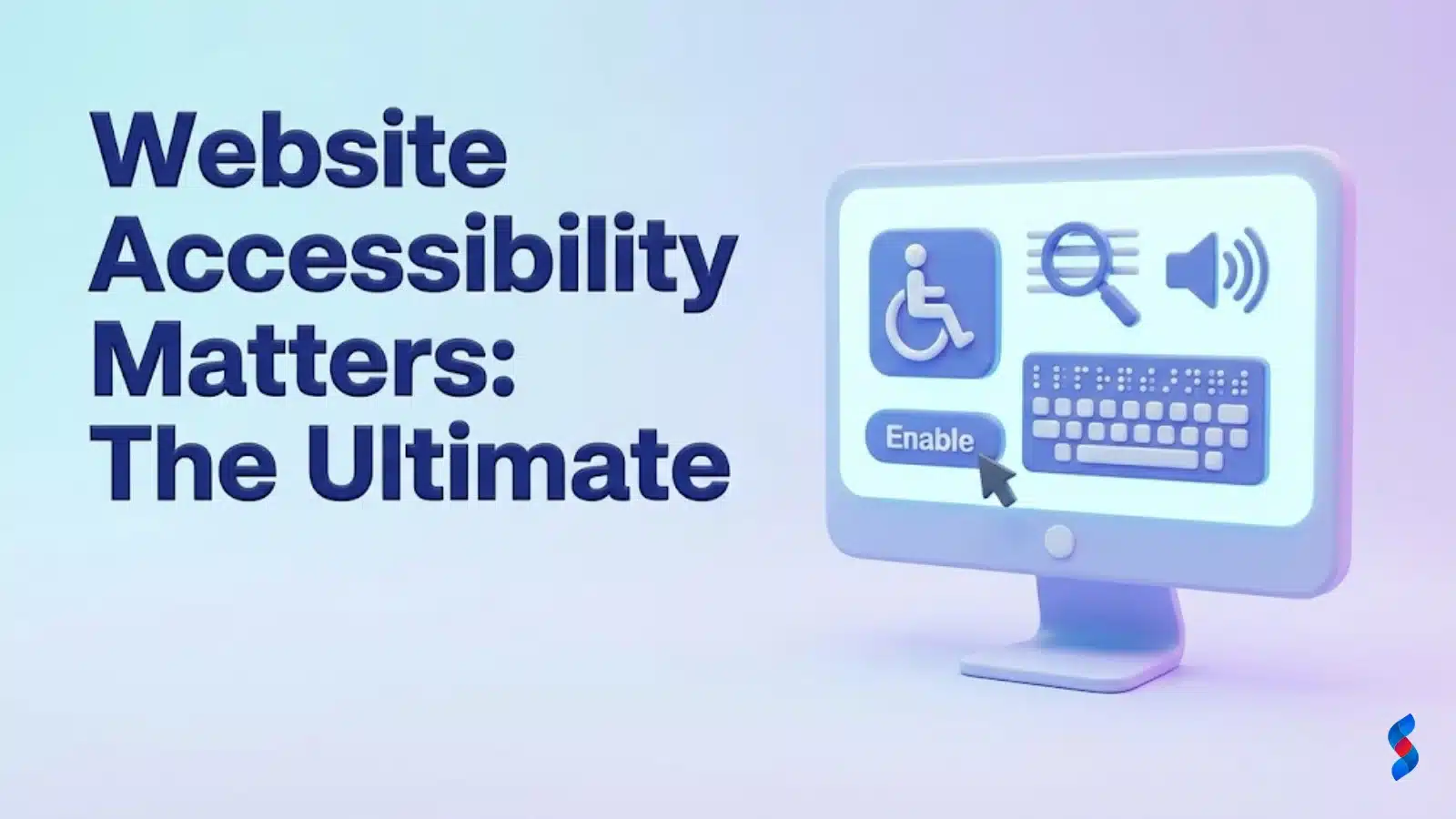
Website Accessibility Matters: The Ultimate Guide for 2025
Discover why website accessibility matters in 2025. This comprehensive guide explores the benefits of inclusive design, legal requirements, and practical tips for creating accessible websites. Ensure your website caters to all users and unlocks its full potential.
- By Khurram Virk
Why Website Accessibility Matters: An Introduction
Website accessibility matters because it ensures that everyone, regardless of their abilities or disabilities, can access and use the internet. At SkySol Media, we believe that creating inclusive digital experiences is not only a moral imperative but also a smart business strategy. In this comprehensive guide, we’ll delve into the core principles, legal requirements, and practical steps involved in making your website accessible.
Defining Website Accessibility
What does it mean for a website to be accessible? Essentially, it means designing and developing your website in a way that people with disabilities can perceive, understand, navigate, and interact with it effectively. Website accessibility matters because it removes barriers that prevent individuals with disabilities from fully participating in the digital world.
- What does it mean for a website to be accessible? An accessible website is one that can be used by everyone, including those with visual, auditory, motor, or cognitive impairments. This involves considering a wide range of needs and using appropriate technologies and design principles.
- Core principles: Perceivable, Operable, Understandable, Robust (POUR). The POUR principles form the foundation of web accessibility:
Perceivable: Information and user interface components must be presentable to users in ways they can perceive. This includes providing text alternatives for images, captions for videos, and ensuring sufficient color contrast.
Operable: User interface components and navigation must be operable. This means making sure that all functionality is available from a keyboard, providing enough time for users to read and use content, and avoiding content that flashes more than three times per second.
Understandable: Information and the operation of the user interface must be understandable. This involves using clear and concise language, providing predictable navigation, and helping users avoid and correct mistakes.
Robust: Content must be robust enough that it can be interpreted reliably by a wide variety of user agents, including assistive technologies. This means using valid HTML and CSS, and following accessibility standards.
- The role of WCAG (Web Content Accessibility Guidelines). The Web Content Accessibility Guidelines (WCAG) are internationally recognized standards for web accessibility. They provide a comprehensive set of guidelines for making web content more accessible to people with disabilities. Conforming to WCAG is a key step in ensuring that your website is accessible and inclusive. WCAG has several versions, and understanding the specific requirements of each version is crucial for maintaining web accessibility.
The Moral Imperative: Inclusion for All
Website accessibility matters because it’s about ensuring equal access to information and services for everyone. Excluding people with disabilities from the digital world is not only unethical but also limits their opportunities and participation in society.
- Ensuring equal access to information and services. Everyone deserves the opportunity to access information, communicate, and participate in online activities. An accessible website ensures that people with disabilities are not excluded from these opportunities. For example, providing captions for videos allows people who are deaf or hard of hearing to access the same content as everyone else. Similarly, providing alternative text for images allows people who are blind or have low vision to understand the content of those images.
- Breaking down digital barriers for people with disabilities. Many websites contain barriers that prevent people with disabilities from using them effectively. These barriers can include poor color contrast, lack of keyboard navigation, and inaccessible forms. By addressing these barriers, we can create a more inclusive online environment where everyone can participate. When our team in Dubai tackles this issue, they often find that simple changes like adding alt text to images and improving color contrast can make a significant difference.
- Promoting a more inclusive online environment. Website accessibility is not just about complying with legal requirements; it’s about creating a more inclusive and equitable online environment for everyone. By prioritizing accessibility, we can help to ensure that people with disabilities are able to fully participate in the digital world. This contributes to a more diverse and vibrant online community.
The Legal Requirements: ADA and Beyond
Website accessibility matters because it’s often a legal requirement. Several laws and regulations mandate accessibility, and non-compliance can lead to significant legal consequences.
- Understanding the Americans with Disabilities Act (ADA). The Americans with Disabilities Act (ADA) is a civil rights law that prohibits discrimination based on disability. While the ADA does not explicitly mention websites, courts have generally interpreted it to apply to online content. This means that businesses and organizations must ensure that their websites are accessible to people with disabilities.
- Section 508 compliance for government websites. Section 508 of the Rehabilitation Act requires federal agencies to make their electronic and information technology accessible to people with disabilities. This includes websites, software, and other digital content. State and local governments often follow similar accessibility guidelines.
- International accessibility laws and standards (e.g., EN 301 549). Many countries have their own accessibility laws and standards. For example, the European Union’s EN 301 549 standard sets accessibility requirements for ICT products and services. It’s crucial to understand the specific legal requirements in your target markets to avoid potential legal issues.
- The potential legal consequences of non-compliance. Failing to comply with accessibility laws can result in lawsuits, fines, and reputational damage. Several companies have faced legal action for having inaccessible websites. Prioritizing web accessibility helps to mitigate these risks and ensures that your organization is in compliance with applicable laws and regulations. One of our clients, a retail company, experienced a significant drop in customer satisfaction after a lawsuit related to their inaccessible website. We helped them remediate their website and implement an ongoing accessibility program to prevent future issues.
The Business Benefits of Accessible Websites
Website accessibility matters not only for ethical and legal reasons but also for sound business reasons. An accessible website can expand your audience, improve your SEO, and enhance your brand reputation.
- Expanding your reach to a wider audience. By making your website accessible, you can reach a larger audience, including people with disabilities, seniors, and those using assistive technologies. This can lead to increased traffic, engagement, and conversions.
- Improving SEO and search engine rankings. Search engines like Google consider website usability and accessibility when ranking websites. An accessible website is more likely to rank higher in search results, driving more organic traffic to your site. This is because accessible websites tend to have better structure, semantics, and user experience.
- Enhancing brand reputation and customer loyalty. Customers are increasingly likely to support businesses that demonstrate a commitment to inclusivity and social responsibility. An accessible website sends a positive message to your customers and can enhance your brand reputation. This can lead to increased customer loyalty and positive word-of-mouth.
- Reducing legal risks and potential lawsuits. As mentioned earlier, failing to comply with accessibility laws can result in legal action. By prioritizing accessibility, you can reduce the risk of lawsuits and protect your organization from potential financial and reputational damage.
“Accessibility is not a feature; it’s a fundamental requirement.” – Tim Berners-Lee
Understanding Different Types of Disabilities
To create truly accessible websites, it’s important to understand the diverse needs of people with different types of disabilities. This knowledge will inform your design and development decisions and help you create a more inclusive user experience.
- Visual impairments: Blindness, low vision, color blindness. People with visual impairments may use screen readers, screen magnifiers, or other assistive technologies to access web content. It’s important to provide alternative text for images, ensure sufficient color contrast, and make sure that websites are navigable with a keyboard.
- Auditory impairments: Deafness, hearing loss. People with auditory impairments may rely on captions and transcripts to access video and audio content. It’s important to provide accurate captions and transcripts for all multimedia content on your website. Consider offering transcripts for audio-only content as well.
- Motor impairments: Limited mobility, paralysis. People with motor impairments may use assistive devices such as keyboard emulators, head pointers, or switch devices to interact with websites. It’s important to ensure that all website functionality is accessible with a keyboard and that interactive elements are large enough to be easily clicked or tapped.
- Cognitive impairments: Learning disabilities, memory issues. People with cognitive impairments may have difficulty understanding complex language, remembering information, or navigating complex websites. It’s important to use clear and concise language, provide predictable navigation, and help users avoid and correct mistakes.
- Speech impairments: Difficulty speaking or being understood. People with speech impairments may have difficulty using voice-based interfaces or participating in online discussions. Consider providing alternative methods of communication, such as text-based chat or email.
Practical Steps to Improve Website Accessibility
Making your website accessible doesn’t have to be overwhelming. By following these practical steps, you can make significant improvements to your website’s accessibility and create a more inclusive user experience.
- Using semantic HTML for proper structure. Semantic HTML uses HTML elements to convey the meaning and structure of content, rather than just its appearance. This helps assistive technologies understand the content and present it to users in a meaningful way. For example, use
, - Providing alternative text for images (alt text). Alternative text (alt text) is a short description of an image that is displayed when the image cannot be loaded or when a user is using a screen reader. Alt text should accurately describe the content and purpose of the image.
- Ensuring sufficient color contrast. Color contrast refers to the difference in luminance between text and its background. Insufficient color contrast can make it difficult for people with low vision to read text. Use a color contrast checker to ensure that your website meets the WCAG’s color contrast requirements.
- Making websites navigable with keyboard only. Many people with disabilities rely on keyboards to navigate websites. It’s important to ensure that all website functionality is accessible with a keyboard. This includes menus, forms, and interactive elements.
- Adding captions and transcripts for videos and audio. Captions and transcripts make video and audio content accessible to people who are deaf or hard of hearing. Captions are synchronized text that appears on the screen, while transcripts are text versions of the audio content.
- Using ARIA (Accessible Rich Internet Applications) roles and attributes. ARIA is a set of attributes that can be added to HTML elements to provide additional information about their role, state, and properties. ARIA can be used to make dynamic content, such as JavaScript widgets, more accessible to assistive technologies.
- Creating clear and concise content. Use clear and concise language that is easy to understand. Avoid jargon, technical terms, and complex sentence structures. Break up large blocks of text with headings, subheadings, and bullet points.
- Designing forms that are easy to use with assistive technology. Forms should be designed with accessibility in mind. Use labels to clearly identify each form field, provide instructions for completing the form, and validate user input to prevent errors.
Accessibility Testing: Tools and Techniques
Regular accessibility testing is essential to ensure that your website remains accessible over time. There are a variety of tools and techniques available to help you test your website’s accessibility.
- Automated accessibility testing tools (e.g., WAVE, axe). Automated testing tools can quickly identify many common accessibility issues. However, these tools should not be used as a substitute for manual testing. They can identify potential issues, but they cannot determine whether a website is truly accessible.
- Manual accessibility testing methods. Manual testing involves reviewing your website’s code and content to identify accessibility issues. This can be a time-consuming process, but it is essential to ensure that your website is truly accessible.
- Usability testing with people with disabilities. Usability testing involves observing people with disabilities as they use your website. This can provide valuable insights into the usability of your website and identify areas for improvement.
- The importance of regular accessibility audits. Regular accessibility audits are essential to ensure that your website remains accessible over time. Accessibility standards and best practices are constantly evolving, so it’s important to stay up-to-date and make necessary changes to your website.
Common Misconceptions About Website Accessibility
There are many misconceptions about website accessibility. Let’s debunk some of the most common myths.
- “Accessibility is only for people with disabilities.” ❌ While web accessibility primarily benefits people with disabilities, it also improves the user experience for everyone. Accessible websites are often more user-friendly, easier to navigate, and faster to load.
- “Accessibility is too expensive and time-consuming.” ❌ While implementing accessibility can require an initial investment, the long-term benefits outweigh the costs. Moreover, integrating accessibility into your design and development process from the start can save time and money in the long run.
- “Our website is already accessible enough.” ❌ Even if your website meets some accessibility standards, it may still contain barriers that prevent people with disabilities from using it effectively. Regular accessibility testing is essential to identify and address these barriers.
- “We don’t have any users with disabilities.” ❌ It’s impossible to know for sure whether you have users with disabilities. Many people with disabilities do not disclose their disability status. Moreover, even if you don’t currently have any users with disabilities, it’s important to prioritize accessibility to ensure that your website is inclusive and welcoming to everyone.
Case Studies: Successful Accessible Websites
Let’s explore some examples of websites that have successfully prioritized website accessibility, and highlight the positive impact of these efforts.
- Examples of websites that prioritize accessibility. Many organizations are leading the way in web accessibility. For example, the BBC website is known for its commitment to accessibility, providing captions for all of its video content and ensuring that its website is navigable with a keyboard. Another example is the Australian government’s website, which adheres to strict accessibility standards and provides a range of accessibility features, such as a text-to-speech tool.
- Highlighting the positive impact of accessibility on user experience and business outcomes. Accessible websites tend to have better user experience, which can lead to increased engagement, conversions, and customer loyalty. For example, a study by Forrester found that accessible websites have a 15% higher conversion rate than non-accessible websites.
- Lessons learned from these successful implementations. These case studies demonstrate that website accessibility is not just a legal requirement; it’s a business opportunity. By prioritizing accessibility, organizations can reach a wider audience, improve their SEO, enhance their brand reputation, and reduce their legal risks.
The Future of Website Accessibility
The field of website accessibility is constantly evolving. Let’s explore some of the emerging trends and technologies that are shaping the future of accessibility.
- Emerging technologies and accessibility. Artificial intelligence (AI) and machine learning (ML) are being used to improve accessibility in a variety of ways. For example, AI-powered tools can automatically generate captions for videos, translate text into different languages, and provide personalized accessibility recommendations.
- The role of AI in improving accessibility. AI has the potential to revolutionize web accessibility by automating many of the tasks that are currently performed manually. This can make it easier and more affordable for organizations to create accessible websites.
- The ongoing evolution of accessibility standards and best practices. Accessibility standards and best practices are constantly evolving to keep pace with new technologies and user needs. It’s important to stay up-to-date on the latest developments and make necessary changes to your website to ensure that it remains accessible.
Resources for Learning More About Website Accessibility
There are many valuable resources available to help you learn more about website accessibility. Here are some of the most helpful:
- W3C Web Accessibility Initiative (WAI). The W3C WAI is a leading authority on web accessibility. Their website provides a wealth of information about accessibility standards, guidelines, and best practices.
- WebAIM (Web Accessibility In Mind). WebAIM is a non-profit organization that provides accessibility training, consulting, and resources. Their website offers a variety of helpful articles, tutorials, and tools.
- Accessibility training courses and certifications. There are many accessibility training courses and certifications available. These courses can help you develop the skills and knowledge you need to create accessible websites.
| Resource | Description | Link |
|---|---|---|
| W3C Web Accessibility Initiative (WAI) | Provides standards, guidelines, and resources on web accessibility. | https://www.w3.org/WAI/ |
| WebAIM (Web Accessibility In Mind) | Offers accessibility training, consulting, and resources. | https://webaim.org/ |
| Deque University | Provides accessibility training courses and certifications. | https://www.deque.com/university/ |
| Accessibility Developer Guide | A guide for developers on how to build accessible websites. | https://www.accessibility-developer-guide.com/ |
| Section 508.gov | Information on Section 508 standards for government websites. | https://www.section508.gov/ |
Conclusion: Embracing Accessibility for a Better Web
In conclusion, website accessibility matters for ethical, legal, and business reasons. By prioritizing accessibility, you can create a more inclusive and equitable online environment for everyone, expand your reach to a wider audience, improve your SEO, enhance your brand reputation, and reduce your legal risks.
We at SkySol Media believe that digital accessibility is not just a best practice; it’s a fundamental responsibility. By following the guidelines and recommendations outlined in this guide, you can make a significant difference in the lives of people with disabilities and create a better web for all.
FAQ Section
Q: What is website accessibility?
A: Website accessibility refers to the practice of designing and developing websites that are usable by people with disabilities. This includes people with visual, auditory, motor, and cognitive impairments. An accessible website is one that can be perceived, understood, navigated, and interacted with by everyone.
Q: Why is website accessibility important?
A: Website accessibility matters because it ensures that everyone has equal access to information and services online. It is also a legal requirement in many countries and can improve your SEO, enhance your brand reputation, and reduce your legal risks.
Q: What are the key principles of website accessibility?
A: The key principles of web accessibility are Perceivable, Operable, Understandable, and Robust (POUR). These principles provide a framework for creating accessible websites.
Q: What are the WCAG guidelines?
A: The Web Content Accessibility Guidelines (WCAG) are internationally recognized standards for website accessibility. They provide a comprehensive set of guidelines for making web content more accessible to people with disabilities.
Q: How can I test my website’s accessibility?
A: There are a variety of tools and techniques available to help you test your website’s accessibility. These include automated testing tools, manual testing methods, and usability testing with people with disabilities. Regular accessibility testing is essential to ensure that your website remains accessible over time.
Q: What is alternative text (alt text)?
A: Alternative text (alt text) is a short description of an image that is displayed when the image cannot be loaded or when a user is using a screen reader. Alt text should accurately describe the content and purpose of the image.
Q: What is ARIA?
A: ARIA (Accessible Rich Internet Applications) is a set of attributes that can be added to HTML elements to provide additional information about their role, state, and properties. ARIA can be used to make dynamic content, such as JavaScript widgets, more accessible to assistive technologies.
Q: How can inclusive design improve accessibility?
A: Inclusive design focuses on creating products and services that are usable by as many people as possible, regardless of their abilities or disabilities. By considering the needs of diverse users from the outset, inclusive design can help to improve the web accessibility of websites and other digital content.
Q: What is digital accessibility?
A: Digital accessibility encompasses all aspects of making digital content and technologies accessible to people with disabilities. This includes websites, software, mobile apps, and other digital media. Digital accessibility is essential for ensuring that everyone can participate fully in the digital world.
Q: How does assistive technology work with accessible websites?
A: Assistive technology such as screen readers, screen magnifiers, and voice recognition software allows people with disabilities to access and interact with websites and other digital content. Accessible websites are designed to work seamlessly with assistive technology, providing users with a positive and inclusive experience.
Q: What are the legal implications of neglecting website accessibility?
A: Neglecting website accessibility can lead to legal consequences, including lawsuits and fines. Many countries have laws and regulations that mandate accessibility, and organizations that fail to comply with these laws can face legal action. In the US, the ADA has been interpreted to include website accessibility.
Q: How can SkySol Media help with website accessibility?
A: SkySol Media offers a range of accessibility services, including accessibility audits, remediation, training, and consulting. We can help you assess your website’s accessibility, identify areas for improvement, and implement solutions to make your website more inclusive and accessible to everyone. Our expertise extends to ADA compliance and understanding of WCAG guidelines.
- Related Tags: accessibilityADAinclusionseoUsabilityWCAGWeb Design
Don’t forget to share it
Table of Contents

Want to build a stunning website?
We’ll Design & Develop a Professional Website Tailored to Your Brand
Enjoy this post? Join our newsletter
Newsletter
Enter your email below to the firsts to know about collections
Related Articles
Web Design & Development
Why Small Businesses Should Prioritize Mobile-First Websites
In today’s digital-first world, having an online presence is no longer optional for small businesses; it is essential. As we move further into 2025, one...
Web Design & Development
The Future of WordPress Development in 2025
The Future of WordPress Development in 2025: WordPress has come a long way since its inception in 2003. From being a simple blogging platform to...
Web Design & Development
Web Development Meets Marketing: The SkySol Media Advantage
Web Development Meets Marketing: The SkySol Media Advantage: In today’s digital-first world, your website isn’t just a brochure — it’s your brand’s heartbeat, storefront, marketing...
Web Design & Development
How to Make Your WordPress Site Lightning Fast in 2025-26
Make Your WordPress Site Lightning Fast in 2025-26: In 2025–26, website speed isn’t just a luxury; it’s a necessity. At SkySol Media, we understand how...
Web Design & Development
How Custom Plugin Development Can Solve Your Unique Business Problems
Custom Plugin Development: In today’s hyper-digital world, your website is more than just an online presence ; it’s your business engine. But when off-the-shelf WordPress...
Web Design & Development
The Ultimate WordPress Speed Optimization Checklist for 2025-26
The Ultimate WordPress Speed Optimization Checklist for 2025-26: In today’s competitive digital landscape, a slow website means lost opportunities. Whether you’re running an eCommerce store,...