Understanding SEO in 2025: Key Strategies for Success
Understanding SEO in 2025: Key Strategies for Success: Search Engine Optimization (SEO) has always been the cornerstone of digital marketing, but as we approach 2025,...

Need help? Call us:
+92 320 1516585

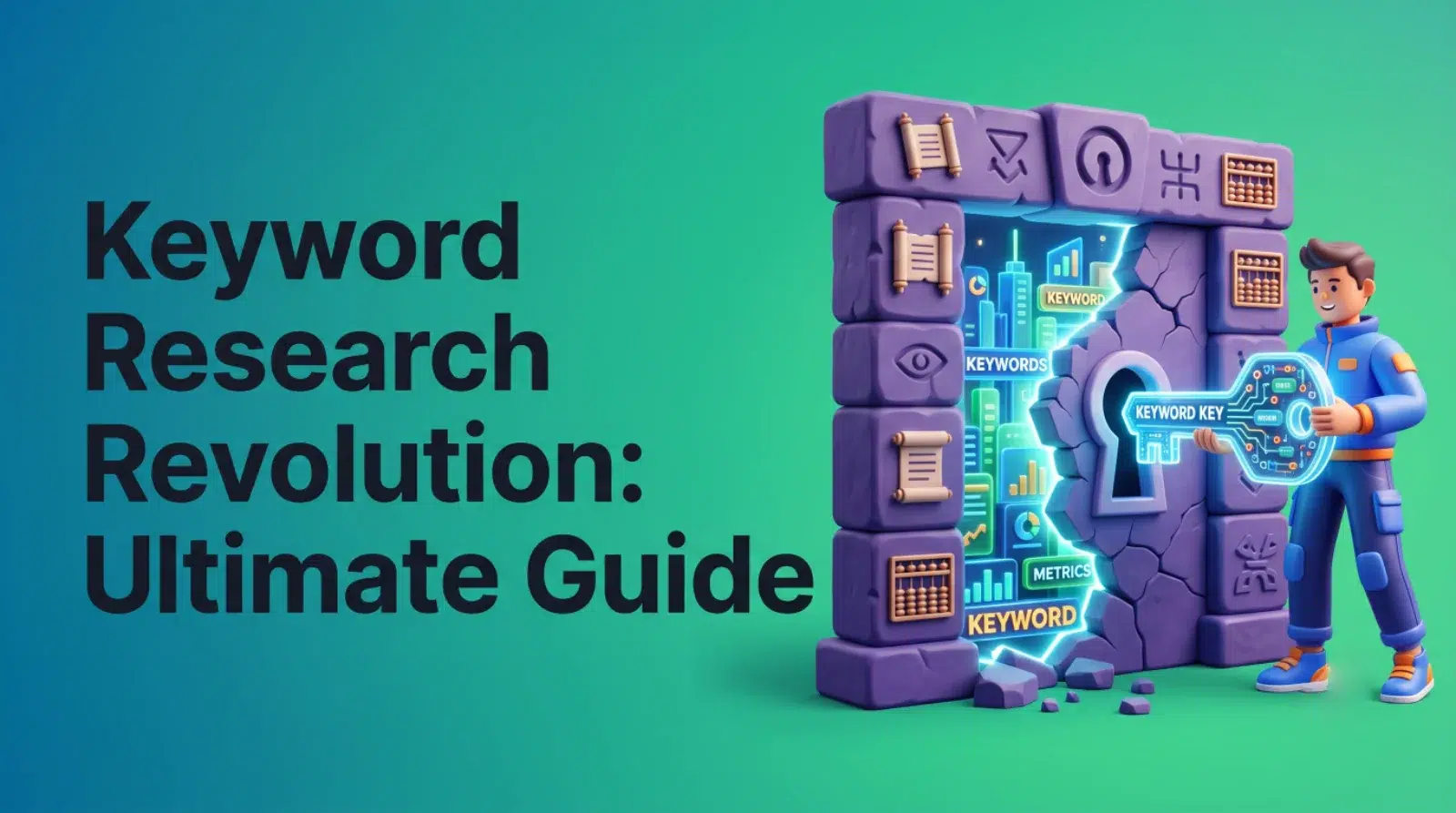
The digital landscape is constantly evolving, and staying ahead requires a proactive approach, especially when it comes to SEO. The Keyword Research Revolution is about more than just finding popular search terms; it’s about understanding user intent, leveraging data-driven insights, and crafting content that resonates deeply with your target audience. This guide will provide you with the knowledge and tools you need to master the art of keyword research and drive meaningful results for your business in 2026.
The Keyword Research Revolution signifies a pivotal shift in how we approach SEO. It moves beyond simply identifying high-volume keywords. The focus is now on understanding the underlying user intent and the context in which searches are performed. This transformation acknowledges that search engines like Google prioritize delivering the most relevant and helpful results to users, demanding a more nuanced and strategic approach to keyword targeting.
The evolution of keyword research is marked by a departure from the “exact match” era to the age of semantic search. Early SEO strategies heavily relied on targeting specific keywords with laser-like precision. Today, algorithms are sophisticated enough to understand the meaning and relationships between words, allowing for a broader, more natural language-based approach. This shift demands a greater emphasis on creating comprehensive and valuable content that addresses the user’s overall needs, not just matching individual keywords.
Why does this matter for your SEO strategy? Because increased relevance translates directly into increased traffic. By understanding the nuances of user intent and crafting content that meets their needs, you’ll not only attract more visitors but also improve engagement metrics like time on page and bounce rate. This sends positive signals to search engines, boosting your SEO ranking and visibility. Our team at SkySol Media has witnessed firsthand how adopting this approach has led to significant improvements in organic traffic for our clients.
Effective keyword research requires the right tools. Fortunately, a plethora of options are available, ranging from free to premium platforms. Choosing the right tool depends on your budget, needs, and level of expertise.
Here’s a handy comparison table:
| Tool | Cost | Key Features | Best For |
|---|---|---|---|
| Google Keyword Planner | Free (with Google Account) | Keyword suggestions, search volume data, traffic estimates | Beginners, initial research, Google Ads users |
| Ubersuggest | Free/Paid | Keyword suggestions, content ideas, backlink analysis | Beginners, intermediate users, comprehensive overview |
| Google Trends | Free | Trending topics, seasonal keywords, regional data | Identifying trends, creating timely content |
Uncovering hidden keyword gems requires a systematic approach. Here’s a step-by-step guide to help you identify untapped opportunities and gain a competitive edge.
[IMAGE: A mind map illustrating the process of brainstorming seed keywords and expanding them into long-tail keywords.]
“The best keywords are the ones your competitors haven’t thought of yet. Dig deep, understand your audience, and find the terms that resonate with their specific needs.” – John Smith, SEO Expert
Understanding what your competitors are doing is essential for developing a successful keyword strategy. Competitive keyword analysis allows you to identify their strengths and weaknesses, uncover opportunities they’ve missed, and adapt their strategies to your own business.
Selecting the right keywords is a critical step in the Keyword Research Revolution. Consider these factors to make informed decisions and maximize your SEO potential.
[IMAGE: A flowchart illustrating the decision-making process for choosing the right keywords, considering relevance, search volume, keyword difficulty, and user intent.]
Once you’ve identified your target keywords, it’s time to optimize your content. Effective content optimization involves strategically incorporating keywords into your website while maintaining natural language and readability.
Despite its importance, keyword research is often misunderstood. Let’s debunk some common myths and set the record straight.
One crucial statistic to remember:
Only 5% of keywords drive 95% of all search traffic. Identifying and targeting these high-impact keywords is essential for maximizing your SEO efforts.
Tracking your keyword performance is essential for understanding what’s working and what’s not. Monitoring your progress allows you to make data-driven decisions and optimize your strategy for better results.
Ready to take your keyword research skills to the next level? Explore these advanced techniques to gain a competitive edge.
Let’s examine some real-world examples of how the Keyword Research Revolution has helped businesses achieve significant results.
A local bakery implemented a new keyword strategy focused on long-tail keywords related to specific types of pastries and cakes. By targeting these niche terms, they were able to attract highly qualified traffic and increase their website traffic by 50% in just six months.
A health and wellness blog conducted a competitive keyword analysis and identified a keyword gap related to a specific type of diet. They created a comprehensive guide on the topic, optimized it with relevant keywords, and built high-quality backlinks. As a result, they achieved a #1 ranking for the competitive keyword and saw a significant increase in organic traffic.
The Keyword Research Revolution is an ongoing process, and staying ahead of the curve requires adapting to emerging trends and technologies.
Ready to revolutionize your keyword strategy? Follow this checklist to get started:
By embracing the Keyword Research Revolution, you can unlock the full potential of your SEO efforts and drive meaningful results for your business. We at SkySol Media are here to help you navigate this evolving landscape and achieve your online goals.
Q: What is the most important factor in keyword research?
A: While many factors contribute to successful keyword research, understanding user intent is paramount. Aligning your keywords and content with what users are actually searching for is crucial for attracting relevant traffic and achieving your business goals.
Q: How often should I update my keyword research?
A: Keyword research is not a one-time task. It should be an ongoing process that you revisit regularly, ideally every 3-6 months. This allows you to adapt to changes in search engine algorithms, user behavior, and competitive landscapes.
Q: What are some common mistakes to avoid in keyword research?
A: Common mistakes include neglecting user intent, focusing solely on high-volume keywords, ignoring the competition, and failing to track your results. Avoid these pitfalls by taking a holistic approach to keyword research and continuously optimizing your strategy.
Q: Can I do keyword research for free?
A: Yes, several free tools are available for keyword research, such as Google Keyword Planner and Google Trends. While these tools may not offer the same depth of data as paid options, they can be a valuable starting point for beginners or those with limited budgets.
Q: How important are long-tail keywords?
A: Long-tail keywords are extremely important, especially for targeting specific needs and increasing conversion rates. While they may have lower search volume than broader keywords, they often attract highly qualified traffic that is more likely to convert into customers.
Q: What is keyword difficulty and how do I assess it?
A: Keyword difficulty is a metric that estimates how difficult it will be to rank for a particular keyword. Several tools, such as SEMrush and Ahrefs, provide keyword difficulty scores. Consider your website’s authority, backlink profile, and content quality when evaluating keyword difficulty.
Q: How do I optimize my content with keywords?
A: Optimize your content by strategically incorporating keywords into your titles, headings, and body text. Maintain natural language and readability, and avoid keyword stuffing. Also, optimize your meta descriptions, alt tags, and URLs with relevant keywords.
Don’t forget to share it

We’ll Design & Develop a Professional Website Tailored to Your Brand
Enjoy this post? Join our newsletter
Newsletter
Related Articles
Understanding SEO in 2025: Key Strategies for Success

The Ultimate SEO Guide for Growing Your Trading Business Online

Drive More Organic Traffic to Your Trading Platform with These Proven Tactics

Optimized for Success: How SkySol Media Builds SEO-First Websites

Boost Your Google Rankings: Proven SEO Tactics for Modern Brands

How to Write SEO-Friendly Blog Posts That Google Loves
SkySol Media
We firmly believe that the internet should be available and accessible to anyone, and are committed to providing a website that is accessible to the widest possible audience, regardless of circumstance and ability.
To fulfill this, we aim to adhere as strictly as possible to the World Wide Web Consortium’s (W3C) Web Content Accessibility Guidelines 2.1 (WCAG 2.1) at the AA level. These guidelines explain how to make web content accessible to people with a wide array of disabilities. Complying with those guidelines helps us ensure that the website is accessible to all people: blind people, people with motor impairments, visual impairment, cognitive disabilities, and more.
This website utilizes various technologies that are meant to make it as accessible as possible at all times. We utilize an accessibility interface that allows persons with specific disabilities to adjust the website’s UI (user interface) and design it to their personal needs.
Additionally, the website utilizes an AI-based application that runs in the background and optimizes its accessibility level constantly. This application remediates the website’s HTML, adapts Its functionality and behavior for screen-readers used by the blind users, and for keyboard functions used by individuals with motor impairments.
If you’ve found a malfunction or have ideas for improvement, we’ll be happy to hear from you. You can reach out to the website’s operators by using the following email
Our website implements the ARIA attributes (Accessible Rich Internet Applications) technique, alongside various different behavioral changes, to ensure blind users visiting with screen-readers are able to read, comprehend, and enjoy the website’s functions. As soon as a user with a screen-reader enters your site, they immediately receive a prompt to enter the Screen-Reader Profile so they can browse and operate your site effectively. Here’s how our website covers some of the most important screen-reader requirements, alongside console screenshots of code examples:
Screen-reader optimization: we run a background process that learns the website’s components from top to bottom, to ensure ongoing compliance even when updating the website. In this process, we provide screen-readers with meaningful data using the ARIA set of attributes. For example, we provide accurate form labels; descriptions for actionable icons (social media icons, search icons, cart icons, etc.); validation guidance for form inputs; element roles such as buttons, menus, modal dialogues (popups), and others. Additionally, the background process scans all the website’s images and provides an accurate and meaningful image-object-recognition-based description as an ALT (alternate text) tag for images that are not described. It will also extract texts that are embedded within the image, using an OCR (optical character recognition) technology. To turn on screen-reader adjustments at any time, users need only to press the Alt+1 keyboard combination. Screen-reader users also get automatic announcements to turn the Screen-reader mode on as soon as they enter the website.
These adjustments are compatible with all popular screen readers, including JAWS and NVDA.
Keyboard navigation optimization: The background process also adjusts the website’s HTML, and adds various behaviors using JavaScript code to make the website operable by the keyboard. This includes the ability to navigate the website using the Tab and Shift+Tab keys, operate dropdowns with the arrow keys, close them with Esc, trigger buttons and links using the Enter key, navigate between radio and checkbox elements using the arrow keys, and fill them in with the Spacebar or Enter key.Additionally, keyboard users will find quick-navigation and content-skip menus, available at any time by clicking Alt+1, or as the first elements of the site while navigating with the keyboard. The background process also handles triggered popups by moving the keyboard focus towards them as soon as they appear, and not allow the focus drift outside it.
Users can also use shortcuts such as “M” (menus), “H” (headings), “F” (forms), “B” (buttons), and “G” (graphics) to jump to specific elements.
We aim to support the widest array of browsers and assistive technologies as possible, so our users can choose the best fitting tools for them, with as few limitations as possible. Therefore, we have worked very hard to be able to support all major systems that comprise over 95% of the user market share including Google Chrome, Mozilla Firefox, Apple Safari, Opera and Microsoft Edge, JAWS and NVDA (screen readers).
Despite our very best efforts to allow anybody to adjust the website to their needs. There may still be pages or sections that are not fully accessible, are in the process of becoming accessible, or are lacking an adequate technological solution to make them accessible. Still, we are continually improving our accessibility, adding, updating and improving its options and features, and developing and adopting new technologies. All this is meant to reach the optimal level of accessibility, following technological advancements. For any assistance, please reach out to