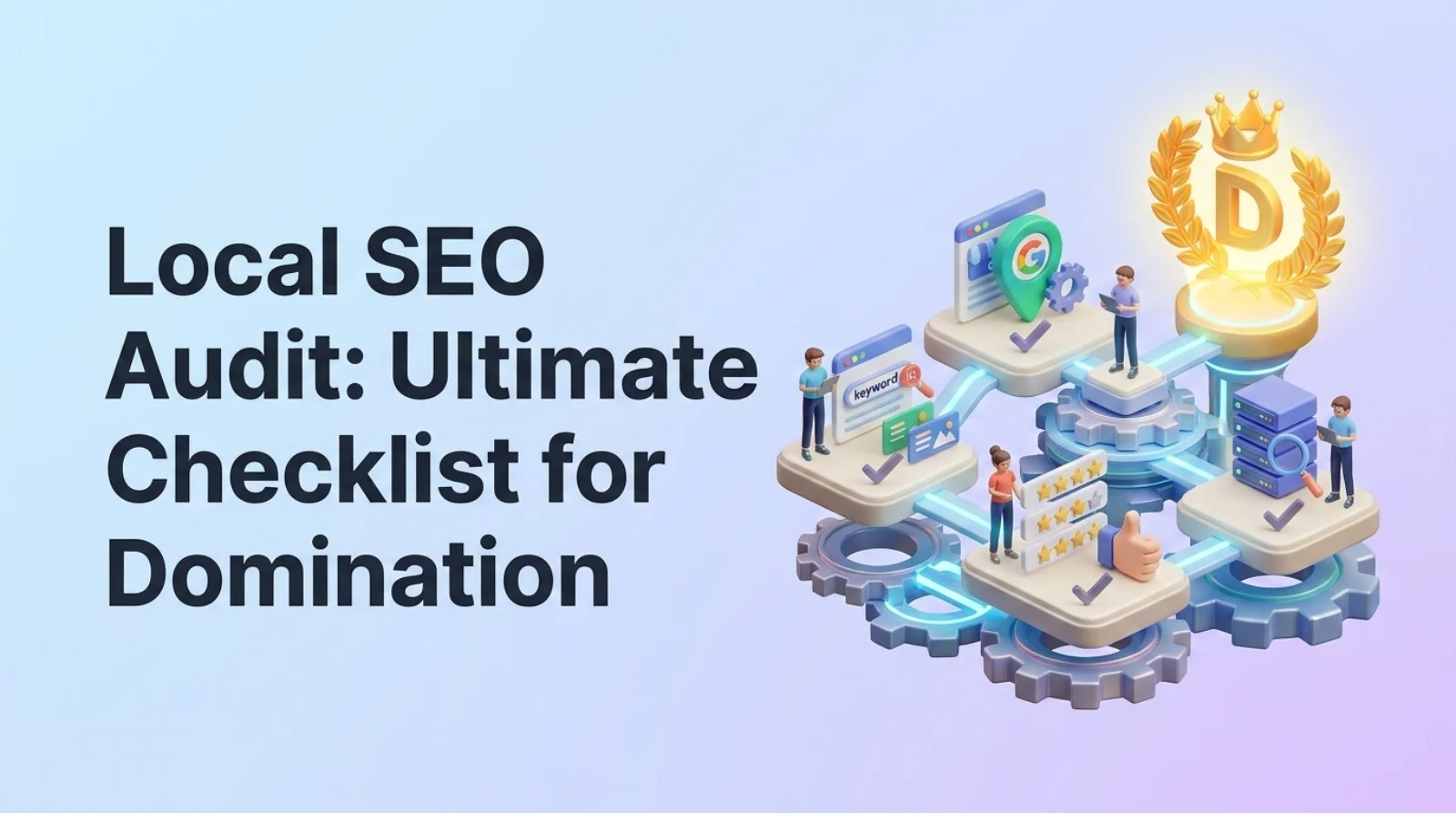
Is Your Business a Ghost Town Online? The Problem of Local Invisibility
Are you pouring your heart and soul into your local business, only to feel like you’re invisible online? In today’s digital age, a strong online presence is no longer optional—it’s essential for survival. A successful local SEO audit can be the key to unlocking your business’s full potential.
The Frustration of Being Unfindable
Imagine potential customers searching for your services in your area, but your business doesn’t even show up in the search results. It’s frustrating, isn’t it? You know you offer quality products or services, but you’re missing out on valuable opportunities because people can’t find you when they need you most. This is a common problem we see with businesses before conducting a thorough local SEO audit.
Why Local SEO Matters: Attracting Nearby Customers
Local SEO is all about optimizing your online presence to attract customers in your geographic area. When someone searches for “best pizza near me” or “plumbers in [City Name],” you want your business to be among the top results. By focusing on local search ranking, you can connect with customers who are actively looking for what you offer, driving more traffic, leads, and sales.
Common Symptoms of Local SEO Neglect: A Quick Self-Assessment
Here are some telltale signs that your local SEO needs some serious attention:
- Reduced website traffic from local searches.
- Low ranking for relevant local keywords.
- Minimal customer inquiries or foot traffic from online searches.
- Inaccurate or inconsistent business information online.
If any of these sound familiar, don’t worry! This local SEO audit checklist will guide you through the steps you need to take to improve your online visibility and attract more local customers.
The Ultimate Local SEO Audit Checklist: Your Visibility Roadmap
This comprehensive checklist will help you perform a thorough local SEO audit, identify areas for improvement, and develop a winning strategy to boost your local search rankings. We’ve seen many businesses transform their online presence by following these steps.
Why a Checklist Approach is Crucial for Success
A checklist provides a structured and organized way to approach your local SEO efforts. It ensures that you don’t miss any crucial steps and helps you track your progress along the way. Think of it as a roadmap to local search ranking success.
Overview of the Audit Process: From Discovery to Implementation
The audit process involves several key stages:
1. Discovery: Identifying your current online presence and areas for improvement.
2. Optimization: Implementing changes to improve your local SEO.
3. Monitoring: Tracking your progress and making adjustments as needed.
4. Maintenance: Ensuring your online information remains accurate and consistent.
This checklist will cover each of these stages in detail, providing you with the knowledge and tools you need to succeed. The local SEO tools mentioned throughout will aid you in this process.
Step 1: Claim and Optimize Your Google Business Profile (GBP)
Your Google Business Profile (formerly Google My Business) is the foundation of your local SEO strategy. It’s often the first thing potential customers see when they search for your business online.
The Cornerstone of Local SEO: Why GBP is Essential
Your GBP listing is your online storefront. It provides potential customers with essential information about your business, including your name, address, phone number, website, hours of operation, and customer reviews. A well-optimized GBP listing can significantly improve your local search ranking.
Claiming Your GBP Listing: A Step-by-Step Guide
1. Go to Google Maps and search for your business name and address.
[IMAGE: Screenshot of Google Maps search results]
2. If your business appears, click on it. If not, click “Add your business to Google.”
3. Follow the prompts to claim or create your GBP listing.
4. You’ll need to verify your business, usually via postcard or phone call.
[IMAGE: Screenshot of the GBP verification process]
We once had a client in Toronto who hadn’t claimed their GBP listing. After we helped them claim and optimize it, they saw a significant increase in website traffic and phone calls.
Optimizing Your GBP Profile: Key Fields to Focus On
Once you’ve claimed your listing, it’s time to optimize it for maximum visibility. Here are the key fields to focus on:
- Business name, address, phone number (NAP consistency).
- Accurate business category selection.
- Compelling business description with relevant keywords.
- High-quality photos and videos showcasing your business.
- Regularly posting updates, offers, and events.
Here’s a more detailed look:
Business Name, Address, Phone Number (NAP Consistency): This is fundamental. Ensure your NAP information is accurate and consistent across your website, GBP listing, and all other online directories. Inconsistencies can confuse search engines and negatively impact your local search ranking.
Accurate Business Category Selection: Choose the most relevant categories for your business. Google allows you to select a primary category and several secondary categories. Select categories that accurately reflect what your business offers.
Compelling Business Description with Relevant Keywords: Craft a clear, concise, and engaging business description that highlights your unique selling points and includes relevant keywords. Think about what makes your business special and incorporate that into your description. This is a great opportunity to use local keyword research to inform your writing.
High-Quality Photos and Videos Showcasing Your Business: Visual content is crucial for attracting attention and showcasing your business. Upload high-quality photos of your storefront, products, team, and services. Videos can also be very effective in engaging potential customers.
Regularly Posting Updates, Offers, and Events: Keep your GBP listing fresh and engaging by regularly posting updates, offers, and events. This shows Google that your business is active and provides valuable information to potential customers. It’s also a great way to use local keyword research to tailor your posts.
“Your Google Business Profile is your digital handshake. Make it count.” – John Lincoln, Ignite Visibility
Step 2: Conquer Local Keyword Research
Keyword research is the foundation of any successful SEO strategy, and it’s especially important for local businesses. Understanding what your target customers are searching for is essential for optimizing your online presence.
Understanding Local Search Intent: What Are Customers Searching For?
Local search intent refers to the specific needs and desires of customers who are searching for local businesses. Are they looking for a specific product or service? Do they need immediate assistance? Understanding their intent will help you tailor your keyword strategy and content to meet their needs. It’s a key part of a thorough SEO audit for local business.
Identifying Relevant Keywords: Tools and Techniques
There are several tools and techniques you can use to identify relevant keywords for your local business:
- Using Google Keyword Planner for local keyword ideas.
- Analyzing competitor keywords.
- Leveraging long-tail keywords and question-based queries.
Here’s a more detailed look at each:
Using Google Keyword Planner for Local Keyword Ideas: Google Keyword Planner is a free tool that can help you discover new keyword ideas and estimate their search volume. You can use it to target specific geographic areas and identify keywords that are relevant to your business.
Analyzing Competitor Keywords: Take a look at your competitors’ websites and GBP listings to see what keywords they’re targeting. This can give you valuable insights into the terms that are driving traffic to their businesses. Many local SEO tools can assist with this.
Leveraging Long-Tail Keywords and Question-Based Queries: Long-tail keywords are longer, more specific phrases that people use when they’re closer to making a purchase. Question-based queries are questions that people ask when they’re looking for information or solutions. Targeting these types of keywords can help you attract highly qualified leads.
Integrating Keywords Strategically: Where to Use Them
Once you’ve identified your target keywords, it’s time to integrate them strategically into your online presence:
- Website title tags and meta descriptions.
- GBP profile description and posts.
- Content on your website, including blog posts and service pages.
Website Title Tags and Meta Descriptions: These are important elements that appear in search results. Use your target keywords in your title tags and meta descriptions to improve your visibility and click-through rates.
GBP Profile Description and Posts: Incorporate your target keywords into your GBP profile description and posts to help Google understand what your business is about and improve your local search ranking.
Content on Your Website, Including Blog Posts and Service Pages: Create high-quality, informative content that incorporates your target keywords naturally. This will not only improve your search engine rankings but also provide valuable information to your potential customers.
Step 3: Master On-Page SEO for Local
On-page SEO refers to the practice of optimizing individual web pages to rank higher in search results. It’s a crucial aspect of local SEO, as it helps search engines understand the relevance of your website to local search queries.
Optimizing Website Content for Local Search
- Incorporating local keywords into page titles and headings.
- Creating location-specific content (e.g., “Serving [City Name]”).
- Using schema markup to provide structured data to search engines.
Let’s delve deeper:
Incorporating Local Keywords into Page Titles and Headings: Use your target keywords in your page titles and headings to signal to search engines the topic of your page. For example, if you’re a plumber in Phoenix, you might use a title tag like “Phoenix Plumbing Services | [Your Business Name]”.
Creating Location-Specific Content (e.g., “Serving [City Name]”): Create content that specifically targets your local area. This could include blog posts about local events, service pages that mention the areas you serve, or testimonials from local customers. This helps improve on-page SEO for local.
Using Schema Markup to Provide Structured Data to Search Engines: Schema markup is code that you can add to your website to provide search engines with more information about your business. This can include your business name, address, phone number, hours of operation, and customer reviews.
[IMAGE: Example of schema markup code]
Ensuring Mobile-Friendliness: A Must-Have for Local
With the majority of local searches now happening on mobile devices, it’s crucial that your website is mobile-friendly. This means that your website should be responsive, meaning it adapts to different screen sizes and devices.
Website Speed and Performance: Improving User Experience
Website speed and performance are also important factors for local SEO. A slow-loading website can frustrate users and lead to higher bounce rates, which can negatively impact your search engine rankings. Optimize your images, minify your code, and use a caching plugin to improve your website’s speed and performance.
Step 4: Build and Maintain Local Citations
Local citations are online mentions of your business name, address, and phone number (NAP). They’re an important ranking factor for local SEO, as they help search engines verify your business’s information and improve its visibility in local search results.
What are Local Citations and Why Do They Matter?
Citations act like votes of confidence for your business. The more consistent and accurate citations you have, the more trustworthy your business appears to search engines. This is a key component of off-page SEO for local.
Finding Citation Opportunities: Directories and Beyond
- Submitting your business to major directories like Yelp and Yellow Pages.
- Identifying niche directories relevant to your industry.
- Checking for existing citations and correcting inaccuracies.
Submitting Your Business to Major Directories Like Yelp and Yellow Pages: These directories are well-known and trusted by search engines. Submitting your business to these directories can help improve your online visibility and drive traffic to your website.
Identifying Niche Directories Relevant to Your Industry: Look for directories that are specific to your industry. For example, if you’re a restaurant, you might submit your business to restaurant directories like OpenTable and Zomato.
Checking for Existing Citations and Correcting Inaccuracies: Use a citation management tool to check for existing citations and correct any inaccuracies. This will help ensure that your NAP information is consistent across the web. A citation audit is crucial for this.
Maintaining Citation Consistency: Ensuring Accurate NAP Information
Consistency is key when it comes to local citations. Make sure your NAP information is accurate and consistent across all of your online listings.
- Using a citation management tool to track and update listings.
Here’s an example of a basic HTML table for your citation audit:
| Directory |
Business Name |
Address |
Phone Number |
Website |
Consistent? |
| Yelp |
SkySol Media |
123 Main St, Anytown, USA |
555-123-4567 |
https://skysolmedia.com |
Yes |
| Yellow Pages |
SkySol Media |
123 Main St, Anytown, USA |
555-123-4567 |
https://skysolmedia.com |
Yes |
| Foursquare |
Sky Sol Media |
123 Main St, Anytown |
555-123-4567 |
https://skysolmedia.com |
No |
Step 5: Generate and Manage Online Reviews
Online reviews are a powerful form of social proof that can influence potential customers’ decisions. Positive reviews can attract new customers, while negative reviews can deter them.
The Power of Social Proof: Why Reviews Influence Customers
Studies show that a large percentage of consumers trust online reviews as much as personal recommendations. Encouraging customers to leave reviews is essential for building trust and credibility.
Encouraging Customers to Leave Reviews: Strategies and Tactics
- Asking for reviews after a positive customer experience.
- Making it easy for customers to leave reviews (e.g., providing direct links).
Asking for Reviews After a Positive Customer Experience: The best time to ask for a review is immediately after a customer has had a positive experience with your business. This could be after they’ve made a purchase, received a service, or had a positive interaction with your staff.
Making it Easy for Customers to Leave Reviews (e.g., Providing Direct Links): Make it as easy as possible for customers to leave reviews by providing direct links to your review profiles on Google, Yelp, and other relevant platforms.
Responding to Reviews: Addressing Both Positive and Negative Feedback
Responding to reviews, both positive and negative, shows that you value your customers’ feedback and are committed to providing excellent service. Thank customers for positive reviews and address any concerns raised in negative reviews.
Step 6: Track Your Progress and Measure Results
Tracking your progress and measuring your results is essential for understanding the effectiveness of your local SEO strategy and making adjustments as needed.
Setting Up Analytics: Monitoring Key Metrics
- Tracking website traffic from local search.
- Monitoring keyword rankings.
- Measuring conversions and leads.
Tracking Website Traffic from Local Search: Use Google Analytics to track the amount of traffic you’re receiving from local search. This will give you an idea of how well your local SEO efforts are working.
Monitoring Keyword Rankings: Use a keyword tracking tool to monitor your rankings for your target keywords. This will help you identify areas where you need to improve your optimization efforts.
Measuring Conversions and Leads: Track the number of conversions and leads you’re generating from local search. This could include phone calls, form submissions, or online sales.
Using Google Search Console: Identifying and Fixing Technical Issues
Google Search Console is a free tool that can help you identify and fix technical issues that may be affecting your website’s performance in search results. Use it to check for crawl errors, mobile usability issues, and other potential problems.
Adjusting Your Strategy Based on Data: Continuous Improvement
Regularly review your analytics data and make adjustments to your local SEO strategy as needed. The local SEO tools can aid in this process. SEO is an ongoing process, so it’s important to stay up-to-date with the latest trends and best practices.
Troubleshooting Common Local SEO Problems
Even with the best strategies, you might encounter challenges. Here’s how to tackle common issues:
Dealing with Duplicate Listings: How to Resolve Them
Duplicate listings can confuse search engines and negatively impact your local search ranking. Identify and claim any duplicate listings and then merge or remove them. Contact Google support if necessary.
Addressing Negative Reviews: Turning a Bad Experience into an Opportunity
Don’t ignore negative reviews. Respond promptly and professionally, acknowledging the customer’s concerns and offering a solution. This shows that you care about your customers and are willing to make things right. We’ve seen instances where addressing a negative review led to a customer updating it to a positive one!
Recovering from a Google Penalty: Steps to Take
If your website has been penalized by Google, identify the cause of the penalty and take steps to fix it. This may involve removing spammy links, improving your website’s content, or addressing technical issues. Submit a reconsideration request to Google once you’ve made the necessary changes.
Recap: Your Local SEO Success Story
Congratulations! You’ve taken the first steps toward local SEO domination. By following this checklist, you’ve laid the groundwork for improving your online visibility, attracting more local customers, and growing your business.
Next Steps: Maintaining and Expanding Your Local Presence
Remember that local SEO is an ongoing process. Continue to monitor your progress, make adjustments as needed, and stay up-to-date with the latest trends and best practices. Consider expanding your local presence by exploring new marketing channels, such as social media advertising and local partnerships. When our team in Dubai is consulted for local SEO analysis, they often find the businesses require regular consultation to maintain their position.
FAQ Section
Q: How long does it take to see results from a local SEO audit?
A: The timeline for seeing results from a local SEO audit can vary depending on several factors, including the competitiveness of your industry and the current state of your online presence. Generally, you can expect to see noticeable improvements within a few months of implementing the recommendations from your audit.
Q: How often should I perform a local SEO audit?
A: We recommend performing a local SEO audit at least once a year, or more frequently if you’re experiencing significant changes in your business or industry. Regular audits will help you stay on top of the latest trends and best practices and ensure that your online presence remains optimized for local search.
Q: What are the most important ranking factors for local SEO in 2026?
A: While Google’s algorithm is constantly evolving, some of the most important ranking factors for local SEO in 2026 include:
- GBP optimization: A complete and accurate GBP listing is crucial for visibility in local search results.
- Local citations: Consistent and accurate citations from reputable sources help establish your business’s authority.
- Online reviews: Positive reviews from satisfied customers can significantly boost your rankings and attract new customers.
- On-page SEO: Optimizing your website content for local keywords helps search engines understand the relevance of your site to local search queries.
- Mobile-friendliness: A mobile-friendly website is essential for providing a positive user experience and ranking well in mobile search results.
Q: Can I perform a local SEO audit myself, or should I hire a professional?
A: While it’s possible to perform a basic local SEO audit yourself using the checklist provided in this article, hiring a professional local SEO agency like SkySol Media can provide you with a more in-depth analysis and customized recommendations. A professional agency has the expertise and resources to identify and address complex SEO issues and develop a comprehensive strategy to improve your online visibility and attract more local customers.