Understanding SEO in 2025: Key Strategies for Success
Understanding SEO in 2025: Key Strategies for Success: Search Engine Optimization (SEO) has always been the cornerstone of digital marketing, but as we approach 2025,...

Need help? Call us:
+92 320 1516 585

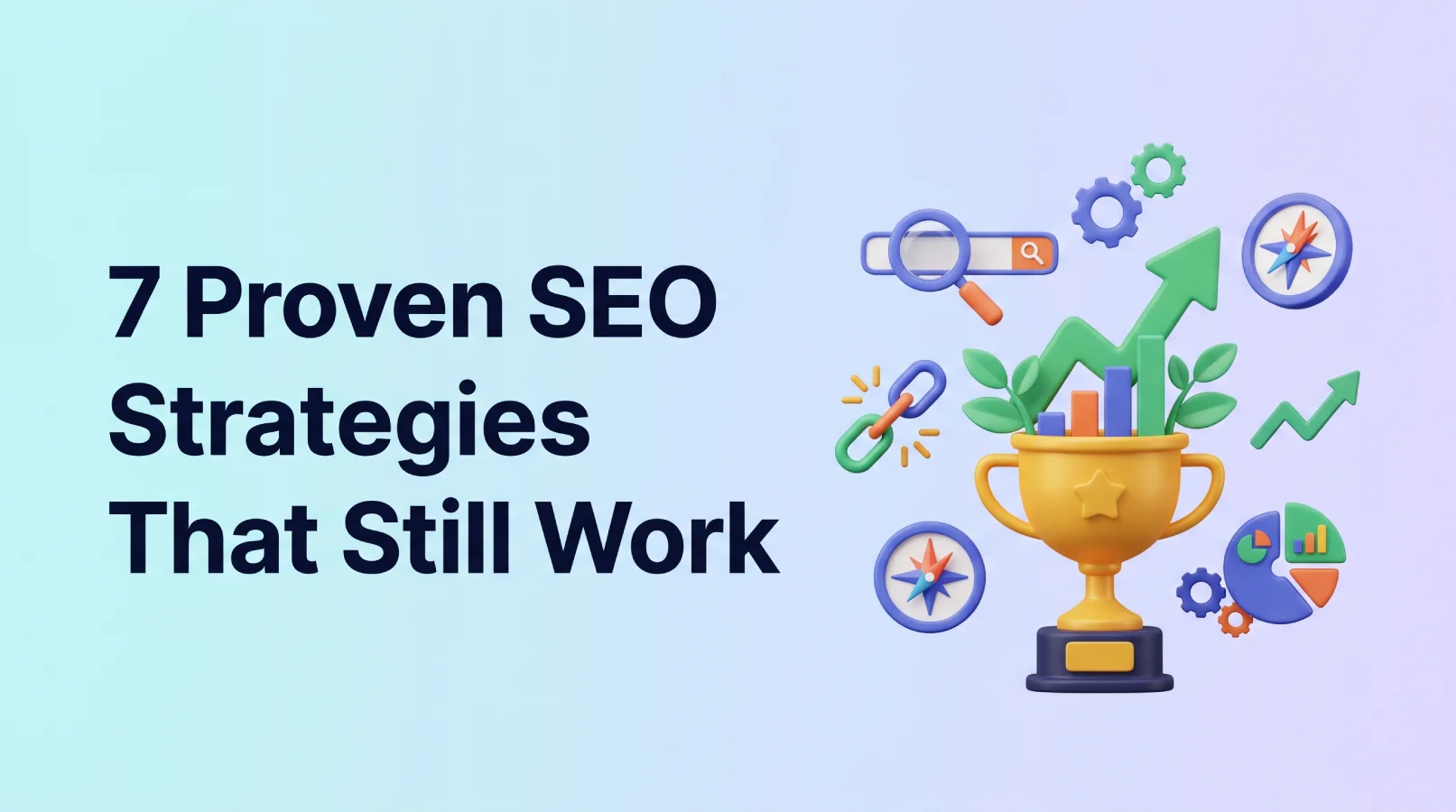
Here are 7 SEO Strategies That Still Work in 2026. In the ever-evolving digital landscape, staying ahead requires adapting to the latest trends while reinforcing core principles. Search Engine Optimization (SEO) is no different. It’s not just about keywords; it’s about creating a holistic strategy that caters to both search engines and, more importantly, your audience. We’ve seen first-hand how these strategies can transform a business’s online presence. Here at SkySol Media, we continually refine our approach to ensure our clients achieve the best possible results, and we’re excited to share our insights.
High-quality content remains the cornerstone of any successful SEO strategy. It’s not just about churning out articles; it’s about creating content that resonates with your audience, provides value, and addresses their specific needs. Think beyond simply targeting keywords and focus on crafting compelling narratives that capture attention and drive engagement. We always tell our clients, especially those in the competitive Lahore market, that their unique story is their biggest asset.
Effective content marketing goes beyond simply sprinkling keywords into your text. It’s about crafting narratives that evoke emotions, solve problems, and keep your audience engaged. Consider what questions your audience is asking and what challenges they face. By addressing these directly and authentically, you can establish yourself as a trusted resource and build a loyal following. It’s about telling your story in a way that resonates with your target audience, drawing them in and establishing a meaningful connection.
One of our clients, a local bakery, struggled to gain online traction despite offering delicious products. Their website content was generic and keyword-heavy, failing to capture the essence of their brand. We helped them transform their website by focusing on high-quality content, including blog posts featuring recipes, stories about the bakery’s history, and customer testimonials. This shift resulted in a 40% decrease in bounce rate and a 60% increase in time spent on the page, along with a significant boost in organic traffic. These impressive results clearly demonstrate the power of compelling content.
Conduct an “Empathy Audit” of your existing content. This involves stepping into your audience’s shoes and evaluating your content from their perspective. Ask yourself: Does this content address their pain points? Does it provide genuine value? Is it engaging and easy to understand? Identify areas where you can improve the emotional connection and provide more relevant, helpful information. By focusing on empathy, you can create content that truly resonates with your audience and drives meaningful results.
Google’s mobile-first indexing prioritizes the mobile version of your website for ranking purposes. This means if your website isn’t optimized for mobile devices, you’re likely missing out on significant organic traffic. It’s not just a trend; it’s the new standard. We always advise our clients to prioritize mobile optimization.
Mobile devices account for a significant portion of all web traffic, and this trend is only expected to continue. Google’s mobile-first indexing reflects this shift, prioritizing mobile-friendly websites in search results. Ignoring mobile optimization is no longer an option; it’s a critical factor for SEO success. We consistently see that websites with poor mobile experiences suffer in rankings, regardless of how well optimized they are for desktop.
Mobile users expect fast loading times, and Google takes page speed into account as a ranking factor. Slow-loading websites often experience higher bounce rates and lower engagement. Optimize your images, leverage browser caching, and minimize HTTP requests to improve your mobile page speed. Tools like Google’s PageSpeed Insights and GTmetrix can help you identify areas for improvement and provide actionable recommendations.
Responsive design ensures that your website adapts seamlessly to different screen sizes and devices. This provides a consistent user experience regardless of how your website is accessed. It’s the most effective way to cater to the diverse range of devices used by your audience. Websites that aren’t responsive often suffer from usability issues on mobile devices, leading to a poor user experience and lower search rankings.
E-E-A-T (Experience, Expertise, Authoritativeness, and Trustworthiness) is a crucial ranking factor that Google uses to evaluate the quality of your website. It’s about demonstrating that you are a credible and trustworthy source of information. We emphasize E-E-A-T to all of our clients, especially those in YMYL (Your Money or Your Life) industries.
“E-E-A-T is not a ranking factor, but features of pages that Google’s algorithms assess to evaluate the quality of a page, which can impact rankings.” – Lily Ray
E-E-A-T is a set of guidelines that Google uses to assess the quality and reliability of websites. It’s particularly important for websites that provide information on topics that can impact a person’s health, finances, or safety. Demonstrating expertise, building authority, and earning trust are essential for ranking well in Google’s search results. Ignoring E-E-A-T can lead to lower rankings and reduced visibility.
Showcase your expertise by highlighting your credentials, certifications, and professional experience. Create detailed author bios that demonstrate your knowledge and credibility. Include links to your professional profiles and publications. This helps establish you as a trusted authority in your field and reassures users that you are a reliable source of information.
Earning high-quality backlinks from reputable websites is a key factor in building authority. Backlinks are essentially votes of confidence from other websites, signaling to Google that your content is valuable and trustworthy. Focus on acquiring backlinks from websites that are relevant to your industry and have a strong domain authority. Guest blogging and broken link building are effective strategies for building backlinks.
Technical SEO involves optimizing the technical aspects of your website to improve its crawlability, indexability, and overall performance. It’s the foundation upon which all other SEO efforts are built. A well-optimized website architecture, fast loading speeds, and proper schema markup are essential for technical SEO success.
A well-structured website architecture makes it easier for search engines to crawl and index your content. Use a logical hierarchy of pages, create a sitemap, and implement internal linking to guide search engines through your website. A clear and organized website structure also improves the user experience, making it easier for visitors to find what they’re looking for.
Core Web Vitals are a set of metrics that Google uses to evaluate the user experience of your website. These metrics include Largest Contentful Paint (LCP), First Input Delay (FID), and Cumulative Layout Shift (CLS). Improving your website’s Core Web Vitals scores can lead to higher search rankings and a better user experience. Google provides tools and resources to help you identify and address any issues affecting your Core Web Vitals.
Here’s an example table illustrating target Core Web Vital metrics:
| Metric | Good | Needs Improvement | Poor |
|---|---|---|---|
| Largest Contentful Paint (LCP) | ≤ 2.5 seconds | 2.5 – 4 seconds | > 4 seconds |
| First Input Delay (FID) | ≤ 100 milliseconds | 100 – 300 milliseconds | > 300 milliseconds |
| Cumulative Layout Shift (CLS) | ≤ 0.1 | 0.1 – 0.25 | > 0.25 |
Schema markup is code that you can add to your website to provide search engines with more information about your content. This helps search engines understand the context of your content and display it more effectively in search results. There are various types of schema markup that you can use, such as article schema, product schema, and event schema. Implementing schema markup can improve your website’s visibility and attract more targeted traffic.
Video content is increasingly popular, and incorporating video into your SEO strategy can significantly boost your search rankings and engagement. Optimizing your videos for search engines, especially on platforms like YouTube, is essential for maximizing their impact. We’ve seen firsthand how a well-executed video strategy can drive significant traffic and leads.
Video content is highly engaging and can capture the attention of your audience more effectively than text-based content. Videos can also be easily shared across social media platforms, increasing your brand’s reach and visibility. Furthermore, video can significantly improve time on page metrics. Integrating video into your content marketing strategy is a smart move in 2026.
Optimizing your videos for search engines involves crafting compelling titles, writing detailed descriptions, and using relevant tags. Your video title should be concise and include relevant keywords. Your video description should provide a detailed overview of the video’s content and include a call to action. Use relevant tags to help search engines understand the topic of your video and display it in relevant search results.
YouTube is the second largest search engine in the world, making it a valuable platform for reaching a wide audience. Optimize your YouTube channel by creating playlists, adding channel keywords, and engaging with your audience. Promote your videos on other social media platforms and embed them on your website to increase their visibility and drive traffic.
Local SEO is crucial for businesses that serve a specific geographic area. Optimizing your online presence for local search can help you attract more customers from your community. Claiming and optimizing your Google My Business profile, building citations, and targeting local keywords are essential for local SEO success.
Claiming and optimizing your Google My Business profile is the first step in local SEO. Ensure that your business information is accurate and up-to-date, including your address, phone number, and website. Add photos and videos to showcase your business and engage with customer reviews. A well-optimized Google My Business profile can significantly improve your visibility in local search results.
Citations are mentions of your business name, address, and phone number (NAP) on other websites. Building citations on reputable directories and websites can improve your local SEO rankings. Some popular directories include Yelp, Yellow Pages, and Foursquare. Consistency in your NAP information is crucial for building trust with search engines.
Local keyword research involves identifying the keywords that your target audience is using to search for businesses like yours in your local area. Use keyword research tools to find relevant local keywords and incorporate them into your website content, Google My Business profile, and other online listings. Targeting local keywords can help you attract more qualified leads and customers.
Voice search is becoming increasingly popular, and optimizing your website for voice search is essential for staying ahead of the curve. Focus on using conversational keywords, providing concise answers to common questions, and structuring your data to help Google understand your content. We believe voice search will fundamentally alter how users interact with the web in the coming years.
Voice search is rapidly growing in popularity, driven by the increasing use of smart speakers and mobile devices. Optimizing your website for voice search can help you reach a wider audience and capture more targeted traffic. Voice search queries are often longer and more conversational than traditional text-based searches, so it’s important to adapt your SEO strategy accordingly.
Conversational keywords are phrases that people use when speaking naturally. When optimizing for voice search, focus on using conversational keywords that reflect how people speak in natural language. Consider the questions that your target audience is likely to ask when searching for information or products using voice search. Incorporate these questions into your website content and provide concise, informative answers.
Structured data helps Google understand the context of your content and deliver it more effectively in voice search results. Use schema markup to provide Google with information about your business, products, and services. This can help Google answer voice search queries more accurately and provide users with relevant information.
Building high-quality backlinks remains a critical SEO technique for boosting your website’s authority and search rankings. Focus on earning backlinks from reputable websites in your industry through strategies like guest blogging, broken link building, and creating valuable resource pages. Remember that quality is far more important than quantity when it comes to backlinks.
Guest blogging involves writing articles for other websites in your industry and including a link back to your own website in your author bio or within the content. This can help you reach a new audience, build your brand awareness, and earn valuable backlinks. Focus on writing high-quality, informative articles that provide value to the website’s audience.
Broken link building involves finding broken links on other websites in your industry and offering to replace them with a link to your own relevant content. This is a win-win strategy because it helps the website owner fix a broken link and provides you with a valuable backlink. Use tools like Ahrefs or SEMrush to find broken links on relevant websites.
Creating valuable resource pages on your website can attract backlinks from other websites that are looking for informative and helpful content to link to. Focus on creating comprehensive and up-to-date resource pages on topics that are relevant to your industry. Promote your resource pages to other websites and encourage them to link to them.
Effective keyword research is the foundation of any successful SEO campaign. It involves identifying the keywords that your target audience is using to search for information or products related to your business. Understanding search intent, targeting long-tail keywords, and using keyword research tools are essential for successful keyword research.
Understanding search intent is crucial for creating content that meets the needs of your target audience. Search intent refers to the reason behind a user’s search query. There are four main types of search intent: informational, navigational, transactional, and commercial investigation. By understanding the search intent behind a keyword, you can create content that is more relevant and engaging to your audience.
Long-tail keywords are longer, more specific phrases that people use when searching for information or products. Targeting long-tail keywords can help you attract more targeted traffic to your website. Long-tail keywords are often less competitive than shorter, more generic keywords, making it easier to rank for them. Focus on creating content that answers specific questions or addresses specific needs using long-tail keywords.
There are many keyword research tools available that can help you find the right keywords for your business. Some popular keyword research tools include Google Keyword Planner, SEMrush, and Ahrefs. These tools can help you identify relevant keywords, analyze their search volume, and assess their competition. Use these tools to find keywords that are relevant to your business and have a good balance of search volume and competition.
Tracking your SEO performance with analytics and reporting is crucial for understanding what’s working and what’s not. Use Google Analytics to track your website’s traffic, engagement, and conversions. Use Google Search Console to monitor your website’s search presence and identify any technical issues. Creating custom reports can help you track the metrics that are most important to your business.
Google Analytics provides valuable insights into your website’s performance, including traffic sources, user behavior, and conversion rates. Use Google Analytics to track your website’s traffic, identify your most popular pages, and understand how users are interacting with your website. This information can help you optimize your website for better performance and improved user experience.
Google Search Console allows you to monitor your website’s search presence and identify any technical issues that may be affecting your search rankings. Use Search Console to track your website’s clicks, impressions, and keyword rankings. You can also use Search Console to submit your sitemap to Google and identify any crawl errors.
Creating custom reports in Google Analytics and Search Console can help you track the metrics that are most important to your business. Focus on tracking metrics that are aligned with your business goals, such as traffic, conversions, and revenue. By creating custom reports, you can gain a deeper understanding of your SEO performance and make data-driven decisions.
The SEO landscape is constantly evolving, with Google regularly updating its search algorithms. Staying informed about these algorithm updates and adapting your SEO strategies accordingly is essential for maintaining your search rankings. Following SEO experts, testing and experimenting, and learning from mistakes are key to staying ahead of the curve.
Following SEO experts and industry publications can help you stay informed about the latest algorithm updates and SEO best practices. Subscribe to newsletters, follow social media accounts, and attend industry conferences to stay up-to-date on the latest trends and developments in the SEO world. Learning from experts can help you adapt your SEO strategies and maintain your search rankings.
Testing and experimenting with different SEO strategies is crucial for finding what works best for your business. There is no one-size-fits-all approach to SEO, so it’s important to experiment with different strategies and tactics to see what delivers the best results for your specific website and target audience. Track your results carefully and make adjustments as needed.
Mistakes are inevitable in the world of SEO, but it’s important to learn from them and embrace a growth mindset. Analyze your mistakes, identify the reasons why they occurred, and develop strategies to prevent them from happening again. By embracing a growth mindset, you can continuously improve your SEO skills and achieve better results.
The future of SEO is likely to be shaped by advancements in AI and machine learning, the increasing prevalence of personalized search, and the growing importance of user experience. Businesses that adapt to these trends and focus on providing a great user experience will be best positioned for SEO success in the years to come.
AI and machine learning are already playing a significant role in SEO, and their influence is only expected to grow in the future. Search engines are using AI and machine learning to better understand user intent, personalize search results, and detect spam. Businesses that can leverage AI and machine learning to optimize their websites and content will have a significant advantage.
Personalized search is becoming more prevalent, with search engines tailoring search results based on a user’s location, search history, and other factors. Businesses need to understand how personalized search works and adapt their SEO strategies accordingly. Focus on creating content that is relevant to your target audience and optimizing your website for local search.
User experience is becoming increasingly important in SEO. Search engines are placing more emphasis on websites that provide a great user experience, including fast loading speeds, mobile-friendliness, and engaging content. Businesses should focus on creating a user-friendly website that is easy to navigate and provides valuable content to their target audience.
These 7 SEO strategies provide a comprehensive framework for success in 2026. By focusing on high-quality content, mobile optimization, E-E-A-T, technical SEO, video SEO, local SEO, and voice search optimization, you can improve your search rankings, attract more targeted traffic, and achieve your business goals. Remember to stay updated with algorithm updates, test and experiment with different strategies, and prioritize user experience. Here at SkySol Media, we’re confident that by implementing these strategies, you’ll see significant improvements in your online visibility.
Q: What is E-E-A-T and why is it important for SEO?
A: E-E-A-T stands for Experience, Expertise, Authoritativeness, and Trustworthiness. It’s a set of guidelines that Google uses to evaluate the quality and reliability of websites. Demonstrating E-E-A-T is crucial for ranking well in Google’s search results, especially for websites that provide information on sensitive topics.
Q: How can I improve my website’s mobile page speed?
A: You can improve your website’s mobile page speed by optimizing your images, leveraging browser caching, minimizing HTTP requests, and using a Content Delivery Network (CDN). Tools like Google’s PageSpeed Insights and GTmetrix can help you identify areas for improvement.
Q: What is schema markup and how can it help my SEO?
A: Schema markup is code that you can add to your website to provide search engines with more information about your content. This helps search engines understand the context of your content and display it more effectively in search results. Implementing schema markup can improve your website’s visibility and attract more targeted traffic.
Q: How often should I update my SEO strategy?
A: The SEO landscape is constantly evolving, so it’s important to update your SEO strategy regularly. Stay informed about algorithm updates, test and experiment with different strategies, and track your results carefully. Aim to review and adjust your strategy at least quarterly, and more frequently if there are major algorithm updates.
Q: What are the most important SEO ranking factors?
A: While the exact ranking factors are not publicly revealed, some of the most important SEO ranking factors include high-quality content, mobile-friendliness, website speed, backlinks, E-E-A-T, technical SEO, and user experience. Focus on optimizing these factors to improve your search rankings.
Don’t forget to share it

We’ll Design & Develop a Professional Website Tailored to Your Brand
Enjoy this post? Join our newsletter
Newsletter
Related Articles
Understanding SEO in 2025: Key Strategies for Success

The Ultimate SEO Guide for Growing Your Trading Business Online

Drive More Organic Traffic to Your Trading Platform with These Proven Tactics

Optimized for Success: How SkySol Media Builds SEO-First Websites

Boost Your Google Rankings: Proven SEO Tactics for Modern Brands

How to Write SEO-Friendly Blog Posts That Google Loves
SkySol Media
We firmly believe that the internet should be available and accessible to anyone, and are committed to providing a website that is accessible to the widest possible audience, regardless of circumstance and ability.
To fulfill this, we aim to adhere as strictly as possible to the World Wide Web Consortium’s (W3C) Web Content Accessibility Guidelines 2.1 (WCAG 2.1) at the AA level. These guidelines explain how to make web content accessible to people with a wide array of disabilities. Complying with those guidelines helps us ensure that the website is accessible to all people: blind people, people with motor impairments, visual impairment, cognitive disabilities, and more.
This website utilizes various technologies that are meant to make it as accessible as possible at all times. We utilize an accessibility interface that allows persons with specific disabilities to adjust the website’s UI (user interface) and design it to their personal needs.
Additionally, the website utilizes an AI-based application that runs in the background and optimizes its accessibility level constantly. This application remediates the website’s HTML, adapts Its functionality and behavior for screen-readers used by the blind users, and for keyboard functions used by individuals with motor impairments.
If you’ve found a malfunction or have ideas for improvement, we’ll be happy to hear from you. You can reach out to the website’s operators by using the following email
Our website implements the ARIA attributes (Accessible Rich Internet Applications) technique, alongside various different behavioral changes, to ensure blind users visiting with screen-readers are able to read, comprehend, and enjoy the website’s functions. As soon as a user with a screen-reader enters your site, they immediately receive a prompt to enter the Screen-Reader Profile so they can browse and operate your site effectively. Here’s how our website covers some of the most important screen-reader requirements, alongside console screenshots of code examples:
Screen-reader optimization: we run a background process that learns the website’s components from top to bottom, to ensure ongoing compliance even when updating the website. In this process, we provide screen-readers with meaningful data using the ARIA set of attributes. For example, we provide accurate form labels; descriptions for actionable icons (social media icons, search icons, cart icons, etc.); validation guidance for form inputs; element roles such as buttons, menus, modal dialogues (popups), and others. Additionally, the background process scans all the website’s images and provides an accurate and meaningful image-object-recognition-based description as an ALT (alternate text) tag for images that are not described. It will also extract texts that are embedded within the image, using an OCR (optical character recognition) technology. To turn on screen-reader adjustments at any time, users need only to press the Alt+1 keyboard combination. Screen-reader users also get automatic announcements to turn the Screen-reader mode on as soon as they enter the website.
These adjustments are compatible with all popular screen readers, including JAWS and NVDA.
Keyboard navigation optimization: The background process also adjusts the website’s HTML, and adds various behaviors using JavaScript code to make the website operable by the keyboard. This includes the ability to navigate the website using the Tab and Shift+Tab keys, operate dropdowns with the arrow keys, close them with Esc, trigger buttons and links using the Enter key, navigate between radio and checkbox elements using the arrow keys, and fill them in with the Spacebar or Enter key.Additionally, keyboard users will find quick-navigation and content-skip menus, available at any time by clicking Alt+1, or as the first elements of the site while navigating with the keyboard. The background process also handles triggered popups by moving the keyboard focus towards them as soon as they appear, and not allow the focus drift outside it.
Users can also use shortcuts such as “M” (menus), “H” (headings), “F” (forms), “B” (buttons), and “G” (graphics) to jump to specific elements.
We aim to support the widest array of browsers and assistive technologies as possible, so our users can choose the best fitting tools for them, with as few limitations as possible. Therefore, we have worked very hard to be able to support all major systems that comprise over 95% of the user market share including Google Chrome, Mozilla Firefox, Apple Safari, Opera and Microsoft Edge, JAWS and NVDA (screen readers).
Despite our very best efforts to allow anybody to adjust the website to their needs. There may still be pages or sections that are not fully accessible, are in the process of becoming accessible, or are lacking an adequate technological solution to make them accessible. Still, we are continually improving our accessibility, adding, updating and improving its options and features, and developing and adopting new technologies. All this is meant to reach the optimal level of accessibility, following technological advancements. For any assistance, please reach out to