Understanding SEO in 2025: Key Strategies for Success
Understanding SEO in 2025: Key Strategies for Success: Search Engine Optimization (SEO) has always been the cornerstone of digital marketing, but as we approach 2025,...

Need help? Call us:
+92 320 1516585

Here’s your article:
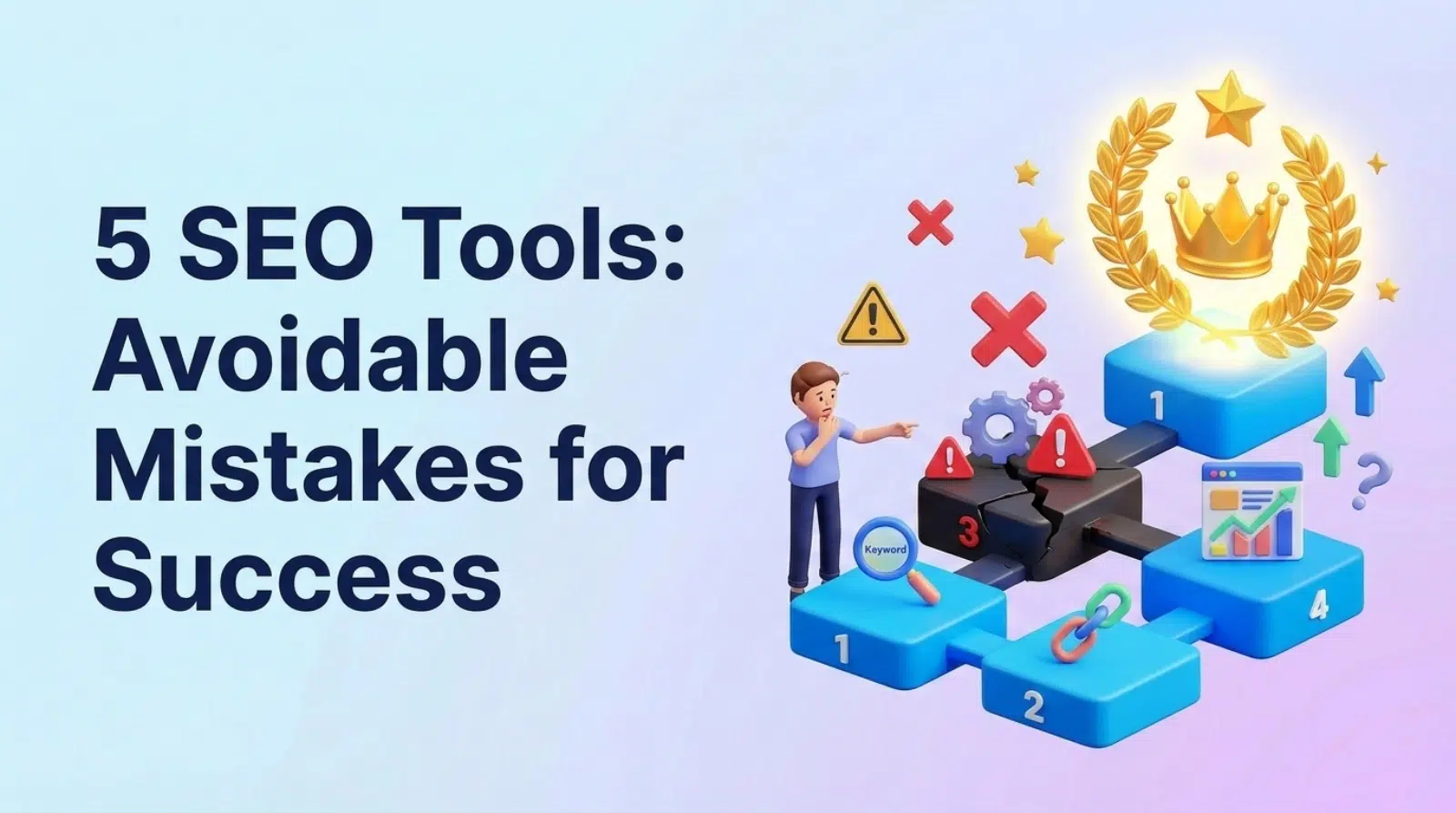
In the ever-evolving landscape of digital marketing, mastering SEO tools is paramount for achieving online success. However, simply having access to these tools isn’t enough. Many businesses make critical mistakes that hinder their SEO efforts and ultimately impact their search engine rankings. In this article, we, at SkySol Media, will explore avoidable errors in using SEO tools in 2026 that can derail your path to success. We often see these mistakes with new clients, and want to share this expertise.
One of the most common mistakes we see businesses make is focusing solely on volume metrics when using keyword research tools. Many people mistakenly believe that targeting keywords with high search volume is the key to driving traffic. However, this approach often neglects the crucial element of user intent. Understanding what users are actually looking for when they type a particular query into a search engine is critical for creating content that resonates with them and ranks well. We find that the best way to understand user intent is to analyze the SERP (Search Engine Results Page) for each keyword to understand what users are actually looking for.
Many companies chase high search volume keywords without considering the user’s underlying goal. This often results in attracting the wrong kind of traffic, visitors who are unlikely to convert or engage with the website’s content. For example, targeting “best running shoes” (broad, informational intent) instead of “running shoes for marathon training” (specific, transactional intent) for a product page, will produce traffic that is not looking to make a purchase.
Another mistake is ignoring longer, more specific keywords, also known as long-tail keywords. While these keywords may have lower search volumes individually, they often have lower competition and higher conversion rates. By focusing on long-tail keywords, you can attract a more targeted audience and increase your chances of driving meaningful results. For example, targeting “SEO services” vs. “affordable SEO services for small businesses in Lahore” helps you focus on the exact customer you are looking for.
Failing to analyze the keywords your competitors are ranking for is a missed opportunity. By understanding what keywords your competitors are targeting, you can identify gaps in your own strategy and discover underserved keywords. Keyword research tools allow you to see which keywords are driving traffic to your competitor’s websites. This reveals opportunities to target underserved keywords and compete more effectively in the search results. For many of our clients here in Lahore, we’ve seen that a thorough competitive keyword analysis can reveal quick wins and opportunities to gain a competitive edge.
Rank tracking tools are invaluable for monitoring your website’s performance in search results, but many users fall into the trap of focusing on vanity metrics. Obsessing over overall rank, ignoring local rank tracking, and failing to segment rank tracking data are all common mistakes that can lead to a skewed understanding of your SEO progress. We always recommend that our clients go beyond these metrics.
Becoming fixated on tracking the overall ranking of a few broad keywords is a common pitfall. While it’s important to monitor your overall ranking, this metric alone doesn’t provide a complete picture of your SEO performance. It’s more effective to track granular keyword rankings for specific pages and content pieces. This offers a more realistic and actionable understanding of performance. For instance, you might have a blog post that ranks well for a specific long-tail keyword, even if your overall ranking for a broader term is lower.
Ignoring local rank tracking is a critical mistake for businesses with a local presence. If you’re a local business, it’s essential to track your rankings in specific geographic locations. For example, failing to track “plumber near me” if you’re a local plumbing service means missing out on understanding how you rank in your service area. Rank tracking tools allow you to monitor your local rankings and optimize your on-page optimization to target local customers more effectively.
Not segmenting rank tracking data is another common mistake that can obscure valuable insights. For example, understanding how your rankings vary between mobile and desktop devices can help you prioritize mobile optimization efforts. Similarly, segmenting data by location can reveal regional differences in performance and inform your local SEO strategy. By segmenting your rank tracking data, you can identify areas for improvement on specific devices or in specific regions. Mobile and local SEO are crucial for most businesses.
Website analytics tools provide a wealth of information about your website’s traffic, user behavior, and conversions. However, simply collecting this data isn’t enough. Many businesses struggle to interpret the data effectively and make informed decisions based on their findings. Failing to understand bounce rate, not setting up goals, and misinterpreting traffic data are all common mistakes that can lead to misguided SEO strategies.
Overlooking bounce rate and time on page as indicators of user engagement is a missed opportunity to improve your website’s performance. Bounce rate refers to the percentage of visitors who leave your website after viewing only one page. Time on page measures how long visitors spend on a particular page. Analyzing these metrics for different pages can help you identify content that needs improvement. For example, a high bounce rate on a landing page may indicate poor content or a mismatch with user expectations.
Failing to set up goals and conversions in your website analytics tool is a critical mistake that prevents you from measuring the true impact of your SEO efforts. Goals represent specific actions you want users to take on your website, such as submitting a form or making a purchase. Tracking conversions allows you to measure how effectively your website is achieving these goals. This is how you tie SEO reporting efforts to business outcomes. Without this data, it’s difficult to determine whether your SEO investments are actually paying off.
Failing to differentiate between organic, direct, referral, and social traffic is another common mistake that can lead to misguided strategies. Each traffic source represents a different channel through which users are finding your website. Understanding the sources of your website traffic and identifying which channels are driving the most valuable visitors is crucial for informing your content and promotion strategies. For example, if you find that organic traffic is driving the most conversions, you may want to invest more in keyword research tools and on-page optimization.
SEO audit tools are essential for identifying technical issues, on-page optimization opportunities, and other factors that can impact your website’s search engine rankings. However, many businesses make the mistake of only running SEO audits sporadically, instead of on a regular basis. Ignoring technical SEO issues and not prioritizing audit findings are also common pitfalls that can hinder your SEO progress.
Neglecting to address technical SEO issues identified by SEO audit tools is like building a house on a weak foundation. Technical SEO encompasses a range of factors that can impact your website’s crawlability, indexability, and overall performance in search results. These include broken links, slow page speed, crawl errors, and mobile-friendliness. Prioritizing fixing these technical issues is crucial for building a strong foundation for your SEO strategy. Remember, technical SEO is the foundation of a successful SEO strategy.
Only running SEO audits sporadically, instead of on a regular basis, is like ignoring your car’s maintenance schedule. Websites are constantly evolving, and new issues can emerge over time. Regularly auditing your website allows you to identify and address these issues before they negatively impact your search engine rankings. We generally recommend scheduling regular SEO audits (e.g., monthly or quarterly) to identify and address new issues as they arise.
Getting overwhelmed by the number of issues identified in an SEO audit and not knowing where to start is a common challenge. SEO audit tools often generate a long list of potential issues, ranging from minor warnings to critical errors. Prioritizing these issues based on their potential impact on your SEO performance is crucial for effective resource allocation. Focus on critical errors first, such as crawl errors and broken links, before addressing less impactful warnings.
Backlinks are a critical ranking factor, but many businesses make the mistake of focusing on quantity over quality when it comes to backlink acquisition. Ignoring domain authority and relevance, neglecting anchor text optimization, and not monitoring your backlink profile are all common mistakes that can undermine your backlink analysis efforts.
Chasing backlinks from low-quality or irrelevant websites is like associating with the wrong crowd. Backlinks from high-authority websites in your niche are far more valuable than numerous low-quality links from irrelevant websites. Focus on acquiring backlinks from websites that are respected in your industry and have a strong domain authority. These high-quality backlinks will signal to search engines that your website is a trusted and authoritative source of information. High-quality backlinks are more valuable than numerous low-quality links.
Using generic or over-optimized anchor text for your backlinks can trigger over-optimization penalties from search engines. Anchor text refers to the clickable text used in a backlink. Over-optimizing your anchor text with the same keyword repeatedly can signal to search engines that you’re trying to manipulate your rankings. Vary your anchor text and use natural language to avoid over-optimization penalties. For example, instead of always using “SEO tools,” use variations like “best SEO software” or “SEO platform.”
Failing to monitor your backlink profile for toxic or spammy links can expose your website to negative SEO attacks. Toxic links are backlinks from websites that are considered low-quality, spammy, or malicious. These links can harm your search engine rankings and damage your website’s reputation. Regularly monitor your backlink profile and disavow any toxic links that could harm your rankings. This protects your website from negative SEO attacks.
While free SEO tools can be a useful starting point, over-relying on them can limit your ability to conduct thorough keyword research, rank tracking, and website analytics. The limitations in functionality, potential security risks, and the possibility of inaccurate data can all hinder your SEO efforts.
Solely relying on free SEO tools can be a limiting factor in your SEO strategy. These tools often have limited functionality and data compared to their paid counterparts. For a more comprehensive view of your SEO performance, it’s best to invest in a combination of free and paid SEO tools. Paid tools typically offer more advanced features, more accurate data, and deeper insights into your website’s performance.
Using untrusted free SEO tools can pose security and privacy risks to your website. Some free tools may contain malware or collect your data without your consent. To protect your website from malware and data breaches, only use free SEO tools from reputable providers. Verify the provider’s reputation before using their tools.
Making decisions based on inaccurate or outdated data from free SEO tools can lead to misguided SEO strategies. Free tools may not always provide the most accurate or up-to-date information. Before making any decisions based on the data provided by free SEO tools, verify its accuracy using other sources. Inaccurate data can lead to wasted time, effort, and resources.
With the majority of web traffic now coming from mobile devices, ignoring mobile SEO best practices is a critical mistake. Failing to optimize for mobile-first indexing, neglecting mobile page speed, and not using mobile-specific keyword research tools can all negatively impact your search engine rankings and user experience.
Neglecting to optimize your website for mobile devices is a major oversight, especially since Google uses mobile-first indexing. This means that Google primarily uses the mobile version of your website for indexing and ranking. To ensure your website performs well in search results, make sure it is mobile-friendly and responsive. Mobile-friendliness is now a critical ranking factor.
Having slow loading speeds on mobile devices can frustrate users and hurt your search engine rankings. Mobile users expect websites to load quickly, and they are more likely to abandon a website that takes too long to load. To improve mobile page speed, optimize images, leverage browser caching, and use a content delivery network (CDN). Slow page speed frustrates users and can hurt your rankings.
Not considering mobile-specific keyword variations during keyword research can lead to missed opportunities. Mobile users often use different keywords and search queries compared to desktop users. For example, mobile users may search for “restaurants near me” instead of “restaurants in Lahore.” Use keyword research tools to identify mobile-specific keywords and optimize your content accordingly.
Implementing SEO tactics without a defined strategy is like sailing a ship without a rudder. Without clear goals, a system for tracking results, or adaptation, a website will drift aimlessly. It is critical that companies have a roadmap for their on-page optimization.
Implementing SEO tactics without setting clear goals or objectives is like shooting in the dark. Before embarking on any SEO initiative, define specific, measurable, achievable, relevant, and time-bound (SMART) goals for your efforts. For example, you might set a goal to increase organic traffic by 20% in the next quarter. This provides direction and allows you to track your progress.
Failing to track the results of your SEO efforts and measure your ROI is like driving without a speedometer. Use website analytics and rank tracking tools to monitor your progress and identify areas for improvement. This will help you justify your SEO investments and demonstrate the value of your efforts.
Ignoring Google algorithm updates and failing to adapt your SEO strategy accordingly is like ignoring the weather forecast. Google’s algorithm is constantly evolving, and what worked yesterday may not work today. Stay up-to-date on the latest Google algorithm updates and adjust your strategy as needed to maintain your search engine rankings.
Treating SEO as a separate activity from other marketing channels can lead to missed opportunities and inefficiencies. Integrating SEO with social media, content marketing, and email marketing can amplify your results and create a more cohesive marketing strategy.
Treating SEO as a separate activity from other marketing channels is like trying to build a house with only one tool. Integrate SEO with other marketing channels like social media, content marketing, and email marketing to create a synergistic marketing campaign. This will lead to more effective results and a greater return on investment.
Failing to create high-quality content that attracts backlinks and drives organic traffic is a missed opportunity to boost your SEO performance. Content is king, and high-quality content is essential for SEO success. Develop a content marketing strategy that aligns with your SEO goals and creates valuable content that your target audience will love.
Overlooking the potential impact of social media on SEO is a mistake that can limit your reach and engagement. Social media can indirectly influence SEO rankings by increasing brand awareness and driving traffic to your website. Promote your content on social media to reach a wider audience and generate social signals that can boost your SEO performance.
Poor on-page optimization practices can hinder your website’s ability to rank well in search results. Neglecting title tags and meta descriptions, not optimizing header tags, and ignoring image optimization are all common mistakes that can negatively impact your SEO performance.
Not optimizing title tags and meta descriptions for your pages is like leaving a blank space on your business card. Title tags and meta descriptions are the first things users see in search results, and they play a crucial role in attracting clicks to your website. Craft compelling title tags and meta descriptions that accurately reflect the content of your pages and encourage users to click through to your website.
Failing to use header tags (H1-H6) to structure your content and highlight important keywords is like writing a book without chapters or headings. Header tags help search engines understand the structure and content of your pages. Use header tags to create a clear hierarchy of information and improve readability for both search engines and human users.
Not optimizing images for SEO is like driving a car with flat tires. Images can contribute to page speed and ranking. Optimize images by reducing file size, adding descriptive alt text, and using descriptive file names. This will improve page speed and provide context for search engines, helping them understand the content of your images.
Neglecting User Experience (UX) will almost certainly reduce search engine rankings, regardless of other positive attributes the site may have. A confusing website design will cause frustration and lower engagement, while intrusive pop-ups will cause users to quickly leave.
Having a poorly designed website with confusing navigation is like trying to find your way through a maze. Ensure your website is easy to use and navigate, with a clear and intuitive design. Good UX leads to higher engagement, lower bounce rates, and better search engine rankings.
Using intrusive pop-ups and ads that annoy users and disrupt the user experience is like shouting at your customers. Avoid using intrusive pop-ups and ads that can negatively impact user experience. Google penalizes websites with intrusive interstitials, so it’s best to avoid them altogether.
Having slow loading pages is like making your customers wait in a long line. Improve your page speed by optimizing images, leveraging browser caching, and using a CDN. Page speed is a ranking factor and impacts user experience, so it’s essential to ensure your website loads quickly.
SEO is a constantly evolving field, and it’s crucial to stay updated with the latest best practices. Following outdated advice, not testing and experimenting, and not staying informed about industry changes can all hinder your SEO efforts and prevent you from achieving your desired results.
Implementing SEO tactics based on outdated or inaccurate information is like using a map from the 2026s to navigate a modern city. SEO is constantly evolving, and what worked in the past may not work today. Stay up-to-date on the latest SEO best practices by following reputable SEO blogs and attending industry events.
Not testing and experimenting with different SEO tactics to see what works best for your website is like cooking a meal without tasting it. Every website is different, and what works for one website may not work for another. Continuously test and experiment with different SEO tactics to identify what drives the best results for your business.
Here’s a useful quote about testing:
“The key to great ideas is not having them, it is executing them. And great ideas come from problems. As designers, we call these opportunities.” – Tim Brown
One of the critical issues that needs to be monitored is the backlink profile. To assist in this, here is an example of a table to guide the process:
| Metric | Description | Importance | Action |
|---|---|---|---|
| Referring Domains | Number of unique domains linking to your site. | High | Increase quantity while maintaining quality. |
| Domain Authority (DA) | A metric predicting a domain’s ranking potential. | High | Focus on links from high DA sites. |
| Anchor Text Distribution | The variety of anchor texts used in backlinks. | Medium | Maintain a natural and varied distribution. |
| Toxic Links | Links from spammy or low-quality sites. | High | Disavow toxic links promptly. |
| Link Velocity | The rate at which new backlinks are acquired. | Medium | Maintain a consistent, natural growth rate. |
#
In conclusion, mastering SEO tools is critical for online success, but avoiding common mistakes is equally important. From ignoring search intent in keyword research to focusing on vanity metrics in rank tracking, these errors can derail your SEO efforts and impact your search engine rankings. By understanding the data provided by website analytics tools, prioritizing technical SEO issues identified by SEO audit tools, and focusing on quality over quantity in backlink analysis, you can optimize your website for success in 2026 and beyond. We have the expertise to help you take your company to the next level.
Q: What are the most important SEO tools for beginners?
A: For beginners, we recommend starting with Google Search Console for monitoring website performance, Google Analytics for understanding user behavior, and a keyword research tool like Semrush or Ahrefs to identify relevant keywords. These free and low-cost SEO tools provide valuable insights into your website’s performance and help you make informed decisions.
Q: How often should I run an SEO audit?
A: We recommend running an SEO audit on a regular basis, such as monthly or quarterly, to identify and address new issues as they arise. Websites are constantly evolving, and new technical SEO problems can emerge over time. Regular audits help you stay on top of these issues and maintain your website’s SEO health.
Q: How do I identify toxic backlinks?
A: You can use backlink analysis tools like Ahrefs or Semrush to identify potentially toxic backlinks. Look for backlinks from websites with low domain authority, spammy content, or irrelevant topics. Once you’ve identified toxic links, you can disavow them using Google Search Console.
Q: What is mobile-first indexing, and how does it affect my SEO strategy?
A: Mobile-first indexing means that Google primarily uses the mobile version of your website for indexing and ranking. This means that it’s crucial to optimize your website for mobile devices, ensuring that it is mobile-friendly, responsive, and loads quickly. If your website is not mobile-friendly, it could negatively impact your search engine rankings.
Q: How important is content optimization for SEO?
A: Content optimization is extremely important for SEO. High-quality, relevant, and engaging content is essential for attracting backlinks, driving organic traffic, and improving user engagement. Optimize your content for your target keywords and ensure that it provides value to your audience.
Q: What is the role of competitive analysis in SEO?
A: Competitive analysis is crucial for understanding your competitors’ strengths and weaknesses, identifying opportunities to target underserved keywords, and developing a more effective SEO strategy. By analyzing your competitors’ keyword research, backlink analysis, and on-page optimization efforts, you can gain valuable insights into their strategies and identify areas where you can improve your own.
Don’t forget to share it

We’ll Design & Develop a Professional Website Tailored to Your Brand
Enjoy this post? Join our newsletter
Newsletter
Related Articles
Understanding SEO in 2025: Key Strategies for Success

The Ultimate SEO Guide for Growing Your Trading Business Online

Drive More Organic Traffic to Your Trading Platform with These Proven Tactics

Optimized for Success: How SkySol Media Builds SEO-First Websites

Boost Your Google Rankings: Proven SEO Tactics for Modern Brands

How to Write SEO-Friendly Blog Posts That Google Loves
SkySol Media
We firmly believe that the internet should be available and accessible to anyone, and are committed to providing a website that is accessible to the widest possible audience, regardless of circumstance and ability.
To fulfill this, we aim to adhere as strictly as possible to the World Wide Web Consortium’s (W3C) Web Content Accessibility Guidelines 2.1 (WCAG 2.1) at the AA level. These guidelines explain how to make web content accessible to people with a wide array of disabilities. Complying with those guidelines helps us ensure that the website is accessible to all people: blind people, people with motor impairments, visual impairment, cognitive disabilities, and more.
This website utilizes various technologies that are meant to make it as accessible as possible at all times. We utilize an accessibility interface that allows persons with specific disabilities to adjust the website’s UI (user interface) and design it to their personal needs.
Additionally, the website utilizes an AI-based application that runs in the background and optimizes its accessibility level constantly. This application remediates the website’s HTML, adapts Its functionality and behavior for screen-readers used by the blind users, and for keyboard functions used by individuals with motor impairments.
If you’ve found a malfunction or have ideas for improvement, we’ll be happy to hear from you. You can reach out to the website’s operators by using the following email
Our website implements the ARIA attributes (Accessible Rich Internet Applications) technique, alongside various different behavioral changes, to ensure blind users visiting with screen-readers are able to read, comprehend, and enjoy the website’s functions. As soon as a user with a screen-reader enters your site, they immediately receive a prompt to enter the Screen-Reader Profile so they can browse and operate your site effectively. Here’s how our website covers some of the most important screen-reader requirements, alongside console screenshots of code examples:
Screen-reader optimization: we run a background process that learns the website’s components from top to bottom, to ensure ongoing compliance even when updating the website. In this process, we provide screen-readers with meaningful data using the ARIA set of attributes. For example, we provide accurate form labels; descriptions for actionable icons (social media icons, search icons, cart icons, etc.); validation guidance for form inputs; element roles such as buttons, menus, modal dialogues (popups), and others. Additionally, the background process scans all the website’s images and provides an accurate and meaningful image-object-recognition-based description as an ALT (alternate text) tag for images that are not described. It will also extract texts that are embedded within the image, using an OCR (optical character recognition) technology. To turn on screen-reader adjustments at any time, users need only to press the Alt+1 keyboard combination. Screen-reader users also get automatic announcements to turn the Screen-reader mode on as soon as they enter the website.
These adjustments are compatible with all popular screen readers, including JAWS and NVDA.
Keyboard navigation optimization: The background process also adjusts the website’s HTML, and adds various behaviors using JavaScript code to make the website operable by the keyboard. This includes the ability to navigate the website using the Tab and Shift+Tab keys, operate dropdowns with the arrow keys, close them with Esc, trigger buttons and links using the Enter key, navigate between radio and checkbox elements using the arrow keys, and fill them in with the Spacebar or Enter key.Additionally, keyboard users will find quick-navigation and content-skip menus, available at any time by clicking Alt+1, or as the first elements of the site while navigating with the keyboard. The background process also handles triggered popups by moving the keyboard focus towards them as soon as they appear, and not allow the focus drift outside it.
Users can also use shortcuts such as “M” (menus), “H” (headings), “F” (forms), “B” (buttons), and “G” (graphics) to jump to specific elements.
We aim to support the widest array of browsers and assistive technologies as possible, so our users can choose the best fitting tools for them, with as few limitations as possible. Therefore, we have worked very hard to be able to support all major systems that comprise over 95% of the user market share including Google Chrome, Mozilla Firefox, Apple Safari, Opera and Microsoft Edge, JAWS and NVDA (screen readers).
Despite our very best efforts to allow anybody to adjust the website to their needs. There may still be pages or sections that are not fully accessible, are in the process of becoming accessible, or are lacking an adequate technological solution to make them accessible. Still, we are continually improving our accessibility, adding, updating and improving its options and features, and developing and adopting new technologies. All this is meant to reach the optimal level of accessibility, following technological advancements. For any assistance, please reach out to